search expand

Human Planet: Ambitious BBC “anthropology” multi media project launched

The Dictionary of Man: Will Bob Geldof and the BBC reproduce racist anthropology? was the title of a (rather sceptical) post back in 2007. Now this ambitious project, four years ago described as “the largest ever living record of films, photographs, anthropological histories, philosophies, theologies, economies, language and art, as well as people’s personal stories” is ready for the TV-screens and partly for the web as well.

Human Planet is it called, now focussing on “man’s remarkable relationship with the natural world” with stories from “eighty of the most remote locations on Earth”.

The website is beautiful. Stunning photographs, videos, text, music and lots of links to external websites. Unfortunately (not surprisingly, though in our economic system), most people on this planet won’t be able to view the videos (within the UK only, I suppose).
UPDATE: Sian Davies from the BBC writes to me and informs that some videos are availabe worldwide, f.ex Walking on the sea bed (Bajau fisherman, Sulbin, freedives to 20 metres to catch his supper.), Pa-aling divers (One of the most dangerous fishing methods of all. A 100 strong crew in the Philippines dive to 40 metres, breathing air pumped through makeshift tangled tubes by a rusty compressor), and Gerewol courtship festival.

Several anthropologists have been involved. Nevertheless, the question remains how people from around the world are represented. Is it the usual exotisation or has the BBC chosen a more innovative approach?

Have a look yourself – here are two (visually fascinating) videos from the

>> Human Planet Website

>> Human Planet Production Blog

Check also the comment on Culture Matters Bob Geldof – the “saviour” of the cultures of the world? (19.4.2007)

Another new initiative – more academic, though, to showcase this planet’s diversity is the Global Ethnographic, “a general interest, peer reviewed web journal featuring the field research and perspectives shaping our social world. Free and exclusively online, Global Ethnographic is multi-media driven and cross-disciplinary, bringing you the scholarly conversations on daily life as it is lived and experienced around the world.”

The website is already online, but the content will be launched the 31.1. 2011.

SEE ALSO:

“Tribal wives” – Pseudo-anthropology by BBC?

In Norwegian TV: Indian tribe paid to go naked

“Good story about cannibals. Pity it’s not even close to the truth”

Is this anthropology? African pygmies observe Britains in TV-show

Why anthropologists should study news media

The Dictionary of Man: Will Bob Geldof and the BBC reproduce racist anthropology? was the title of a (rather sceptical) post back in 2007. Now this ambitious project, four years ago described as "the largest ever living record of films,…

Read more

Book review: No fashion outside the “West”?

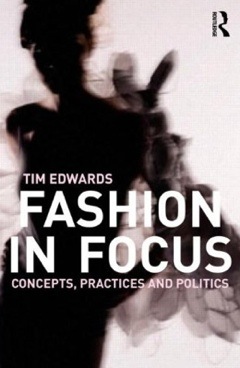
“The subject of fashion in non-Western world is largely understudied. The whole research community is to be blamed for viewing fashion too narrowly”, Tereza Kuldova writes in her new book review for antropologi.info. She has read a new book on fashion studies: Fashion in Focus by sociologist Tim Edwards.

——-

Review: Fashion in Focus: Concepts, Practices and Politics by Tim Edwards, New York: Routledge, 2011.

Tereza Kuldova, PhD Fellow, Department of Ethnography, Museum of Cultural History, University of Oslo

Fashion in Focus by Tim Edwards is mainly an overview work, summarizing most of the texts predominantly within the confines of sociology that deal with various aspects of the fashion system.

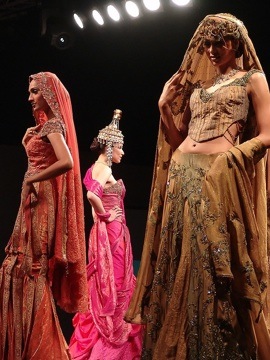
Nilofer: Pakistani fashion in Dubai. Foto: Mark Kirchner, flickr

The book is not a revelation in any sense and it does not develop the theory of fashion in any major way, though one might find traces of such attempts within the text. Considered as a summary of the most influential theories in fashion studies, it is a very good one. The language of the work is marked by clarity of expression, though there is a tendency towards excessive repetitiveness (though again, this might come handy to students)

However, the book considers almost without exception only western fashion, leaving the emerging non-western fashion centers unnoticed and the ‘East’ thus remains simply an (exploited) producer of fashion, rather than being treated as more and more important consumer. Considering the fact that Louis Vuitton’s sales are higher in Asia than in Europe and US together, this is a severe omission.

This omission is however not the mistake of the author summarizing the existing work, the whole research community is to be blamed for viewing fashion too narrowly, as a modern particularly Western phenomenon, focusing on consumption while neglecting production. With the exception of a handful of anthropologists, the subject of fashion in non-Western world is largely understudied and production and consumption remain separated in most of the studies.

The author is of course not unaware of the situation and to fill the gap he includes a chapter (7) on the production of fashion. There is a nice section that says it all in a few lines, let me quote:

“Fashion, even in its second-hand market versions, is sold according to illusion or the notion that dresses, jackets or shoes are somehow invested with the transformative magic to make us more than what we are, that clothes may somehow make up for what we lack or more simply help us to fulfill our fantasies. Fashion’s production is a grim reminder that they are no such thing, that they are just material assembled and sold, often at a rip-off cost to our pockets and at the expense or the exploitation of someone else” (121).

However, one might want to add, even though clothes and other fashion objects are in principle just assembled materials, their power over the minds of the self-fashioning individuals and the magic has real effects. Thomas’ theorem works here perfectly, ‘if people define situations as real, they are real in their consequences’.

Though as a person involved in the research on production and consumption of fashion in India I was looking forward to this chapter in particular, I was disappointed to a degree. The author hardly goes beyond stating the “popular”, i.e. ‘fashion production is exploitation’. Yet, as my own fieldwork can tell, it might be both, exploitation and empowerment. The omnipresent idea of a dreadful sweatshop is without doubt true to reality in some cases; however the incredible variety of destinies within fashion production can hardly be reduced to it.

A balanced and empirically grounded view is what is needed here. Only an in-depth qualitative research seems to be able to reveal the actual processes and meanings of and within the incredible complex rollercoaster of fashion industry. It appears as if too much of the theorizing done in the book is from the table, based on one’s perceptions, local bias, and readings of other scholars equally speculating from the warmth of their office chairs.

Edwards however makes up for certain omissions by paying attention to other rather neglected topics within the fashion studies, and that is men’s wear, children wear and recently also the topic of media, celebrities, designers and desire. In the third chapter he turns his attention towards the case of western suit, discussing topics of gender and masculinity in relation to the evolution of suit as a nexus of the consumption of men’s fashion in the West. There is a nice point in the chapter that Edwards makes about the oscillation of men’s dress throughout centuries from extravagant and lavish to simple and modest and back, he calls it “playboy” vs. “puritan” tendencies (45). These concepts might have broader application, not only being useful in conceptualizing the recent rise of the ‘metrosexual’ man, but also in conceptualizing fashion in other non-Western contexts.

In the fifth chapter he then turns towards the children fashion. This chapter being based on the actual original research by the author is definitely one of the more interesting. It draws on interview material with retailers, designers and consumers of children fashion in UK. It touches on the topics of branding of child wear, increasing fashion consciousness of children and the relationships between parents and children as consumers, as well as the tendency of parents to turn the child into a “mini me”.


Children fashion show in Singapore. Photo: Choo Yut Shing, flickr

Edwards concludes that in respect to children fashion in the UK market “the overwhelming key variables were age and gender and not class, geography or ethnicity” (100), which is hardly surprising. However what is possibly new (though the question remains to which degree) is “the rise of a more adult sense of fashion consciousness in the children’s clothing market, whether in terms of the wishes of some parents to dress their children more fashionably or in terms of wider trends of ‘mini-me’” (100).

The last chapter is then devoted to a trendy and until recently also neglected topic of desire, designers, branding and celebrities. He presents a good introduction into this topic, but it also becomes obvious that it is an area which needs more thorough investigation. Let me give you a tasting of this chapter in a quote that at the same time in a way makes obvious why fashion needs to taken seriously as a research object. It is “the combining of the desire for a designer label – whether sexual or more diffuse – for another person that turns contemporary fashion not only into a process of desiring objects but one of desiring subjects. More problematically still it also becomes a process of desiring subjectivity per se. Not only is the fashion consumer a desiring subject who desires both objects and other subjects but a desirer of alternative forms of subjectivity” (158).

Further the book includes summaries of both classical, modern and postmodern fashion theory, as well as a discussion on fashion, feminism and fetishism and ideas on the politics of dressing and self-expression. It is apparent by now that the book will make a good resource for students of fashion in various disciplines and it might thus stimulate further development of fashion theory, not less because it points towards the blind spots in the theory and towards areas that need to be investigated with greater sensitivity.

—-

See more reviews by Tereza Kuldova, among others Religious globalization = Engaged cosmopolitanism?, The deep footprints of colonial Bombay and Hindi Film Songs and the Barriers between Ethnomusicology and Anthropology or Colonialism, racism and visual anthropology in Japan: Photography, Anthropology and History and my look at her master’s thesis about the Chikan embroidery industry in India That’s why there is peace

"The subject of fashion in non-Western world is largely understudied. The whole research community is to be blamed for viewing fashion too narrowly", Tereza Kuldova writes in her new book review for antropologi.info. She has read a new book on…

Read more

How racist is American anthropology?

Why does anthropology tend to focus on “exotic others”? Why this obsession with Africa? How come calls by well-known anthropologists such as Paul Rabinow to “anthropologize the West seemed to have not brought forth much fruit? How racist is American anthropology?

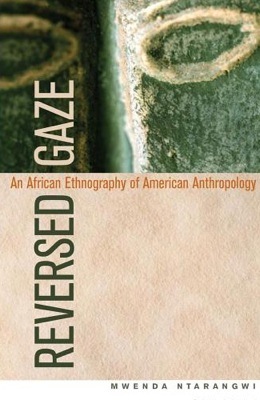
Kenyan anthropologist Mwenda Ntarangwi discusses those and other questions in his new book Reversed Gaze. An African Ethnography of American Anthropology.

Yes, Ntarangwi has conducted an anthropological study of American anthropology! An important undertaking. He has studied textbooks, ethnographies, coursework, professional meetings, and feedback from colleagues and mentors. He “reverses the gaze”, he stresses: Whereas Western anthropologists often study non-Western cultures, he studies “the Western culture of anthropology”.

He is especially interested in “the cultural and racial biases that shape anthropological study in general”.

In the preface and introduction he writes:

If anthropology truly begins at home as Malinowski states, how come, as I had thus far observed, anthropology tended to focus on the “exotic”? How come only a small percentage of fieldwork and scholarship by Western anthropologists focused on their own cultures, and when they did it was among individuals and communities on the peripheries, their own “exotics” such as those in extreme poverty, in gangs, ad others outside mainstream culture? (…)

This book is a personal journey into the heart of anthropology; representing my own pathways as an African student entering American higher education in the early 1990s that I knew very little about. It is a story about my initial entry into an American academic space very different from my own experience in Kenya, where we followed a British system of education.

It is also a story hemmed within a specific discourse and views about anthropology that can be best represented by remarks from fellow graduate students who wondered what i was doing in a “racist” discipline. (…) Troubled by this label, I consciously embarked on a journey to find more about the discipline.

He critiques dominant tenets of reflexivity, where issues of representation in his opinion are reduced to anthropologists’ writing style, methodological assumptions, and fieldwork locations. Inherent power differences that make it easier for anthropologists to study other people (“studying down”) than to study themselves (“studying up”) are rendered invisible.

Ntarangwi seeks to contribute to the process of “liberating the discipline from the constraints of its colonial legacy and post- or neocolonial predicament”. As long as the bulk of anthropological scholarship comes from Europe and North America and focuses on studying other cultures than their own, the power differentials attendant in anthropology today will endure.

I have just starting to read and took among others a short look at the chapter about the annual meetings of the American Anthropological Association (AAA).

“I believe it is at the AAA meetings that the anthropological ritual of what we do as anthropologists is best performed”, he writes:

Just as America has become an economic and political empire, American anthropology has consolidated a lot of power and in the process has peripheralized other anthropologies, forcing them either to respond to its whims and hegemony or to lose their international presence and appeal. The American Anthropological Association (AAA), I argue, is an important cultural phenomenon that begs for an ethnographic analysis.

It was in 2002, four years after his graduation that Mwenda Ntarangwi attended his first AAA-meeting. It was held in New Orleans. Already at the airport, he realises it is easy to spot anthropologists:

They were dressed casually, many were reading papers, and majority wore some exotic piece of jewelry or clothing that symbolized their field site – either a bracelet from Mexico (…), a necklace from a community in Africa, a tie-dyed shirt, or a multicolored scarf.

His observations from the different sessions he attended remind me of my own impressions: “Conference papers were written to make the presenters sound more profound rather than to communicate ideas”, he writes.

But there were interesting panels as well, among others about “marginalization and exclusion of certain scholars and scholarship on the basis of their race”. There were, he writes, “discussions of how Haitian anthropologists challenged the notion of race but were never “knighted”, as was Franz Boas, simply because they were Black”.

He also attended sessions where the speakers were using data collected ten or twenty years before and yet were speaking of the locals as if representing contemporary practices.

Ntarangwi went to the 2007 annual meeting as well. He was very much interested in seeing how well the meeting itself reflected in its theme “Inclusion, Collaboration, and Engagement.”

I’ll write about it next time. I’ll take the book with me on my short trip to Portugal. I’m leaving tomorrow.

You can read thw first pages of the books on Google Books. Check also Mwenda Ntarangwi’s website.

SEE ALSO:

How can we create a more plural anthropological community?

The Five Major Challenges for Anthropology

The resurgence of African anthropology

“Take care of the different national traditions of anthropology”

“No wonder that anthropology is banished from universities in the ‘decolonized’ world” (updated)

Keith Hart and Thomas Hylland Eriksen: This is 21st century anthropology

Why does anthropology tend to focus on "exotic others"? Why this obsession with Africa? How come calls by well-known anthropologists such as Paul Rabinow to "anthropologize the West seemed to have not brought forth much fruit? How racist is American…

Read more

Muslim Christmas Parties in Egypt = Celebration of religious diversity?

“I have been invited to at least four Christmas parties this year, and three of them are being held by Muslims. This is the first time I’ve felt such a huge emphasis on Christmas,” 33-year-old investment banker Osama Abdelshafy says.

Hotels in Egypts have long celebrated Christmas for tourism-related reasons. However, over the past few years, Christmas has been visibly gaining ground throughout various strata of Egyptian society according to the Egyptian newspaper Al-Masry Al-Youm:

Around 10 December, the Christmas buzz starts to hit with displays popping up in almost every major Cairo mall. Banners with “Merry Christmas and Happy New Year” adorn different store and restaurant fronts, and it becomes all too evident that the consumer fever that hits many other parts of the world has caught on here this year too. Some reports say that around 500,000 Christmas trees will have been sold this year in Egypt by 25 December.

Social anthropologist Reem Saad reminds us that the celebration of Christmas has always existed as part of Egypt’s heritage. “People in Egypt have traditionally celebrated religious diversity and joined each other in their celebrations”, she says. “It has been a mainstay of Egyptian culture in the past.”

But Christmas in Egypt has departed from its roots as a celebration of the birth of Christ and taken on a more social role. “It’s not about being Christian or not, I just like the idea of getting together and giving gifts in a festive atmosphere”, Rania El-Nazer, who works in PR.

>> read the whole story in Al-Masry Al-Youm

It seems that Christmas is turning into a global secular ritual. Not only in Egypt. Only a minority in Norway for example (23%) is attending the church service at Christmas. Maybe it’s best to describe Christmas as a celebration of the family and capitalism. Many muslims and people from other religious minorities in Norway celebrate Christmas.

At the same time, the Guardian writes that Egypt’s Coptic Christians struggle against institutionalised prejudice.

At GlobalVoices you find an overview over Christmas Recipes in Global Food Blogs

SEE ALSO:

Book review: Religious globalization = Engaged cosmopolitanism?

Earth Hour – The first globalized ritual?

Christians and Muslims: That’s why there is peace

Eating Christmas in the Kalahari

Why you always get a present you don’t want – Social Sciences and Gift-Giving

Germans critical of Santa Claus’s spread – “symbol of American commercialism”

“I have been invited to at least four Christmas parties this year, and three of them are being held by Muslims. This is the first time I've felt such a huge emphasis on Christmas,” 33-year-old investment banker Osama Abdelshafy says.

Hotels…

Read more

– Use Anthropology to Build A Human Economy

Book launch
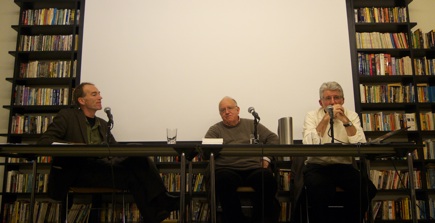
Book launch in the House of Literature (Litteraturhuset) in Oslo with Thomas Hylland Eriksen, Keith Hart and Desmond McNeill. Photo: Lorenz Khazaleh

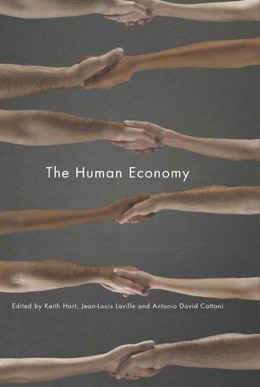
Anthropologists, sociologists, philosophers, economists and activists have come together and written a citizen guide for a human economy.

In The Human Economy more than 30 authors from 15 countries show alternatives to our current dominating economic system.

Anthropologist Keith Hart launched the book Friday last week in Oslo together with two contributors: Thomas Hylland Eriksen and Desmond McNeill.

The table of contents looks promising: There are essays on for example solidarity economy, community participation, fair trade, ecological and feminist economics, alter-globalisation, social entrepreneurship and also articles on two topics that are especially relevant when we’re sitting in front of the screen: gift economies and digital commons.

I like the authors’ approach. They are not dreaming of an obscure and distant revolution. We don’t need a revolution. The alternatives do already exist, explained Keith Hart in Oslo:

The problem with posting an radical alternative to the socalled capitalist economy is that it raises question how do you get there from where we are.

What I want to argue is that the economies are much more plural than ideologies or conventional theories make them out to be. We live in a world in which we say if we can identify the economy as capitalist we’ve somehow done the job. Or if we want to build another one and call it socialist we’ve done the job.

My notion is that we live by a large numbers of economic principles which includes family economy, the importance of the state as an agent to redistribution, voluntary associations, NGOs etc

If we want to push the world economy in a new direction, then we should build it on what people are doing already – even if what they are doing already is marginalised, obscured or even repressed.

Keith Hart made me think of what I wrote nearly ten years ago when I prepared my final exam in economic anthropology. The more I read about Kula, Potlatch and other gift economies in distant places, I wrote (in German only), the more I got convinced of that we are operating in a similar way, that capitalisms’ importance is overrated. I found lots of examples of local exchange trading systems, even in my neighborhood, that work without any money involved: You repair my bike, and I’ll help your with your English homework.

The internet is a huge gift economy. Wikipedia, Flickr, blogging, we’re giving away our work for free. Or think of the free software movement or the way science works. Capitalism dominates only a small part of our economic system.

The authors are optimistic. It’s more easier than ever to realise a Human Economy. In the introduction (pdf), editors Keith Hart, Jean-Louis Laville and Antonio David Cattani write:

This world is massively unequal and voices for human unity are often drowned. But now at last we have means of communication adequate to expressing universal ideas. Anthropologists and sociologists have shown that Homo economicus — the idea of an economy based on narrow self- interest, typified as the practice of buying cheap and selling dear — is absent from many societies and does not even reflect what is best about ourselves. We ought to be able to do better than that by now. But ideas alone are insufficient. Emergent world society is the new human universal – not an idea, but the fact of our shared occupation of the planet crying out for new principles of association.
(…)
The Human Economy is a work of reference that has come out of a dialogue between successful social experiments in many parts of the world and theoretical reflection on them. The resulting synthesis is an invitation to advance knowledge along the lines we have begun and to dare to build a better world.

Unfortunately, this “citizen guide” exists on paper only. I asked Keith Hart if a webversion is in the making. His answer was No. Lack of time. “I’m totally overworked”, he said.

I’ll try to write more about the book in the coming weeks.

>> short presentation of the book on Keith Hart’s blog’

>> download the introduction (pdf)

>> After the Crash : A Human Economy for the 21st Century (published in Revue du MAUSS permanente)

>> read Keith Hart’s book “The Memory Bank. Money in an Unequal World” and his blog

SEE ALSO

How anthropologists should react to the financial crisis

Used anthropology to predict the financial crisis

What anthropologists can do about the decline in world food supply

The last days of cheap oil and what anthropologists can do about it

The Internet Gift Culture

Why were they doing this work just to give it away for free? Thesis on Ubuntu Linux hackers

Anthropologist uncovers how global elites undermine democracy

Democratic Publishing = Web + Paper

Book launch

Book launch in the House of Literature (Litteraturhuset) in Oslo with Thomas Hylland Eriksen, Keith Hart and Desmond McNeill. Photo: Lorenz Khazaleh

Anthropologists, sociologists, philosophers, economists and activists have come together and written a citizen guide for a human economy.

In…

Read more