search expand

Oral history, folk music and more: British Library puts vast sound archive online

Wow! Overwhelming! The British Library has made more than 23 000 sound recordings from all over the world freely available to everyone at http://sounds.bl.uk

“World and traditional music”, “oral history”, “accents and dialects”, “environment and nature” are some of the categories on the websites. Right now I’m listening to Sunna Saora in India with his two-stringed Sora fiddle. Sunna went from house to house, asking for some rice grains and playing his songs.

“One of the difficulties, working as an archivist, is people’s perception that things are given to libraries and then are never seen again – we want these recordings to be accessible”, Janet Topp Fargion, the library’s curator of world and traditional music, says in the Guardian.

To say the sounds are diverse may be understatement, according to the presentation in the Guardian:

There are Geordies banging spoons, Tawang lamas blowing conch shell trumpets and Tongan tribesman playing nose flutes. And then there is the Assamese woodworm feasting on a window frame in the dead of night. (…) The recordings go back more than 100 years, with the earliest recordings being the wax cylinders on which British anthropologist Alfred Cort Haddon recorded Aboriginal singing on his trip to the Torres Strait islands off Australia in 1898

>> more in the Guardian (incl selected sound files)

The sound archive website has even a project blog where selected recordings are presented.

Unfortunately, the website is optimised for Windows users and the people behind the website don’t seem to have much knowledge about other operating systems. For example, they advise Mac users to download “software such as Winamp or Windows Media Player” – which are Windows applications (VLC works fine). Their statement “Some features are unavailable in some web browser/operating system configurations” is not very helpful either.

SEE ALSO:

How to save Tibetan folk songs? Put them online!

Multimedia Music Ethnography of Yodelling and Alphorn Blowing

Smithsonian Folkways to Open MP3 Music Store

“A new approach to the collection of traditional Aboriginal music”

Acoustic Environments in Change – a multi-disciplinary project

Wow! Overwhelming! The British Library has made more than 23 000 sound recordings from all over the world freely available to everyone at http://sounds.bl.uk

"World and traditional music", "oral history", "accents and dialects", "environment and nature" are some of the…

Read more

For more Anthropology of Christianity

(LINKS UPDATED 26.5.2020) What is happening within Christianity today? This is a question that is exciting to study, but which has received little attention among anthropologists, says Norwegian anthropologist Edle Lerang Nes.

For hundreds of years, Christianity has been the most important religion in Europe and some other places on this planet. But while everybody is studying Islam, Christianity seems to be ignored.

As Edle Lerang Nes tells in an interview with me, parts of Christian culture actually is “endangered culture” and therefore a field for “urgent anthropology”.

Nes studied “chapel culture” – part of Revival Christianity – which broke out in Norway at the end of the 18th century. It was a layman’s movement in opposition to church authorities. A personal relationship to God was important, combined with a sober and hardworking lifestyle without dance, merriment, music, or card-playing ( >> overview Christianity in Norway). How is Christian life developping on this island? Nes conducted fieldwork on the small island if Finnøy, in Southwestern Norway where there are no pubs or restaurants, but the approximately 1,700 inhabitants can choose between five different chapels and a church.

Her research also reminds us of how important religion is for many people in rural areas that are often ignored by researchers and the mainstream press.

>> read the interview (website of the research project Culcom, University of Oslo)

There is not much material on anthropology and christianity online, but Ingie Hovland (from Anthropology Matters) has a large section of posts on her blog about the anthropology of christianity – part of her two book projects – where she also reviews several books and papers.

I found an interesting blog post about being Christian and anthropologist. Being a Christian anthropologist raises difficult questions, Katherine Cooper writes, among others because of the tenet of cultural relativism:

All practices and beliefs, whether shocking to a Westerner or not, are said to ‘make sense’ within the society that they are located. Such views cause problems for Christians. Christianity is an ultimate truth claim with an absolute framework for morality located in the character and commands of a personal God. How do we square our belief in such a claim with studying a subject that inherently denies the validity of such claims?

She also links to the paper by Dean E. Arnold Why Are There So Few Christian Anthropologists? Reflections on the Tensions between Christianity and Anthropology

Last year, anthropologist Gabriele Marranci wrote an interesting blog post called Terrorism in the name of Jesus? Everybody ignore. The Italian Christian anti-Islamic terrorist movement called Fronte Combattente Cristiano or ‘Fighting Christian Front’ has been responsible for several bomb attacks against Islamic centres and mosques:

I thought that news about the first Christian anti-Muslim terrorist group would have attracted international attention and fostered new debates. (…) But the news about a self-defined Christian terrorist and a Christian (mainly Catholic) terrorist organization has attracted virtually no attention.

SEE ALSO:

Researches neo-paganism in an overwhelmingly Catholic society

The Journals of Knud Rasmussen: The impact of Christianity among the Inuit

Explores how indigenous peoples interprete Christianity

How far have we come since anthropologists began to think about magic & religion?

Maurice Bloch: Religion is a Figment of Human Imagination

(LINKS UPDATED 26.5.2020) What is happening within Christianity today? This is a question that is exciting to study, but which has received little attention among anthropologists, says Norwegian anthropologist Edle Lerang Nes.

For hundreds of years, Christianity has…

Read more

96 year old anthropologist starts blogging

(via AAA-blog) He was both president of the American Anthropological Association (AAA) and editor of the journal American Anthropologist. Now Walter Goldschmidt, born in 1913, is joing the growing anthropological blogging community at http://waltergoldschmidt.wordpress.com/

He writes:

Electronic communication, and these things called “blogs,” represent a medium I am singularly unready for. My amanuensis has suggested that I use it to place various of my essays and monographs for public use, and I do find this appeals to me, and invite you to make what use of them you may. Among these, I shall offer presentation of a book of memoirs that I have long intended to write but am only now getting around to.

During the recent weeks and months, many other anthropologists have started blogging as well. Among others, there are two new group blog projects: Anthropoliteia – a blog about police, policing and security from an anthropological perspective and Anthropologyworks – a more general anthro blog that also provides overviews over “anthropology in the news”. It is a project of the Culture in Global Affairs (CIGA) research and policy program at The George Washington University in Washington, D.C.. Then there is the blog Economics in Cultural Perspective that also looks very interesting. I’m very glad to see that two anthropologists from Scandinavia have joined us: Daniel Winfree Papuga with his blog Recontextual – Expressive culture in new formations and Johanna Sommansson who is blogging about her fieldwork in India at Anthromodernity.

Not all of them can be found on the blog overview at http://www.antropologi.info/blog/ I’ll update it later today tomorrow.

SEE ALSO:

“Blogging sharpens the attention”

Paper by Erkan Saka: Blogging as a Research Tool for Ethnographic Fieldwork

Professor lets students blog their field experiences: More than 20 new blogs online!

Anthropology blogs more interesting than journals?

5 years antropologi.info

(via AAA-blog) He was both president of the American Anthropological Association (AAA) and editor of the journal American Anthropologist. Now Walter Goldschmidt, born in 1913, is joing the growing anthropological blogging community at http://waltergoldschmidt.wordpress.com/

He writes:

Electronic communication, and these things called…

Read more

Why anthropologists should politicize mental illnesses

(Links updated 8.9.2019) How to deal with “mental illness”? Are people who are labelled ill actually ill? Is it ok that psychologists call “adolescent rebellion” for “Oppositional Defiant Disorder”? What is anthropologists’ role here? Eugenia Tsao discusses these questions in an article in Counterpunch and in a paper in the open access anthropology journal Alterities.

The extent to which our lives and livelihoods have been “colonized by the reductive logic of pharmaceutical intervention” is breathtaking, she writes. Drugs are touted with increasing regularity as a treatment of choice for entirely natural responses to conditions of unnatural stress – although medical textbooks and even drug advertisements have admitted uncertainties in psychiatric research (“While the cause [of depression] is unknown, Zoloft can help”):

How have we been persuaded to equate such things as recalcitrant despair (“Dysthymic Disorder,” DSM-IV-TR 300.4), adolescent rebellion (“Oppositional Defiant Disorder,” DSM-IV-TR 313.81) and social apathy (“Schizoid Personality Disorder,” DSM-IV-TR 301.20) with aberrant brain chemistry and innate genetic susceptibilities rather than with the societal circumstances in which they arise? What does it mean when increasing numbers of people feel as though they have no choice but to self-medicate with dubious chemical substances in order to stay in school, stay motivated, stay employed, and stay financially solvent?
(…)
As Laurence Kirmayer of McGill University has suggested, the millennial rise of a “cosmetic” psychopharmaceutical industry, wherein drugs are “applied like make-up to make us look and feel good, while our existential predicaments go unanswered,” raises disturbing questions about the consequences of our willingness to use chemicals to treat forms of distress that would seem to signal not biological but social maladies.

When psychiatrists lament that over half of depressed people are “treatment-resistant,” Tsao stresses, they do not consider that it is a strenuous aversion to being told that one’s existential grievances are irrational, a mere result of a pathological neurochemical imbalance, that discourages many people from seeking medical help.

Anthropologists have an important role to play here, Tsao explains:

(A)nthropologists who seek to honor their informants’ narratives and confute clinical meta-narratives may find it useful to illuminate the perils of overliteralization: to explain why it is that those who are sick and suffering will so often thumb their noses at those who presume to offer help; to highlight the tragicomedy in the seemingly bottomless capacity of highly educated MDs and PhDs to overlook simple things like the anaesthetizing comforts to be found in a bottle or at the edge of a razor blade, or why a person might choose to act out of anguish rather than economic rationalism.
(…)
I ultimately argue that an efficacious anthropology of psychiatry must adopt as its point of departure the candidly transformative objective of repoliticizing mental illnesses as historical rather than congenital events. Anthropologists must, in short, develop ethnographic, historiographic, and rhetorical strategies for destabilizing the biological with the biographic.
(…)
(A)nthropologists should pay careful attention to regional histories, local processes of identity formation, and other kinds of social transactions paradigmatically excluded from biomedical narratives in order to distinguish necessary etiological agents from sufficient ones. While certain congenital factors may precondition an individual’s susceptibility to, for example, schizophrenia, the cultural factors that activate the disorder will in most cases determine whether or not an individual ultimately develops the condition – as corroborated by numerous studies on identical twins (Levy 1992:215-216).

Tsao presents theories by Robert Levy, Hans A. Baer, Merrill Singer, Ida Susser, and Nick Crossley. From them, she extracts “four fundamental methodological criteria that a robust anthropology of psychiatry must be equipped to meet”:

• An adequate means of distinguishing proximate and ultimate causes of specific mental illnesses.
• An explicit aim of recontextualizing, repoliticizing, and rehistoricizing mental health issues through elucidations of pathogenic conditions.
• Methods for critiquing the specific ways in which hegemonic texts (e.g. the DSM, clinical scripts, standardized questionnaires) systematically delegitimize and obscure social etiologies.
• Methods for reinserting alternative etiological narratives into mainstream medical conversations and, ultimately, into lay discourse.

Anthropologists challenge is according Tsao twofold: (1) to sharpen our interdisciplinary literacy with biomedicine and its cognates, but in a critical rather than deferential manner; and, in so doing (2) to elucidate the emergent, rather than immanent, character of illness experiences.

>> Eugenia Tsao: Inside the DSM. The Drug Barons’ Campaign to Make Us All Crazy (Counterpunch 20.8.09)

>> Eugenia Tsao: Primum Non Nocere. Evaluating and Amalgamating Competing Blueprints for a New Anthropology of Psychiatry (Alterities 1/2009)

For more articles by Eugenia Tsao, see her website

The blog Neuroanthropology has more information on anthropology and mental illness.

SEE ALSO:

Medicine as power: “Creates new categories of sick people”

Shanghai: Study says 1 in 4 youths thinks about taking own life

Poverty and health policies: Listening to the poor in Bangladesh

“Ethnographic perspectives needed in discussion on public health care system”

(Links updated 8.9.2019) How to deal with "mental illness"? Are people who are labelled ill actually ill? Is it ok that psychologists call "adolescent rebellion" for “Oppositional Defiant Disorder”? What is anthropologists' role here? Eugenia Tsao discusses these questions in…

Read more

The Anthropology of Wrestling

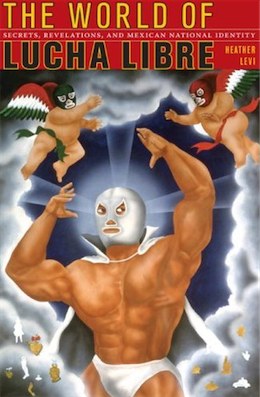
How do you study wrestling as an anthropologist? By becoming a wrestler yourself! Heather Levi’s book The World of Lucha Libre: Secrets, Revelations, and Mexican National Identity is featured in the new issue of American Ethnography on Lucha libre – Mexican wrestling.

A long excerpt from the second chapter can be read there – an example of good anthropological writing and according to Martin Høyem, editor of American Ethnography, the best ethnography of 2008.

I found some reviews of the book. According to the Los Angeles Times the book is actually “entertaining”. And it places wrestling in a political context:

“The success of figures like Superbarrio lay in the capacity of lucha libre to invoke a series of connections between sometimes contradictory domains: rural and urban, tradition and modernity, ritual and parody, machismo and feminism, politics and spectacle,” she writes. And in that tight sentence, Levi nails the appeal lucha libre has had among working-class Mexicans for decades. The various intersections she describes — class, sexuality, gender, xenophobia — are frequently lost on American audiences but make the sport so enjoyable.

“The World of Lucha Libre is one of the most interesting cultural studies of a key pastime in Mexico for many years” according to the Latin American Review of Books, while the Seattle newspaper The Stranger insists that “the first few chapters are pretty dry”. But this is to be expected: “Most anthropological writing simply isn’t for general audiences”.

But the academic nature of the text is something to be overcome:

Levi lays the entire world of lucha libre at the reader’s feet, from the adulation of the crowd to the metallic smell of blood in the ring, and the act of creativity, installing the personal narrative, is the reader’s job. This is excellent reportage on an endlessly fascinating subject, and Levi should be commended for standing back and letting the luchadores take center stage.

As in previous issues, American Ethnography is really interdisciplinary: It includes images from the Bolivian Lucha Libre scene, a review of a book by photographer Lourdes Grobet on the Mexican wrestling scene and a glimpse into American wrestling magazines from the 1970’s on “apartment wrestling”, where women – according to the magazine Sports Review Wrestling in 1978 “clash with the fury of primitive savages fighting for their gods!”

SEE ALSO:

New e-zine: American Ethnography

How do you study wrestling as an anthropologist? By becoming a wrestler yourself! Heather Levi's book The World of Lucha Libre: Secrets, Revelations, and Mexican National Identity is featured in the new issue of American Ethnography on Lucha libre -…

Read more