
search expand

What anthropologists can do about the decline in world food supply

The UN Food and Agriculture Organisation (FAO) warns ominously of an ‘unforeseen and unprecedented’ decline in world food supply. Anthropologists should contribute their expertise and knowledge to this emerging problem, Solomon H. Katz writes in the current issue of Anthropology Today (accessible for subscribers only).

First, anthropologists are often on the ground in remote places in societies which should, but often do not, figure in the mainstream of news stories about food problems. By the nature of our work, anthropologists are often close to the centre of the most desperate problems. We need to report these problems, especially through blogs, wikis and other instant communications within our means.

Second, anthropologists need to communicate beyond our own field about these food problems – with other scientific disciplines, the media, public policy advocates and elected officials who can help implement corrective change. The economic community has begun to focus on the micro level, which is consonant with the anthropologist’s study of problems at the local level.

In the case of food problems, for example, we can share our knowledge of how households, villages and communities are being affected and are coping with the rapidly increasing price of food throughout the world, and we can do so without delay.

Third, anthropologists need to be fully involved in building increased lines of communication that represent their collective perspectives more effectively, and can provide new insights for the media and policy-makers and help change the way societies think and act on problems of global concern.
(…)
Finally, we need to help develop a systematic way for government policy affecting the human food chain to be tested before it is adopted, in order to avoid unintended consequences.

The anthropologist is mentioning an online wiki web page and database of reports from the field as part of a new ‘world food problems’ wiki that he launched in December 2007 at http://wfmo.pbwiki.com Unfortunately, it seems he has taken it down already as it is password protected.

Katz has organized a panel entitled ‘Food to Fuel’ that I organized for the annual meeting of the American Anthropological Association in Washington in December 2007.

He writes that the food crisis is the result of the sharp rise in competition between food and fuel, together with the higher costs of energy to produce and transport foods, the increased use of maize as animal feed in China and elsewhere, and the rapid changes in climate and rainfall patterns:

Last winter, within a month of Felipe Calderón taking office as the new president of Mexico, there were so many protests over the rise in corn prices induced by the US corn-to-ethanol policy that Calderón had to reverse his free trade philosophy and immediately fix corn prices or risk further street violence during the opening days of his presidency.

Similarly, the wheat price crisis has sparked street protests in Italy and Russia. In Africa there have been major protests, and the real spectre of food shortages this year resulting from prohibitively high prices looms in at least 37 countries.

UPDATE: The Guardian (26.2.08) reports Feed the world? We are fighting a losing battle, UN admits

SEE ALSO:

Malaysia: Penan people threatened by demand for “green” bio-fuels

Dissertation: Survival in the Rainforest

Global Migrants For Climate Action – Migrants organize to fight climate change

Thesis: How does EU influence the life of farmers in Finland?

Anthropology of Food – one more Open Access Journal!

The UN Food and Agriculture Organisation (FAO) warns ominously of an ‘unforeseen and unprecedented’ decline in world food supply. Anthropologists should contribute their expertise and knowledge to this emerging problem, Solomon H. Katz writes in the current issue of Anthropology…
Read more

Open Access journal Antrocom now also in English / CFP

Last summer I’ve mentioned for the first time the Italian project Antrocom. Now, their journal consists of articles in English as well. I was asked to forward their Call for papers:

CALL FOR PAPERS

Antrocom – The Online Journal for Anthropology will accept and review submissions in Italian, English and French from any author, in any global locality. A body of international peers will review all submissions, with potential author revisions as recommended by reviewers, with the intent to achieve published papers that:

– Relate to the field of physical anthropology and cultural
anthropology (in its broader domain as a discipline);
– Represent new, previously unpublished work;
– Advance the state of knowledge of the field;
– are conformed to a high standard of scholarly presentation.

The deadline for the next number (volume 4, number 1, 2008) is April, 15th, 2008.

Articles can be sent to redazione [at] antrocom.net. Web site: http://www.antrocom.net

Last summer I've mentioned for the first time the Italian project Antrocom. Now, their journal consists of articles in English as well. I was asked to forward their Call for papers:

CALL FOR PAPERS

Antrocom - The Online Journal for Anthropology…

Read more

Sheds light on the collaboration between science and colonial administration in Naga ethnography

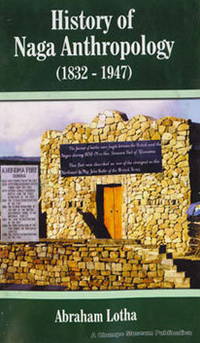
book cover

Paul Pimomo reviews in The Morung Express a book that might not only be interesting for area specialists. The History of Naga Anthropology is, he writes, “a valuable contribution to the broad area of postcolonial studies“.

In History of Naga Anthropology (1832-1947), Abraham Lotha sheds light into a darker part of the history of our discipline. Among other things, he documents the “intimate collaboration between science and colonial administration in the development of Naga ethnography”. The book is based on research for the master’s degree in Cultural Anthropology at Columbia University in New York:

Like other postcolonial studies of history, Abraham Lotha’s book places the first hundred years of writings about Nagas in the category of “colonial anthropology,” that is to say, ethnography by colonial administrators and others enabled by them in ways that directly or indirectly served the colonial functions of the powers that be.
(…)
British writing on Nagas up to 1866 portrayed them as ignorant, stubborn, and hostile to British interests. Several monographs came out of the military expeditions into Naga territory at this time, and shorter individual soldiers’ accounts of their experiences were published in the Journal of Asiatic Society of Bengal. These early articles, mostly in the manner of descriptive reports, sold the Nagas as exotic, wild, and savage tribes to their scholarly readers in India and in England.

The projects of the colonial administration and Christian missionaries resulted in that the Nagas were socialized into the ideology of colonial subordination and, after they left the Naga Hills, into the position of second-class citizens in postcolonial India, he writes.

>> read the whole review in The Morung Express

SEE ALSO:

Book review: An Anthropological history of the Adivasis of Bastar

An exhibition and a movie: The French, colonialism and the construction of “the other”

On Savage Minds: Debate on the Construction of Indigenous Culture by Anthropologists

Anthropology and Colonial Violence in West Papua

Rethinking Nordic Colonialism – Website Sheds Light Over Forgotten Past

“No wonder that anthropology is banished from universities in the ‘decolonized’ world”

book cover

Paul Pimomo reviews in The Morung Express a book that might not only be interesting for area specialists. The History of Naga Anthropology is, he writes, "a valuable contribution to the broad area of postcolonial studies".

In History of Naga…

Read more

Open Access: South Asia Multidisciplinary Academic Journal

Migration and Constructions of the Other is the topic of the first (and most recent) issue of the Open Access journal South Asia Multidisciplinary Academic Journal.

According to their self-description, the journal “seeks to ‘democratize’ research-based studies on South Asia by giving them a greater visibility through a free and worldwide access. It is the “first academic and peer-reviewed on-line journal devoted to social sciences studies on South Asia.” It covers studies in history, geography, anthropology, sociology, political science and economy.

The next issue (due in Spring 2008) will deal with the mobilization of ‘offended communities’ in South Asia.

>> visit the journal’s website

Migration and Constructions of the Other is the topic of the first (and most recent) issue of the Open Access journal South Asia Multidisciplinary Academic Journal.

According to their self-description, the journal "seeks to ‘democratize’ research-based studies on South Asia…

Read more

(updated) Danah Boyd on Open Access: “Boycott locked-down journals”

“This is the last article that I will publish to which the public cannot get access. I am boycotting locked-down journals and I’d like to ask other academics to do the same”, writes Danah Boyd on her blog:

On one hand, I’m excited to announce that my article “Facebook’s Privacy Trainwreck: Exposure, Invasion, and Social Convergence” has been published in Convergence 14(1) (special issue edited by Henry Jenkins and Mark Deuze).

On the other hand, I’m deeply depressed because I know that most of you will never read it. It is not because you aren’t interested (although many of you might not be), but because Sage is one of those archaic academic publishers who had decided to lock down its authors and their content behind heavy iron walls.

What’s the point of writing papers if no one can read them? The journals are “god-awful expensive and no one outside of a niche market knows what’s in them”, she writes:

Digital copies of the articles have intense DRM protection, often with expiration dates and restrictions on saving/copying/printing. Authors must sign contracts vowing not to put the articles or even drafts online. (Sage -allows- you to posts articles one year following publication.) Academic publishers try to restrict you from making copies for colleagues, let alone for classroom use.
(…)
The result? Academics are publishing to increasingly narrow audiences who will never read their material purely so that they can get the right credentials to keep their job. This is downright asinine. If scholars are publishing for audiences of zero, no wonder no one respects them.

This has to change, she writes. Scholars have a responsibility to make their work available as a public good.

She proposes:

  • Tenured Faculty and Industry Scholars: Publish only in open-access journals
  • Disciplinary associations: Help open-access journals gain traction
  • Tenure committees: Recognize alternate venues and help the universities follow
  • Young punk scholars: Publish only in open-access journals in protest, especially if you’re in a new field
  • All scholars: Start reviewing for open-access journals. Help make them respected
  • Universities: Support your faculty in creating open-access journals on your domains

>> read the whole post on her blog

UPDATE:

Anne Galloway does not think boycott is the way to go: “I fully support open-access scholarship, but find danah boyd’s recent post on boycotting “locked-down” journals naive at best, and offensive at worst”, she writes in her blog. Furthermore she think Danah Boyd “overstates the “lock-down”.”:

I’ve published articles with Sage and Taylor&Francis, and was able to publish almost identical draft versions here. All I did was hand-write that provision onto my contract before I signed it, and no one ever objected.

>> read the whole post by Anne Galloway

There are now more than twenty comments on Danah’s post, including by publishers, a very interesting discussion!

SEE ALSO:

A quick guide to selv-archiving for anthropologists (mainly USA/GB-related, it seems) by Kerim Friedman

Anthropology News February about Open Access Anthropology

2006 – The Year of Open Access Anthropology?

Why Open Access?

Open Access News

"This is the last article that I will publish to which the public cannot get access. I am boycotting locked-down journals and I'd like to ask other academics to do the same", writes Danah Boyd on her blog:

On one hand,…

Read more