
search expand

Why Siberian nomads cope so well with climate change

The tundra ecosystems in Siberia are vulnerable to both climate change and oil/gass drilling. Yet the Yamal-Nenets in West Siberia have shown remarkable resilience to these changes. “Free access to open space has been the key for success” says Bruce Forbes of the University of Lapland, Finland, Environmental Research Web reports.

Forbes and five colleagues from various disciplines (including anthropology) at the University of Joensuu, Finland, the Russian Academy of Sciences and the University of Cambridge, UK, have studied the Yamal-Nenets for more than four years. The research should not only help with plans for the Nenets’ future survival but could also offer tips for other communities.

The ability to roam freely enables people and animals to exploit or avoid a wide range of natural and manmade habitats. The Nenets responded to their changing environment by adjusting their migration routes and timing, avoiding disturbed and degraded areas, and developing new economic practices and social interaction, for example by trading with workers who have moved into gas villages in the area.

“Our work shows that local people have an important role to play, one that is every bit as useful and informative as that of the scientists and administrators charged with managing complex social-ecological systems”, Forbes says.

Around half of the Yamal Peninsula’s 10,000 Nenet people are herding reindeers. Average temperatures in the region have increased by 1–2 °C over the past 30 years. The area contains some of the largest known untapped gas deposits in the world.

>> read the whole story in Environmental Research Web

>> press release

Their findings were published as open access article in the Proceedings of the National Academy of Sciences, see High resilience in the Yamal-Nenets social–ecological system, West Siberian Arctic, Russia.

One of Forbes’ colleagues is anthropologist Florian Stammler. He has put several papers online, among others Arctic climate change discourse: the contrasting politics of research agendas in the West and Russia (together with Bruce C. Forbes), The Obshchina Movement in Yamal: Defending Territories to Build Identities? and the magazine article Siberia Caught between Collapse and Continuity (together with Patty Gray)

SEE ALSO:

Indigenous Russians Unite Against Oil and Gas Development

Cimate Change: Inuit leader wins environment prize

Climate Change: When is the Arctic no longer the Arctic?

“But We Are Still Native People” – Tad McIlwraith’s dissertation is online

Dissertation: Survival in the Rainforest

The tundra ecosystems in Siberia are vulnerable to both climate change and oil/gass drilling. Yet the Yamal-Nenets in West Siberia have shown remarkable resilience to these changes. "Free access to open space has been the key for success" says…

Read more

Exploring the honor culture of social media

How can businesses profit from social media? How does social media challenge what is regarded as “value” in the business world? Anthropologist Lene Pettersen discusses these and other questions in her paper “The impact of social media for business“.

Lene Pettersen, one of the few web2.0-anthropologists in Scandinavia, sent me this article that she previously has published on Slideshare

She writes:

‘Value’ in a strong economic sense is challenged by social media as a door opener for influence that the organizations should take seriously. (…) The market is a part of individual and collective projects where emotions and identities are expressed, and can therefore not be defined by monetary values alone (Olsen 2003). (…)
The virtual market isn’t a huge collection of passive consumers; it is represented by networks of people having meaningful dialogues and interaction with both each other and the businesses as such, and represents new ways of market power. (…) By mapping different social media applications that are used for interaction we will receive great insight of benefits from different social media tools, technology as such and give important knowledge of how social media can be used by companies and organizations for innovation.

For businesses to be successfull they have to establish a good reputation. She quotes anthropologist Tian Sørhaug who states that “we no longer can divide production from consumption, because it is difficult to separate the person and the product. In these online times we all are dependent on our reputation.”

Pettersen draws our attention to a kind of “honor culture” among bloggers and compares it to the Kula exchange:

In social media we can recognize how highly respected bloggers receive respect from others. In parallel to honor cultures, where public reputation is more important than one’s self esteem, bloggers achieve huge respect within their community (Pettersen 2009). Anette Weiner showed in her studies of the Trobriand people how transaction of the kula (a type of shell) with people’s kula network didn’t have a solely economic value, but that knowledge, high status, and even sorcery help kula players claim success and circulate their fame (Weiner 1988:156).

>> download the paper (pdf)

SEE ALSO:

The Internet Gift Culture

Mobile phone company Vodafone gets inspired by traditional Kula exchange system

Dissertation: Why kids embrace Facebook and MySpace

Ethnographic study: Social network sites are “virtual campfires”

Interview with Michael Wesch: How collaborative technologies change scholarship

How can businesses profit from social media? How does social media challenge what is regarded as "value" in the business world? Anthropologist Lene Pettersen discusses these and other questions in her paper "The impact of social media for business".

Lene Pettersen,…

Read more

Where shamans understand colonialism as sickness

“I am here to save the people, to cure the people. In the city they are all sick, they are all domesticated. The shaman has to go together with disease.”

Anthropologist Anders Burman talks to Don Carlos, an Aymara shaman in Bolivia. According to Don Carlos, people are ill from Colonialism and in need of a cure.

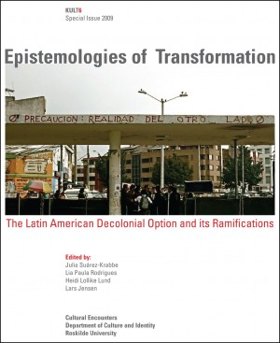
“In contemporary Bolivia, the concept Colonialism is used so frequently, and with such distinct connotations by such a diverse set of actors that it demands scrutiny”, the Swedish anthropologist writes in his paper Colonialism in Context An Aymara Reassessment of ‘Colonialism’, ‘Coloniality’ and the ‘Postcolonial World’ (pdf) that was published in the recent issue of KULT on postkolonial.dk.

Colonialism is according to Burman on the one hand considered a sickness and on the other hand the source of sickness. Most notions of illness held by Aymara shamans find their equivalents in notions of Colonialism.

As illness, as lived experience and as collective memory, Colonialism is still present in the Andes. To the indigenous peoples in Latin America it is a question of continuous Colonialism; the colonialists have not left. Although the Spanish colonial administration no longer holds power over their former indigenous subjects, Aymara people of the 21st century are subalternized and impoverished in a global system that still has colonial traits according to Burman.

Evo Morales’ victory at the polls in December 2005 did not change that, the researcher writes. There is an imminent risk of the new regime being “infected”.

>> read the whole paper

Burman has written a dissertation about this topic.

KULT is a postcolonial special issue series. It began in 2004 as the result of a desire to connect a series of discussion fields about postcolonial Denmark. The recent issue on Contemporary Latin American epistemologies has grown out of a network of Latin Americanists in Scandinavia and the Americas.

In one of the other papers in this issue, Madina Tlostanova and Walter Mignolo introduce what they call decolonial thinking, an approach that – they claim – differs from what postcolonial studies have been doing so far:

As a corridor between the academy and the Political Society, decolonial thinking is transdisciplinary (not inter-disciplinary), in the sense of going beyond the existing disciplines, of rejecting the “disciplinary decadence” (Gordon 2006) and aiming at un-disciplining knowledge (Walsh et. al 2002).

Decolonial thinking, in the academy, assumes the same or similar problems articulated in and by the “Political Society.” Knowledge is necessary to act in the political society. But this knowledge is no longer or necessarily produced in the academy. Living experiences generate knowledge to solve problems presented in everyday living. And this knowledge is generated in the process of transformation enacted in the “Political Society.”

Hence, decolonial thinking in the academy has a double role: a) to contribute to de-colonize knowledge and being, which means asking who is producing knowledge, why, when and what for; b) to join processes in the “Political Society” that are confronting and addressing similar issues in distinct spheres of society.

>> read the whole paper: Global Coloniality and the Decolonial Option

SEE ALSO:

Why was anthropologist and indigenous rights activist Miguel Ángel Gutiérrez Ávila beaten to death?

Rethinking Nordic Colonialism – Website Sheds Light Over Forgotten Past

Colonialism, Racism and The Five Major Challenges for Anthropology

New book explores female roots of shamanism

Bolivia: More and more indigenous influence on politics

Why anthropologists should politicize mental illnesses

Open Access to Indigenous Research in Norway

"I am here to save the people, to cure the people. In the city they are all sick, they are all domesticated. The shaman has to go together with disease."

Anthropologist Anders Burman talks to Don Carlos, an Aymara…

Read more

Two months free access to AAA journals!

From now on until the end of December, the American Anthropological Association (AAA) is offering free access to a large number of its journals.

Why not free all the time? asks Kerim Friedman. Good question. The AAA has often been criticized for its restrictive publishing policies.

But maybe things are changing. Here is a selection of journals with free access in november and december 2009. I’ve picked a sample article from the most recent issue as well. Very interesting stuff and many catchy titles! For the full list of journals, visit the AAA Blog

SEE ALSO:

Free access to the 25 most popular Anthrosource articles!

From now on until the end of December, the American Anthropological Association (AAA) is offering free access to a large number of its journals.

Why not free all the time? asks Kerim Friedman. Good question. The AAA has often been…

Read more

SSOAR – The first Social Science Open Access Repository is online

(via media/anthropology and Open Access Anthropology blog) Where can I publish my papers online? A few weeks ago, I wrote about ResearchGATE and other initiatives. Now, SSOAR – the Social Science Open Access Repository is online. It is according to Kerim Friedman from the Open Access Anthropology blog, “the first general Social Science Open Access repository we’ve found”.

The repository is multilingual with texts in English, Spanish, German, Polish and many other languages. There are already around 5000 papers available, around 84 of them are listed under Eth­nol­o­gy, Cul­tur­al An­thro­pol­o­gy, Eth­noso­ci­ol­o­gy (84), whille searching for anthropology gives 96 hits.

SSOAR’s goal is to provide free electronic access to journal article preprints and postprints. Master’s theses are not included here, it seems. You can deposit the following types of documents:

Copyright permitting, you can deposit in SSOAR all quality-assured scholarly contributions which have already been published or have been accepted for publication in journals, collective volumes or journal-like series.
Journal contributions include scholarly articles, reviews, interviews and conference proceedings. By collective volumes we mean all text compilations such as handbooks, conference readers or proceedings. Contributions such as research reports, discussion papers and working papers from, for example, institutes’ series or research networks can also be deposited in SSOAR, and are, indeed, becoming increasingly significant. Such contributions can be monographic in nature or comprise several documents. Actual monographs (books, dissertations) may also be deposited, ideally in full.

SSOAR is a German initiative, “operated jointly by the Center for Digital Systems, the Institute of Qualitative Research (both are part of the Freie Universitaet Berlin), and by GESIS – Leibniz Institute for the Social Sciences. The project is funded by the German Research Foundation (DFG).

Open Access Anthropology gives an overview over other repositories.

A few weeks ago, the Open Anthropology Cooperative (OAC) has launched the OAC Press

SEE ALSO:

Selv-archiving repositories: Is ResearchGate the solution?

essays.se: Open access to Swedish university papers

Open Access Anthropology in Africa – an introduction

Open access to all doctoral dissertations at Temple University

How can we create a more plural anthropological community?

(via media/anthropology and Open Access Anthropology blog) Where can I publish my papers online? A few weeks ago, I wrote about ResearchGATE and other initiatives. Now, SSOAR - the Social Science Open Access Repository is online. It…

Read more