search expand

Online: New book on the cultural significance of Free Software

cover

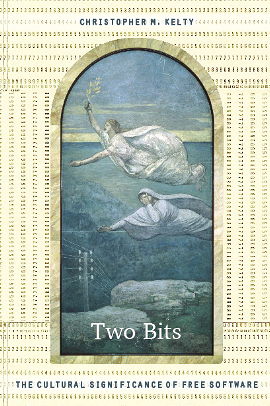
How has Free Software transformed not only software, but also music, film, science, and education? Anthropologist and Savage Minds blogger Christopher M. Kelty explores this question in his new book “Two bits” that now is “available for purchase, for download and for derivation and remixingas he writes.

A really web 2.0 book in other words. It is both available on paper (published by Duke University Press) and online – freely accessible. Both book, blog and wiki!

From the book description:

Drawing on ethnographic research that took him from an Internet healthcare start-up company in Boston to media labs in Berlin to young entrepreneurs in Bangalore, Kelty describes the technologies and the moral vision that binds together hackers, geeks, lawyers, and other Free Software advocates.
(…)
Kelty shows how these specific practices have reoriented the relations of power around the creation, dissemination, and authorization of all kinds of knowledge after the arrival of the Internet.

>> more information about the book

>> website of the book

SEE ALSO:

Why were they doing this work just to give it away for free? Thesis on Ubuntu Linux hackers

2006 – The Year of Open Access Anthropology?

The Internet Gift Culture

Ethnomusicologist uses website as an extension of the book

cover

How has Free Software transformed not only software, but also music, film, science, and education? Anthropologist and Savage Minds blogger Christopher M. Kelty explores this question in his new book "Two bits" that now is "available for purchase, for…

Read more

Lila Abu Lughod: “In Israel and Palestine we have an amazing opportunity”

cover

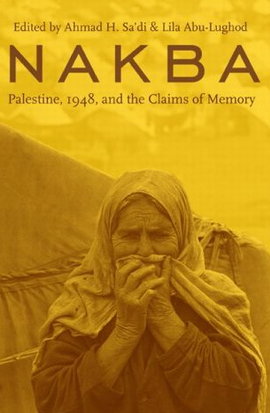
(via CultureMatters) While Israelis celebrate the 60th anniversary of their state’s founding, Palestinians around the world are mourning the “Nakba” – or “catastrophe” – that drove so many into exile. SPIEGEL ONLINE interviewed anthropologist Lila Abu-Lughod on the Nakba and today’s Palestine.

Together with Ahmad Sa’di, she published the book “Nakba: Palestine, 1948, and the Claims of Memory”. Abu-Lughod’s father was Palestinian.

“I don’t see the anniversary as a time of mourning but as an occasion for trying to get the world to listen to what really happened and to think about how this should shape our vision of a solution”, she says:

Palestinians and Israelis are tightly entangled. Any resolution must involve a recognition of the fact that Israel was founded on the expulsion of Palestinians. Then we can think and talk together about restitution, redress, compensation, or whatever it takes for a more just way forward. In Israel and Palestine we have an amazing opportunity — to think about changing history by considering a democratic state with a living future for everyone.

The number of those who actually lived through the Nakba decreases every year. The Nakba commemoration has spurred storytelling, the anthropologist says:

Dr. Rosemary Sayigh, who has been interviewing Palestinians about their experiences for decades, describes her work as a race against time. But Diana Allan, an anthropologist from Harvard who has been videotaping old men and women in the refugee camps all over Lebanon to create a Nakba Archive, would be the first to insist that though it is important to get these stories, it should not distract us from the contemporary problems Palestinians face, in Lebanon and elsewhere.

I have been following with interest, though, the way this particular Nakba commemoration has galvanized people and spurred storytelling: a good example is the series of “untold stories” on the Web site of the Institute for Middle East Understanding.

>> read the whole interview in SPIEGEL ONLINE

For information on her book on Nakba, see the Columbia University Press blog, The Institute for Middle East Understanding, This Week in Palestine and the review on H-Net.

SEE ALSO:

Lila Abu-Lughod: It’s time to give up the Western obsession with veiled Muslim women

New book by Lila Abu-Lughod: The Politics of Television in Egypt

Interview with Lila Abu-Lughod on women and Islam in the wake of the American war in Afghanistan (Asiasource)

Anthropologists on the Israel-Lebanon conflict

“Voices”: Anthropologist publishes e-book about Palestinian women

cover

(via CultureMatters) While Israelis celebrate the 60th anniversary of their state's founding, Palestinians around the world are mourning the "Nakba" - or "catastrophe" - that drove so many into exile. SPIEGEL ONLINE interviewed anthropologist Lila Abu-Lughod on the Nakba and…

Read more

Phd-Thesis: That’s why they embrace Islam

cover

Our fellow anthro-blogger Martijn de Koning was awarded his doctorate at the Free University of Amsterdam last week.

In his Ph.D. thesis he shows how Islam has become the most important frame of reference for Moroccan-Dutch youth to reflect upon who they are and what they want to be.

In the late 1990s, the general perception was that young muslims were turning away from their religion. But things went differently, he says in an interview with Radio Netherlands. Young Dutch Moroccans are increasingly turning to their religion.

According to Martijn de Koning this is a direct result of the current polarisation of the debate on Islam:

Even before 9/11 there was already an increase in interest for religion among young Moroccans. But once the debate on Islam flared up, their interest increased enormously. They were continually asked about their Muslim identity; not just by the media, but also by school mates and teachers and by people at their sports club. They started looking into Islam so that they could answer these questions.

These group of young Muslims searched for an identity with which they could distinguish themselves from Dutch society as well as from their parents:

They wanted a pure Islam, without compromise. Not an Islam that had been watered down because they happened to live in the Netherlands. Nor did they want an Islam peppered with Moroccan traditions.

The Islam they found was not the traditional type from Morocco. They found their answers on the Internet in the conservative, Saudi-Arabian version called Salafism, the anthropologist says:

It is a form of Islam with clear rules, which makes a clear distinction between good and evil. An Islam which is stricter and more orthodox than that of the older generation, but nevertheless seemed to provide better answers to their complicated lives in modern Dutch society.

>> read the whole story in Radio Netherlands

>> visit his blog (in both Dutch and English)

Interestingly, researchers in Norway came to similar conclusions, for example anthropologist Christine M. Jacobsen – see Doctoral thesis: Towards a transnational Islam and the culture historian Liv Bjørnhaug Johansen – see Moving toward a Cultureless Islam

cover

Our fellow anthro-blogger Martijn de Koning was awarded his doctorate at the Free University of Amsterdam last week.

In his Ph.D. thesis he shows how Islam has become the most important frame of reference for Moroccan-Dutch youth to reflect…

Read more

Anthropologist: “Decriminalize prostitution! It’s part of our culture”

cover

After her fieldwork in a brothel in Mexico, anthropologist Patty Kelly is convinced: Legalizing and regulating prostitution has its problems. But criminalization is worse. It’s time to decriminalize prostitution, she writes in The Los Angeles Times.

One reason: Prostitution is not terribly uncommon. It’s a part of “our” culture, and it’s not going away any time soon, she explains. I’m not sure if she means “American culture” or “human culture”. Her statistics are related to America: More than one in every 10 American adult males have paid for sex at some point in their lives. In 2005, about 84,000 people were arrested across the USA for prostitution-related offenses.

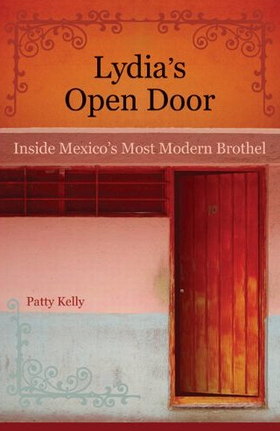
But it was during her one year fieldwork in a legal, state-regulated brothel in Mexico where she learned why legalizing is the way the way to go. She spent days and nights in close contact with the women who sold sexual services, with their clients and with government bureaucrats who ran the brothel. In Mexico, commercial sex is common, visible and, in one-third of the states, legal.

Saying that all sex workers are victims and all clients are demons is the easy way out, she writes:

Here’s what I learned: Most of the workers made some rational choice to be there, sometimes after a divorce, a bad breakup or an economic crisis, acute or chronic. Of the 140 women who worked at the Galactic Zone, as the brothel was called, only five had a pimp (and in each of those cases, they insisted the man was their boyfriend).

The women made their own hours, set their own rates and decided for themselves what sex acts they would perform. Some were happy with the job. (As Gabriela once told me: “You should have seen me before I started working here. I was so depressed.”) Others would’ve preferred to be doing other work, though the employment available to these women in Mexico (servants, factory workers) pays far less for longer hours.

At the Galactic Zone, good-looking clients were appreciated and sometimes resulted in boyfriends; the cheap, miserly and miserable ones were avoided, if possible.

To be sure, the brothel had its dangers: Sexually transmitted diseases and violence were occasionally a part of the picture. But overall, it was safer than the streets, due in part to police protection and condom distribution by government authorities.

Sweden’s 1998 criminalization of commercial sex has according to Kelly not protected the women at all. Prostitution continued, prices for sexual services dropped, clients were fewer but more often violent.

Kelly prefers New Zealand’s 2003 Prostitution Reform Act. The act, she writes, not only decriminalizes the practice but seeks to “safeguard the human rights of sex workers and protects them from exploitation, promotes the welfare and occupational health and safety of sex workers, is conducive to public health, [and] prohibits the use in prostitution of persons under 18 years of age.”

>> read the whole article in The Los Angeles Times

Patty Kelly is also the author of the book Lydia’s Open Door: Inside Mexico’s Most Modern Brothel

SEE ALSO:

An anthropologist on sex, love, AIDS and prostitution in a university campus in South Africa

cover

After her fieldwork in a brothel in Mexico, anthropologist Patty Kelly is convinced: Legalizing and regulating prostitution has its problems. But criminalization is worse. It's time to decriminalize prostitution, she writes in The Los Angeles Times.

One reason: Prostitution is…

Read more

The most compelling ethnographies

We’ve been into this topic a few times before, but this might be the longest list of good ethnographies. CultureMatters-blogger Lisa Wynn not only lists her own favorite books but also several ethnographies that are particularily popular with students.

She writes that she only can think of a small handful of ethnographies that have affected her in the way that a good novel can. This is her list:

– Evans-Pritchard: Witchcraft, Oracles, and Magic;
– Lila Abu-Lughod: Writing Women’s Worlds;
– Elizabeth Warnock Fernea: Guests of the Sheikh (not precisely an ethnography, more a memoir);
– Paul Willis: Learning to Labor;
– Philippe Bourgois: In Search of Respect;
– Amitav Ghosh: In an Antique Land;
– Joao Biehl: Vita;
– Levi-Strauss: Tristes Tropiques;
– Pierre Clastres: Chronicle of the Guayaki Indians.

She also reflects on some of her favorite examples of ethnographic fiction.

>> read the whole post on Culture Matters

UPDATE: For more suggestions and comments see the post on the blog Entertaining Research: Amitav Ghosh among most compelling ethnographies

SEE ALSO:

The Secret of Good Ethnographies – Engaging Anthropology Part III

Alex Golubs list on popular ethnographies

Good anthropological writing: “Nuclear Borderlands” and “Global Body Shopping”

Why is anthropological writing so boring? New issue of Anthropology Matters

We've been into this topic a few times before, but this might be the longest list of good ethnographies. CultureMatters-blogger Lisa Wynn not only lists her own favorite books but also several ethnographies that are particularily popular with students.

She…

Read more