
search expand

Phd-Thesis: That’s why they embrace Islam

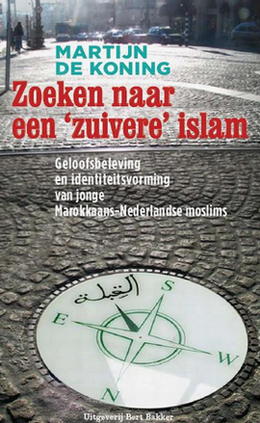
cover

Our fellow anthro-blogger Martijn de Koning was awarded his doctorate at the Free University of Amsterdam last week.

In his Ph.D. thesis he shows how Islam has become the most important frame of reference for Moroccan-Dutch youth to reflect upon who they are and what they want to be.

In the late 1990s, the general perception was that young muslims were turning away from their religion. But things went differently, he says in an interview with Radio Netherlands. Young Dutch Moroccans are increasingly turning to their religion.

According to Martijn de Koning this is a direct result of the current polarisation of the debate on Islam:

Even before 9/11 there was already an increase in interest for religion among young Moroccans. But once the debate on Islam flared up, their interest increased enormously. They were continually asked about their Muslim identity; not just by the media, but also by school mates and teachers and by people at their sports club. They started looking into Islam so that they could answer these questions.

These group of young Muslims searched for an identity with which they could distinguish themselves from Dutch society as well as from their parents:

They wanted a pure Islam, without compromise. Not an Islam that had been watered down because they happened to live in the Netherlands. Nor did they want an Islam peppered with Moroccan traditions.

The Islam they found was not the traditional type from Morocco. They found their answers on the Internet in the conservative, Saudi-Arabian version called Salafism, the anthropologist says:

It is a form of Islam with clear rules, which makes a clear distinction between good and evil. An Islam which is stricter and more orthodox than that of the older generation, but nevertheless seemed to provide better answers to their complicated lives in modern Dutch society.

>> read the whole story in Radio Netherlands

>> visit his blog (in both Dutch and English)

Interestingly, researchers in Norway came to similar conclusions, for example anthropologist Christine M. Jacobsen – see Doctoral thesis: Towards a transnational Islam and the culture historian Liv Bjørnhaug Johansen – see Moving toward a Cultureless Islam

cover

Our fellow anthro-blogger Martijn de Koning was awarded his doctorate at the Free University of Amsterdam last week.

In his Ph.D. thesis he shows how Islam has become the most important frame of reference for Moroccan-Dutch youth to reflect…
Read more

Obituary: Anthropologist Germaine Tillion dies at the age of 100

tillion

“Few students of anthropology probably can tell you who Germaine is despite the fact that she has been one of the anthropologists who have contributed not only to the understanding of the Mediterranean region, particularly North Africa, but also to the freedom of Europe from the nightmare of fascism and Nazism”, anthropologist Gabriele Marranci writes in his post In memory of the anthropologist Germaine Tillion.

Germaine Tillion died on Saturday at the age of 100. Her resistance against injustice and inhuman treatment, Marranci writes, never ceased despite her age. Recently, starting from her experience in Algeria under the French occupation, she had condemned the use of torture in Iraq and the ‘CIA secret prisons’ as part of the Bush administration’s so-called ‘war against terror’.

>> read the whole obituary

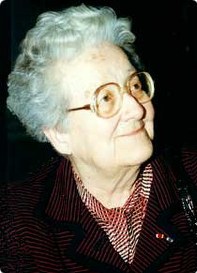
See also the Reuters article French resistance hero Germaine Tillion dies at 100 and Tillion’s website (in French) where also the picture is taken from.

tillion

"Few students of anthropology probably can tell you who Germaine is despite the fact that she has been one of the anthropologists who have contributed not only to the understanding of the Mediterranean region, particularly North Africa, but also to…

Read more

Transforming the Anthropology of Childhood – Anthropology News April

Has Anthropology News gone open-access? 14 articles of the new issue are online. Anthropology News examines new ways of thinking about childhood and children’s roles and experiences. Methodological challenges of anthropological work with and of children are addressed as well.

We can read articles on children and climate change and disasters, on a successful antipoverty program for working poor adults and their children where anthropologists were involved, children as anthropologists, on children’s rights and much more.

>> overview over all articles

screenshot

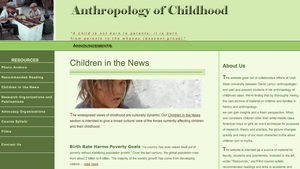
In this issue, we also are informed about the existence of a website called Anthropology of Childhood that grew out of collaborative efforts at Utah State University between anthropologist David Lancy and past and present students in his anthropology of childhood class.

SEE ALSO:

“We want children to be their own ethnographers”

Ethnographic study: Why the education system fails white working-class children

Anthropologist calls for a greater appreciation of child labor

Technologies of the Childhood Imagination- new text by anthropologist Mizuko Ito

Play as research method – new Anthropology Matters is out

screenshot

Has Anthropology News gone open-access? 14 articles of the new issue are online. Anthropology News examines new ways of thinking about childhood and children's roles and experiences. Methodological challenges of anthropological work with and of children are addressed as well.

We…

Read more

Marianne Gullestad has passed away

Yesterday, one of Norway’s most important anthropologists has passed away: Marianne Gullestad. I got to know it just a few hours ago, and MaterialWorld-blogger Daniel Miller has already made a post about her and has re-published the introduction he wrote to Gullestads book Kitchen Table Society:

Indeed, what made this such an important work when it first came out was, rather, that it was in many respects a conventional ethnography – though of the type of population that, on the whole, had not been the subject of conventional ethnographies. The topic was working class women in the town of Bergen on the West coast of Norway.

What made this special was that there was nothing special about these people. They were not being studied because they were a problem that academics were supposed to shed light on, such as drug-takers or the unemployed. They represented the neglected topic of the merely ordinary.

>> read the whole post “Marianne Gullestad (1946-2008)”

I have written severa posts on her work, one in English about her “best of” book Plausible Prejudice: Everyday Experiences and Social Images of Nation, Culture and Race. To understand the problems of the world today, we need to “decolonize anthropological knowledge”, she writes and lits five major challenges for the discipline of anthropology >> read the whole post “The Five Major Challenges for Anthropology”

Several papers by her are available online:

Marianne Gullestad: Blind Slaves of our Prejudices: Debating ‘Culture’ and ‘Race’ in Norway

Marianne Gullestad: Normalising racial boundaries. The Norwegian dispute about the term ‘neger’

Marianne Gullestad: Mohammed Atta and I. Identification, discrimination and the formation of sleepers

Marianne Gullestad: Invisible Fences: Egalitarianism, nationalism and racism

Yesterday, one of Norway's most important anthropologists has passed away: Marianne Gullestad. I got to know it just a few hours ago, and MaterialWorld-blogger Daniel Miller has already made a post about her and has re-published the introduction he wrote…

Read more

First issue of open access journal “After Culture” is online

The first issue of “After Culture – Emergent Anthropologies” that was planned for release in September 2006 has finally been published, Savage Minds reports.

The journal is edited by anthropologist Matthew Wolf-Meyer . In his editorial he explains that After Culture is intended as international, open access, and run primarily by graduate students. One of the central issues for the journal is: How are we to explain the worlds we interact with and perceive when “culture” as an explanatory concept, as a causal force, had been debunked?

In the first issue we find among others an interview with George Marcus:

In the interview, Marcus reviews the common pitfalls of students’ first projects and offers his thoughts towards new framings of research design that can evolve out of “research imaginaries.” These new framings expose the tensions between the opportunities and pressures of collaboration in the field and older, simpler technologies of individual knowing. They also open the door to searching for critical data, challenging well-worn fieldwork tropes, and preparing for the reception of one’s work.

>> After Culture Volume 1

SEE ALSO:

Anpere – New Open Access Anthropology Journal

New Proposals – New Open Access Journal

New journal: “Radical Anthropology” with David Graeber

Omertaa – Open access journal for Applied Anthropology

2006 – The Year of Open Access Anthropology?

American Anthropological Association opposes Open Access to Journal Articles

The first issue of "After Culture - Emergent Anthropologies" that was planned for release in September 2006 has finally been published, Savage Minds reports.

The journal is edited by anthropologist Matthew Wolf-Meyer . In his editorial he explains that After Culture…

Read more