search expand

Anthropologist Paul Bohannan Dies at 87

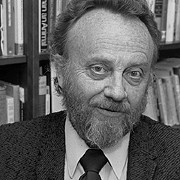
Paul Bohannan, the anthropologist who was known for his research on the Tiv culture of Nigeria (especially the economic spheres) died July 13. He was 87. Later, Bohannan studied U.S. culture, particularly family life and divorce among the middle class.

>> Orbituary in the Los Angeles Times

>> Orbituary by University of Southern California

There’s no Wikipedia entry yet about Paul Bohannan

Paul Bohannan, the anthropologist who was known for his research on the Tiv culture of Nigeria (especially the economic spheres) died July 13. He was 87. Later, Bohannan studied U.S. culture, particularly family life and divorce among the…

Read more

Cultures of Consumption: Re-thinking the relationship between consumer and citizen

Inspiring research contradicts journalistic and academic presumptions. It seems that the multidisciplinary research program Cultures of Consumption has produced inspiring papers. Anthropologist Daniel Miller gives us a summary of a public presentation of the research results on the blog Material World:

As usual in such programme the highlights came from research that contradicts journalistic and academic presumptions. For example we heard evidence that international retailing firms find that they have to raise their standards to meet Chinese consumers who are more demanding than those in other areas. Another paper demonstrated that people have extended family meals in the UK just as much now as in the 1970s (though migrating from dinner table to kitchen table) and that in terms of food behaviour generally there is no evidence for global convergence e.g. becoming more like the US.

>> read the whole post

The research project has a great website. The snapshops from the projects provide reader-friendly summaries. Lots of working papers can be downloaded.

Inspiring research contradicts journalistic and academic presumptions. It seems that the multidisciplinary research program Cultures of Consumption has produced inspiring papers. Anthropologist Daniel Miller gives us a summary of a public presentation of the research results on the blog Material…

Read more

Obituary: Anthropologist Priscilla Reining Broke Ground on AIDS

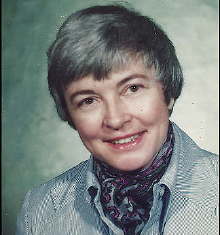
Anthropologist Reining died July 19 at the age of 84. “Anthropologist Broke Ground on AIDS, Satellite Mapping”, writes the Washington Post in an orbituary.

Last winter I wrote about anthropological studies that showed that male circumcision reduces the risk of HIV infection. But Reining had researched this topic already 18 years ago:

In a 1989 study published in Current Science with three co-authors, Reining spelled out the unmistakable correlation: Uncircumcised African men were 86 percent more likely to get the AIDS virus than those who had been circumcised. Her findings held true across different regions, ethnic groups and religious faiths in Africa.

At first, her study was ignored or dismissed. Some African peoples had taboos against circumcision, and many scientists couldn’t believe that such a simple procedure could produce such startling results.

(…)

Yet study after study — there have now been more than 60 — supported Reining’s initial findings. She was interviewed for a BBC documentary in 2000, and one-time skeptics were convinced by years of mounting evidence that she had been right all along.

>> read the whole article in the Washington Post

SEE ALSO:

Male circumcision prevents AIDS?

“There’s no AIDS here because men and women are equal”

AIDS:”Traditional healers are an untapped resource of great potential”

Cultural values and the spreading of AIDS in Africa

AIDS and Anthropology – Papers by the AIDS and Anthropology Working Group

Anthropologist Reining died July 19 at the age of 84. "Anthropologist Broke Ground on AIDS, Satellite Mapping", writes the Washington Post in an orbituary.

Last winter I wrote about anthropological studies that showed that male circumcision reduces the risk of…

Read more

“To know what’s happening around the world, you have to study the knowledge of local people”

Recently, we cound find a portrait of anthropologist Melissa Leach in the Guardian. At the age of 35, Leach became professor of the Institute of Development Studies at Sussex University. Now, at 42 and proficient in four African languages, she has been made director of a new global research hub known as the Steps centre (social, technological and environmental pathways to sustainability).

Her research has consistently challenged public policy and the stance taken by government authorities, the Guardian writes:

In the early 1990s, when Leach was a PhD student at the School of Oriental and African Studies at the University of London, she went to Guinea in west Africa with Fairhead, then her research partner.

The area was widely assumed to be experiencing a deforestation crisis, and experts held local villagers responsible. Leach, Fairhead and a Guinean researcher discovered – by talking to the villagers, researching the area’s history and “viewing things through an anthropological lens” – that the opposite was true. The forest was in fact growing, because farmers had worked out how to turn savannah into forest.

Leach and her colleagues had shown how experts can reach wildly wrong conclusions if local knowledge and history are not taken into account. Their findings became a book, Misreading the African Landscape, and a film, Second Nature: Building Forests in West Africa’s Savannahs. A decade later, they are still being used to illustrate the power of anthropological methods.

Her new centre opened in June and hopes to develop a new approach to understanding why the gap between the poorest and the richest is growing, and to doing something about it. It promises to question the “assumption that the world is stable, predictable and knowable through a single form of knowledge that assumes one size fits all”. “We are about producing scholarly research, and playing a public and intellectual role.”

At the Steps centre, there are 18 academics representing disciplines ranging from anthropology to ecology to medicine. Academic and policy debates, she says to the Guardian, are compartmentalised into areas as agriculture or health. Rarely do the different disciplines manage to speak to one another. “We urgently need new, interdisciplinary approaches to understanding and addressing situations that combine an understanding of social, technological and environmental processes.”

>> read the whole story in the Guardian

There are already several papers to download at the website of the Steps centre.

And the centre has of course its own blog “The crossing”

Leach has been interviewed by the Guardian before, see Ground rules for research. Technology won’t help developing countries if it is not tailored to local needs and Steps towards better development.

I also found an older paper:

James Fairhead and Melissa Leach: Webs of power: forest loss in Guinea

SEE ALSO:

Primatologists go cultural – New issue of Ecological and Environmental Anthropology

How to survive in a desert? On Aboriginals’ knowledge of the groundwater system

Thailand: Local wisdom protects hometown from the onslaught of globalisation

Culture and Environment – New issue of Pro Ethnologica is online

Collaborative Ethnography: Luke Eric Lassiter Receives Margaret Mead Anthropology Award

Teamwork, Not Rivalry, Marks New Era in Research

Recently, we cound find a portrait of anthropologist Melissa Leach in the Guardian. At the age of 35, Leach became professor of the Institute of Development Studies at Sussex University. Now, at 42 and proficient in four African languages, she…

Read more

Keith Hart is blogging

banner memory bank

Economic anthropologist Keith Hart has upgraded his website The Memory Bank. Now it looks more like a blog and produces a RSS-feed so it’s easier to follow. Apart from his blog posts, his book on the anthropology of money is online and many papers.

banner memory bank

Economic anthropologist Keith Hart has upgraded his website The Memory Bank. Now it looks more like a blog and produces a RSS-feed so it's easier to follow. Apart from his blog posts, his book on the anthropology of money is…

Read more