
search expand

“A well-informed critique of wartime anthropology for the military”

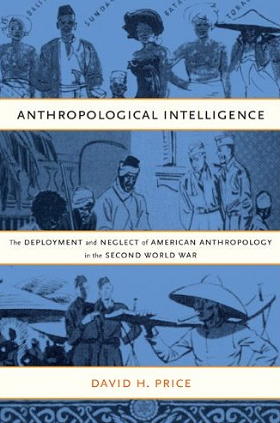
cover Approximately half of all anthropologists in the United States contributed their expertise to the World War II effort. In his new book Anthropological Intelligence: The Deployment and Neglect of American Anthropology in the Second World War, anthropologist David Price explores the wide range of roles they played through dozens of accounts profiling their work.

In a review in Anthropological Quarterly that today was published in Red Orbit, Roberto J Gonzalez writes:

Price’s work reveals that even in a “good war” like WWII, anthropologists often stood on ethically shaky ground when working for military and intelligence agencies, and some of them came to regret the long- term consequences of their participation.

In addition, the book reveals that the during the war, military officials had a tendency of “selectively ignoring and selectively commandeering social scientists’ recommendations” (p. 198). All too often, anthropologists had little impact on policy making and functioned as cogs in large bureaucracies with clearly established goals.

Anthropologists were involved in many doubtful projects. But only “few anthropologists had second thoughts about the ethics of applying anthropology to warfare” according to Price’s book.

The Office of War Information employed nearly a dozen anthropologists, who among other things designed propaganda custom made for Japanese audiences for the purpose of convincing them to surrender.

(…)

Still others were recruited into the Office of Strategic Services (established in 1942), a spy agency that was the precursor to the CIA. For example, Gregory Bateson carried out clandestine missions in South Asia; Carleton Coon used his anthropological knowledge to train assassins and kidnappers in North Africa

(…)

Among the most shocking sections is a description of “social engineers” such as Henry Field (p. 127). Field and several other anthropologists were deeply involved in the “M Project” initiated by President Roosevelt in 1942. The goal was to search the globe for regions where millions of wartime refugees could be resettled.

Declassified documents reveal that “library bound bureaucrats [were] designing contingency plans to move tens of millions of people thousands of miles away from their native lands. Field and his staff appear[ed] comfortable planning to move inventoried people about the globe like fungible commodities” (p. 126).

Even more disconcerting is that fact that “in almost every case, the peoples identified for relocation were victims of the aggression of others (e.g., the Roma, Jews, etc.), as if the reward of being victimized was being moved so that the aggressor could live in peace” (p. 127).

Price concludes that anthropologists’ efforts might have helped defeat the forces of fascism. But at the same time, they unleashed other forces that could potentially be used for harm.

Gonzales has written a quite enthusiastic review. Price’s book is an “extraordinarily powerful and well-informed critique of wartime anthropology for the military”, he writes.

When I’m not very comfortable with the review, it’s because of the connections between the two anthropologists. Gonzales and Price are among the founding members of the Network of Concerned Anthropologists and have written several texts together, i.e. When Anthropologists Become Counter-Insurgents

>> read the whole review

There is also a short review in The Olympian

David Price seems to be a fan of open access anthropology. He has put online lots of articles, including about World War I & II and Anthropology

SEE ALSO:

Cooperation between the Pentagon and anthropologists a fiasco?

More and more anthropologists are recruited to service military operations

The dangerous militarisation of anthropology

Anthropology and CIA: “We need more awareness of the political nature and uses of our work”

Protests against British research council: “Recruits anthropologists for spying on muslims”

American Anthropologists Stand Up Against Torture and the Occupation of Iraq

cover

Approximately half of all anthropologists in the United States contributed their expertise to the World War II effort. In his new book Anthropological Intelligence: The Deployment and Neglect of American Anthropology in the Second World War, anthropologist David Price explores…
Read more

Anthropologist: Al-Qaeda uses dreams to justify violence

Militant jihadists are inspired by their night dreams according to a study by a social anthropologist Iain Edgar, according to Malaysia Sun.

The researcher interviewed individuals in the UK, Pakistan, Northern Cyprus and Turkey to identify the key features of the inspirational night dream. He also reviewed transcripts including that of Osama Bin Laden, who has spoken of the night dream in the context of his concern that “the secret [of the 9/11 attacks] would be revealed if everyone starts seeing it in their dreams.”

According to Iain Edgar, dreams were interpreted to justify violence and legitimise actions. At the Cheltenham Science Festival on the cultural significance of sleeping and dreaming, Edgar said:

Islam is probably the largest night dream culture in the world today. The night dream is thought to offer a way to metaphysical and divinatory knowledge, to be a practical alternative and accessible source of inspiration and guidance, to offer clarity concerning action in this world.

Even if reported jihadist dream narratives are fabricated, the fact that Muslims often believe them and are mobilized to jihad partly on their account is of significance”.

Overall, how Moslems, and people in general, understand their night dreams is a powerful tool in assessing their worldview and implicit key motivations.

>> read the whole story

Iain Edgar has studied the relationship between night dreams and culture, between dream imagery and human behaviour for twenty-five years. He writes more about his dream research in the text “Encountering the ‘true dream’ in Islam: a Journey to Turkey and Pakistan” (pdf)

He has also written a text about Anthropology and the dream

Robert Fisk has commented on his research in the Independent, see his article Visions that come to men as they sleep

SEE ALSO:

Extremism: “Authorities -and not Imams – can make the situation worse”

Protests against British research council: “Recruits anthropologists for spying on muslims”

Selected quotes from “On Suicide Bombing” by Talal Asad

Conflict Resolution and Anthropology: Why more scholarship on violence than on peace?

Militant jihadists are inspired by their night dreams according to a study by a social anthropologist Iain Edgar, according to Malaysia Sun.

The researcher interviewed individuals in the UK, Pakistan, Northern Cyprus and Turkey to identify the key features of the…

Read more

Lila Abu Lughod: “In Israel and Palestine we have an amazing opportunity”

cover

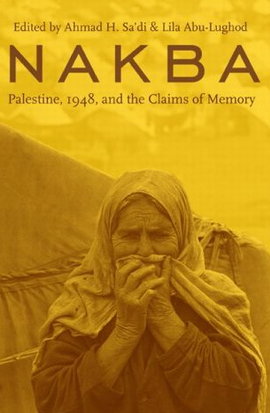
(via CultureMatters) While Israelis celebrate the 60th anniversary of their state’s founding, Palestinians around the world are mourning the “Nakba” – or “catastrophe” – that drove so many into exile. SPIEGEL ONLINE interviewed anthropologist Lila Abu-Lughod on the Nakba and today’s Palestine.

Together with Ahmad Sa’di, she published the book “Nakba: Palestine, 1948, and the Claims of Memory”. Abu-Lughod’s father was Palestinian.

“I don’t see the anniversary as a time of mourning but as an occasion for trying to get the world to listen to what really happened and to think about how this should shape our vision of a solution”, she says:

Palestinians and Israelis are tightly entangled. Any resolution must involve a recognition of the fact that Israel was founded on the expulsion of Palestinians. Then we can think and talk together about restitution, redress, compensation, or whatever it takes for a more just way forward. In Israel and Palestine we have an amazing opportunity — to think about changing history by considering a democratic state with a living future for everyone.

The number of those who actually lived through the Nakba decreases every year. The Nakba commemoration has spurred storytelling, the anthropologist says:

Dr. Rosemary Sayigh, who has been interviewing Palestinians about their experiences for decades, describes her work as a race against time. But Diana Allan, an anthropologist from Harvard who has been videotaping old men and women in the refugee camps all over Lebanon to create a Nakba Archive, would be the first to insist that though it is important to get these stories, it should not distract us from the contemporary problems Palestinians face, in Lebanon and elsewhere.

I have been following with interest, though, the way this particular Nakba commemoration has galvanized people and spurred storytelling: a good example is the series of “untold stories” on the Web site of the Institute for Middle East Understanding.

>> read the whole interview in SPIEGEL ONLINE

For information on her book on Nakba, see the Columbia University Press blog, The Institute for Middle East Understanding, This Week in Palestine and the review on H-Net.

SEE ALSO:

Lila Abu-Lughod: It’s time to give up the Western obsession with veiled Muslim women

New book by Lila Abu-Lughod: The Politics of Television in Egypt

Interview with Lila Abu-Lughod on women and Islam in the wake of the American war in Afghanistan (Asiasource)

Anthropologists on the Israel-Lebanon conflict

“Voices”: Anthropologist publishes e-book about Palestinian women

cover

(via CultureMatters) While Israelis celebrate the 60th anniversary of their state's founding, Palestinians around the world are mourning the "Nakba" - or "catastrophe" - that drove so many into exile. SPIEGEL ONLINE interviewed anthropologist Lila Abu-Lughod on the Nakba and…

Read more

“Racist” Buddhist monks hope for “ethnically clean” Tibet?

In his post Not only freedom: the dark ethnic side of the Tibetan Buddhist revolt, anthropologist Gabriele Marranci challenges mainstream images of Tibetans as peaceful and writes about Tibetan racism, ethno-nationalistic dreams, and attacks against muslims in Tibet.

Both the mass media, academics, and even anthropologists specialised in Tibetan Buddhism, have hidden what Marranci calls the ‘dark ethnic side’ of the revolt.

The Muslims in Tibet have been the target of Buddhist Tibetan violence for some time now, especially since 9/11. During the recent protests in Tibet there were anti-muslim attacks:

The mosque in Lhasa was burnt and destroyed, shops and the possessions of Muslim Tibetans smashed, a family burned alive in their own shop, terror and terrorism have affected this community because of a pernicious form of ethnic (Buddhist) nationalism

Marranci points to the paper Close Encounters of an Inner Asian Kind: Tibetan-Muslim co-existence and conflict in Tibet past and present by Andrew Fischer. According to Fischer, the tensions are primarily the cause of ‘economic’ differences and opportunities:

During the 1990s Ethnic Tibetan Buddhist started to fear that the economic success of Muslim Tibetans (particularly their restaurants and shops), would have undermined the economic, and so social, status of the Buddhist Tibetans. The Buddhist monks began a campaign against the economic activities of Tibetan Muslims, which epitomised in the 2003 boycott of Muslims’ businesses and saw also violent actions against innocent Muslim Hui families

Marranci writes:

Since the beginning of the revolt in March, demonstrations against China are held in all those countries through which the Olympic torch is passing. From the politicians, to the public, from Hollywood to Bollywood, from the scholars (with few exceptions) to the students, from the Trade Unions to the Industrial associations: all show indignation against the ‘oppression of the Chinese government’. Yet they ignore the dark side of this ‘revolt’ which is not so different from that in 2003.
(…)
Meanwhile monks and lamas are just stoking the fire in the hope of not just a free Tibet but also an ethnically clean one!

>> read the whole post on Marranci’s blog

SEE ALSO:

The special thing about the Tibet protests

In his post Not only freedom: the dark ethnic side of the Tibetan Buddhist revolt, anthropologist Gabriele Marranci challenges mainstream images of Tibetans as peaceful and writes about Tibetan racism, ethno-nationalistic dreams, and attacks against muslims in Tibet.

Both the mass…

Read more

The last days of cheap oil and what anthropologists can do about it

Oil is vital to our growth economy. Yet, our need for continued access to fossil fuels drives many of today’s conflicts. And we are in the last days of cheap oil and need alternatives. In his guest editorial in the new issue of Anthropology Today (subscription required unfortunately), Thomas Love encourages anthropologists to examine the complex relationship between our lives and fossil fuels.

What are the consequenes of rising oil prices? Rising energy prices may prolong availability for those who can afford it, but will will cause uneven economic development and contribute to the deterioration of labour conditions in sweatshop economies, he writes.

A quick search reveals following news: Rwanda: High Oil Prices Make Essential Commodities Costly (allAfrica 28.3.08), Higher petrol costs ‘act like a tax on consumption’ (CNN, 7.8.06) Food prices are rising worldwide. Weather, oil costs among factors (Boston Globe 30.3.08), Oil prices hit hard on Asia’s poor. UNDP report ranks countries according to a new Oil Price Vulnerability Index (UNDP 25.10.07), and “What about the poor?”, askes the Energy report (1.8.07).

Thomas Love proposes following research questions:

How does this crisis resemble previous ones? What metaphors and symbols do people use to make sense of it all? To what discursive structures will people turn to make sense of the potential unravelling of their worlds? (…) How has the fossil-fuelled growth system already affected the lives of people in producing areas?
(…)
We need cross-cultural perspectives and commitment to ethnography to understand how such large-scale forces play out on the ground in the everyday lives of ordinary people. Detailed grasp of the non-fossil-fuelled ways of living of pre- and non-industrial peoples will convey to interested publics and policy-makers alternative ways of organizing human society. We can help understand how humans might manage to power down without precipitating collapse.

SEE ALSO:

What anthropologists can do about the decline in world food supply

Malaysia: Penan people threatened by demand for “green” bio-fuels

Dissertation: Survival in the Rainforest

Arctic refuge saved from oil drillers – Inuit divided

Indigenous Russians Unite Against Oil and Gas Development

Long battle between Argentine oil company and Ecuadorian indigenous community

A Solar power equipped school as gift to the Maasai: Good or bad?

Oil is vital to our growth economy. Yet, our need for continued access to fossil fuels drives many of today's conflicts. And we are in the last days of cheap oil and need alternatives. In his guest editorial in…

Read more