search expand

How racist is American anthropology?

Why does anthropology tend to focus on “exotic others”? Why this obsession with Africa? How come calls by well-known anthropologists such as Paul Rabinow to “anthropologize the West seemed to have not brought forth much fruit? How racist is American anthropology?

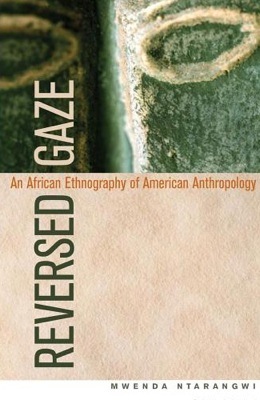
Kenyan anthropologist Mwenda Ntarangwi discusses those and other questions in his new book Reversed Gaze. An African Ethnography of American Anthropology.

Yes, Ntarangwi has conducted an anthropological study of American anthropology! An important undertaking. He has studied textbooks, ethnographies, coursework, professional meetings, and feedback from colleagues and mentors. He “reverses the gaze”, he stresses: Whereas Western anthropologists often study non-Western cultures, he studies “the Western culture of anthropology”.

He is especially interested in “the cultural and racial biases that shape anthropological study in general”.

In the preface and introduction he writes:

If anthropology truly begins at home as Malinowski states, how come, as I had thus far observed, anthropology tended to focus on the “exotic”? How come only a small percentage of fieldwork and scholarship by Western anthropologists focused on their own cultures, and when they did it was among individuals and communities on the peripheries, their own “exotics” such as those in extreme poverty, in gangs, ad others outside mainstream culture? (…)

This book is a personal journey into the heart of anthropology; representing my own pathways as an African student entering American higher education in the early 1990s that I knew very little about. It is a story about my initial entry into an American academic space very different from my own experience in Kenya, where we followed a British system of education.

It is also a story hemmed within a specific discourse and views about anthropology that can be best represented by remarks from fellow graduate students who wondered what i was doing in a “racist” discipline. (…) Troubled by this label, I consciously embarked on a journey to find more about the discipline.

He critiques dominant tenets of reflexivity, where issues of representation in his opinion are reduced to anthropologists’ writing style, methodological assumptions, and fieldwork locations. Inherent power differences that make it easier for anthropologists to study other people (“studying down”) than to study themselves (“studying up”) are rendered invisible.

Ntarangwi seeks to contribute to the process of “liberating the discipline from the constraints of its colonial legacy and post- or neocolonial predicament”. As long as the bulk of anthropological scholarship comes from Europe and North America and focuses on studying other cultures than their own, the power differentials attendant in anthropology today will endure.

I have just starting to read and took among others a short look at the chapter about the annual meetings of the American Anthropological Association (AAA).

“I believe it is at the AAA meetings that the anthropological ritual of what we do as anthropologists is best performed”, he writes:

Just as America has become an economic and political empire, American anthropology has consolidated a lot of power and in the process has peripheralized other anthropologies, forcing them either to respond to its whims and hegemony or to lose their international presence and appeal. The American Anthropological Association (AAA), I argue, is an important cultural phenomenon that begs for an ethnographic analysis.

It was in 2002, four years after his graduation that Mwenda Ntarangwi attended his first AAA-meeting. It was held in New Orleans. Already at the airport, he realises it is easy to spot anthropologists:

They were dressed casually, many were reading papers, and majority wore some exotic piece of jewelry or clothing that symbolized their field site – either a bracelet from Mexico (…), a necklace from a community in Africa, a tie-dyed shirt, or a multicolored scarf.

His observations from the different sessions he attended remind me of my own impressions: “Conference papers were written to make the presenters sound more profound rather than to communicate ideas”, he writes.

But there were interesting panels as well, among others about “marginalization and exclusion of certain scholars and scholarship on the basis of their race”. There were, he writes, “discussions of how Haitian anthropologists challenged the notion of race but were never “knighted”, as was Franz Boas, simply because they were Black”.

He also attended sessions where the speakers were using data collected ten or twenty years before and yet were speaking of the locals as if representing contemporary practices.

Ntarangwi went to the 2007 annual meeting as well. He was very much interested in seeing how well the meeting itself reflected in its theme “Inclusion, Collaboration, and Engagement.”

I’ll write about it next time. I’ll take the book with me on my short trip to Portugal. I’m leaving tomorrow.

You can read thw first pages of the books on Google Books. Check also Mwenda Ntarangwi’s website.

SEE ALSO:

How can we create a more plural anthropological community?

The Five Major Challenges for Anthropology

The resurgence of African anthropology

“Take care of the different national traditions of anthropology”

“No wonder that anthropology is banished from universities in the ‘decolonized’ world” (updated)

Keith Hart and Thomas Hylland Eriksen: This is 21st century anthropology

Why does anthropology tend to focus on "exotic others"? Why this obsession with Africa? How come calls by well-known anthropologists such as Paul Rabinow to "anthropologize the West seemed to have not brought forth much fruit? How racist is American…

Read more

Book review: Religious globalization = Engaged cosmopolitanism?

Can studying religious movements give us new insights into globalisation or even cosmopolitanism? Anthropologist Tulasi Srinivas thinks so.

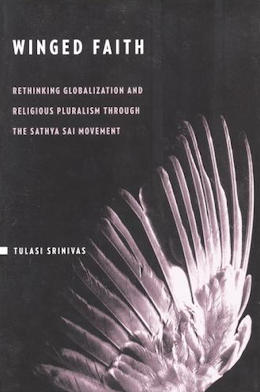
Antropologi.info book reviewer Tereza Kuldova has taken a closer look at Srinivas’ new book Winged Faith: Rethinking Globalization and Religious Pluralism Through the Sathya Sai Movement.

—-

Book Review: Winged Faith: Rethinking Globalization and Religious Pluralism Through the Sathya Sai Movement by Tulasi Srinivas, New York: Columbia University Press, 2010

Tereza Kuldova, PhD Fellow. Museum of Cultural History, Department of Ethnography, University of Oslo

Tulasi Srinivas draws us with her book into the intriguing world of a transnational religious Sathya Sai movement, a movement that crosses regional, national, religious and cultural boundaries and thus creates something that she labels ‘engaged cosmopolitanism’.

Through the focus on this religious and cultural movement that has its roots in India and that has managed to grow into a huge global movement with millions of followers and devotees, she tries to resolve what ‘cultural globalization’ might mean in contemporary world. At the same time, she addresses the questions of the nature of transglobal economies of spirituality, affect and religio-cultural identity and the meanings and forms of new pluralism, as they can be exemplified through this movement.

Her detailed ethnographic study based on nine years of fieldwork, makes it clear that processes of globalization cannot be perceived in terms of westernization, as some would like to have it. They must be understood in terms of interactions, flows and movement between variously localized cultural centers and in terms of the resulting variously spatially and culturally localized translations of these interactions, images, ideas and discourses. To put it simply, flows are multidirectional (though I would say, this has never been different).

“Dynamic ethnography”

Tulasi Srinivas is throughout her work making an appealing argument for a ‘dynamic ethnography’, which operates with the concepts of mobile description and multi-sitedness. The problem she tries to resolve in her writing is how to comprehend mobility and how to deal with translocal phenomena and that within a discipline so ill equipped to understand them. Hers is a critical hermeneutic study of religious globalization, where concepts such as complexity, relationality, networks, interaction and affectivity play a crucial role.

Even though this type of logic is generally appealing and without any doubt trendy, there is still something that disturbs me in her work. It might be the constant concern with ‘cultural globalization’ and ‘cultural translation’, even after reading the book I still find myself wondering what exactly does that mean, where does one culture begin and the other end, what is borrowed, what authentic, what reinterpreted? Maybe we are just looking here for artificial isles of safety in a sea of constant flux… The question is – can we not do without these isles?

Hinduism-Muslim culture of saints, Christian teaching + indigenous healing rituals

Let me now provide you with a brief sketch of the book and then discuss one of the chapters in more detail.

Throughout her book, Tulasi Srinivas introduces us to the story of the Sathya Sai movement. This movement is sixty-five years old and draws on a Hindu-Muslim culture of saints and mystics and on several strands of religion in the subcontinent, from Sufi mysticism, popular Hinduism, and Buddhism to indigenous healing rituals, Zoroastrianism and contemporary Christian teaching. The movement is centered on the charismatic personality of Shri Sathya Sai Baba (b. 1926).

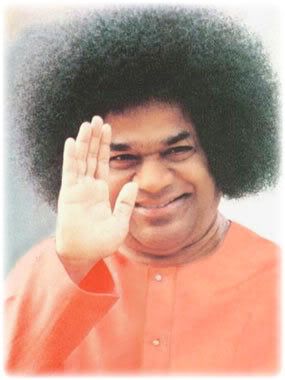
sathya sai baba Pictures, Images and Photos
Sathya Sai Baba. Source: Nebbie2006, photobucket

Sai Baba was born in a remote village of Puttaparthi in Andhra Pradesh and “after suffering a series of seizures and falling into trances, he declared his greatness at the age of thirteen and proclaimed that he was Sai Baba, a reincarnation of Shirdi Sai Baba, a Muslim saint from Mahara who had died in 1918” (p. 9). He substantiated his claims by performing miraculous acts, such as materializations of sacred ash that devotees apply on their foreheads. These materializations continue to be central to his practice and are a matter of dispute among the members of anti-Sai movement.

Spiritual travel and “sexual healing”

Tulasi Srinivas maps the way this movement of his following has grown and became popular with people all around the world. She devotes a part of the book to the discussion of the nature of contemporary spiritual travel to the ashram in the village of Puttaparthi and the viewing and experience and magical encounter of darshan (witnessing of divinity) of Sai Baba. She takes us into the world of the global Sai community that stretches from the village of Puttaparthi to Tokyo, London, Hollywood, Mumbai, Bangalore and many other places around the globe and tries to grasp what it means to be and become a part of this global Sai community.

The chapter 4 is noteworthy because of its controversial nature. Tulasi Srinivas poses here the questions considering democracy, transparency and theology within the Sathya Sai Organization and focuses on the discussion of the allegations of ‘sexual healing’ and the ‘strategies of secrecy’ that according to her pervade this organization. In this respect, it is instrumental to read the reactions of the Sathya Sai Organization to her book, and in particularly to this chapter on http://www.saisathyasai.com/tulasi-srinivas/.

This controversy might be of interest to anyone possessing deeper knowledge of the movement and studying it, and it is up to the reader to make any conclusions. However, such critical comments are possibly the result of the fact that Srinivas dared to include the perceptions and views of the anti-Sai movement and did not only restrict her ethnography to the experiences of the committed devotees. On the other hand, how accurate any of the data is, is very hard to judge for anyone outside the movement and without its deep knowledge.

Further, she includes an interesting discussion on the encoded bodily prescriptions in the ashram and the problems they pose to the devotees from different cultures. She understands the failure of certain devotees to abide by the ashram rules as illuminating the “differential understanding of embodiment, salvation, desire and discipline” and believes that it speaks to “problems in cultural translation” (p. 19).

Branding of religious goods

However, the most intriguing chapter is according to me, being keenly interested in material culture, the last one dealing with the paradoxes of the teaching of resistance to the material world on one hand and the excessive consumption of religious objects on the other. In this context, “the material object is rejected as ‘unreal’ and a distraction from the truth of divinity, but the objects themselves become a significant signpost indicating the road to self-transformation” (p. 290).

Tulasi Srinivas shows us nicely how the consumption of these religious objects, be it gifted sacra or bought ephemera, has the power to directly transform the selves and the habitus of the devotees.

The gifted materializations (rings, necklaces, talismans, sacred ash, ambrosia etc.) from Sathya Sai Baba are the most important of the religious objects. “The reception of a materialized object instantly raises one’s standing among the community of devotees, as it is read as a sign of divine favor and an index of one’s active piety” (p. 285).

The materialized objects gifted by Sai Baba are believed to be transformed by the contact with him and thus possess a magical transformative power within them, “capable of transforming people’s bodies and minds from sick to well and from skeptical to devotional” (p. 294). “The gifting of the materialized objects to the faithful is the key element of transformative interaction between deity and devotee, as it is believed to be the material form of the much hoped for transference of the divinity’s grace and power as a blessing to the devotee” (p. 297).

Though gifts are the most important religious items for the Sai devotees, most of them never meet Sai Baba and are thus dependent on the global distributive network of Sai Baba goods, that can be purchased almost anywhere in the world. However, the further from the village of Puttaparthi, the less ‘authentic’ and powerful these objects get.

This chapter thus draws us also into the world of branding of religious goods, and the branding of the movement as such. What began as small business in touristic souvenirs in the 60s was turned into a bigger business in religious souvenirs in the early 70s mostly for spiritual tourists. By the beginning of 80s a huge business in religious objects of international scale, dealing in all kinds of objects, ranging from images, photographs, CDs, books, to jewelry, all featuring Sai Baba, was in place.

After all, the “Sathya Sai movement is known to be the largest faith-based foreign exchange earner for India, earning approximately Indian Rs. 881,8 million (approx. $5 million) for the year 2002-2003” (p. 12). Srinivas draws us also into the intricacies of the trade in the Sai Baba goods, where the SSSO claims to be the only ‘authentic’ source of ‘blessed’ goods by Sai Baba and where the struggle for perfection of the purchased goods is central.

Engaged cosmopolitanism or Hindu superiority?

To conclude, we can contrast the idea of ‘engaged cosmopolitanism’ which Srinivas uses with a statement of one of my informants, a lady who has been a spiritual tourist for the last 20 years and managed to escape her obsession: “After seeing all these babas and the way they treat people, you realize that most of what is happening is about power and money, the one who gives most gets those materialized gifts, the one who pays most gets to sit next to Sai Baba, in the end it is only a huge money-making industry and highly hierarchical one. And what is worse, the whole agenda of this money-making business is not a peaceful message of acceptance and equality of all religious beliefs, but rather the opposite, namely the superiority of Hindu thought and the Hindu dominance in a global sphere, after all India is shining. And magic, they can do no magic, why don’t they treat the lepers waiting outside their ashrams?” (Interview, 18. august 2010).

Engaged cosmopolitanism? Depends on what you imagine under this term.

This book on its all appears to be well-researched and is without doubt well-written, though at times it might seem too chaotic and the arguments unnecessarily literally twisted. A struggle for more clarity would be advisable. That does not diminish the contribution of the author to the studies in transnational religious phenomena. The book would be of interest to any scholar or student of globalization, religious movements, India, and to anyone interested in the methodological challenges posed by multi-sited fieldwork. And I would say, it is a must read for any Sathya Sai devotee!

Tereza Kuldova

—-

>> Information about the book by the publisher (Columbia University Press)

>> Review by Peter Berger (The American Interest, 3.8.2010)

>> Interview with Tulasi Srinivas (Lokvani 3.2.2006)

See more reviews by Tereza Kuldova, among others The deep footprints of colonial Bombay and Hindi Film Songs and the Barriers between Ethnomusicology and Anthropology or Colonialism, racism and visual anthropology in Japan: Photography, Anthropology and History and my look at her master’s thesis That’s why there is peace

Can studying religious movements give us new insights into globalisation or even cosmopolitanism? Anthropologist Tulasi Srinivas thinks so.

Antropologi.info book reviewer Tereza Kuldova has taken a closer look at Srinivas' new book Winged Faith: Rethinking Globalization and Religious Pluralism…

Read more

“Human smugglers fight global apartheid”


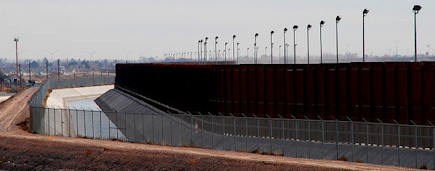
High-tech border between USA and Mexico. Photo: Paul Garland, flickr

The limitation of people’s freedom of movement based on their nationality (“global apartheid”) is maybe one of the biggest human rights issues nowadays.

One month ago I wrote about Shahram Khosravi’s auto-ethnography of illegalised border crossing.

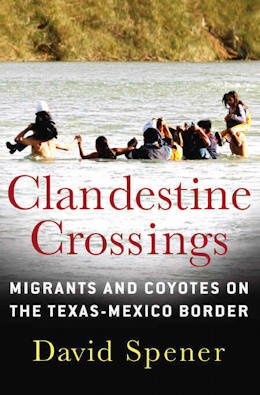
The Democracy In America blog at the Economist draws attention to a related book: Migrants and Coyotes on the Texas-Mexico Border by David Spener. The anthropologist spent eight years doing field work on both sides of the border.

Armed with latest technology, the U.S. does everything to prevent people from the South to enter its territory. Because border crossing is difficult, 90% of all illegalised migrants crossing into the United States through Mexico hired a smuggler (also called “coyote”). Human smuggling has become a $6.6-billion industry in Mexico.

The press presents human smuggling as a sinister organized-crime phenomenon. Spener argues that it is better understood “as the resistance of working-class Mexicans to an economic model and set of immigration policies in North America that increasingly resemble an apartheid system.

Publishing a book is not always the best strategy to spread knowledge. Therefore it is a good idea to set up companion websites as Spener has done. Here we find border crossing stories, articles and papers as well as images, maps and sounds.

As the Democracy in America blog reminds us: Even reaching the border is hard. Each year some 20,000 migrants are kidnapped for ransom in Mexico. Victims are made to give the phone numbers of relatives, who must pay upwards of $3,000 or more to get them released.

Migrants from Central and South America are particularly easy targets:

Illegal in Mexico, they must evade checkpoints throughout the country and risk deportation if they report a crime. Women and girls—about a fifth of the migrants making their way through Mexico—face additional dangers. Six out of ten are reckoned to suffer sexual abuse during their migration, according to Amnesty International, a human-rights watchdog.

For a global perspective, see the overview by the BBC: Walls Around The World

SEE ALSO:

The “illegal” anthropologist: Shahram Khosravi’s Auto-Ethnography of Borders

More Global Apartheid?

For free migration: Open the borders!Why borders don’t help – An engaged anthropology of the US-Mexican border

Online: On the Margins – An Ethnography from the US-Mexican Border

Interview with Sámi musician Mari Boine: Dreams about a world without borders

High-tech border between USA and Mexico. Photo: Paul Garland, flickr

The limitation of people’s freedom of movement based on their nationality (“global apartheid”) is maybe one of the biggest human rights issues nowadays.

One month ago I wrote about Shahram Khosravi’s…

Read more

Thesis: That’s why they go to war

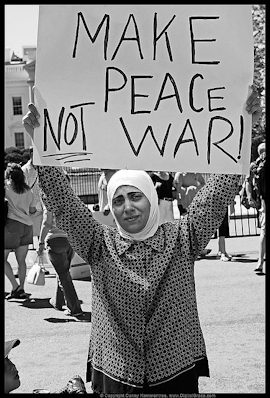
Make Peace. Photo: Danny Hammontree, flickr

What if they gave a war and nobody came?” is a popular slogan from the antiwar-movement. But nowadays, when USA with their allies go to war in Iraq and Afghanistan, people do come. Lots of people enlist in the military, even voluntarily, especially in the U.S. Why?

Anthropologist Sarah Salameh answers this question in her master’s thesis Courtesy Of The Red, White And Blue. A Midwest American Perspective on Troops, War and Nation.

She’s been on a six months’ fieldwork in a small town in the upper Midwest, a rather conservative and patriotic area that struggles with deindustrialization, low wages and unemployment. Salameh – an opponent of the U.S wars in Afghanistan and Iraq – describes the six months “as the most interesting and mind blowing time of my life.”

And it is indeed an interesting and well written thesis about “one of the most understudied groups”: white middle-class Americans.

She introduces us to a diverse group of military people:

The many settings the reader is introduced to includes an Army recruiting office, a public elementary school, Memorial Day celebrations, the motorcycle group the Patriot Guard Riders‟ missions, and the celebration of a National Guard unit returning home from Iraq. One gets to know people ranging from Army recruiters to the girls they helped enlisting at the age of 17, the concerned mother of a soldier, and a bunch of rather unconcerned 5th graders performing their patriotic duty decorating their town‟s cemetery with Star Spangled Banners.

One of her findings is the critical distance many soldiers have towards the government.

While in uniform, the anthropologist writes, soldiers are not allowed to speak negatively about the President. But in reality, as Robert, one of the soldiers, told her “The troops fight for the people, the American people, not the government. Neither the troops nor the people like the government.”

The official reason for waging a war is not always relevant for the soldiers. Looking at peoples‟ motives for joining the military, Salameh writes, “underlines the irrelevance of government and politics”.

Not one person she’s talked to (around 100) claimed to have joined the military because he or she thinks that this or that exact war is especially just or necessary as it is explained by politicians.

Robert is one of them. He did not believe the official explanation of the Iraq war (weapons of mass destructions). At times, Robert claimed the Iraq war is a quest for oil.

But he doesn’t care:

I am going for other reasons than oil. When I was in Iraq, I built schools, and handed out backpacks and paper to school children. I fixed dams so the people could have electricity. I spent two years totally committed to doing stuff like that.


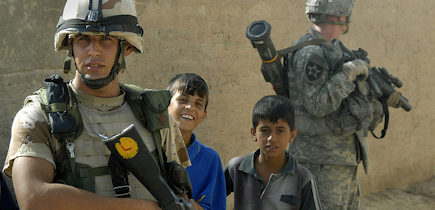
U.S. Army Soldiers in Iraq. Photo: Scott Taylor, U.S.Army, flickr

The research subjects explained and mostly legitimized the US military presence and their own participation, with a reference to themselves as Americans.

Robert places American politicians outside these “American people. He places himself, as a service member, on the side of and fighting for, the American people, not the government.

The anthropologist explains:

People and troops, the government and the people make up two societies that act according to two different value systems; the politicians according to a rather crooked one, initiating wars on unjust premises and ignoring the will of the American people; the American people according to what might perhaps be termed a more American one, expressed in Robert‟s account as focused on a wish to keep his own family and other Americans safe and free, and help Iraqis towards a better life.

Help Iraqis towards a better life? That’s in the eyes of the soldiers their responsibility as Americans. The USA is in their view a positive example for other countries, an example to follow. It seems to me they are on a kind of religious mission.

This religious dimension is interesting. Salameh discusses American nationalism as “civil religion”:

Much of the (…) USA and its military, can be understood within the context of civil religion, wherein the nation is the focus of belief, and its endeavours overseas is the spreading (missionary function) of the values inherent in the „national belief‟.

One of the dogmas of this “civil religion” is the idea that God has a special concern for America, putting Americans in the role of the chosen people, and America in the role of the promised land:

This is connected to the story of the American foundation, taking the form of myth, where today‟s American‟s ancestors came to this promised land and made a covenant with it, still binding today‟s Americans. The covenant has two aspects: to maintain the concept of promised land, basically to keep the USA free, as underlined by for example Robert, as well as to „export by example‟ the American version of freedom.

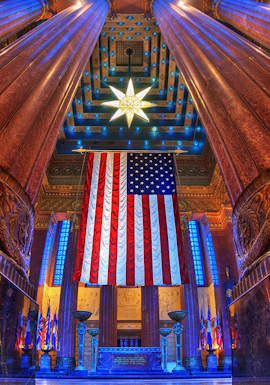
Indianapolis War Memorial Shrine Room.
Photo: Carl Van Rooy, flickr

She also describes the flag as totem, and blood sacrifice as an American group taboo.

At Memorial Day sacrifice was a central theme. “What soldiers in the Army do is to give up their life for others‟ freedom”, an army recruiter explained.

Tony‟s 5th graders stood up, faced the flag on the left side of the blackboard, put their right hand on the left side of their chest and said the Pledge simultaneously with the principal‟s voice. Everybody knew the Pledge by heart and said it out loud: I pledge allegiance to the flag of the United States of America and to the republic for which it stands: one nation under God, indivisible, with liberty and justice for all.

But do people in Iraq and Afghanistan really want their help? What about the widespread opposition towards the US wars?

This question is not very relevant for the research subjects. Even if the the people the USA tries to help reject the help, the USA‟s efforts are legitimate.

“It is as if the people on the receiving side of, what by the Americans is presented as „help‟, are not in a position to judge whether what the US presence offers is good or bad”, Salameh comments.

This remembers of what Edward Said describes as orientalism.

People in the Orient have frequently been portrayed as more passionate, more violent and barbaric, as well as culturally determined. This „savaging‟ of the Orientals has justified European and American imperialism throughout history, often presented as a civilizing project.
(…)
And in the very same act as „the West‟ thus diagnoses other countries as less developed, „the West‟ also categorizes them as passive (they are weak, ill), thus allowing for a paternal role.

For the research subjects, there are “good others” and “bad others” in Iraq and Afghanistan:

There is the „good Other‟ who takes the form of some sort of deprived, but possible, allied and member of the „free world‟; in the accounts above termed „innocents‟, „civilians‟, „the people‟ (of Afghanistan and Iraq), or simply „Afghanis‟ and „Iraqis‟. Opposed to this, exists a „bad Other‟ that cannot possibly be helped, thus only fought. This bad Other carries many different names, among them „terrorists‟, „insurgents‟, „extremists‟, „radicals‟, and to a varying degree also the Iraqi and Afghani „leaders‟ and „government‟ are included.

Although nationalism is important, she stresses that she does not claim it is the only, or the most central factor. There are many individual factors (escaping from smalltown life etc). Economic incentives are often central when people decide to join the military in the first place, and “a thesis could have been written on economy as incentive alone””.

Sarah Salameh is currently turning the thesis into a book where she will include on all those other factors as well.

The whole thesis is available online. (LINK UPDATED 4.4.2020)

SEE ALSO:

Thesis: That’s why there is peace

Secret rituals: Folklorist studied the military as an occupational folk group

Embedded anthropology? Anthropologist studies Canadian soldiers in the field

War in Iraq: Why are anthropologists so silent?

Military anthropologist starts blogging about his experiences

More and more anthropologists are recruited to service military operations

Make Peace. Photo: Danny Hammontree, flickr "What if they gave a war and nobody came?" is a popular slogan from the antiwar-movement. But nowadays, when USA with their allies go to war in Iraq and Afghanistan, people do…

Read more

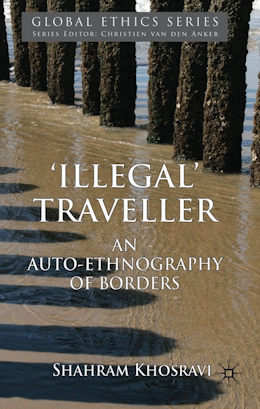
The "illegal" anthropologist: Shahram Khosravi’s Auto-Ethnography of Borders

Globalisation means for most people on this planet higher fences and less movement across borders. The new book by anthropologist Shahram Khosravi is an auto-ethnography of illegalised border crossing.

‘Illegal’ Traveller is based on the anthropologists’s own journey from Iran to Sweden and his informants’ border narratives. “Studies of migrant illegality are often written by people who have never experienced it”, he writes in the introduction. “My aim has been to offer an alternative, partly first-hand, account of unauthorized border crossing that attempts to read the world through ‘illegal’ eyes:

This book is the outgrowth of my own ‘embodied experience of borders’, of ethnographic fieldwork among undocumented migrants between 2004 and 2008, and of teaching courses on irregular migration and the anthropology of borders. It also emerges from my activities outside academia: freelance journalism, helping arrange events such as film festivals about border crossing, and volunteer work for NGOs helping failed asylum seekers and undocumented migrants in Sweden.
(…)

Auto-ethnography lets migrants contextualize their accounts of the experience of migrant illegality. It helps us explore abstract concepts of policy and law and translate them into cultural terms grounded in everyday life.

(…)
In my years as an anthropologist, I have been astonished at how my informants’ experiences overlapped, confirmed, completed, and recalled my own experiences of borders. One interesting aspect of the auto-ethnographic text is that the distinction between ethnographer and ‘others’ is unclear.

I haven’t found any reviews yet, but what I have found is a fascinating paper by him, published in Social Anthropology three years ago. The title: The ‘illegal’ traveller: an auto-ethnography of borders (subscription required now open access!).

In this paper he describes his journey from Iran to Europe as “illegal” refugee and theoreticizes about the ‘world apartheid’ we live in according to him and criticizes the ways we think about borders and migration:

Based on a capitalist-oriented and racial discriminating way of thinking, borders regulate movements of people. However, borders are also the space of defiance and resistance.

It is because of this resistance he is still alive. In September 1986 he tried to leave Iran ‘illegally’ for the first time. “I had then just finished high school and I was called up to do military service during the ongoing terrible war between Iran and Iraq. To come back alive from the front was a chance I did not want to take”, he writes.

It was a long journey via Afghanistan, Pakistan and India. He ended up in Sweden via human smugglers. They saved him his life.

Human smuggling is in his opinion recurrently misrepresented by the media and politicians as an entirely mafia-controlled criminality. One of his helpers was Homayoun, a 25-year-old Afghani man, an undocumented immigrant, who had lived clandestinely in Iran since he was 15:

According to immigration law, Homayoun was a human smuggler, a law breaker and a criminal. But in fact he saved my life in one of the most dangerous places, under the rule of ruthless criminal gangs, corrupt border guards and fanatic Mujaheddin. (…) Homayoun facilitated my escape from undesired martyrdom in a long and bloody war.

Maybe one can say that the smugglers did what the UN Refugee Agency (UNHCR) was supposed to do? Khosravi tells shocking stories about the UNHCR who seems to be responsible for several deaths, including suicides, among refugees. Almost everyone in the refugee community had the same answer: “There is no point in going to the UNHCR”. You won’t get any help. Khosravi’s application was rejected as well. In the view of the UNHCR officer, his “fear of being killed in a horrible war was not ‘well-grounded’ enough.

He tells us the story of Henry’s suicide:

Henry, a young Iranian-Armenian man (…) was an activist within a communist militia, Cherikhaye Fadai, in Iran. But the UNHCR did not believe him. The reason was a wall painting in a corridor in the basement of a prison in Isfahan, where Henry had been detained for several months before his escape to Pakistan. In the interview Henry was asked by the UNHCR official to say what was painted on the wall in the corridor, to test his reliability. Henry had not seen such a painting and consequently his application was rejected. How did the UNHCR officer know about the wall painting? How could she or he be sure that there was any painting at all in that corridor?

Henry was desperate and did not know what to do. Just a few weeks before my departure from Karachi, one morning when the UNHCR officials arrived in their dark-windowed cars, he poured gasoline on himself and struck a match in front of the UNHCR.

With a false passport, Khosravi escaped to India. There he found a smuggler with good reputation, Nour:

During my five months in New Delhi I shared rooms with many persons in transit. All are now residents of Europe or North America – thanks to the smugglers.

He finally ended up in Sweden, a country that he at that time was not able to locate on a world map.

He explains:

The choice of destination was rarely as it was intended and designed. An ‘illegal’ journey is after all arbitrary. Sometimes the migrants end up in a country just coincidentally.
(…)
First of all, the destination was determined by the payment. A few hundred dollars could change the destination from one continent to another. Masoud, a roommate, was Nour’s mosafer (client) at the same time as I was. He had US$500 more than me and today he is a Canadian citizen, lives in Toronto and his children’s mother tongue is English. I am a Swedish citizen, live in Stockholm and my children’s language is Swedish: US$500 destined our lives so differently.

Border crossing is, he continues, is in anthropological sense a ritual:

The border ritual reproduces the meaning and order of the state system. The border ritual is a secular and modern sort of divine sanctity with its own rite of sacrifice. Several hundred clandestine migrants die en route to Europe each year. From January 1993 to July 2007 the deaths of more than 8800 border-crossers were documented in Europe. The Mediterranean Sea is turned into a cemetery for the transgressive travellers.

Border crossing can be experienced in terms of honour and shame:

A legal journey is regarded as an honourable act in the spirit of globalism and cosmopolitanism. The legal traveller passes the border gloriously and enhances his or her social status, whereas the border transgressor is seen as anti-aesthetic and anti-ethical (they are called ‘illegal’ and are criminalised). We live in an era of ‘world apartheid’, according to which the border differentiates between individuals. While for some the border is a ‘surplus of rights’, for others it is a ‘color bar’ (Balibar 2002: 78–84).

Khosravi ends his paper with some “final remarks” from 18 years later (2006), when he arrives at Bristol airport, along with colleagues from Stockholm University. He was convener for a workshop on ‘irregular migration in Europe’ at the biannual conference of the European Association of Social Anthropologists (EASA).

At the immigration control, he is illegalised again in the name of the “war on terror”:

After passing immigration control, I was stopped by a security official who let my blond fellow travellers pass. In the middle of a narrow corridor a mini interrogation began which lasted for half an hour.
(…)

My status as a Swedish citizen disappeared at the border because of my face. I answered questions about myself, my education, work, purpose of visit to Bristol. Then she asked about my parents, where they lived and what they did. I was not willing to disclose to her any kind of information about my elderly parents, who have been subjected to persecution by the Iranian state for decades. When I refused to answer her questions about my parents, she threatened to detain me first for nine hours and then, if necessary, for nine days according to the Anti- Terrorism Act.

I protested that she had targeted me because of my ‘Middle Eastern’ look and her selection of suspicious persons was racist. She did not even deny it and said ‘you [me and who else?] want to kill us. We have to protect ourselves’.

Khosravi has published some articles in Swedish, see my earlier post – Ikke kall dem for illegale

SEE ALSO:

More Global Apartheid?

For free migration: Open the borders!

Why borders don’t help – An engaged anthropology of the US-Mexican border

Research in refugee camps: Too political for anthropology?

Nina Glick Schiller: Who belongs where? A Global Power Perspective on Migration (ASA-blog)

Globalisation means for most people on this planet higher fences and less movement across borders. The new book by anthropologist Shahram Khosravi is an auto-ethnography of illegalised border crossing.

'Illegal' Traveller is based on the anthropologists's…

Read more