search expand

A short summary of recent open access news

AAA Creates “Open Access” to Anthropological Research announced the American Anthropological Association two weeks ago. But in reality, open access is only granted to two journals (American Anthropologist and Anthropology News) and to articles that are at least 35 years old!

AAAs move has received mixed reactions as Peter Suber’s Open Access News and Inside Higher Ed summarize.

Is it a first step as Alex Golub suggests or is it rather a way to avoid discussions about actual Open Access as Alexandre Enkerli argues?

Will AAAs recent move lead to greater divisions between the AAA and anthropologists who want to engage with the wider world by making their research more accessible online?

Additionally, the AAA has announced that they are going to conduct preliminary research on the economic issues faced by scholarly society publishers in the humanities and social sciences as consequence of the demand for open access to their peer reviewed journals, Culture Matters informs.

Until now, the AAA has opposed Open Access to journal articles.

More than 80% of all anthropology open access journals are published outside of the U.S, as Maximilian Forte has found out.

As last year, the Savage Minds bloggers are going to promote the Open Access issue at the annual meeting of the AAA. Chris Kelty writes:

Ergo, I am hereby inaugurating an independent awards show to be performed at the AAA. I’m willing to organize it this year, if others are willing to help out (please!?). Nothing too extravagant or long, I’m thinking a guerrilla ceremony in the lobby. I’ll need people to hold the signs, act as paparazzi, maybe a little musical act before and after… and especially: NOMINATIONS. Post them here, or email me (ckelty at ucla etc ). I’m not sure what the prizes will be yet, but they will be good, I promise.

These are the categories I’ve come up with so far:

1. most excellent (and second most excellent) open access article in anthropology or associated disciplines, 2007-8. open access = green, gold, self-archived or institutional repository.

2. most excellent open access teaching materials 2007-8. Syllabus, teaching materials, assessment ideas, technologies or tools, ideas for teaching.

3. most excellent idea for making anthropology public.

4. most (or least?) excellent new theoretical fad.

5. most excellent anthropology blog (SM recuses itself, naturally).

6. most excellent business plan idea for the AAA.

7. most excellent award category not listed here.

>> more at Savage Minds

As the Open Acess Anthropology blog, I forgot that the 14th of october was the Open Access Day

AAA Creates "Open Access" to Anthropological Research announced the American Anthropological Association two weeks ago. But in reality, open access is only granted to two journals (American Anthropologist and Anthropology News) and to articles that are at least 35 years…

Read more

First reports from Europe’s largest anthropology conference (EASA)

logo

Today was the fifth and last day of the 10th Biennial Conference of the European Association of Social Anthropologists (EASA) in Ljubljana, Slovenia. There are no news stories yet, but anthropology students at the University of Ljubljana have already written an impressive number of reports on workshops, plenaries and poster sessions.

The students have done a real great job and I hope they will inspire other conference organizers. There are exciting things being told and discussed at conferences. But until now, these stories have stayed inside a small community of scholars. Things are changing: The Society for Applied Anthropology (SfAA) has started podcasting from their annual meetings.

EASA has started an ambitious project. Read this:

You have reached the online database of texts on the 10th Biennial Conference of the European Association of Social Anthropologists (EASA). During this event, the site is hourly updated, bringing you fresh reports on the venues (workshops, plenaries and poster sessions) as well as several interviews with the lecturers, EASA officials and other guests. All texts will be published in English language.

The reports and interviews are written by students at the Department for Ethnology and Cultural Anthropology at the Faculty of Arts in Ljubljana. Since human resources are scarce, not all venues are covered and are therefore not reported or commented. We are trying, however, to present as much material as possible by covering as much events as possible.

The reports give a great overview over current anthropological research in Europe.

Tjaša Selič and Goran Karim for example write about Michael Carrithers who is interested in the question: How can so many differences between cultures, groups of people and individuals still inspire participation, cooperation, solidarity? (pdf) Tjaša Zidarič also mentions Panayiota Toulina Demeli who is interested in how being in prison effects the social meaning of motherhood (pdf).

Nikolas Kosmatopoulos seems to have given an interesting paper in the workshop “Imagining and Constructing “Terrorism” and “War on Terror”. “Being an anthropologist in the Middle East feels almost like being a spy”, he said according to Vasja Pavlin:

(I)t is possible to be objective in such an intense field as Lebanon. There is a grey zone between the attackers and the attacked into which an anthropologist enters in order to do his or her research. By entering into this zone one immediately becomes a suspicious person.

An anthropologist has to tell his or her informants some of the intimate stuff about what he or she is doing in order to be accepted by them. The situation forces you to take a position but you cannot please everyone; if you do so you are just like a clown. He concluded that being an anthropologist in the Middle East feels almost like being a spy.

(pdf)

“Crowd crystals and birdwatchers: charismatic leadership in volunteer organisations” was the title of Dan Podjed‘s paper. In her summary, Tina Mučič informs us that the meaning of charisma and charismatic leadership is “a black hole in anthropological research” (pdf).

She also writes that “his presentation was very good and in some parts funny”.

I was surprised over the open and honest comments on the papers and the presentations. Maybe these reports may inspire some anthropologists to rethink their way of giving papers.

Tina Kranjec comments on a presentation by Elke Mader at the workshop Happiness: Anthropological Engagements:

I must say this was a very interesting paper. The author explores how fans experience, express, communicate and circulate happiness in relationship with Shah Rukh Khan. There was a lot of visual material, which was also very representative.

(pdf)

But the workshop On ‘Souvenir’: experiencing diversity, objectifying mutuality was less exciting, she writes:

After visiting two other workshops, I can say that this last one was more oriented on giving as much information as possible and not so much on trying to provoke us and making us participate by commenting and asking questions. Almost all of the lecturers were reading as fast as possible, which made the comprehension of the papers quite difficult.

(pdf)

Tina Mučič has also reviewed several presentations. An anthropologist “was reading her paper very quietly so it was difficult to understand everything”, another one “was speaking and reading very fast, almost too fast to understand the meaning of the paper.”

She liked Gillian Evans‘ presentation best:

This introduction was the most likeable. Dr. Evans was speaking aloud and her tone was resolute. She was trying to explain some terms which we did not understand and was aware that there were not only experts on this topic in the room.

It seems that more and more paper givers have used PowerPoint presentations than for two years ago when I attended the conference of the Association of Social Anthropologists of the UK and Commonwealth in Keele. Then, most presentations were so boring that I decided to stay at home. According to the students’ reports, the conference in Slovenia must have been very interesting. Their reports are very inspiring. Maybe I should have gone though?

>> overview over all reports

>> conference website

UPDATE (12.9.08) : Guest post: Review of the Moving Anthropology Student Network conference

UPDATE (3.9.08): Martha Jiménez-Rosano has written a few notes about the conference of the Moving Anthropology Student Network (MASN) that took place before the EASA conference (in Slovenia as well) and has uploaded her paper “Projectionists of Reality. When researchers project images of their own boundaries.”

UPDATE 10.11.08) Another EASA-report by Martha Jiménez-Rosano: A feeling about EASA 2008

SEE ALSO:

What’s the point of anthropology conferences? – EASA conference 2006

How To Present A Paper – or Can Anthropologists Talk?

Academic presentations: “The cure is a strong chairman and a system of lights”

Norwegian anthropology conferences are different

Anthropology and the World: What has happened at the EASA conference?

Conference Podcasting: Anthropologists thrilled to have their speeches recorded

This is conference blogging!

AAA Annual Meeting: Are blogs a better news source than corporate media?

First news from the AAA-conference?

Military spies invade anthropology conferences?

logo

Today was the fifth and last day of the 10th Biennial Conference of the European Association of Social Anthropologists (EASA) in Ljubljana, Slovenia. There are no news stories yet, but anthropology students at the University of Ljubljana have already…

Read more

How to challenge Us-and-Them thinking? Interview with Thomas Hylland Eriksen

As some of you might know, I work as a journalist at the interdisciplinary research programme Culcom – Cultural Complexity in the New Norway. I’ve just put online the English translation of my interview with Thomas Hylland Eriksen, research director of Culcom.

We talk about how hard it is to challenge conventional academic thinking and to establish a new analytical view of the world.

Thomas Hylland Eriksen says:

– What we are trying to do is shift the analytical gaze in a direction where the nation-state and the ethnic group are not viewed as the most important unit. It is here researchers like Knut Kjeldstadli have been vital in insisting on the significance of class, or Oddbjørn Leirvik, who points out that differences in value-based questions cuts across the majority and minority population.

– In this way, lines of distinction that are somewhat different than those common to immigrant research, in which an us-and-them way-of-thinking is common, get established. And in addition, the transnational perspective leads to a de-centering of the nation-state; it is almost like a small Copernican revolution.

We also talk about open access and dissemination via our website. He says:

– Working in a place where most of what is published is electronically available and can be downloaded as a PDF has been a dream of mine for many years, even in the transnational sense: Then people who are in Switzerland and India can get onto our webpages, download texts and use our research in their own work. There is no reason why this should cost money.

>> read the whole interview with Thomas Hylland Eriksen

There are two more new interviews online about related issues.

Hans Erik Næss criticizes in his thesis the methodologicial nationalism in sociology text books. Sociology does not focus enough on transnational aspects in society. His thesis contains not only suggestions for a better sociology, but also an alternative required reading list.

>> read the whole interview: “In favor of a more transnational sociology”

Gunn Camilla Stang has written one of the first studies on Polish labour migrants in Norway. She says that debates about migration should focus more on the possiblities of learning. In viewing Polish laborers primarily as (cheap) labor, companies miss out in a great deal of knowledge they could have used to improve routines and products.

>> read the whole interview “More than “social dumping””

And Arnfinn Haagensen Midtbøen explains us why Scandinavia should be illuminated as an interesting region in migration research.

>> Interview: Does migration strengthen the nation-state?

We have relaunched our website, and our English pages are “still under construction”

As some of you might know, I work as a journalist at the interdisciplinary research programme Culcom - Cultural Complexity in the New Norway. I've just put online the English translation of my interview with Thomas Hylland Eriksen, research director…

Read more

Is it time to boycott SAGE?

sage-instructions

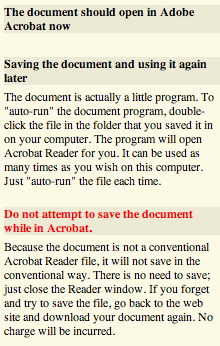
It sounds like a satire on capitalism but reality is often even worse. If you have written an article for SAGE you cannot send your own article to colleagues, you cannot copy nor save it. You can read it on one computer only according to anthropologist and Culture Matters blogger Lisa Wynn.

sage-instructions2

Wynn had published an article in the Journal of Social Archaeology. Instead of getting a PDF of the published article, which is what she gets from all the other journals, she received this e-mail:

Dear Contributor, Thank you for submitting your article titled “Shape Shifting Lizard People, Israelite Slaves, and Other Theories of Pyramid Building: Notes on Labor, Nationalism, and Archaeology in Egypt” to Journal of Social Archaeology, which was recently published in volume 8 issue 2 of the journal.

We invite you to visit http://articleworks.cadmus.com/doc/872534 to download an electronic version of your article (we are no longer sending out paper offprints/tearsheets). You can download this file as an .exe file, which will allow you to view and print the PDF an unlimited number of times on your own computer, and you can forward it as a link up to 25 times to your co-authors and other colleagues. Please note that it is a protected file and you will not be able to forward the file itself or upload it to a website.If you have difficulty please check our FAQs section http://articleworks.cadmus.com/open/sagehelp.html

“I will NEVER again consider publishing with them as long as Sage is running things this way”, she comments.

I have followed the download-link and made these two screenshots.

PS: Strangely enough, as a SAGE-subscriber via my university account, I could download a conventional pdf-file of her article.

Christopher Kelty wrote about similar difficulties to get a free copy of his own article, published in the journal Cultural Anthropology in his Savage Minds-post Recursive public irony.

UPDATE

The above procedure applies only if the author is no subscriber of the journal, as Lisa Wynn writes in reply to my question:

Yes, according to what Sage sent me, if your university subscribes, you can download a conventional PDF (and then spread it around as much as you like). But if you don’t belong to a subscribing university, then you can only get this executable file (and only 25 people, too). The irony is that even if an AUTHOR doesn’t have a subscription, then the author doesn’t get the normal PDF, just the executable protected PDF. Maddening!

“A boycott would be swell (but don’t see that happening). digital disobedience is even better”, somebody commented on the blog laguayabita.blogspot.com

Greg Downey has similar thoughts and comments on Culture Matters:

Yeah, I got one of these, too, recently from another journal, but I cheated on the whole thing: I printed off a copy and then scanned it as a .pdf on our departmental copier. It’s a bit bigger than a normal .pdf, so it’s harder to circulate, but it does give me a way to send the article to overseas colleagues.

SEE ALSO:

Danah Boyd on Open Access: “Boycott locked-down journals”

Open Access: “The American Anthropological Association reminds me of the recording industry”

For Open Access: “The pay-for-content model has never been successful”

Why Open Access?

sage-instructions

It sounds like a satire on capitalism but reality is often even worse. If you have written an article for SAGE you cannot send your own article to colleagues, you cannot copy nor save it. You can read it on…

Read more

The resurgence of African anthropology

cover

What is the state of anthropology at African universities? African anthropology is interdisciplinary and focuses on solving problems like poverty, diseases and violence, Paul Nchoji Nkwi writes in the book World Anthropologies (download the book):

The West invented anthropology to study the “Other” and it defined the canons. But in developing economies, where resources are scarce, science has to be either useful or be gone.

In his very interesting text that is available online (Word-document), he describes the recent developments of our discipline in Africa and calls for a better cooperation between anthropologists in Africa with anthropologists in other parts of the world:

The European and American traditions of the discipline are distinct and the discipline surely deserves an African twist as well. It is time for the social sciences, including anthropology, across Africa to regroup and to face the challenges that confront us as a continent and as part of the human family: Disease, hunger, HIV/AIDS, ethnic wars, poverty … We need to look for answers to these scourges. It will be salutary for Africans to bring their own particular perspectives to all the social sciences, including anthropology

It is the applied option that dominates anthropology in Africa. Applied anthropology as the focus of academic work rehabilitated the discipline that has been discredited in post-colonial Africa because of its history as the handmaiden of colonialism:

African anthropologists grew up in societies that were either colonized or recently decolonized. Westerners initially controlled the production of anthropological knowledge and the result was functionalist studies. These studies were explicitly ahistorical and often myopic about colonialism. After the colonial period, the new nations of Africa dismissed anthropology both as a cultivation of primitivism and as an apologetic for colonialism.

Throughout the 1960s and 1970s African and Africanist anthropologists found it difficult to practice their profession openly, Paul Nchoji Nkwi writes. Anthropology took cover within African Studies programs, or anthropology institutes disappeared into sociology departments.

Some African anthropologists like Kwesi Prah (papers), Godwin Nukunya, Harris Memel-Fotê and Théophile Obenga, remained in Africa, while others like Adam Kuper, John Comaroff and Brian du Toit, Archie Mafeje, and Maxwell Owusu, left their countries “in search of more conducive environments”.

But by the 1980s, there was more and more demand for anthropological knowledge – mainly regarding development projects. Many projects had failed due to their top-down approach. A perspective from below was needed – an anthropological perspective. Also, a shift from hospital-centered to people-centered health care gave medical anthropologists a window of opportunity.

In 1987, the Pan African Anthropological Association (PAAA) was established. This was another event in the late 1980s and early 1990s that helped integrate anthropology into the discourse of development in Africa.

Anthropology, Paul Nchoji Nkwi writes, had to rediscover itself as a discipline that could help to solve problems:

During the first PAAA conference in 1989, many participants argued that addressing important human issues, such as the need for health care, the spread of famine, rapid population growth, environmental degradation, discrimination and violence against women, poverty, and ethnic violence would enhance the discipline’s tarnished image.
(…)
Since 1989, the PAAA has organized twelve annual conferences and a series of training workshops for junior anthropologists. The association has also worked hard to bring the discipline closer to other social sciences. The future of anthropology depends, we feel, on how well the discipline integrates with the other social sciences. For anthropology to attract funds it must take on, and bring a unique perspective to, research problems that are common to other social sciences.
(…)
Over the years, African anthropologists have worked closely with environmental biologists, organic chemists, economists, demographers, health providers, and others. This experience showed that multi-disciplinary work is mutually enriching since each discipline draws on its unique insights to attain a common goal.

At the University of Yaoundé, there were 525 students majoring in anthropology in the 2002-2003 academic year, the same number of students took it as their minor. Paul Nchoji Nkwi witnessed an “increased involvement of the social sciences in health, agriculture, animal, environmental, and population research programs funded by the government”:

Targeting critical areas such as general health, reproductive health, population growth, the environment, and agricultural development led to the design of courses in medical anthropology, development anthropology, and environmental impact assessment. Today, the University of Yaoundé-I has one of the most active and dynamic departments of anthropology in Central Africa, attracting students from the entire region.

African anthropologists want opportunities to work and earn their way – in partnership with their colleagues all over the world, he stresses:

To bring this about requires a series of small but doable changes in the formal academic training programs, grant administration procedures, and grant requirements to promote better partnership arrangements.
(…)
Strengthening the ability of Africans to organize and develop their own professional associations is a way to address all of these issues at once. Truly professional associations will link Northern and African anthropologists in a single intellectual, publishing, and teaching endeavor on a more equal footing.

>> read the whole text “Anthropology in a Post-Colonial Africa – The Survival Debate” by Paul Nchoji Nkwi (Word-document)

SOME LINKS RELATED TO AFRICAN ANTHROPOLOGY:

Pan African Anthropological Association (PAAA) (no updates since 2005!)

African Anthropologist (Journal of the Pan African Anthropological Association)

Etho-Net Africa (the new website of this network is no longer available)

African e-Journals Project

Nordic Journal of African Studies

African Studies Quarterly

African Journal on Conflict Resolution

JENdA: A Journal of Culture and African Women Studies

Afrikanistik online

Africa Writes

SEE ALSO:

How can we create a more plural anthropological community?

Book and papers online: Working towards a global community of anthropologists

cover

What is the state of anthropology at African universities? African anthropology is interdisciplinary and focuses on solving problems like poverty, diseases and violence, Paul Nchoji Nkwi writes in the book World Anthropologies (download the book):

The West invented anthropology to…

Read more