
search expand

Circumcision: “Harmful practice claim has been exaggerated” – AAA meeting part IV

Is female circumcision violence against women or a feminist act? Are critics of this practice guilty of cultural imperialism? Those questions were debated at the American Anthropological Association’s annual meeting in Washington – among others by African anthropologists who have undergone the procedure themselves.

New York Times blogger John Tierney has written two interesting posts on the debate incl links to books and papers, among others by Fuambai Ahmadu. She has argued that the critics of circumcision exaggerate the medical dangers, misunderstand the effect on sexual pleasure, and mistakenly view the removal of parts of the clitoris as a practice that oppresses women. Ahmadu writes that her Westernized “feminist sisters insist on denying us this critical aspect of becoming a woman in accordance with our unique and powerful cultural heritage.”

>> read the whole post by John Tierney: “A New Debate on Female Circumcision”

>> two papers by anthropologist Fuambai Ahmadu on circumcision

In his second post, John Tierney askes anthropologist Richard Shweder for more information about he health risks, benefits, and the actual effect of the procedure on the lives of those subject to circumcision.

Shweder reviews existing research and concludes that “the harmful practice claim has been highly exaggerated and that many of the representations in the advocacy literature and the popular press are nearly as fanciful as they are nightmarish”:

The best evidence available at the moment suggests to me that the anthropologist Robert Edgerton basically had it right when he wrote about the Kenyan practice in the 1920s and 1930s as a crucible in which it is not just the courage of males but also the courage of females that gets tested:

“…most girls bore it bravely and few suffered serious infection or injury as a result. Circumcised women did not lose their ability to enjoy sexual relations, nor was their child-bearing capacity diminished. Nevertheless the practice offended Christian sensibilities”.

(…)

At the panel on “Zero Tolerance” policies held on Saturday at the American Anthropological Association meeting, one of the participants Zeinab Eyega, who runs an NGO concerned with the welfare of African immigrants in the USA, noted that these days in New York “the pain of hearing yourself described is more painful than being cut.”

Shweder thinks it is noteworthy or even astonishing that in the community of typically liberal, skeptical and critical readers of the New York Times there has been such a ready acceptance of the anti-circumcision advocacy groups’ representations of family and social life in Africa as dark, brutal, primitive, barbaric, and unquestionably beyond the pale”.

>> read the whole post: “Circumcision” or “Mutilation”? And Other Questions About a Rite in Africa

>> papers by Shweder on circumcision

More about the AAA-meeting:

New media and anthropology – AAA meeting part III

“The insecure American needs help by anthropologists” – AAA-meeting part II

Final report launched: AAA no longer opposes collaboration with CIA and the military – AAA meeting part I

Is female circumcision violence against women or a feminist act? Are critics of this practice guilty of cultural imperialism? Those questions were debated at the American Anthropological Association’s annual meeting in Washington - among others by African anthropologists who have…

Read more

“The insecure American needs help by anthropologists” – AAA-meeting part II

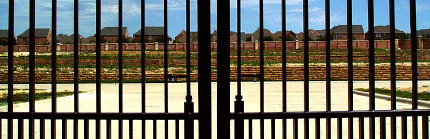
gated community
(Photo: Dean Terry, flickr, from the film Subdivided, see below)

The annual meeting of the American Anthropological Association received more media attention than usual. One important topic was the relationship between anthropology and the military as noted earlier (see also Culture Matters), new media, and circumcision. Another topic: Gated Communities and “insecure Americans”.

Washington Post writer Eugene Robinson has attended a panel discussion titled “The Insecure American.” He writes:

We Americans like to think of ourselves as strong, rugged and supremely confident — a nation of Marlboro Men and Marlboro Women, minus the cigarettes and the lung cancer. So why do we increasingly find ourselves hunkered behind walls, popping pills by the handful to stave off diseases we might never contract and eyeing the rest of the world with an us-or-them suspicion that borders on the pathological?

Last week, I heard some of the nation’s leading cultural anthropologists try to explain these and other phenomena. I came away convinced that we, as a nation, definitely should seek professional help.

Professional help? Yes, by anthropologists!

“The Insecure American” turned out to be a revelation — by turns alarming, depressing and laugh-out-loud amusing — as scholar after scholar presented research showing just how unnerved this society is.
(…)
We’re afraid of one another, we’re afraid of the rest of the world, we’re afraid of getting sick, we’re afraid of dying. Maybe if we study our insecurities and confront them, we’ll learn to keep them in check. Before we turn the whole nation into one big, paranoid gated community, maybe we’ll learn that life isn’t really any better behind the walls.

>> read the whole comment in the Washington Post

Writer Barbara Ehrenreich was there as well and writes in her blog (also published as comment in several newspapers) about Setha Low‘s research on Gated communities:

At the annual meeting of the American Anthropological Association in Washington last week, incoming association president Setha Lowe painted a picture so dispiriting that the audience guffawed in schadenfreude. The gated community residents Lowe interviewed had fled from ethnically challenging cities, but they have not managed to escape from their fear.
(…)
Before we turn all of America into a gated community, with a 700 mile steel fence running along the southern border, we should consider the mixed history of exclusionary walls. Ancient and medieval European towns huddled behind massive walls, only to face ever-more effective catapults, battering rams and other siege engines. More recently, the Berlin Wall, which the East German government described fondly as a protective “anti-fascism wall,” fell to a rebellious citizenry. Israel, increasingly sealed behind its anti-Palestinian checkpoints and wall, faced an outbreak of neo-Nazi crime in September – coming, strangely enough, from within.

>> continue reading on her blog

PS: Setha Low is interviewed by Dean Terry in the film Subdividedclips of the filmfilm blog.

SEE ALSO:

Ethnographic Research: Gated Communities Don’t Lead to Security

‘Overemphasis on security creates insecurity’

gated community

(Photo: Dean Terry, flickr, from the film Subdivided, see below)

The annual meeting of the American Anthropological Association received more media attention than usual. One important topic was the relationship between anthropology and the military as noted earlier (see also Culture…

Read more

Final report launched: AAA no longer opposes collaboration with CIA and the military

(post in progress) The American Anthropological Association (AAA) sounds quite diplomatic in its final report on the growing ties between the military and anthropology. The report was released yesterday at the annual AAA meeting and says:

There is nothing inherently unethical in the decision to apply one’s skills in these areas. Instead, the challenge for all anthropologists is finding ways to work in or with these institutions, seeking ways to study, document, and write transparently and honestly to an anthropological audience about them, in a way that honors the discipline’s ethical commitments.
(…)
We do not recommend non-engagement, but instead emphasize differences in kinds of engagement and accompanying ethical considerations. We advise careful analysis of specific roles, activities, and institutional contexts of engagement in order to ascertain ethical consequences. These ethical considerations begin with the admonition to do no harm to those one studies (or with whom one works, in an applied setting) and to be honest and transparent in communicating what one is doing.

The AAA has set up another blog to discuss these issues (but it seems that they haven’t enabled the comment feature yet?).

>> visit the blog

>> download the report

UPDATE 3.12.07

Inside Higher Education: Secrecy and Anthropology (another summary) and Wired: Academics Turn On “Human Terrain” Whistleblower (incl excerpts of a speech)

UPDATE 2.12.07:

>> Summary of the initial reactions to the report on the blog Open Anthropology

UPDATE 1.12.07:

The report was discussed at the AAA meeting. Inside Higher Ed reports: Questions, Anger and Dissent on Ethics Study:

Can an association urge its members to apply the principle of “do no harm” in research when there isn’t much agreement on what “harm” is? (…)
The discussion was sufficiently heated that a graduate student who spoke to the group to defend the concept of scholarly engagement with the military was crying at one point, and at another point, the audience applauded the suggestion that any anthropologists who work with the military should be kicked out of the organization.

UPDATE:

Inside Higher Ed summarizes the report

First comments on the blog Arabisto

A few weeks ago, the Executive Board of the AAA decided to oppose the embedding of anthropologists in military teams (HTS) in Iraq and Afghanistan. It was, I suppose, a preliminary statement as the final word would be said in the final report.

For more news on the AAA meeting see Circumcision: “Harmful practice claim has been exaggerated” – AAA meeting part IV, New media and anthropology – AAA meeting part III, and “The insecure American needs help by anthropologists” – AAA-meeting part II

SEE ALSO:

The dangerous militarisation of anthropology

American Anthropological Association opposes collaboration with the military – Bloggers react

American Anthropologists Stand Up Against Torture and the Occupation of Iraq and AAA Press Release: Anthropologists weigh in on Iraq, torture at annual meeting

(post in progress) The American Anthropological Association (AAA) sounds quite diplomatic in its final report on the growing ties between the military and anthropology. The report was released yesterday at the annual AAA meeting and says:

There is nothing inherently…

Read more

“You can’t understand America without understanding the world”

Nice interview with anthropologist Alan Klima in University paper The California Aggie about anthropology in general.

For example the anthropologist’s answer to the question how he became interested in anthropology:

I was always interested in social theory, thinking about what is going on in the world and at one point in college I realized that there are all of these different ways of thinking, ways of doing things around the world – that there is no way you could really understand humans and society and history without understanding all of the variety in the world.

So I guess I was eventually very interested in U.S. society and social problems and had a lot of thoughts about that and realized that you can’t really understand these things unless you understand the tremendous variety in the world.

Or his definition of anthropology:

Sociocultural anthropology is the study of all alternative world knowledges. Political knowledges, religious knowledges, scientific knowledges, medical knowledges – that there are a lot of different ways to think about things.

The situation of anthropology in the US:

I think for most professors in the U.S., that you’re sort of a class of people that’s not very well respected in the wider society, and often your voice doesn’t count in a direct way, unlike in other countries in the world, where if there’s an issue the television might come to the university and ask professors what they think. But that doesn’t happen so much in the U.S.

Or look at his his comparision of anthropologists with garbage collectors when he is asked if anthropologists can change the world:

I also think of it (work as anthropologist) as sometimes as similar to people who collect the garbage. They are not changing the world, but if they didn’t do it, things would get really messy. Somebody’s got to do that. Somebody’s got to be in the academy thinking all kinds of experimental and critical thoughts and sharing that with students and thinking that over with students. If we didn’t have that, things would be a lot worse. I can’t really say that I or any of the other professors are totally changing the world for the better.

>> read the whole interview in The California Aggie

SEE ALSO:

Why anthropology fails to arouse interest among the public – Engaging Anthropology (2)

Interview: “Anthropology Is Badly Needed In Eastern Europe”

Keith Hart and Thomas Hylland Eriksen: This is 21st century anthropology

The Five Major Challenges for Anthropology

“Anthropology not less scientific than physics”

Nice interview with anthropologist Alan Klima in University paper The California Aggie about anthropology in general.

For example the anthropologist's answer to the question how he became interested in anthropology:

I was always interested in social theory, thinking about what is…

Read more

Who are the people keeping the Jewish traditions alive in Cuba?

The Ann Arbor News (Michigan) interviews anthropologist Ruth Behar who has written a new book about Jewish life in Cuba. The island’s tiny Jewish community is among the most diverse in the world.

“An Island Called Home: Returning to Jewish Cuba” offers not only profiles of Jews who live in Cuba, but details the author’s own history – wherein she, at age 5, left Cuba with her family at the time of the 1959 revolution.

She tells she was surprised about how Cuban Jews try to preserve the past. A lot of young people are willing to emigrate to Israel. Many times in the book, people mention the absence of anti-Semitism in Cuba. The anthropologists explains, people in Cuba / in the Caribbean are more tolerant:

Definitely it is helpful to Jews if they live in a culture that’s more secular than in a culture that’s heavily Catholic and Christian – especially if that culture continues to say the Jews killed Christ. This kind of thing does not exactly create good feeling toward the Jews. …

But we can’t give full credit to the revolution for this, because even before ’59, Jews did not experience anti-Semitism, based on the stories that I heard from my family, my Polish grandmother. When she arrived, she said it was such a breath of fresh air from Poland that she just – people didn’t have the anti-Jewish stereotypes that they did in Poland and elsewhere in Europe.

So it was like a fresh slate. That was part of it, and I think the Caribbean is different, too, in that the African influence on Cuba is very important. The African religions are much more open and tolerant of difference.

>> read the whole interview

According to the Miami Herald, the book is “a narrative that tugs at the heart”: It’s a collection of anecdotes and observations accompanied by black and white images shot by Cuba-based photographer Humberto Mayol:

In many respects, this may be Behar’s most personal work. The University of Michigan anthropology professor has written poems and essays about the nostalgia, grief and displacement of exile. She was also awarded a MacArthur Foundation ”genius” grant 18 years ago and even has a short feature film about Cuban Sephardic Jews, Adio Kerida, to her credit. But here she lovingly intertwines her own thoughts and feelings with the more analytical observations of her profession. The result: a narrative that tugs at the heart.

>> continue reading in the Miami Herald

>> Excerpts from An Island Called Home by Ruth Behar

On her own website, she describes herself as a “cultural anthropologist who specializes in homesickness”:

I’m a memoirist who suffered from amnesia as a child after leaving Cuba. That must be why I’m obsessed with remembering and all the ways that history leaves traces on how we live in the present.

She has also started writing a web diary (a web1.0 blog)

SEE ALSO:

Kosher cell phones, kosher bus routes and kosher clothing: Israel’s Ultra-Orthodox economy

The Ann Arbor News (Michigan) interviews anthropologist Ruth Behar who has written a new book about Jewish life in Cuba. The island's tiny Jewish community is among the most diverse in the world.

"An Island Called Home: Returning to Jewish…

Read more