search expand

“A well-informed critique of wartime anthropology for the military”

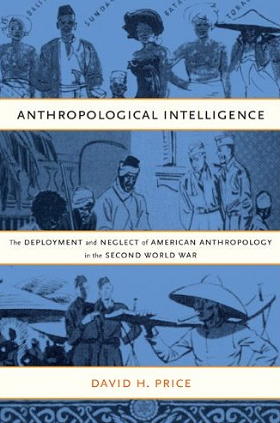
cover Approximately half of all anthropologists in the United States contributed their expertise to the World War II effort. In his new book Anthropological Intelligence: The Deployment and Neglect of American Anthropology in the Second World War, anthropologist David Price explores the wide range of roles they played through dozens of accounts profiling their work.

In a review in Anthropological Quarterly that today was published in Red Orbit, Roberto J Gonzalez writes:

Price’s work reveals that even in a “good war” like WWII, anthropologists often stood on ethically shaky ground when working for military and intelligence agencies, and some of them came to regret the long- term consequences of their participation.

In addition, the book reveals that the during the war, military officials had a tendency of “selectively ignoring and selectively commandeering social scientists’ recommendations” (p. 198). All too often, anthropologists had little impact on policy making and functioned as cogs in large bureaucracies with clearly established goals.

Anthropologists were involved in many doubtful projects. But only “few anthropologists had second thoughts about the ethics of applying anthropology to warfare” according to Price’s book.

The Office of War Information employed nearly a dozen anthropologists, who among other things designed propaganda custom made for Japanese audiences for the purpose of convincing them to surrender.

(…)

Still others were recruited into the Office of Strategic Services (established in 1942), a spy agency that was the precursor to the CIA. For example, Gregory Bateson carried out clandestine missions in South Asia; Carleton Coon used his anthropological knowledge to train assassins and kidnappers in North Africa

(…)

Among the most shocking sections is a description of “social engineers” such as Henry Field (p. 127). Field and several other anthropologists were deeply involved in the “M Project” initiated by President Roosevelt in 1942. The goal was to search the globe for regions where millions of wartime refugees could be resettled.

Declassified documents reveal that “library bound bureaucrats [were] designing contingency plans to move tens of millions of people thousands of miles away from their native lands. Field and his staff appear[ed] comfortable planning to move inventoried people about the globe like fungible commodities” (p. 126).

Even more disconcerting is that fact that “in almost every case, the peoples identified for relocation were victims of the aggression of others (e.g., the Roma, Jews, etc.), as if the reward of being victimized was being moved so that the aggressor could live in peace” (p. 127).

Price concludes that anthropologists’ efforts might have helped defeat the forces of fascism. But at the same time, they unleashed other forces that could potentially be used for harm.

Gonzales has written a quite enthusiastic review. Price’s book is an “extraordinarily powerful and well-informed critique of wartime anthropology for the military”, he writes.

When I’m not very comfortable with the review, it’s because of the connections between the two anthropologists. Gonzales and Price are among the founding members of the Network of Concerned Anthropologists and have written several texts together, i.e. When Anthropologists Become Counter-Insurgents

>> read the whole review

There is also a short review in The Olympian

David Price seems to be a fan of open access anthropology. He has put online lots of articles, including about World War I & II and Anthropology

SEE ALSO:

Cooperation between the Pentagon and anthropologists a fiasco?

More and more anthropologists are recruited to service military operations

The dangerous militarisation of anthropology

Anthropology and CIA: “We need more awareness of the political nature and uses of our work”

Protests against British research council: “Recruits anthropologists for spying on muslims”

American Anthropologists Stand Up Against Torture and the Occupation of Iraq

cover

Approximately half of all anthropologists in the United States contributed their expertise to the World War II effort. In his new book Anthropological Intelligence: The Deployment and Neglect of American Anthropology in the Second World War, anthropologist David Price explores…
Read more

London Anthropology Day

British Museum, London, 10 July, 9.30-4pm.

Lecturers from 17 university anthropology departments will run interactive workshops covering social, biological, and various other strands of Anthropology. Find out more at www.londonanthropologyday.co.uk.

British Museum, London, 10 July, 9.30-4pm.

Lecturers from 17 university anthropology departments will run interactive workshops covering social, biological, and various other strands of Anthropology. Find out more at www.londonanthropologyday.co.uk.

Read more

Kritisiert ethnologische “Stammesforschung”

umschlag

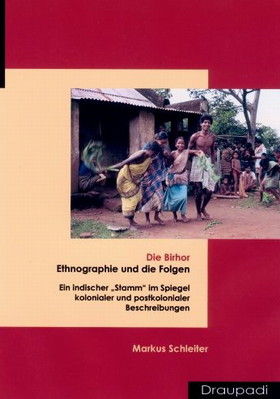
Ethnologe Markus Schleiter scheint eine interessante Dissertation geschrieben haben, die sich kritisch damit auseinandersetzt wie Ethnologen ihnen fremde Gesellschaften beschreiben.

In “Die Birhor- Ethnographie und die Folgen. Ein indischer ,Stamm’ im Spiegel kolonialer und postkolonialer Beschreibungen” geht es besonders um den Begriff “Stamm”, erfahren wir in der Buchbesprechung von Melitta Waligora auf suedasien.info.

Der Begriff “Stamm” (oder “tribe”auf Englisch) ist umstritten, weil er oft negative Assotiationen weckt wie “Rückständigkeit”. Die Begriffe “Stamm” und “Kaste” wurden in Indien im 18. und 19. Jahrhundert oft synonym verwendet.

Die ethnographische Konstruktion der „Stämme“ mit den jeweiligen Zuschreibungen wie primitiv, isoliert, rückständig, gefährdet erfolgte erst ab der Mitte des 19. Jh., gleichlaufend mit dem Begriff der „Kaste“.

Mit beiden Begriffen sollte fortan jeweils etwas anderes beschrieben werden, ohne dass es dafür eine hinreichende Grundlage gab. So konnte es passieren, dass ein und dieselbe Gemeinschaft in einem Gebiet als primitiver Stamm, in einem anderen als niedrige Kaste und wieder woanders als herrschende Schicht klassifiziert wurde.

Diese koloniale Einteilung, so der Ethnologe, wurde sehr bald von den nationalen Akteuren übernommen. Bis heute findet sie sich in der Entwicklungshilfeideologie “als Paternalismus gegenüber den subalternen, so ganz anders gearteten und hilfebedürftigen Stämmen wieder”.

Melitta Waligora schreibt:

So kann der Autor in seinem Resümee nahezu zynisch formulieren, dass die Birhor und deren postulierte Gefährdung eine notwendige Existenzberechtigung für eine Armada von Entwicklungsadministratoren wie Forschern bieten, deren Interesse an einer realen Verbesserung auch der ökonomischen Situation der Birhor demzufolge nur gering ist.

>> weiter bei suedasien.info

Von Markus Schleiter gibt es kaum etwas im Netz. Auf journal-ethnologie.de hat er zumindest den Text “Zum Tanze”. Eine ethnographische Erzählung über den indischen „Stamm“ der Birhor veröffentlicht

SIEHE AUCH:

So lebt der Kolonialismus in der Ethnologie weiter

Ethnologe Leo Frobenius und der koloniale Blick auf Afrika

“Leben wie in der Steinzeit” – So verbreiten Ethnologen Vorurteile

Ethnologen kritisieren Berichterstattung über “isolierte Urwaldvölker”

Nackte Nagas, Nationalsozialismus und Ethnologie

Wieso immer noch Kasten in Indien?

Anthropologists condemn the use of terms of “stone age” and “primitive”

umschlag

Ethnologe Markus Schleiter scheint eine interessante Dissertation geschrieben haben, die sich kritisch damit auseinandersetzt wie Ethnologen ihnen fremde Gesellschaften beschreiben.

In "Die Birhor- Ethnographie und die Folgen. Ein indischer ,Stamm’ im Spiegel kolonialer und postkolonialer Beschreibungen" geht es besonders um…

Read more

Neues Buch von Thomas Hauschild über “Ehrenmorde”, Religion und Gewalt

umschlag

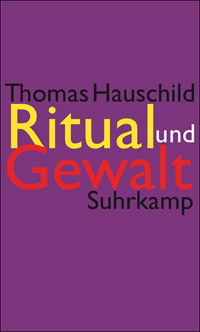
“Ritual und Gewalt” heisst das neue Buch des Ethnologen Thomas Hauschild, das soeben in der Welt besprochen wurde.

Der Ethnologe attackiert darin den Kulturrelativismus in Debatten über Ehrenmorde. “Weder bäuerliche Werte, familiales Gewohnheitsrecht noch der Koran können den Mördern einen kulturellen Bonus verschaffen”, so Hauschild. Das Gerede vom Ehrenmord sei nichts als eine Mystifikation, ersonnen in einem Diskurs, für den alles Kultur ist, alles voller Bedeutung steckt und alles relativ ist.

Hauschild benutzt im Buch seine Erkenntnisse aus seiner Mittelmeer-Forschung, um das Phänomen “Ehrenmord” und andere angeblich durch den Islam motivierte Gewalt zu analysieren. Welt-Kritiker Wolfgang Sofsky war jedoch nicht sonderlich überzeugt vom Buch. Wieweit man ihn als Kritiker vertrauen kann, ist nach dem Eröffnungssatz (“Von Zeit zu Zeit wird die Öffentlichkeit durch Gewalttaten in der Parallelwelt der Einwanderer aufgeschreckt.”) jedoch fraglich.

>> weiter in der Welt

Auch nicht unbedingt überzeugt vom Buch ist Niels Beintker von der Süddeutschen Zeitung. Der Kritiker tut sich schwer mit dem “gedanklichen Sprung von der religiösen Verehrung eines Heiligen in den süditalienischen Bergen zu den religiös verirrten heiligen Kriegern der Gegenwart, vom Aberglauben in der Basilikata zum Kult der fundamentalistischen Massenmörder”.

>> weiter in der Süddeutschen

Bei Suhrkamp erfahren wir folgendes über das Buch:

Gewaltexzesse, die scheinbar von außen in die westlichen Gesellschaften einbrechen, erweisen sich häufig als rituell grundiert und haben ihre europäischen Resonanzen und Gegenstücke. Angesichts dessen entwickelt Thomas Hauschild eine neue Sicht auf Rituale und deren Zusammenhang mit Ressentiment und Gewalt.

Jenseits von Idealisierung und Dämonisierung, von »aufgeklärtem Westen« und »rückständigem Orient«, von postkolonialem Denken und Wissenschaftsgläubigkeit versteht er Rituale als im Kern politisch neutrale Grenzphänomene an den Rändern textlich überlieferten Wissens, die weniger mit abstrakten politisch-religiösen Überzeugungen zu tun haben als mit den konkreten Lebensbedingungen der Menschen.

Hauschild setzt daher auf die Mikroanalyse lokaler ritueller Praktiken und präsentiert höchst anschauliche ethnologische Studien europäischer Gesellschaften und des Mittelmeerraums. Die »Kultur« von Al Qaida wird ebenso untersucht wie die der sizilianischen Mafia, der »Ehrenmord«, der »böse Blick« sowie andere magische und religiöse Riten und Fetischismen.

Bei Suhrkamp kann man auch die Einleitung des Buchs (pdf) lesen

UPDATE Besprechung in der Frankfurter Rundschau (18.7.08) und in der Berliner Zeitung (31.7.08)

SIEHE AUCH:

Hauschild: “Wir müssen begreifen, was es heißt, als Muslim im Westen zu leben”

Thomas Hauschild: Böser Blick nicht nur im Mittelmeer

Ehrenmorde: Ist Kultur ein mildernder Umstand?

Ethnologe Werner Schiffauer über Hintergründe von Verbrechen im Namen der Ehre

umschlag

"Ritual und Gewalt" heisst das neue Buch des Ethnologen Thomas Hauschild, das soeben in der Welt besprochen wurde.

Der Ethnologe attackiert darin den Kulturrelativismus in Debatten über Ehrenmorde. "Weder bäuerliche Werte, familiales Gewohnheitsrecht noch der Koran können den Mördern einen kulturellen…

Read more

20th European Conference on Modern South Asian Studies (Manchester)

8-11 July 2008, University of Manchester

The European Conference on Modern South Asian Studies (ECMSAS) is the largest gathering of South Asia oriented researchers in Europe, covering all fields from the humanities and social sciences to technology, natural sciences and medicine.

http://www.arts.manchester.ac.uk/ecmsas/

8-11 July 2008, University of Manchester

The European Conference on Modern South Asian Studies (ECMSAS) is the largest gathering of South Asia oriented researchers in Europe, covering all fields from the humanities and social sciences to technology, natural sciences and medicine.…

Read more