search expand

– Vi vet for lite om voldelige menn

Både i Sverige og Danmark fortier en vold og seksuelle overgrep innenfor majoritetssamfunnet. Vi vet for lite om voldelige hvite menn, sier sosiolog Keith Pringle i et intervju med Webmagasinet Forum for kjøn og kultur. Pringle har kartlagt kunnskapen som fins om menn i Europa. Han fant ut at de skandinaviske landene henger etter i forskningen om menn og vold.

Han mener at vi trenger kunnskap om hvorfor menn begår vold mot kvinner, barn og mot andre menn. Denne volden er nemlig et utbredt problem – også i landene som ser seg selv som likestilte som de nordiske landene:

– De nordiske lande bliver ofte fremstillet i et særligt positivt lys, når det gælder politik ifht. klasse, køn, etnicitet, alder, handicap og seksualitet. Men i de senere år har kritikere påpeget, at ryet som et entydigt godt ”forbillede” er falsk. For det store fokus på demokrati og velfærd sker på bekostning af smallere områder som fx køn og magt, kønsidentitet og etnicitet.

– Både i Sverige og Danmark ønsker man ikke at se, hvad der sker inden for ens egen etniske gruppe, når det gælder vold og seksuelle overgreb mod børn. Man lukker øjnene. I Storbritannien er det derimod mere accepteret blandt forskere og professionelle socialarbejdere, at seksuelle overgreb mod børn primært bliver begået af mænd og drenge generelt uden særligt fokus på etniske mindretal.

– I Danmark og Sverige er der blinde pletter, når det gælder vold udøvet af den etniske majoritet, nemlig ”hvide” svenskere og danskere. Der er indgået en form for ubevidst overenskomst om, at man som etnisk majoritet er mindre voldelige end ”de andre”. Jeg har mødt tilsvarende holdning hos danske studerende på det sociale område i øvrigt.

Hvorfor er det slik? Pringler peker på nordiske særtrekk:

– De nordiske lande har en historie, som bygger på homogene værdier og konsensus-politik, og de har en rodfæstet tro på egen velfærdsstruktur, sammenlignet med de langt mere individuelle og konfliktorienterede tilgange i Storbritannien. Men det er den samme britiske individualisme, der giver plads til forskelligheder og større opmærksomhed over for manglende ligestilling, når det gælder køn, race, alder, handicap og seksualitet.

Den dynamik, som gør den nordiske velfærdsmodel så stærk, begrænser altså samtidig systemerne, når det drejer sig om håndtering og anerkendelse af social ulighed på en række minoritetsområder.

– Jeg tror, at den kulturelle arv i Danmark skaber modstand mod sociale analyser ud fra et magtperspektiv. For styrken i den liberale individualisme og den dominerende gruppes trang til at påberåbe sig frihed, kan nemlig kun opretholdes gennem fravær af magtanalyser, analyser som netop vil kaste lys på de centrale kløfter i det danske samfund. Efter min mening tænker vi alt for lidt i de borgerrettigheder, som især mindretal bør have i samfund som de skandinaviske.

>> les hele saken i Webmagasinet Forum for køn og kultur

SE OGSÅ:

Æresdrap og dovaner: Kun innvandrere har kultur

Æresdrapsdebatten: Manglende kunnskap eller uttrykk for norsk nasjonalisme?

Ny bok: De fleste drap begås av vestlige menn med gammeldags æresbegrep

Vår tause aksept av drap: Kan de norske “familietragediene” skyldes at enkelte menn ikke takler den raske likestillingen? Det er på tide vi ser på oss selv (Per Kristian Bjørkeng, Aftenposten, 23.12.05)

Har studert norsk forståelse av vold og minoriteter

Både i Sverige og Danmark fortier en vold og seksuelle overgrep innenfor majoritetssamfunnet. Vi vet for lite om voldelige hvite menn, sier sosiolog Keith Pringle i et intervju med Webmagasinet Forum for kjøn og kultur. Pringle har kartlagt kunnskapen som…

Read more

Keith Hart is blogging

banner memory bank

Economic anthropologist Keith Hart has upgraded his website The Memory Bank. Now it looks more like a blog and produces a RSS-feed so it’s easier to follow. Apart from his blog posts, his book on the anthropology of money is online and many papers.

banner memory bank

Economic anthropologist Keith Hart has upgraded his website The Memory Bank. Now it looks more like a blog and produces a RSS-feed so it's easier to follow. Apart from his blog posts, his book on the anthropology of money is…

Read more

New Proposals – New Open Access Journal

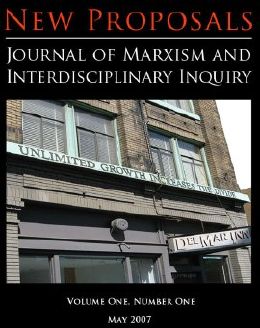
new proposals - cover Anthropologist Charles Menzies is the editor of a new open access journal called New Proposals: Journal of Marxism and Interdisciplinary Inquiry:

New Proposals is a journal of Marxism and interdisciplinary Inquiry that is dedicated to the radical transformation of the contemporary world order. We see our role as providing a platform for research, commentary, and debate of the highest scholarly quality that contributes to the struggle to create a more just and humane world, in which the systematic and continuous exploitation, oppression, and fratricidal struggles that characterize the contemporary sociopolitical order no longer exist.

The first issue was launched in May and focuses on marxist anthropology.

The journal has (of course) its own blog.

new proposals - cover

Anthropologist Charles Menzies is the editor of a new open access journal called New Proposals: Journal of Marxism and Interdisciplinary Inquiry:

New Proposals is a journal of Marxism and interdisciplinary Inquiry that is dedicated to the radical transformation of the contemporary…

Read more

A First Look at Italian Anthropology

antrocom
There are not many anthropologists in Italy that have websites in English. But some have. And in Italy they is an Open Access anthropology journal Antrocom that will be translated into English in a few months. I was contacted by the Italian Antrocom Press Office and provided with some links – so here a first look at Italian anthropology.

Duccio Canestrini runs Homo Turisticus, a web site dealing with the anthropology of tourism.

From the self description:

(The website) provides an original viewpoint of the touristic “species” and of recreational land uses. Travel myths, holiday rythes and touristic encounters are my personal research field.

Over the last decades it seems that everybody has travelled to just about everywhere. But there’s also something risky in the side effects of global tourism. We can do better. A responsible tourism should protect natural resources, respect different cultures and improve everybody’s quality of life.

Although ecotourism and sustainability are new buzz words, and in such risk dying of a dose of media overkill, new representations and new manners in tourism are investigated and largely practiced. Tourism likes and needs innovation. New ideas often come from social sciences.

In English, some articles and videos are available.

Laura Ciaffi is medical anthropologist who focuses on HIV/AIDS. On her website we can read her Cameroon Diary and download three papers about aids and health in Africa.

Cristina Grassen has started blogging on the Anthropology of Innovation.

Alessandro Duranti is Professor of Anthropology at UCLA (Los Angeles). He has put online lots of articles and papers and video clips. He is mainly interested in linguistic and political anthropology.

I was also pointed at these two papers:

Alessandro Cavalli and Fabio Luca Cavazza (2001): Reflections on political culture and the “Italian national character” (published in Daedalus, Summer 2001)

Franco Pelliccioni (1980): “Anthropology in Italy” (published in Human Organization, Journal of the Society for Applied Anthropology)

Earlier today, I’ve written about another Italian anthropologist Gabriele Marranci who runs the blog Islam, Muslims, and an Anthropologist.

Finally, there is the Italian online anthropology community Anthropos with news, links, forum and lots more – currently only in Italian, though.

antrocom website

There lots of anthropology sites in other languages as well (f.ex. Spanish/Portuguese), maybe a topic for another post?

If know more websites, leave a comment!

SEE ALSO:

World Anthropologies: Working towards a global community of anthropologists

How can we create a more plural anthropological community?

Savage Minds: Is Anthropology Global?

antrocom

There are not many anthropologists in Italy that have websites in English. But some have. And in Italy they is an Open Access anthropology journal Antrocom that will be translated into English in a few months. I was contacted…

Read more

New blog: Islam, Muslims, and an Anthropologist

The Anthropology of Islam and Jihad Beyond Islam are the most recent books by Gabriele Marranci. In January this year he has started his own blog Islam, Muslims, and an Anthropologist. He is also writing for the excellent Middle East blog Tabsir.

Gabriele Marranci explains:

By nature, academic publications, even when attempting to reach the general public, are not very widely read outside the ivory tower of academia. (…)For this reason I also started, with Prof. Daniel Varisco, and regularly contribute to, Tabsir.

I believe that anthropologists, as Franz Boas and Margaret Mead have taught us, should engage and contribute to their time by facilitating debate.

In his recent post Collateral damage in the Wars on Terror: between Afghanistan and Glasgow, he comments on the public discourse and press coverage of the recent car bombings in Britain that were linked to al-Qaeda:

Yet are these attacks really al-Qaeda-sponsored? It is too early to say, but I have the impression that this series of attacks were the work of some ‘amateurs of terror’.

(…)

Prime Minister Gordon Brown misleads us when repeating ,

“It’s obvious that we have a group of people – not just in this country, but round the world – who’re prepared at any time to inflict what they want to be maximum damage on civilians, irrespective of the religion of these people who are killed or maimed are to be.”

It’s obvious, I would say, that this is not what those people want; this is, in this case, the inevitable ‘collateral damage’. This group of people kills because they want to achieve their idea of justice and good; they are fighting their battle against ‘evil’ to affirm ‘good’; they are ‘gifting’ us with a purifying fire which will be able to bring joy and prosperity in the future. They are gifting their victims with paradise, they are terrorising us for what they think is right, though costly to achieve. So they say.

Yet are we not terrorising, killing and maiming Afghan civilians to achieve what we think is the right cause? Have we not killed, possibly tortured, illegally detained (i.e. kidnapped), thousands of innocent people, or asked rogue Middle Eastern dictatorships to do so, to achieve what, paraphrasing Mr Brown, is in the interests of a perversion of our western democracy?

During these years of research with different Muslims, having different ideas and beliefs, I have reached the conclusion that we, the homely people of all colours, cultures, faiths and nationalities have found ourselves between not just one ‘War on Terror’ but two. And here is the issue: Terror fighting terror, the only result can be an endless chain of death.

>> visit Gabriele Marranci’s blog

SEE ALSO:

Anthropological perspectives on suicide bombing

Anthropologists on the Israel-Lebanon conflict

“Discuss politics!” – How anthropologists in Indonesia engage with the public

More and more anthropologists, but they’re absent from public debates – “Engaging Anthropology” (1)

The Anthropology of Islam and Jihad Beyond Islam are the most recent books by Gabriele Marranci. In January this year he has started his own blog Islam, Muslims, and an Anthropologist. He is also writing for the excellent Middle East…

Read more