search expand

Anthropologists: “It’s time to kill the Osama bin Laden myths”

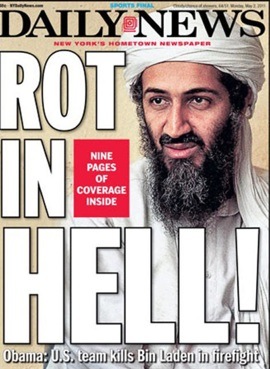
(draft, post in progress) It’s not the first time that Osama Bin Laden has died. Nevertheless, the Western political leaders, even European leaders who were supposed to oppose death penalty, are celebrating the killing of Bin Laden (incl. CIA torture), and the frontpages of American newspapers are shouting in Wild West style “ROT IN HELL”, as Daniel Martin Varisco documents on the blog tabsir.

Varisco is one of several anthropologists who have already started commenting this issue.

William O. Beeman, chair of the department of anthropology, University of Minnesota and past president of the Middle East Section of the American Anthropological Association, explains in an article the myths surrounding Osama bin Laden.

One of the myths is bin Laden’s supposed importance. “Osama bin Laden at the end was far from the looming powerful figure he was made out to be”, he writes:

bin Laden was promoted by the Bush administration as the mastermind of a gigantic apocalyptic global organization under his control. (…). This was a gigantic exaggeration that was largely accepted by the American public without question.

In fact, bin Laden was an incredibly useful symbolic bogeyman. His mere existence justified the United States’ presence in Afghanistan, as well as billions of dollars spent supporting the Pakistan military regime without complaint from the American public.

.

Furthermore, bin Laden was seen as promulgating the United States as al-Qaeda’s principal target. That’s not so true either.

“The mythic ideology of Islamic confrontation with the West, inherent in the bin Laden myth, should die with him”, he writes:

Americans, rather than celebrating a triumph over Islam, should instead be looking forward to a new era of cooperation with the progressive peoples throughout the region, who, with bin Laden’s death, have now begun to have the false accusation of Islamic extremism lifted from their shoulders.

W. Porter Bourie, a PhD student of cultural anthropology at the University of Colorado at Boulder, comments on his blog Dynamic Relations:

Celebrating his death only redefines the Us-Them divide and misdirects our gaze from the conditions that have led to the state of the world. His death won’t cause more violence, but the West’s continued political economic imperialism will. (…) Celebration blinds us to empathy and deludes us into thinking that the world is easily knowable.

Anthropologist Jason Antrosio, presents on the blog Living Anthropologically insights from anthropology and its “voice for tolerance”, contrasting it to the us-versus-them mentalities of the American “war on terror”. It would have been much a more powerful and enduring victory to see bin Laden tried in a court of law, he argues. “Let’s celebrate by investing in jobs, an inclusive healthcare system, schools, and paying our teachers”, he concludes.

The History News Network has published an interview with anthropologist and Afghanistan expert Thomas Barfield on Bin Laden’s death. Barfield seems to identify with the official American rhetoric, and when he says “We”, he means the U.S. administration.

Hamid Mir was the last journalist to interview Osama after 9/11. In his article The Osama bin Laden I knew, published today in the Pakistani newspaper The News, he concludes:

Physical elimination of Osama bin Laden is big news for the Americans but many outside America want elimination of the policies that produce bin Ladens. America came into Afghanistan in search of Osama bin Laden. No doubt that he was responsible for the killing of many innocent people but Americans cannot justify the killing of innocent people through drone attacks just because Osama killed some innocent Americans.

Both Osama bin Laden and Americans violated the sovereignty of Pakistan. It must be stopped now. Osama is dead. If America does not leave Afghanistan after the death of Osama bin Laden, then this war will not end soon and the world will remain an unsafe place.

Check also Wikipedia for the CIA-Osama bin Laden controversy

UPDATES:

Interesting analysis by Matt Thompson at Savage Minds: “One of the most revealing bits of trivia has been that Bin Laden was assigned the code name “Geronimo” by the operation tasked with capturing and killing him”, he writes:

This raises the question, what does a nineteenth century Apache leader have to do with twenty first century Saudi millionaire? Perhaps nothing when viewed from an academic standpoint, it seems more like a non sequitur. But when read as expression of an underlying ideology, one that has legitimated American military action for centuries, the answer is: quite a lot, actually.

Yes, and then we’re back we I’ve started this post, actually, in the Wild West! (Check also Osama, Geronimo, and the scalp of our enemy by Aaron Bady at zunguzungo)

SEE ALSO:

How can anthropology help us understand Swat and Taliban?

Extremism: “Authorities -and not Imams – can make the situation worse”

Selected quotes from “On Suicide Bombing” by Talal Asad

Anthropologist: Al-Qaeda uses dreams to justify violence

Fieldwork reveals: Bush administration is lying about the “war on terror” in the Sahara

Anthropology and CIA: “We need more awareness of the political nature and uses of our work”

War in Iraq: Why are anthropologists so silent?

Thesis: That’s why they go to war

(draft, post in progress) It's not the first time that Osama Bin Laden has died. Nevertheless, the Western political leaders, even European leaders who were supposed to oppose death penalty, are celebrating the killing of Bin Laden (incl. CIA torture),…

Read more

New open access journal: Anthropology Of This Century

(via Cognition and Culture Blog) More and more open access anthropology journals are popping up. The newest one is Anthropology Of This Century (AOTC), edited by Charles Stafford from the London School of Economics (LSE).

The journal publishes reviews of recent works in anthropology and related disciplines, as well as occasional feature articles. The first issue was published a few days ago. Apart from a “feature article” by Maurice Bloch, the issue consists of six book reviews.

Although the journal name seems to signal innovation, it is a rather conventional academic publication. It is written for other social scientists and does not take use of the possibilities that the internet provides. No links, no multimedia, no interactive parts. It has a nice design, including illustrations by Ed Linfoot.

Here’s an overview over the first issue:

Maurice Bloch: The Blob (a theoretical article about “what kind of phenomena people are”)

James Laidlaw: Morality and Honour (review of The Honor Code: How Moral Revolutions Happen by Kwame Anthony Appiah)

Harry Walker: A Problem With Words (review of Christian Moderns: Freedom and fetish in the mission encounter by Webb Keane)

Charles Stafford: Living with the Economists (review of Economic Persuasions edited by Stephen Gudeman and Economy’s Tension: The Dialectics of Community and Market by Stephen Gudeman

Emma Tarlo: Reflections on Ghetto Anthropology (review of Mitzvah Girls: Bringing up the next generation of Hasidic Jews in Brooklyn by Ayala Fader)

Sherry Ortner: On Neoliberalism (review of The Shock Doctrine by Naomi Klein, A Brief History of Neoliberalism by David Harvey, and Inside Job a film by Charles Ferguson)

Chris Fuller: Timepass and Boredom in Modern India (review of Timepass: Youth, Class and The Politics of Waiting in India by Craig Jeffrey)

SEE ALSO:

Anthropology and the challenges of sharing knowledge online: Interview with Owen Wiltshire

Dissent and Cultural Politics (ARDAC) – the first real web2.0-journals in anthropology?

Popular Anthropology Magazine = fail

George Marcus: “Journals? Who cares?”

(via Cognition and Culture Blog) More and more open access anthropology journals are popping up. The newest one is Anthropology Of This Century (AOTC), edited by Charles Stafford from the London School of Economics (LSE).

The journal publishes reviews of…

Read more

Frankrike boikotter prinsebryllup fordi Kate bruker ansiktsslør


Kongelig bryllup med heldekkende ansiktsslør. Screenshot: Jens Rost, flickr

Ifjor høst vedtok Frankrike et forbud mot heldekkende ansiktsslør i offentlig rom. På grunn av det britiske kongehusets lange tradisjon med å bruke sånne plagg, har Frankrike boikottet bryllupet mellom Prince William og Kate Middleton, og bryllupsinteresserte franskmenn måtte derfor ty til utenlandske tv-stasjoner for å få med seg spetakkelet.

Les hele saken i Dagens Nyheter

SE OGSÅ:

“Hodeplagg er obligatorisk”: Den skjulte islamiseringen av 17.mai

Da danske kvinner gikk med burka og radikale norske kvinner med skaut

“Bisarre skikker kjennetegner norske kvinners dagligliv”

Kongelig bryllup med heldekkende ansiktsslør. Screenshot: Jens Rost, flickr

Ifjor høst vedtok Frankrike et forbud mot heldekkende ansiktsslør i offentlig rom. På grunn av det britiske kongehusets lange tradisjon med å bruke sånne plagg, har Frankrike boikottet bryllupet mellom Prince William…

Read more

Antropologisk film: Når eks-barnesoldater driver “Jew-Man-Business”

To svenske aviser skriver om antropologisk film! I Norrländska Socialdemokraten finner vi en artikkel om en filmfestival i Jekaterinburg i Ural – Russian Anthropological Film Festival – ikke akkurat hverdagskost.

“På festivalen i Uralhuvudstaden har man under veckan kunnat se ett trettiotal filmer om bland annat sibiriskt pimpelfiske, medicinmän från Filippinerna och Kamerun, en svensk bloggare och ryska gästarbetare i Polen”, skriver Kenneth Mikko og innleder med at “Allt fler folklivsforskare och antropologer väljer att redovisa sina forskningar genom att göra film.”

Helt riktig! Upsala Nya Tidning intervjuer en av dem: Mats Utas. Han har sammen med Maya Mynster Christensen og Christian Vium lagt filmen Jew-Man Business. Den handler om unge menn med fortid som barnesoldater i Sierra Leone som nå livnærer seg ved å kjøpe og selge tjuvgods i hovedstadens slummer.

“Männen i gathörnen kallar sin egen häleriverksamhet för ”Jew-Man Business”, enligt den stereotypa bilden av den judiske mannen som affärsidkare”, leser vi. Dette til tross for at det har aldri bodd jøder i Sierra Leone. Slummen kaller de forresten “Belgia”. For de gamle bilene som blir importert til Afrika kommer fra Belgia. Alt som er gammelt og slitt er “Belgium”. Hela Sierra Leone blir av og til kalt Belgia.

Han sier:

– När man skriver rapporter eller debattartiklar så når de oftast bara ut till en begränsad krets läsare. Film däremot är ett begripligt medium som uppskattas av väldigt många, inte minst av Sierra Leonierna själva.

– Det som bland annat gör filmen så speciell är att vi har en unik kontakt med de här unga männen och vi har vunnit deras förtroende eftersom vi har umgåtts med dem så länge. I vanliga fall så har man inte råd med sådant omsorgsfullt bakgrundsarbete som dokumentärfilmare.

Å lage en film med eks-krigere i slummen til et av verdens fattigste land er langt fra enkelt, utdyper han i teksten Making Jew-Man Business

På spørsmålet “Vad har du själv lärt dig av dina upplevelser i Sierra Leone?”, svarer han forresten:

– Att människan i grunden är densamma överallt. När strukturer omkring henne inte fungerar eller rasar samman så skapar hon en stat i staten. Utsatta grupper som de i Belgium organiserar sig på samma sätt som liknande grupper i fattiga delar av amerikanska storstäder.

>> les hele saken i Uppsala Nya Tidning

>> Filmens hjemmeside med trailer

Mats Utas har lagt mange av sine publikasjoner i fulltekstversjon på nett.

Siden 2009 jobber han forresten ved Försvarshögskolan. Han skrev en interessant tekst om dette valget, se tidligere innlegg When should anthropologists work for the military?.

SE OGSÅ:

Formidling: – Bruk heller film enn skrift

Får ingen publiseringspoeng for å lage film

Frode Storaas: Derfor trenger vi multimedia-antropologi på nett

Dokumentar- og dogmefilmer inspirert av antropologisk film?

The Visual Anthropology of Fashion and Running on YouTube and Vimeo

Via YouTube: Anthropology students’ work draws more than a million viewers

To svenske aviser skriver om antropologisk film! I Norrländska Socialdemokraten finner vi en artikkel om en filmfestival i Jekaterinburg i Ural - Russian Anthropological Film Festival - ikke akkurat hverdagskost.

"På festivalen i Uralhuvudstaden har man under veckan kunnat…

Read more

Er det riktig å stille ut mennesker på den måten?


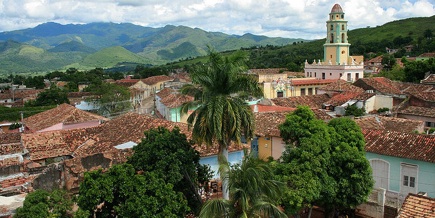
Verdensarv = levende museum?: Trinidad de Cuba. Foto: Richard IJzermans, flickr

Mens familien spiser frokost, stormer en guide med en gjeng turister inn i stua. Er det etisk forsvarlig å gjøre hus der folk bor til museer? Er det riktig å stille ut mennesker på denne måten? Og hva og for hvem er det egentlig vi verner, for Vesten, resten eller alle, spør Nina Alnes Haslie. doktorgradsstipendiat i sosialantropologi i en kronikk i Dagsavisen.

Hun skriver om Trinidad de Cuba. Byens koloniale urbane sentrum ble i 1988 erklært som kulturelt verdensarvsted av Unesco.

Hva betyr dette for byen og dens innbyggere? Antropologen skriver:

I Trinidad er det bak lukkede dører mye motstandskraft mot offentlig historieskriving og forvaltningspolitikk. Arvens beboere ble ikke spurt om de ville vernes, og forteller sine egne historier om fortrengning og om livet på utstilling i gamle hus.

Nina Alnes Haslie har i 2009 levert sin masteroppgave om denne byen: Å leve med arv. Om forhandling med fortid, nåtid og framtid på Verdensarvstedet Trinidad de Cuba.

Hun har også blogget mens hun var seminarleder for Kulturstudier i León, Nicaragua, i faget Latin-Amerikakunnskap, sjekk http://www.lakinica.blogspot.com/

SE OGSÅ:

Antropologer kritisk mot økoturisme

– Turister søker det lokale og tradisjonelle

“Primitive folkeslag” utstilt i dyrehagen: Glemt Danmarkshistorie fram i lyset

For et levende museum – Få utstillingsobjektene til å snakke!

Cultural Backstreet Tours: Explore your town with anthropologists!

Home Ethnography?

Verdensarv = levende museum?: Trinidad de Cuba. Foto: Richard IJzermans, flickr

Mens familien spiser frokost, stormer en guide med en gjeng turister inn i stua. Er det etisk forsvarlig å gjøre hus der folk bor til museer? Er det riktig å…

Read more