“Die Ureinwohner Amerikas gelten als Menschen, die im Einklang mit der Natur lebten. Doch das war keineswegs der Fall. Mitunter zerstörten sie sogar ihre eigene Lebensgrundlage”, schreibt Sebastian Herrmann, der eine grosse Menge an Quellen zusammengetragen hat, u.a. auch Artikel in Ethnologiezeitschriften.
Diese Klischees sind weit verbreitet, teils auch innerhalb des Faches Ethnologie. Die Klischees sagen mehr aus über die Sehnsüchte der Europäer als über die Indianergesellschaften. Doch es stimmt natürlich auch, und darauf wird im SZ-Artikel auch hingewiesen, die grössten Schäden an der Umwelt richten selbstverständlich die Industriestaaten an. Diverse Ureinwohnergruppen benutzen diese Klischees in ihrem Kampf um Anerkennung.
“Jetzt ist es definitiv: Für den Profilbereich Volkskunde/ Kulturanthropologie gibt es an der Universität Bonn keine Zukunft”, meldet der Bonner Generalanzeiger.
AKTUALISIERUNG: Jörn Borchert von Kulturelle Welten kommentiert das Ende der Volkskunde. Der Untergang war absehbar, schreibt er:
Eine Disziplin, die keine Fürsprecher aus der Hochkultur hat und nicht deutlich machen kann, was sie zur Verbesserung der Welt beitragen kann, die muss untergehen. (…) Sie hat jahrzehntelang Themen in den Vordergrund gestellt, die keinerlei gesellschaftliche Relevanz besaßen und trat nur dann öffentlich in Erscheinung, wenn Freitag der 13. war oder der Osterhase nach Eiern suchte. War ja ganz lustig, aber nicht so bedeutsam, dass irgendeiner auf die Idee hätte kommen können, dass diese Meldungen etwas mit ernsthafter Wissenschaft zu haben könnten.
Der drei Jahre lange Kampf für den Erhalt der Volkskunde und Kulturanthropologie an der Uni Bonn ist verloren. Der "Profilbereich" fällt den Sparmassnahmen der Uni zum Opfer. Zum Wintersemenester 2012/13 ist endgültig Schluss.
Barna lever i stor ensomhet, de sover dårlig og plages ofte av hodepine. Mange er ulykkelige og sliter psykisk. Noen av dem blir fullstedendig knust av de deprimerende omgivelsene.
Meningen med boka er å gi forskningsbaserte innspill i debatten om dansk asylpolitikk, skriver bokas redaktører Signe Smith Nielsen, Kathrine Vitus i en innlegg i Information.
Barna føler nemlig konsekvensene av dansk asylpolitikk, der beskyttelsen av de nasjonale grensene er viktigere beskyttelsen av menneskene på flukt, på kroppen.
Livet på asylmottak er hardt, spesielt for barn når de må bo der i årevis. Det forekommer fortsatt, og den danske regjeringen har ingen planer om å gjøre noe med det, kritiserer redaktørene.
Kathrine Vitus sier i et intervju med Politiken at det mangler en overordnet diskusjon om, hva vi vil stille opp med en i verden, hvor kriger plutselig skaper flyktningestrømmer:
”Hver gang der bliver trukket en enkeltsag frem, lyder det fra højeste sted, at ’vi følger bare reglerne’. Men reglerne opstår ikke ud af det blå. Hvad er det for nogle præmisser, der ligger til grund for reglerne.
Politikerne forsøger at afpolitisere området ved at gøre det til et bureaukratisk og juridisk spørgsmål.
Med denne antologi viser vi videnskabeligt, hvilke konsekvenser lovene har, og hvis man fremlægger de konsekvenser, så bliver det en mere åben diskussion, hvor man ved, hvad det er, man vælger.”
Boka viser også framskritt, skriver Danmarks Radio: Flere asylbarn får – som det er vanlig i Norge – å besøke den vanlige skolen.
Men grunnvilkårene er likevel de samme, sier Vitus:
Børnene kender ikke deres fremtid, og de lever i en frygt for hjemsendelse. De lever på kanten af samfundet – hverken indenfor eller helt udenfor.
Boka fikk terningkast fire i Politiken. Anmelder Poul Aarøe Pedersen mener boka bør deles ut blant politikerne på Christiansborg som er ansvarlig for den nåværende politikken overfor asylbarna.
Menneskerettssituasjonen i Norge overfor flyktninger er heller ikke forbilledlig. Etter å ha hørt hvordan norske myndigheter behandlet småbarnsmoren og læreren Tsehay Shumye, som flyktet fra Etiopias regime etter valget i 2005, skrev Dag Herbjørnsrud i Ny Tid: Kjære FN: Hjelp oss!: Norge trenger en humanitær intervensjon.
Barna lever i stor ensomhet, de sover dårlig og plages ofte av hodepine. Mange er ulykkelige og sliter psykisk. Noen av dem blir fullstedendig knust av de deprimerende omgivelsene.
I "Asylbørn i Danmark. En barndom i undtagelsestilstand" viser…
What’s the point of science when the public lacks access to it and researchers hide in their ivory towers? The internet provides new ways for researchers and the public to exchange knowledge. How do antropologists make use of blogging, Facebook, YouTube and new modes of publishing, for example Open Access journals?
The history of anthropology section was meant to reveal that anthropologists have reasons for increased collaboration with non-anthropologists, reasons to engage with public audiences, reasons to give people outside academia a place to respond to what anthropologists write.
Unfortunately, the way I did this led some people to think I was attacking them and their profession.
– Why did you choose to study your own discipline online instead of studying mobile phone use in Papua New Guinea or immigrants in Toronto?
– I saw open access publishing and new online publishing options as being important new developments that might contribute to “decolonizing” the creation and dissemination of anthropological work.
– So how is internet fueling change in Anthropology? Can you give us 3 examples?
– The desire for changes in anthropology that I discuss had been occurring well before the Internet became popular. But the Internet, of course, is a revolutionary technology that allows anthropologists to target all sorts of different audiences in new ways.
The main points of change I addressed were:
1. Open Access (OA) publishing is helping researchers disseminate work that might normally remain geographically bound due to the costs to access it.
As Max Forte pointed out, most OA journals in anthropology come from what would be the periphery of anthropological publishing. This is interesting when we see that that academic publishing, at least in terms of the American Anthropological Association, continues to be very geographically centered, even ethnocentric to a degree.
Open Access journals are a way for international scholars to make their work accessible to researchers abroad. OA might help scholars in places like Brazil have their work recognized in North America. Of course language divides remain.
2. Blogging and other ways of creating publicly accessible, archived, discussions are an awesome way to develop ideas throughout and after the research process!
It really opens the door for anyone to participate, to react, and to help guide research through feedback (however nasty it might be). It helps make writing research reports a more iterative process, where researchers can bounce ideas off each other and other audiences, prior to publishing.
For anthropologists who have been criticized for misrepresenting communities (as I have with anthropology!) it makes sense to work in as much discussion like this as possible. I tried to show how this could occur by incorporating blog responses into the thesis. Where I may have been wrong about anthropology as a whole (you can make that decision yourself), I think my biases are balanced out to a degree by the included responses.
3. Welcome the uncensored, unreviewed voice of the anthropology students.
I think we can be a pain in the ass, but I can’t imagine going through the program without reading so many other blogs by people going through the same thing in different institutions.
– Anthropologist have been described as “the last primitive tribe on earth”: They hide in their ivory towers and look with suspicion upon new technologies like the internet. Does your research challenge this assumption?
– I made this argument in my thesis, and its true to a degree, but I take it more as a argumentative point. Anthropologists and other academics are making use of the internet and just about every new tool that comes their way.
The point I make in my thesis is that the ivory tower remains even when we use these tools in public.
I used the distinction which had been developed in discussion with a number of anthros, including some people at Savage Minds, and Max Forte, and Erkan Saka, of there being “anthropology in public” and “public anthropology”.
Even if you write about anthropology in public, it doesn’t mean you are addressing interests outside the ivory tower. That is where public anthropology comes in, where anthropologists address issues outside the ivory tower. When they do this however, it is a challenge to identify what makes the work academic. Michael Wesch’s youtube videos are a great example of this that I discussed very briefly in the thesis.
An anthropological introduction to YouTube
47:32 Networked Production: The Collab. MadV's "The Message" and the message of YouTube 49:29 Poem: The Little Glass Dot, The Eyes of the World 51:15 Conclusion by bnessel1973 52:50 Dedication and Credits (Our Numa Numa dance) The Numa Numa quote is from *Douglas* Wolk (not Gary Wolk as I mistakenly said in the talk).">
– Why are some anthropologists interested in sharing and open access, while others are not?
– Some see the discipline of anthropology as being an expert and professional society. They want to share their work with other anthropologists who have the same interests and concerns as themselves. Feedback from random Youtube users, or even people in other disciplines, isn’t very valuable to them. The feedback they can get through peer review in professional anthropology journals is exactly what they want, as is the recognition.
Also, I don’t think every researcher agrees that expensive academic journals fail to disseminate work. They only want to share their work with a select audience, and don’t see the point in making it available free online. In the end they disagree that free access would improve the impact of their work (it comes down to who they are trying to impact).
– What are in your view the main barriers to open access publishing?
– Some professors encourage students to look at select journals, and they don’t consider the Open Access journals that are out there. If researchers only use Jstor and Anthrosource to find material, they are missing out on a lot of what is being discussed – yet this is standard practice and considered to be acceptable.
Is it a researchers responsibility to make themselves aware of everything that’s being published out there? Or is that unreasonable? The increasing number of journals around the world make it quite difficult to do a complete literature review! If we can’t funnel it down to a select number of publications, it is impossible to ask researchers to keep up to date. But if OA journals are ignored, many researchers may never realize how beneficial it is to be able to openly link to, discuss, and talk about publications online.
– But you stress that OA Publishing does not necessarily lead to a more public anthropology?
– Yes, OA publishing is just about making anthropological research more accessible to its desired audience. It doesn’t mean anthropologists are writing with the intention that public audiences interact with it, or that it be relevant to public interests. Also, if you look at OA repositories, theres still no effort being made to host responses, so we can’t say that OA is an attempt to get more feedback.
– Do you think we need a more public anthropology? OA Publishing is not enough?
– I think it’s easy to adapt anthropology and research to public contexts, but at that point it ceases to be anthropology as we know it. I would have loved to come out of my masters degree program with more experience producing video, and documentary-like productions. Maybe I should have studied communications. Speaking of which, my roommate studies Communications, and we shared many of the same readings. Finally, as I develop in the thesis, theres nothing inherently good about public engagement – take a look at the Human Terrain Teams for example.
– You’ve done your fieldwork mainly online. An interesting experience?
– Yes. I think the blog experiment worked out rather well, showing that the blog can be used to solicit feedback throughout the research process and not just as a way of disseminating/publishing ideas.
– The most interesting thing you have learned?
– It is really easy to piss people off when you critique anthropology.
– What are the implications of your research?
– Feedback is important, and sharing ideas openly online is a great way to solicit that feedback!
– Final words to the readers in front of the screen?
What's the point of science when the public lacks access to it and researchers hide in their ivory towers? The internet provides new ways for researchers and the public to exchange knowledge. How do antropologists make use of blogging, Facebook,…
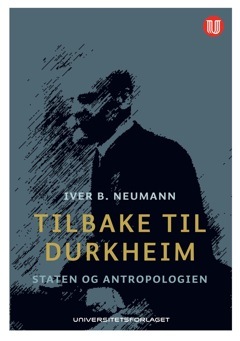
Vi plyndres av staten! Staten undertrykker minoriteter! Staten detaljstyrer livene våre! Når vi kommer med slike utsagn får vi ofte høre at det er jo vi som er staten. “Staten, det er deg!”, fastslår for eksempel Lars-Henrik Myrmel-Johansen fra Fornyings-, administrasjons og kirkedepartementet.
“De der oppe” er bare våre representanter. Er det virkelig slik? Stemmer det slik vi ofte hører at det er vi som er staten? Eller er staten noe separat, en egen elite med sine egne interesser og som derfor er så interesserte i å kontrollere oss? Var det ikke engang en hersker som sa “staten det er meg?”
Vi tar staten for gitt som noe som bare er der, som på en måte er det samme som samfunnet. Hvorfor er det slik? Dette skyldes dominansen av angloamerikansk teori, mener han. Han mener vi heller bør la oss inspirere av fransk og tysk samfunnsteori. Durkheim for eksempel er opptatt av relasjonen mellom staten og samfunnet som er under stadig forandring.
Den tidlige staten, skriver Neumann, er for Durkheim organisert separat fra samfunnet, en organisasjon som la under seg territorium, først og fremst ved våpenmakt, og kommuniserte med andre stater. Jo større grensesnitt staten har med samfunnet, desto mer demokratisk er staten ifølge Durkheim.
Med et slikt perspektiv er staten altså noe som kan studeres empirisk. Den er ikke bare der og svever i luften.
Heidi Stakset har skrevet en interessant kommentar til Neumanns artikkel, der hun viser til flere eksempler på at kontrakten mellom staten og samfunnet er radikalt brutt, blant annet i spørsmål rundt asyl og funksjonshemmedes situasjon. Enkeltpersoner har ingenting å stille opp mot “staten som styrkens herredømme”.
Neumann har nylig gitt ut boka Antropologien og staten og har tidligere iår skrevet en kronikk i Dagbladet. I Kongene som forsvant (Dagbladet, 15.2.11) skriver han om kreativ historieskriving som får staten til å framstå som hevet over det timelige.
“Staten”, skriver han, “bør helst være så gammel at den er tidløs, for en gammel stat er en ærverdig stat.” Hvis innbyggerne tar staten for gitt, og endatil identifiserer seg med den, får statens ledere enklere dager.
Boka har fått en positiv anmeldelse i Universitas. “I motsetning til det som preger selvforståelsen til mange norske samfunnsvitere, nemlig at du som forsker ikke er berettiget en politisk mening, slår Neumann et velrettet slag for antropologens rolle som maktkritiker”, skriver Magnus Løvold.
Vi plyndres av staten! Staten undertrykker minoriteter! Staten detaljstyrer livene våre! Når vi kommer med slike utsagn får vi ofte høre at det er jo vi som er staten. "Staten, det er deg!", fastslår for eksempel Lars-Henrik Myrmel-Johansen fra Fornyings-,…