search expand

Burka = kors?


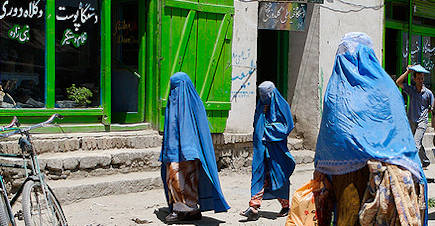
Swaggering Burqas. Kabul. Foto: Mohamed Somji, flickr

Burkadebatten ser ikke ut til å ta slutt med det første, og i flere land vurderer styresmaktene å forby klesplagget. I et innlegg i Upsala Nya Tidning går antropolog Patrik Sander Göth ganske langt i å forsvare burkaen. Han mener vi kommer ikke særlig langt når vi bare ser burkaen som noe fremmed. Den er et personlig religiøst uttrykk på samme måte som korset rundt halsen blant kristne:

I den svenska sekulariserade kulturen är således det lilla korset som hänger runt halsen det enda som avslöjar en eventuell tillhörighet till den kristna tron. Så om vi likställer det lilla korset runt halsen med burkan med perspektivet att det är ett uttryck för en religiös tillhörighet blir varken det ena eller det andra mer eller mindre förtryckande.

Patrik Sander Göth er en av de mange antropologer som driver for seg selv som frilanskonsulent. Han har reservert seg et passende domenenavn www.kulturantropologen.se.

Der presiserer han at det nettopp er de andre perspektivene som utmerker antropologifaget:

Kulturantropologen utgår inte från det västerländska tänket utan tillämpar relativism och holism och kan därför hitta nya tillvägagångssätt och lösningar. (…) Med hjälp av kulturantropologen kan problemsituationen omvandlas till något mycket spännande och inte alls hotfullt.

SE OGSÅ:

Gabriele Marranci: Burqu’ing freedom: the danger of ‘moral civilizing

Magnus Michaelsen: Burkaen – En samfunnsfiende?

Da danske kvinner gikk med burka og radikale norske kvinner med skaut

Thesis: Hijab empowers women

France asks anthropologist for advice on burqa-ban

Lila Abu-Lughod: It’s time to give up the Western obsession with veiled Muslim women

Lila Abu-Lughod: Do Muslim Women Really Need Saving? (pdf)

Swaggering Burqas. Kabul. Foto: Mohamed Somji, flickr

Burkadebatten ser ikke ut til å ta slutt med det første, og i flere land vurderer styresmaktene å forby klesplagget. I et innlegg i Upsala Nya Tidning går antropolog Patrik Sander Göth ganske langt…

Read more

Juss + antropologi = sant

Stadig flere forskere fra andre disipliner går på “feltarbeid”. De lever ikke alltid i feltet på samme måte som antropologer, men erkjenner verdien av å få et innblikk i hverdagen til menneskene de skriver om.

Men det står dårlig til med tverrfaglige perspektiver i pensum, forteller Maja Janmyr, stipendiat ved Det juridiske fakultet ved Universitetet i Bergen, i et intervju med På Høyden.

Janmyr har gjort feltarbeid blant flyktningar i Uganda. Det var “utfordrande for ein jurist med lita utdanning innanfor sosiologisk og kvalitativ metode å gjere feltarbeid av denne typen”, forteller hun. Det er for lite av dette i pensum. Jussen kan ha utbyte av å åpne seg mer mot andre fagfelt.

>> les hele saken i På Høyden

Doktorgradsprosjektet heter “Protection of Civilians within Refugee Camp Environments: the separation of armed elements”. I Bistandsaktuelt skrev hun kommentaren Urovekkende utvikling i Uganda

Anne Hellum er en av de få juristene i Norge som kombinerer juss og antropologi.

SE OGSÅ:

Vår evne til å forstå schizofreni – en filosof på feltarbeid

Naturviter på feltarbeid blant skolejenter i Afrika

Dårligere kår for tverrfaglig forskning?

Kan kunst være antropologi? Hvor unik er antropologi?

Improviasjonsforskning: Å la seg inspirere av jazzmusikere og fotballspillere

Stadig flere forskere fra andre disipliner går på "feltarbeid". De lever ikke alltid i feltet på samme måte som antropologer, men erkjenner verdien av å få et innblikk i hverdagen til menneskene de skriver om.

Men det står dårlig til med…

Read more

Nach dem Islamismus: “Schiffauer differenzierter als seine Kritiker einräumen”

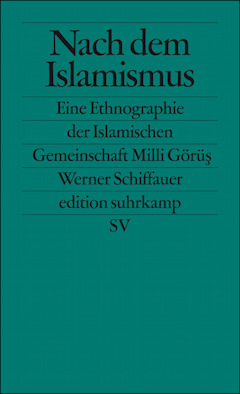
War er zu unkritisch gegenüber seinen Informanten? Ein Sprachrohr der “Islamisten”? In der taz wurde das neueste Buch des Sozialanthropologen Werner Schiffauer Nach dem Islamismus: Eine Ethnographie der Islamischen Gemeinschaft Milli Görüs verrissen. In der faz ist soeben eine bedeutend positivere Besprechung des Buches erschienen, in dem Schiffauer u.a. für eine größerere Gelassenheit im Umgang mit Milli Görüs eintritt.

Die Kritik am Buch sei wenig überzeugend, schreibt Susanne Schröter in der faz. Schiffauer sei differenzierter, als seine Kritiker einräumen.

Wissenschaftlich betrachtet, ist nämlich weder an Schiffauers Methoden noch an den Schlussfolgerungen aus seinen empirischen Daten etwas auszusetzen. Im Gegenteil: Der Autor hat im besten ethnologischen Sinne langjährige teilnehmende Beobachtungen bei Milli Görüs durchgeführt und ist in einen Verstehensprozess eingetreten, der ihm Erkenntnisse eröffnet hat, die bei großer Distanz nicht möglich gewesen wären.

(…)
In der heutigen Milli Görüs unterscheidet er drei Milieus: ein konservatives Gemeindemilieu, in dem ländlich-türkische Wertvorstellungen gepflegt werden, ein Jugendmilieu, dessen Protagonisten sowohl in der Gemeinde als auch in der Mehrheitsgesellschaft aktiv sind, aber einen wenig flexiblen Oppositionsgeist pflegen, und schließlich ein postislamistisches Milieu mit reflektierten Intellektuellen, die sich für den Kontakt mit dem Wissenschaftler anboten, da sie den „Dialog mit Geisteswissenschaftlern“ suchen.

>> weiter in der faz

Auch Urmila Goel, die bei Schiffauer studiert hat, findet im Buch “eine differenzierte Darstellung der Milli Görüs und verschiedener Strömungen in ihr”. Schiffauer ermögliche seinen Leser_innen immer auch kritische Perspektiven auf sein Protagonisten, schreibt sie.

In einem Interview mit dem Deutschlandradio geht Schiffauer auf die Kritik in der taz ein.

Fast gleichzeitig ist ein Interview mit Schiffauer in der Rheinischen Post erschienen. Hier wird deutlich, dass der Forscher gegen Vorurteilen unter Medienmachern ankämpfen muss.

Das Interview dreht sich um die islamische Gruppierung der Salafisten. Der deutsche Verfassungsschutz scheint sie in Verbindung mit Al Qaida zu setzen.

“Salafismus – Einstieg in die Gewalt” tittelt das Blatt, obwohl Schiffauer deutlich erklärt, dass nur eine kleine Minderheit gewaltbereit ist. “Eine Teilgruppierung im aktivistischen Zweig hat eine Tendenz zum gewaltsamen Islam. Aber das ist eine Minderheit innerhalb der salafistischen Bewegung”, betont er.

Die Vertreter dieser “aktivistischen” Teilgruppierung setzten sich für die Herstellung eines “Gottesstaates” ein. Aber dann gibt es noch eine relaxtere Gruppe, die eine “quietistische” Form des Salafismus verfolgt. Sie ziehen sich von der Gesellschaft zurück, “um dort die Religion in ihrer ganzen Reinheit zu verwirklichen”, erklärt Schiffauer.

Allen Salafisten ist gemeinsam, dass sie zurück zu den Ursprüngen des Islams möchten. Salafismus ist laut Schiffauer “eine Reinigungsbewegung, mit der man sich wieder frei machen will von all den Einflüssen, die in der Geschichte über den Glauben gekommen sind.”

>> weiter in der Rheinischen Post

Siehe hierzu ein laengerer Text des Anthropologen Martijn de Koning Radicalization Series IV – Salafism as a Utopian Movement

Werner Schiffauer im Gespräch mit Geesa Tuch

SIEHE AUCH:

Schiffauer: “Öffnung gegenüber dem Islam nicht der Terrorismusbekämpfung unterordnen”

Werner Schiffauer: Wie gefährlich sind “Parallelgesellschaften”?

Werner Schiffauer zum Mord an Marwa El-Sherbini: “Islamophobie reicht bis in die Mitte der Gesellschaft”

Wenn christliche Terroristen töten

Militarisation of Research: Meet the Centre for Studies in Islamism and Radicalisation

“Encouraging to see a Muslim anthropologist studying American society”

Extremism: “Authorities -and not Imams – can make the situation worse”

War er zu unkritisch gegenüber seinen Informanten? Ein Sprachrohr der "Islamisten"? In der taz wurde das neueste Buch des Sozialanthropologen Werner Schiffauer Nach dem Islamismus: Eine Ethnographie der Islamischen Gemeinschaft Milli Görüs verrissen. In der faz ist soeben eine bedeutend…

Read more

Trauerethnologin: Eine neue Trauerkultur ist am Entstehen


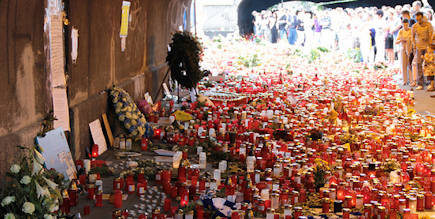
Nach der Loveparade: Trauer am Tunnel. Foto: triple1_hamburg , flickr

Blumen, Kerzenmeere, Abschiedsbriefe. Dass an Orten, wo ein Unglück wie während der LoveParade in Duisburg passiert ist, Menschen gemeinsam öffentlich trauern, ist ein relativ neues Phänomen in Deutschland, sagt “Trauerethnologin” Christine Aka in einem Interview mit dem Westdeutschen Rundfunk (WDR):

Eine der ersten großen öffentlichen Trauerkundgebungen gab es 1986 in Schweden, als der damalige Ministerpräsident Olof Palm erschossen worden war. Plötzlich gingen die Menschen hin und legten Blumen, Kerzen und Zettel an den Tatort. Das entwickelte sich dann schnell weiter. Zum Beispiel nach dem Flugzeugunglück in Rammstein oder dem Zugunglück in Eschede gab es auch in Deutschland große, öffentliche Trauerbekundungen.

Eine vollkommen neue Dimension der Massentrauer war dann die Reaktion auf den Tod des Fußballers Robert Enke, der sich im November 2009 das Leben nahm. Dass der Tod eines Einzelnen, der nicht durch eine Massenkatastrophe gestorben ist, so kultisch gewürdigt wird, hat es noch nicht gegeben.

Bis Anfang der 1980er Jahre waren Tod und Trauer Tabuthemen in Deutschland. Vieles har sich mit den ersten Aidstoten geändert. Auch Säkularisierung spielte eine wichtige Rolle:

Viel hat sich verändert mit den ersten Aidstoten. Es entstanden Trauerrituale für Menschen, die außerhalb der Gesellschaft oder der Kirche gestanden hatten. Außerdem wollte man das Schicksal dieser Menschen öffentlich machen. Einerseits, um den einzelnen Verstorbenen zu würdigen, andererseits als Präventionsmaßnahme. In der Folge kam eine Flut von Trauerratgebern auf den Markt. Vorher hatte man die Trauer dem Dienstleistungsunternehmen Kirche überlassen. Irgendwann konnte man mit diesen kirchlichen Ritualen nicht mehr viel anfangen, sie waren nicht mehr individuell genug. Gleichzeitig verließen immer mehr Leute die Kirchen. Diese Leute stellten fest, dass sie aber trotzdem Abschiedsrituale brauchen. Dann hat man angefangen, sehr kreativ mit der persönlichen Trauer umzugehen.

>> weiter beim WDR

Aka veröffentlichte vor drei Jahren ein Buch über Unfallkreuze am Straßenrand.

Die Forscherin hätte auch die Rolle des Internets für Trauernde erwähnen können. Vor wenigen Wochen ist ein Freund von mir in Norwegen beim Bergwandern 200 Meter in den Tod gestürzt. Freunde und Bekannte benutzten seine öffentliche Facebook-Seite, um letzte Grüsse an ihn zu hinterlassen.

Medienforscherin danah boyd beschreibt dies Phänomen in ihrem Blogpost Facebook and MySpace used as site of mourning/memory:

There is no good way to mourn the loss of someone young, but what fascinates me about these messages on Christine’s Profiles is that they are all written to her but visible for everyone to see. A persistent, public signal of mourning. Her friends are speaking to her, not about her.

Für die Hinterbliebenen von Selbstmord gibt es eine Fülle von Foren im Netz, u.a. suicidegrief.com.

SIEHE AUCH:

Ethnologie und die Sehnsucht nach dem Tod

The Anthropology of Suicide

Völkerkundemuseum der Universität Zürich: Wie ist es im Jenseits und wie gelangt man dorthin?

Kreuze am Fahrbahnrand – ein neuer Trauerritus

Nach der Loveparade: Trauer am Tunnel. Foto: triple1_hamburg , flickr

Blumen, Kerzenmeere, Abschiedsbriefe. Dass an Orten, wo ein Unglück wie während der LoveParade in Duisburg passiert ist, Menschen gemeinsam öffentlich trauern, ist ein relativ neues Phänomen in Deutschland, sagt…

Read more

The "illegal" anthropologist: Shahram Khosravi’s Auto-Ethnography of Borders

Globalisation means for most people on this planet higher fences and less movement across borders. The new book by anthropologist Shahram Khosravi is an auto-ethnography of illegalised border crossing.

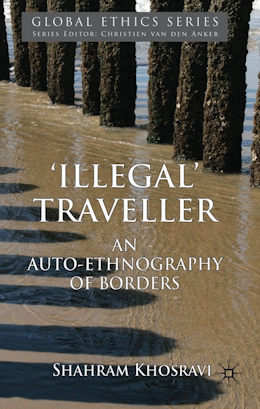
‘Illegal’ Traveller is based on the anthropologists’s own journey from Iran to Sweden and his informants’ border narratives. “Studies of migrant illegality are often written by people who have never experienced it”, he writes in the introduction. “My aim has been to offer an alternative, partly first-hand, account of unauthorized border crossing that attempts to read the world through ‘illegal’ eyes:

This book is the outgrowth of my own ‘embodied experience of borders’, of ethnographic fieldwork among undocumented migrants between 2004 and 2008, and of teaching courses on irregular migration and the anthropology of borders. It also emerges from my activities outside academia: freelance journalism, helping arrange events such as film festivals about border crossing, and volunteer work for NGOs helping failed asylum seekers and undocumented migrants in Sweden.
(…)

Auto-ethnography lets migrants contextualize their accounts of the experience of migrant illegality. It helps us explore abstract concepts of policy and law and translate them into cultural terms grounded in everyday life.

(…)
In my years as an anthropologist, I have been astonished at how my informants’ experiences overlapped, confirmed, completed, and recalled my own experiences of borders. One interesting aspect of the auto-ethnographic text is that the distinction between ethnographer and ‘others’ is unclear.

I haven’t found any reviews yet, but what I have found is a fascinating paper by him, published in Social Anthropology three years ago. The title: The ‘illegal’ traveller: an auto-ethnography of borders (subscription required now open access!).

In this paper he describes his journey from Iran to Europe as “illegal” refugee and theoreticizes about the ‘world apartheid’ we live in according to him and criticizes the ways we think about borders and migration:

Based on a capitalist-oriented and racial discriminating way of thinking, borders regulate movements of people. However, borders are also the space of defiance and resistance.

It is because of this resistance he is still alive. In September 1986 he tried to leave Iran ‘illegally’ for the first time. “I had then just finished high school and I was called up to do military service during the ongoing terrible war between Iran and Iraq. To come back alive from the front was a chance I did not want to take”, he writes.

It was a long journey via Afghanistan, Pakistan and India. He ended up in Sweden via human smugglers. They saved him his life.

Human smuggling is in his opinion recurrently misrepresented by the media and politicians as an entirely mafia-controlled criminality. One of his helpers was Homayoun, a 25-year-old Afghani man, an undocumented immigrant, who had lived clandestinely in Iran since he was 15:

According to immigration law, Homayoun was a human smuggler, a law breaker and a criminal. But in fact he saved my life in one of the most dangerous places, under the rule of ruthless criminal gangs, corrupt border guards and fanatic Mujaheddin. (…) Homayoun facilitated my escape from undesired martyrdom in a long and bloody war.

Maybe one can say that the smugglers did what the UN Refugee Agency (UNHCR) was supposed to do? Khosravi tells shocking stories about the UNHCR who seems to be responsible for several deaths, including suicides, among refugees. Almost everyone in the refugee community had the same answer: “There is no point in going to the UNHCR”. You won’t get any help. Khosravi’s application was rejected as well. In the view of the UNHCR officer, his “fear of being killed in a horrible war was not ‘well-grounded’ enough.

He tells us the story of Henry’s suicide:

Henry, a young Iranian-Armenian man (…) was an activist within a communist militia, Cherikhaye Fadai, in Iran. But the UNHCR did not believe him. The reason was a wall painting in a corridor in the basement of a prison in Isfahan, where Henry had been detained for several months before his escape to Pakistan. In the interview Henry was asked by the UNHCR official to say what was painted on the wall in the corridor, to test his reliability. Henry had not seen such a painting and consequently his application was rejected. How did the UNHCR officer know about the wall painting? How could she or he be sure that there was any painting at all in that corridor?

Henry was desperate and did not know what to do. Just a few weeks before my departure from Karachi, one morning when the UNHCR officials arrived in their dark-windowed cars, he poured gasoline on himself and struck a match in front of the UNHCR.

With a false passport, Khosravi escaped to India. There he found a smuggler with good reputation, Nour:

During my five months in New Delhi I shared rooms with many persons in transit. All are now residents of Europe or North America – thanks to the smugglers.

He finally ended up in Sweden, a country that he at that time was not able to locate on a world map.

He explains:

The choice of destination was rarely as it was intended and designed. An ‘illegal’ journey is after all arbitrary. Sometimes the migrants end up in a country just coincidentally.
(…)
First of all, the destination was determined by the payment. A few hundred dollars could change the destination from one continent to another. Masoud, a roommate, was Nour’s mosafer (client) at the same time as I was. He had US$500 more than me and today he is a Canadian citizen, lives in Toronto and his children’s mother tongue is English. I am a Swedish citizen, live in Stockholm and my children’s language is Swedish: US$500 destined our lives so differently.

Border crossing is, he continues, is in anthropological sense a ritual:

The border ritual reproduces the meaning and order of the state system. The border ritual is a secular and modern sort of divine sanctity with its own rite of sacrifice. Several hundred clandestine migrants die en route to Europe each year. From January 1993 to July 2007 the deaths of more than 8800 border-crossers were documented in Europe. The Mediterranean Sea is turned into a cemetery for the transgressive travellers.

Border crossing can be experienced in terms of honour and shame:

A legal journey is regarded as an honourable act in the spirit of globalism and cosmopolitanism. The legal traveller passes the border gloriously and enhances his or her social status, whereas the border transgressor is seen as anti-aesthetic and anti-ethical (they are called ‘illegal’ and are criminalised). We live in an era of ‘world apartheid’, according to which the border differentiates between individuals. While for some the border is a ‘surplus of rights’, for others it is a ‘color bar’ (Balibar 2002: 78–84).

Khosravi ends his paper with some “final remarks” from 18 years later (2006), when he arrives at Bristol airport, along with colleagues from Stockholm University. He was convener for a workshop on ‘irregular migration in Europe’ at the biannual conference of the European Association of Social Anthropologists (EASA).

At the immigration control, he is illegalised again in the name of the “war on terror”:

After passing immigration control, I was stopped by a security official who let my blond fellow travellers pass. In the middle of a narrow corridor a mini interrogation began which lasted for half an hour.
(…)

My status as a Swedish citizen disappeared at the border because of my face. I answered questions about myself, my education, work, purpose of visit to Bristol. Then she asked about my parents, where they lived and what they did. I was not willing to disclose to her any kind of information about my elderly parents, who have been subjected to persecution by the Iranian state for decades. When I refused to answer her questions about my parents, she threatened to detain me first for nine hours and then, if necessary, for nine days according to the Anti- Terrorism Act.

I protested that she had targeted me because of my ‘Middle Eastern’ look and her selection of suspicious persons was racist. She did not even deny it and said ‘you [me and who else?] want to kill us. We have to protect ourselves’.

Khosravi has published some articles in Swedish, see my earlier post – Ikke kall dem for illegale

SEE ALSO:

More Global Apartheid?

For free migration: Open the borders!

Why borders don’t help – An engaged anthropology of the US-Mexican border

Research in refugee camps: Too political for anthropology?

Nina Glick Schiller: Who belongs where? A Global Power Perspective on Migration (ASA-blog)

Globalisation means for most people on this planet higher fences and less movement across borders. The new book by anthropologist Shahram Khosravi is an auto-ethnography of illegalised border crossing.

'Illegal' Traveller is based on the anthropologists's…

Read more