
search expand

“Løfter debatten om majoritet og minoriteter opp på et høyere nivå”

Forfatterne av boka Adskillelsens politikk mener monokulturalisme og multikulturalisme er like forkastelig. “Alt i alt er det en storartet bok”, skriver Thomas Hylland Eriksen i Morgenbladet.

Han er ikke enig i alt Jens-Martin Eriksen og Frederik Stjernfelt skriver, men mener de “lykkes i å løfte debatten om majoritet og minoriteter opp på et høyere refleksjonsnivå enn det som er vanlig”.

Bokens primære mål, skriver antropologen, er å argumentere mot kulturalismen – altså det syn at mennesker er formet av sin kultur og at politikken også må basere seg på kulturelle gruppeidentiteter. Den politiske formen blir enten nasjonalistisk eller multikulturalistisk. En ekstrem form for denne kulturalismen er apartheid.

Mot denne sosiale ontologien setter Eriksen og Stjernfelt en liberal posisjon der politikk dreier seg om felles anliggender uavhengig av folks bakgrunn. Kultur (inkludert religion) skal være en privatsak. De går inn for “et samfunn der det er en felles fremtid og ikke fragmenterende, mytiske fortider som utgjør grunnlaget for solidaritet og tilhørighet”.

>> les hele saken i Morgenbladet

Boka er tidligere blitt omtalt i Morgenbladet, se Går til angrep på kulturalismen. Den kom opprinnelig ut på dansk, se bl.a. aneldelser i Politiken, Jyllands-Posten og Kulturkapellet

På Eurozine fant jeg Eriksen og Stjernfelts tekst Culturalism: Culture as political ideology

Jeg har formulert en lignende kritikk i min tekst Finnes det kulturer?: “Mens rasister tror at det ikke kommer noe godt av når “forskjellige kulturer” møtes, så tror multikulturalister at “andre kulturer” er en “berikelse”. Men begge argumenter er egentlig like rasistiske.”

SE OGSÅ:

Skal vi slutte å snakke om kultur?

Multikulturalisme – en ideologi for de privilegerte?

Kritiserer undervurdering av klasseforskjeller i innvandringsdebatten

Rosengård: “Snakk heller om makt enn kultur”

For en multikulturalisme uten kultur

Æresdrap og dovaner: Kun innvandrere har kultur

The Five Major Challenges for Anthropology

Forfatterne av boka Adskillelsens politikk mener monokulturalisme og multikulturalisme er like forkastelig. "Alt i alt er det en storartet bok", skriver Thomas Hylland Eriksen i Morgenbladet.

Han er ikke enig i alt Jens-Martin Eriksen og Frederik Stjernfelt skriver, men mener…
Read more

Army-Anthropologists call Afghans “Savages”?

READ THE COMMENTS BELOW – AND THE UPDATE “Army-Anthropologists don’t call Afghans “Savages”

Do you want to know what anthropologists who work for the US military in Afghanistan write about the people America is at war with? I resist to believe it but according to the Sydney Morning Herald they call some Afghan societies “utter savages”.

Here is an excerpt from the report:

“The Zadran have been written up as a small tribe, but they are the biggest in the south-east. Their manners resemble the Waziris [who straddle the nearby border with Pakistan] and the Kharotis [also concentrated in the east], from which we may infer that they are utter savages. They live in small villages … they are great robbers and their country was a refuge for bad characters.”

Sydney Morning Herald correspondent David Brill who has travelled to Afghanistan’s south-east talked to an anonymous American analyst who refuses to endorse the report’s terminology and can’t believe what he is reading there.

Thomas Ruttig, a member of the Afghanistan Analysts Network, is also “shocked by the anthropologists’ assessment of the locals as savages” and says:

“I have been working in Afghanistan for 25 years. They might look like savages, but they have a sophisticated political understanding. ‘There is great hostility to the Americans, but it is not because the people are savages.”

The ”savage’s” point, and Ruttig’s, is that America’s military tactics have created so much local hostility that it has become difficult, if not impossible, for the locals to accept the US presence and what Washington calls “aid”. The “savages” told Ruttig that they had no option but to join a tribal uprising after a controversial civilian “casualty” (meaning the locals were killed by Americans)

>> read the whole story in the Sydney Morning Herald

A few days ago, anthropologist Hugh Gusterson explained Why the war in Afghanistan cannot be won (by the Americans, I assume)

PS: Maybe this issue makes more sense when we remember what the researchers in militarized institutions like the Centre for Studies in Islamism and Radicalisation write about “Americas enemy”.

UPDATE: Much new information: “Army-Anthropologists don’t call Afghans “Savages”

SEE ALSO:

Humain Terrain anthropologist attacked in Afghanistan has died

How the Human Terrain System anthropologists think

Cooperation between the Pentagon and anthropologists a fiasco?

Anthropology and CIA: “We need more awareness of the political nature and uses of our work”

“Anthropology = Smarter Counterinsurgency”

The dangerous militarisation of anthropology

Thesis: The limits of youth activism in Afghanistan

War in Iraq: Why are anthropologists so silent?

READ THE COMMENTS BELOW - AND THE UPDATE "Army-Anthropologists don't call Afghans "Savages"

Do you want to know what anthropologists who work for the US military in Afghanistan write about the people America is at war with? I resist…

Read more

France asks anthropologist for advice on burqa-ban

France banned burqas in public schools in 2004. Now, a parliamentary commission is investigating a possible ban on burqas in public places and anthropology professor John Bowen was asked to testify on this matter, Student Life and New York Times report.

As far as I know, anthropologists aren’t very visible in public debates in France.

Bowen is the author of the book Why the French don’t like Headscarves.

According to Bowen only a few hundred women in France wear burqas. A ban, though, could potentially have a profound impact on some of those women which means they would dissappear from public spaces and stay at home.

Bowen considers it highly unlikely that a ban would ever pass. “I think that French politicians will find that it would be absurd to create a set of clothing police to decide whether what a woman is wearing on the street counts as a burqa or a niqab…or just a headscarf.”

>> read the whole story in Student Life

>> Interview with Bowen in French on nonfiction.fr

I’ve collected some Bowen related links on my earlier post Why the French Don’t Like Headscarves. There are several papers on Bowen’s website.

SEE ALSO:

Thesis: Hijab empowers women

Lila Abu-Lughod: It’s time to give up the Western obsession with veiled Muslim women

Phd-Thesis: That’s why they embrace Islam

France banned burqas in public schools in 2004. Now, a parliamentary commission is investigating a possible ban on burqas in public places and anthropology professor John Bowen was asked to testify on this matter, Student Life and New York…

Read more

What has anthropology taught you?

(LINKS UPDATED 5.1.2021) A friend of mine sent me a link to the website of the Norwegian migration researcher Jørgen Carling www.dragoeiro.comIt has an unusually nice design, but what I’m even more impressed about is the section “Research findings”. Here, he lists selected findings from his own research on migration in a very simple but convincing manner like

“It is misleading to say that the ‘total effect’ of labour emigration is either positive or negative for a given country.”

or

“We are living in an era of involuntary immobility”

followed by a short explanation and link to the relevant publication.

I haven’t seen something like this on other websites, it looks like a great way to present one’s own research – and it might be even a good exercise for the reasearcher: What have I learnt through my research? What has anthropology taught me? Yes, what would you answer?

(LINKS UPDATED 5.1.2021) A friend of mine sent me a link to the website of the Norwegian migration researcher Jørgen Carling www.dragoeiro.comIt has an unusually nice design, but what I'm even more impressed about is the section "Research findings".…

Read more

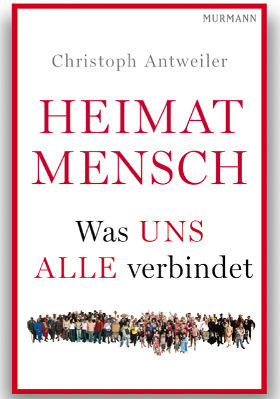
Populärethnologie von Christoph Antweiler: Heimat Mensch. Was uns alle verbindet

Vor zwei Jahren brachte Ethnologe Christoph Antweiler seinen Wälzer “Was ist den Menschen gemeinsam” heraus. Soeben ist die populärwissenschaftliche Version auf den Markt gekommen “Heimat Mensch. Was uns alle verbindet“.

Fast ohne Fremdwörter bespricht der Ethnologe von der Uni Bonn zwölf Universalien alltagsnah. Das Kapitel über Initiationen z.B. beginnt er mit der Schilderung seiner Habilitation. Dieses akademische Initiationsritual stellt er einem Initiationsritual bei den australischen Aborigines gegenüber. Solche Riten gibt es überall auf der Welt – auch in der Uni also.

“Die vermeintlich “ganz anderen” Kulturen sind bei genauem hinsehen oft verblüffend gleich und diese Gemeinsamkeiten zwischen den Kulturen sind oft viel fundamentaler”, schreibt Antweiler in der Einleitung:

“Trotz aller Unterschiede können wir wir uns aber erstaunlich leicht mit Menschen aus wildfremden Kulturen verständigen. Über manche Witze wird überall gelacht. Bei Menschen unterschiedlichster Herkunft finden wir die gleichen Überzeugungen.”

Er distanziert sich von jenem Multikulturalismus, der meint, wir würden in verschiedenen Welten leben. Er sagt wir sind eine Menschheit und wir leben in einer Welt.

Interessanterweise hält Antweiler an dem viel gescholtenen Begriff “Kulturen” fest, auch wenn er einräumt, dass “in der multikulturellen Gesellschaft immer mehr Menschen auch mehrere Kulturen im Gepäck” haben.

Leider erklärt er diesen zentralen Begriff, der zu vielen Missverständnissen führt (Kulturfalle), nicht. Kultur bleibt in der Einleitung eine mystische Grösse, doch offenbar ein Synonym für “Nation” oder “ethnische Gruppe”.

Misstrauisch macht mich seine Behauptung “Wo gibt es denn neben Norwegen und Bangladesh noch einen kulturell einheitlichen Staat?” Gewiss hat Bangladesh keine grossen Gruppen mit ethnischen Minderheiten (98% sind laut offizieller Statistik Bengali), doch das Land besteht aus rundt 150 Millionen Menschen und es gibt riesige Klassenunterschiede – wie lässt sich da von einer kulturell einheitlichen Bevölkerung reden? Norwegen ist ein langestrecktes Land mit grosser regionaler Vielfalt und war seit Jahrhunderten ein melting pot verschiedener Nationalitäten.

Der Verlag hat mir das Buch erst vor kurzem zugeschickt. Ich hab bisher nur Auszüge gelesen und bin daher gespannt auf die vielen Beispiele in den Kapiteln über Zeit, Sprache, Ethno-Pop, Sex und Moral, Heimat, Kunst, Gefühle und Macht. Gerade bin ich beim Kapitel “Gewaltverherrlichung und Konfliktvermeidung”. Da räumt der Ethnologe mit dem weitverbreitenden Vorteil auf, kulturelle Vielfalt führe zu Konflikten:

Kulturelle Vielfalt in einer Gesellschaft ist nicht automatisch ein Konfliktfaktor, ebenso wenig wie bestehende Stereotypen über fremde Gruppen. Der zentrale Konfliktmotor ist strukturell fehlende Anerkennung, die sich in dem Gefühl äussert: “Wir haben keine Stimme.” Scharf gemacht werden die Unsicherheit im Umgang an kulturellen Rändern und der fast universale Ethnozentrismus durch den strategischen Einsatz der kulturellen Unterschiede. Kollektive Identität ist die global eingesetzte Waffe im Kampf um Anerkennung.

Beim Murmann-Verlag ist übrigens ein kurzes Interview mit Antweiler zu sehen.

Das Buch hat bisher noch kein grosses Medienecho hervorgerufen. Antweiler war jedoch zu Gast beim WDR.

Ich hatte Christoph Antweiler vor zwei Jahren interviewt, siehe Mehr Fokus auf die Gemeinsamkeiten der Menschen! – Interview mit Christoph Antweiler. Sein Buch “Was ist den Menschen gemeinsam” (2007) ist u.a. auf rezensionen.ch und socialnet besprochen worden. Das Buch ist inzwischen ausverkauft und eine überarbeitete und erweiterte Neuauflage ist soeben bei der Wissenschaftlichen Buchgesellschaft erschienen.

Ist die Veröffentlichung dieses für Laien verständlichen Buches ein Zeichen dafür, dass Ethnologie sich mehr in die Öffentlichkeit wagt? Neben diversen Initiativen im Netz sind in letzter Zeit mehrere populär geschriebene Bücher herausgekommen, u.a. Maxikulti – Der Kampf der Kulturen ist das Problem – zeigt die Wirtschaft uns die Lösung? von Joana Breidenbach und Pál Nyíri sowie Kölner Stammbaum. Zeitreise durch 2000 Jahre Migrationsgeschichte von Erwin Orywal.

AKTUALISIERUNG: Der Spiegel interviewt Christoph Antweiler zum Buch

Vor zwei Jahren brachte Ethnologe Christoph Antweiler seinen Wälzer "Was ist den Menschen gemeinsam" heraus. Soeben ist die populärwissenschaftliche Version auf den Markt gekommen "Heimat Mensch. Was uns alle verbindet".

Fast ohne Fremdwörter bespricht der Ethnologe von der Uni Bonn…

Read more