search expand

Volkskunde-Studenten entwickeln Wiki über bayrische Bräuche

Zum 1. Mai soll es online gehen: In Zusammenarbeit mit dem Bayerischen Landesverein für Heimatpflege entwickeln Augsburger Studenten ein Brauch-Wiki, ein Online-Lexikon, an dem zukünftig jeder mitschreiben kann, schreibt die Welt am Sonntag.

Ethnologin Margaretha Schweiger-Wilhelm, die das Projekt leitet, meint mithilfe dieses Wikis könne eine Datenbank entstehen, wie sie mit den herkömmlichen Methoden der Feldforschung niemals möglich wäre. Sie hofft, dass so ein möglichst wirklichkeitsnahes Bild der Brauchtumslandschaft entstehen kann.

Denn der Wissenschaft, ebenso bestehenden Brauchtumslexika im Internet, fehle oft der Bezug zur Gegenwart, die Beschreibungen seien “sehr reproduktiv”, sagt Michael Richter vom Heimatverein für Landespflege. “Bräuche sind aber nichts Statisches, sie verändern sich permanent, das soll das Projekt deutlich machen.”

“Es gibt so viele Leute, die im Internet schreiben”, sagt Seminarteilnehmerin Luisa Berger. “Das wird auch für die Bräuche funktionieren.”

Die Studenten im Volkskunde-Seminar schreiben gleichzeitig wissenschaftliche Artikel über bayerische Bräuche – auch neueren Datums.

>> weiter in der Welt am Sonntag

SIEHE AUCH:

Musikethnologie des Alphorns – neue Multimedia-Webseite

“Mediterranean Voices” – Ethnologen mit neuer Multimedia-Datenbank im Netz

Interview with anthropologist Michael Wesch: How collaborative technologies change scholarship

Another way of doing fieldwork: Developing websites with your informants!

Online: New book on the cultural significance of Free Software

Zum 1. Mai soll es online gehen: In Zusammenarbeit mit dem Bayerischen Landesverein für Heimatpflege entwickeln Augsburger Studenten ein Brauch-Wiki, ein Online-Lexikon, an dem zukünftig jeder mitschreiben kann, schreibt die Welt am Sonntag.

Ethnologin Margaretha Schweiger-Wilhelm, die das Projekt leitet, meint…

Read more

“Projekt Migrationsgeschichte”: Kulturwissenschaftler in Container in Innenstadt

Die Geschichten von Migranten ist selten Thema in Museen. Im Rahmen der Heimattage startet ein Projekt zur Migrationsgeschichte in Reutlingen: In Ab dem 14. März werden Ethnologen, Volkskundler und andere Kulturwissenschaftler in einem “Geschichtsbüro auf Zeit” in der Innenstadt Reutlingens zu finden sein, um mit Migranten zu reden, meldet der Alb-Bote.

Projektleiterin Claudia Eisenrieder und drei Mitarbeiter werden in dem Container an der Nikolaikirche bis Mitte Mai nicht nur Interviews führen mit den so genannten Gastarbeitern, die Reutlingen als neue Heimat im Wirtschaftswunderland auserkoren haben, sowie mit den Spätaussiedlern, Flüchtlingen und den Asylbewerbern, die ab den 90er Jahren an den Fuß der Achalm umgesiedelt sind. Sie werden auch “Erinnerungsgegenstände” entgegennehmen.

Zur Zeit nehmen die Forscher Kontakt mit Migranten auf. “Wir möchten einen Aktionskreis mit Vertretern unterschiedlicher Migrantengruppen aufzubauen”, erklärt Eisenrieder.
 
Die Arbeit soll in eine Ausstellung im Heimatmuseum im Frühjahr 2010 münden, sowie in ein Buch oder eine andere Dokumentation.

>> weiter im Albbote

>> mehr Information im Schwäbischen Tagblatt

SIEHE AUCH:

Ethnologe schreibt Migrationsgeschichte – Interview mit Erwin Orywal

ZEIT nicht beeindruckt ueber “Projekt Migration” in Köln

Die Geschichten von Migranten ist selten Thema in Museen. Im Rahmen der Heimattage startet ein Projekt zur Migrationsgeschichte in Reutlingen: In Ab dem 14. März werden Ethnologen, Volkskundler und andere Kulturwissenschaftler in einem "Geschichtsbüro auf Zeit" in der Innenstadt…

Read more

Warum helfen sie illegalisierten Flüchtlingen?

cover

Warum gibt es Menschen, für die es selbstverständlich ist, zu helfen, obwohl sie dabei Gesetze brechen? Diese Frage untersucht Ina Boesch in ihrem neuen Buch “Grenzfälle. Von Flucht und Hilfe. Fünf Geschichten aus Europa”.

Boesch studierte Ethnologie, Geschichte und Publizistik an der Uni Zürich. Viele Jahre hat sie als Kulturredaktorin bei Schweizer Radio DRS2 gearbeitet.

>> Besprechung im Tagesspiegel

>> Rezension in der WoZ

Boesch hat auch eine interessante Webseite: http://www.inaboesch.ch

SIEHE AUCH:

Festung Europa: “Wir wollen die Schicksale hinter den Zahlen aufzeigen”

Erforschte das Leben illegalisierter Migranten

cover

Warum gibt es Menschen, für die es selbstverständlich ist, zu helfen, obwohl sie dabei Gesetze brechen? Diese Frage untersucht Ina Boesch in ihrem neuen Buch "Grenzfälle. Von Flucht und Hilfe. Fünf Geschichten aus Europa".

Boesch studierte Ethnologie, Geschichte und Publizistik…

Read more

Ethnologie-Vorlesungen gratis auf iTunes

screenshot

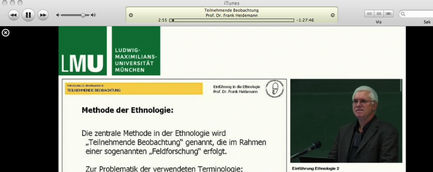
Die Ludwig-Maximilians-Universität (LMU) München hat ab sofort eine eigene Plattform auf iTunes. Im Angebot an Audio- und Video-Podcasts finden wir auch die Vorlesungsreihe “Einführung in die Ethnologie” von Frank Heidemann. Man kann sich 14 Vorlesungen anschauen zu Themen wie Kulturrelativismus, Teilnehmende Beobachtung, visuelle Ethnologie usw.

LMU-Präsident Professor Bernd Huber sagt in einer Pressemitteilung:

“Die LMU erprobt seit längerem mithilfe der neuen Medien innovative Formen der Wissensvermittlung in Ergänzung zum grundlegenden Lehrangebot. Auf unserem neuen Portal bündeln wir sukzessive diese audiovisuellen Inhalte aus der Lehre, aber auch zur Forschung an der LMU und zu unserem Profil. Damit wollen wir gezielt die ‘Generation iPod’ erreichen.”

>> zum ITunes-Angebot der Uni München

screenshot

Die Ludwig-Maximilians-Universität (LMU) München hat ab sofort eine eigene Plattform auf iTunes. Im Angebot an Audio- und Video-Podcasts finden wir auch die Vorlesungsreihe "Einführung in die Ethnologie" von Frank Heidemann. Man kann sich 14 Vorlesungen anschauen zu Themen wie Kulturrelativismus,…

Read more

Cities: It was twenty years ago. Part 2

The roar is not really loud, it’s rather tiny, but with a high pitch. He learns and develops new sounds at the moment, the books say and we’ve certainly noticed that. On the brighter side; he’s also learning to laugh. I find that wonderful and such a good symbol of the human condition (as a product both of nature and society): the urge to laugh (and smile of course) is innate but babies has to learn to make the right sounds! So, now my son opens his mouth and tries to make the “h” sound…
[teaserbreak]
Well, yes, his roars and laughter is my concern at the moment. But there is of course plenty of time to think of updates for this blog, I could tell my friend who made jokes about it in the previous post. When I nurse or stroll the little lion in his pram there often isn’t much else do than letting the mind wander. And it often wanders familiar streets in Paris and goes through my experiences from the time I lived there. Certain of these streets, the “feel” of them and what they meant to me is one such possible update. I imagine myself walking certain routes – along the canal, to the bakery, down the boulevard… – Another is my relationship to Paris throughout the years. What has this city meant to me?

I started thinking of that as a possible blog post long time ago, when I heard a letter from the correspondent from the Norwegian Broadcasting Corporation stationed in Berlin. He had gone there on inter rail in his early twenties, in 1989 when the wall fell and he’s letter talked about how the city appeared to him at that time and how it had changed (the notes I made are in my office, where I haven’t set foot since early November). In 1989 we went to Berlin by train, too. When the wall was torn down some months afterwards, I felt a personal victory after what I saw of the East German border police with their eager examination of the train compartments and the passengers. But Berlin hardly made an impression on me compared to the three weeks we spent in Paris. At the time I found it curious that my Dad let me go and stay there in an hotel with four friends while there was no way he would let me go to the Roskilde festival before I was 18. When my son is 17, I would say the same thing. Drinking and smoking is part and parcel of the Roskilde festival, there’s hardly a way to escape it, while we hardly tasted a drop of alcohol t in Paris. Why should we? Just being there was an adventure in itself. In fact, just hanging around at the lawn at Les Halles and at Place Beaubourg outside Centre Pompidou all the time was enough for us. I think perhaps we went to Père Lachaise to see Jim Morrison and Oscar Wilde’s graves once and we made a couple of more excursions, but most of the time we spent less than 10 minutes away from the hotel. And there we watched people and even made some friends.

The funny thing is, that we, just by chance, stumbled upon the cool place to be in Paris at the time, I learnt from one of my slammer-friends. He told me he used to go to Place Beaubourg at the same time to try to chat up young models and actresses, as far as I remember. The friends we made in Paris, was the kind one meets when one travels and which one remembers the rest of one’s life even though one only spends a week or even just a day together. “That trip to Paris is 20 years ago in 2009” my friend told me on new years eve when I told her about the blog updates I was thinking about. The following parts of this post will be about what that and other trips to Paris has meant to me and how they have shaped my understanding of the city and France. This part, however, I would like to finish with a personal thought on time and life. I think I resigned and thought that I could as well settle down with a family when I – to my big surprise – realised things like it’s 20 years ago since I considered myself at the height of my youth. Then it’s time to do something completely different, like marvel at the wonders of nature that make humans with an innate urge to smile and laugh long before they are three months old!

The roar is not really loud, it’s rather tiny, but with a high pitch. He learns and develops new sounds at the moment, the books say and we’ve certainly noticed that. On the brighter side; he’s also learning to laugh.…

Read more