search expand

– For få antropologer opptatt av populærkultur

– Vi anerkjenner sport som svært betydningsfullt for kjønnsidentitet i vår egen kultur, men tenker ikke på det som viktig for minoritetsgrupper, sa sosialantropolog Thomas Michael Walle nylig på en konferanse, melder Kilden.

Walle har studert norsk-pakistanske menn i cricket-miljøet i Oslo. Walles informanter er vant til å måtte forsvare seg i forhold til de ofte stereotype bilder media gir av såkalte innvandrermenn, leser vi.

For å få fram tak i hva pakistanske menn mener at de er, var det viktig for Walle å møte informantene på arenaer hvor de ikke følte seg annerledesgjort. En slik arena fant forskeren på Ekebergsletta i Oslo, hvor pakistanske menn møtes for å spille cricket.
(…)
Forskeren fortalte at cricket er et sentralt sosialt omdreiningspunkt for disse mennene. I cricketmiljøet finner de venner, det drives politikk og utveksles informasjon. I tillegg gir vissheten om at pakistanere over hele verden spiller cricket, en følelse av å knytte seg opp til et globalt Pakistan, og en drøm om et Pakistan man ikke finner på besøk i landet.

Antropologen sier:

– I cricketmiljøet fant jeg menn i relasjon til andre menn, og det er en viktig kilde til å forstå hvordan maskulinitet utformes. Forholdet til majoritetsbefolkningen kom i bakgrunnen, og pakistanerne kom mer tydelig fram som subjekter.

– Cricket representerer selvsagt en kilde til mannlige praksiser og idealer også for etterkommerne. Cricket konkurrerer med andre populære aktiviteter, men mange trekker mot sporten når de blir eldre. Dette bunner ofte i opplevd diskriminering i for eksempel fotballklubben, eller som et økende ønske om å koble seg opp mot en «pakistansk» identitet.

>> les hele saken på KIlden

Bislett Ducks Cricketklubb kommenterer at Walles funn ikke er så overraskende: “Det bør vel ikke være noe annerledes for oss i Bislett Ducks?” og legger til: For det er jo dette Bislett Ducks er tuftet på: Mer tid med gutta!

Walle har også skrevet en lengre artikkel: Cricket og norskpakistansk mannsfellesskap. Den begynner slik:

I løpet av sommerhalvåret er det omlag 20 cricketlag i ligaen i Oslo, og majoriteten av spillerne har bakgrunn fra Pakistan. Cricket-sporten løfter de norskpakistanske mennene ut av dimensjonen majoritet–minoritet, og etablerer et rom der mannlighet kan utformes og uttrykkes på andre premisser. Kanskje derfor er dette feltet i liten grad viet oppmerksomhet, usynliggjort i all sin mannlighet.

Se også tidligere sak i Kilden: Pakistanske menn – styrt av etnisitet? og min tekst om Elise Skarsaunes hovedoppgave Hvem er den muslimske mannen?

- Vi anerkjenner sport som svært betydningsfullt for kjønnsidentitet i vår egen kultur, men tenker ikke på det som viktig for minoritetsgrupper, sa sosialantropolog Thomas Michael Walle nylig på en konferanse, melder Kilden.

Walle har studert norsk-pakistanske menn i cricket-miljøet i…

Read more

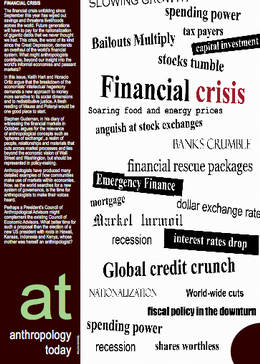
How anthropologists should react to the financial crisis

cover

Anthropologists have largely left the global effects of economic globalisation to economists. Now in this worldwide financial crisis it is the time for anthropologists to renew an engagement with political economy, Keith Hart and Horacio Ortiz write in their guest editorial in the new issue of Anthropology Today:

Anthropology’s relevance to the world would be enhanced if some of us adopted a more self-conscious strategy of seeking to understand the present crisis and its consequences for society at all levels.
(…)
We should try to bring the distributive consequences of finance down to a concrete level. Readers might then be able to engage with money not as a superhuman force with devastating effects, but as the outcome of ideas and institutions that can and should be changed by human action.
(…)
The breakdown of the economists’ intellectual hegemony represents a chance for us to link our engagement with people’s lives to anthropology’s original mission to understand humanity as a whole.

There are many ways to do this:

One method of doing so would be to analyse the everyday practices of professionals in financial corporations, states and regulatory bodies (Ortiz 2008), but also those of the people who entrust their monetary resources to them or are barred from access to the process.
(…)
Kula objects have magical power for those who exchange them, but anthropologists have shown their social logic and instrumentality. We have always invented concepts to describe and explain social processes quite different from those familiar at home. The current crisis presents us with a compelling reason to do so again, this time in a global context.

Anthropologists can do no better than to renew their engagement with the writings of Marcel Mauss and Karl Polanyi. Their perspectives on political economy can help us to make sense of the current situation and to recommend alternative paths forward according to Hart and Ortiz.

In his famous work “The Gift”, Mauss observed,

…that in contemporary capitalism the wealthy classes acted increasingly as if they did not belong to a social order that made redistributive obligation a condition of their hierarchical privilege. Their amnesia when it came to the ‘gift’ was not just a function of power, but of an accumulation of power that considered itself to be socially unbounded. As a result, heightened strife put the social order itself at risk.

Polanyi showed in his famous work The great transformation (1944) how markets became disembedded from the rest of society. Like Mauss, Polanyi was concerned with the ideas that defined money, the rules of its use and the social distinctions that made its circulation possible and legitimate:

He too contended that the classes who benefited from markets, particularly high finance in the decades before the First World War, neglected the interests of the rest of the population, with devastating consequences for society. (…) He identified the historical dialectic or ‘double movement’ whereby the drive of capitalists to escape from social constraints met the countervailing power of classes and institutions (such as those adhering to the welfare state) acting in society’s self-defence. (…) The distribution of resources, according to him, should not be left to the search for profit in market relations, but needed also to acknowledge solidarity between all members of society.
(…)
Anthropologists following him would thus explore how the social struggles over money are understood by the participants, and with what consequences for distribu- tion itself. This would offer a critique of the pretence that economics is not social or political; beyond that, it would constitute a research programme.

Polanyi and Mauss made sure that their more abstract understandings of political economy were grounded in the everyday lives of concrete people:

An unblinking focus on distribution at every level from the global to the local reveals how the social consequences of political economy and the way it is understood by those who make it are one and the same social process. The current crisis renders this insight particularly visible, since it challenges contemporary financial ideas, while its tangible distributive effects are felt and feared throughout the world.

It is no coincidence that economic anthropology was last a powerful force in the 1970s, when the world economy was plunged into depression by the energy crisis, Hart and Ortiz write:

Now, if ever, is the time for anthropologists to renew an engagement with political economy that went into abeyance then. The prize at stake for our discipline as a whole is much larger than the revival of one of its parts.

Anthropology’s highest mission is to start from where people are and go with them wherever they take you. That means engaging with their visions of the world, perhaps to catch a glimpse of the world humanity is making together. What better time to follow this imperative than when the model the world has been compelled to live by for three decades is in such disarray?

The editorial is not accessible for readers outside the university world, but Keith Hart has published a different version of the editorial on his website (and many related papers as well)

SEE ALSO:

Used anthropology to predict the financial crisis

Anthropologist: Investors need to understand the tribal nature of banking culture

What anthropologists can do about the decline in world food supply

The last days of cheap oil and what anthropologists can do about it

After the Tsunami: Maybe we’re not all just walking replicas of Homo Economicus

Why were they doing this work just to give it away for free? Thesis on Ubuntu Linux hackers

cover

Anthropologists have largely left the global effects of economic globalisation to economists. Now in this worldwide financial crisis it is the time for anthropologists to renew an engagement with political economy, Keith Hart and Horacio Ortiz write in their…

Read more

Slik preger kristne ideer våre bilder av verden

cover

Hvorfor aksepterer så mange at underbetalte lønnslaver verden over er grunnlaget for rike lands velstand? Hvorfor syns mange at urbefolkninger og andre mennesker fra fjerne land er “mindre siviliserte” enn “oss” og må koloniseres?

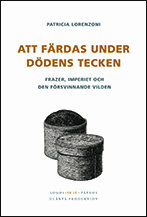
Idehistoriker Patricia Lorenzoni ser ut til å ha skrevet en interessant bok. “Att färdas under dödens tecken. Frazer, imperiet och den försvinnande vilden” er basert på hennes doktoravhandling ved Göteborgs universitet som kom ut ifjor.

Lorenzoni viser hvordan kristne ideer (spesielt den såkalte forsoningslæren) har preget vårt bilde av de andre – ikke bare for å legitimere kolonialisme i gamle dager, men også undertrykking idag.

Dette kommer fram i to anmeldelser av boka.

Moa Matthis skriver i Dagens Nyheter:

Alltsedan Europa påbörjade sin världserövring för 400 år sedan har svältkatastrofer, slaveri och folkmord beskrivits som nödvändiga inslag i formandet av den goda världen
(…)
Hennes närläsning av James G Frazers antropologiska klassiker och storsäljare “Den gyllene grenen” från 1900-talets början leder henne mot den kristna försoningslärans betydelse för västerländsk självförståelse. Med kors och svärd lade Europa världen under sig och i bilden av Jesu offerdöd på korset smälte mission och våld samman. Någon måste lida och dö för att det nya ska kunna födas. “Kroppar sätts i arbete för att underlätta själars frälsning; själar frälses för att underlätta användandet av kroppar”, skriver Lorenzoni om den logik som legitimerade exploatering till döds på sockerplantager, i gruvor och fabriker.
(…)
Tasmanier, australier och bushmen var alla rester från en mörk forntid som måste utplånas för att framtiden skulle bli verklighet. För Frazer var det koloniala våldet den historiska nödvändighetens verktyg på samma självklara sätt som det hundra år tidigare varit frälsningens verktyg.

>> les hele anmeldelsen i Dagens Nyheter (link oppdatert med kopi)

Denne kristne idearven formet møtet mellom Europa og den øvrige verden, men ble også overtatt av de sekulære. I en anmeldelse av boka i Tidningen Kulturen skriver Lars-Göran Söderberg:

På så sätt, framhåller Patricia Lorenzoni, kom den sekulariserade föreställningen om den primitiva människan att ersätta den religiösa idén om det hedniska. 
Med en förskjutning från ett religiöst perspektiv till ett mer sekulärt sådant, handlade det emellertid ytterst om samma sak, nämligen att bygga ett imperium, som krävde först slavar och senare undersåtar i allmänhet.

>> les anmeldelsen i Tidningen Kulturen

Argumentasjonen minner på Bente Persens masteroppgave der hun viser at det var religiøse motiver bak fornorskningen av samene

OPPDATERING Se også to tekster av Patricia Lorenzoni: Violence and sacrifi ce in evolutionary anthropology: A reading of J.G. Frazer’s The Golden Bough through theology of liberation (Ideas in History) og Riten där själ och kropp vävs samman (Nättidningen Alba)

SE OGSÅ:

Menneskeutstillinger og myten om hvit overlegenhet

Misjonsbildenes makt over sinnene – ny bok av Marianne Gullestad

– Kolonitida lever videre i utenriksredaksjonene

Jack Goody: “The West has never been superior”

cover

Hvorfor aksepterer så mange at underbetalte lønnslaver verden over er grunnlaget for rike lands velstand? Hvorfor syns mange at urbefolkninger og andre mennesker fra fjerne land er "mindre siviliserte" enn "oss" og må koloniseres?

Idehistoriker Patricia Lorenzoni ser ut…

Read more

The Cognition and Culture Blog

screenshot

While browsing the web for Claude Levi Strauss posts, I stumbled upon a great site: Cognition and Culture.

It is run by International Cognition & Culture Institute, an initiative of the Department of Anthropology of the London School of Economics and Political Science.

From their self-description:

* Scholars in the emerging cross-disciplinary field of cognition and culture studies are scattered around the world and few (if any) institutions has a sufficient number and variety of them for optimal research and teaching.

* It is in the very nature of this field to call for international and interdisciplinary collaborations.

The site features both a news and a blog section. There are news stories like “Religion, anthropology, and cognitive science” at the 107th AAA meeting or Maurice Bloch on BBC Radio 3.

Lots of bloggers are involved in the project and there are blog posts like Is culture what makes us cooperate? (by Jean-Baptiste André), Neuroanthropology or ethnographical neurosciences? (by Nicolas Baumard), Your brain needs a British headmistress – the unexpected impact of pop-cognitive science on British schoolgirls (by Michael Stewart), Maori Memories (by Olivier Morin), “You work in WHAT field?” (by Nicola Knight) and the most recent Claude Lévi-Strauss: the first 100 years (by Dan Sperber) and many more!

The site was made possible by an initial grant from the LSE and support from the Institut Jean Nicod (ENS, EHESS, CNRS) in Paris.

>> visit cognitionandculture.net

See also earlier comments on this site over at Neuroanthropology and Somatosphere

screenshot

While browsing the web for Claude Levi Strauss posts, I stumbled upon a great site: Cognition and Culture.

It is run by International Cognition & Culture Institute, an initiative of the Department of Anthropology of the London School of Economics…

Read more

“Gewalt gehört zu Indien wie ein gut gewürztes Currygericht” – Ethnologe kritisiert SZ

Die Münchner Ethnologen nehmen sehr aktiv am öffentlichen Diskus teil. Wieder wenden sie sich an die Medien. In einem Leserbrief an die Süddeutsche kritisiert der Münchner Ethnologieprofessor Frank Heidemann einen haarsträubenden Kommentar zu den Anschlägen in Mumbai.

Chefkorrespondent Stefan Klein schreibt u.a.

“Gewalt gehört zu Indien wie ein gut gewürztes Currygericht.”

und

“Gefühle geraten in Indien leicht in Wallung, Mordlust ist ohne großen Aufwand hervorzurufen, und nach einer Nacht wie dieser stellt sie sich nahezu automatisch ein.”

Heidemann schreibt:

die terroristischen Anschläge in Mumbai sind erschreckend, und der Kommentar von Herrn S. Klein, ihrem Chefkorrespondenten, leider völlig haltlos. Obwohl einige kluge, wenn auch nicht originäre, Ideen im Kommentar verpackt sind, fügt sich der Tenor jedoch in einen orientalistischen Repräsentationsmodus des 19. Jahrhunderts.

>> weiter zum Leserbrief auf ethno::log

Erst drei Wochen ist es her, als sein Kollege Wolfgang Habermeyer einen Leserbrief an die Abendzeitung versandt hat, siehe Die “negroiden Lippen Obamas” – Ethnologe reagiert auf Rassismus in der Abendzeitung

SIEHE AUCH:

Racism: The Five Major Challenges for Anthropology

Die SZ und die Ureinwohner: Gestrandet im vorsintflutlichen Evolutionismus

Ethnologen protestieren gegen Mel Gibsons „Apocalypto“

Mainzer Ethnologen protestieren gegen Gen-Rassismus

Die Münchner Ethnologen nehmen sehr aktiv am öffentlichen Diskus teil. Wieder wenden sie sich an die Medien. In einem Leserbrief an die Süddeutsche kritisiert der Münchner Ethnologieprofessor Frank Heidemann einen haarsträubenden Kommentar zu den Anschlägen in Mumbai.

Chefkorrespondent Stefan Klein…

Read more