
search expand

Antropress er tilbake!

screenshot

(oppdatert 5.11.08 – nå er siden offisielt lansert) Få akademikarar bloggar om forsking meldte nylig På Høyden. Det er også mitt inntrykk. Antallet på bloggende antropologer har faktisk gått ned. Studentene derimot er blitt aktive på nettet. Etter litt over to års dvale har magasinet Antropress gjenoppstått i ny form.

I motsetning til forskernes tidsskrifter, er artiklene i Antropress også forståelig for lesere uten doktorgrad. Den første utgaven har mye spennende lesestoff, dessverre er ikke tekstene på nett enda (bl.a intervjuet med Fredrik Barth og teksten om Thailands sjønomader).

I denne utgaven finner vi bl.a. et intervju med Fredrik Barth, artikler om Film fra Sør, et reisebrev fra Kjersti Eskild Havenstrøm som studerer antropologi i London, Thea Marie Astrup skriver “Ja til antropologi i mediedebatter!” (handler om NRKs omstridte serie Den store reisen).

Thomas Hylland Eriksen skriver om Antropress i gamle dager og Ann-Charlotte ”Lotta” Granbom om sjønomader i Thailand i teksten Turistindustriens brød og et urfolks død og Assad Nasir svarer på spørsmålet Hva er sosialantropologi?

Dessuten er det totre spennende spalter. Maria Christophersen utforsker Oslos uteliv som felt. Hittil har hun vært på Mono, Parkteatretet og på Odeoen på Vestkanten. Hun forklarer:

Tidligere dette året var det en antropolog på AiA (Antropologer i Arbeid) som kommenterte at hele livet kan forstås som feltarbeid. Hele livet, med alle dens sfærer og arenaer, kan forstås som en uutømmelig kilde til antropologiske feltarbeid. Dermed kom tanken om Oslos uteliv som felt.

Kanskje forskjellige utesteder i Oslo kan peke til forskjellige kulturelle grupper med egne innhold som differensierer gruppene fra hverandre?

Den andre spalten befinner seg på en midlertidig side og heter “Utenfor lesesalen”, også skrevet av Maria Christophersen. Hun tester for oss alternativer til lesesalen på Blindern:

Når lesesalen blir for stille eller når den blir redusert til femminutters pauser fra kaffedrikking, da kan det være på tide å bevege seg vekk fra universitetet. Det finnes faktisk nok av innbydende leseplasser i Oslo by!

Kaffebarer er et opplagt alternativ. Det finnes uendelig med variasjon for ulike behov også. Småprat i bakgrunnen, eller brølende musikk. Store flotte lokaler med masse luft, eller lite, fokusert og privat. Kanskje trenger du Internett, eller kanskje det bare blir en distraksjon du helst skulle vært foruten.

I løpet av høsten skal undertegnede ta med seg pensum og bevege seg utenfor lesesalen.

Vilde Fastvold Thorbjørnsens spalte heter Fag fritt fra fantasien. Hun gir oss et innblikk i en antropologistudents sjel i natta før eksamen:

Jeg forsøker å sovne, men etter den omtrent femten timers dagen jeg har lagt inn på Blindern, inklusive de tre til fem koppene kaffe som gikk med underveis, fortoner dette seg som heller urealistisk.

Etter timevis rastløs vending og vriing døser jeg omsider ut i kaldsvettende drømmer der et Schönbergs soundtrack innrammer et psykedelisk kaos av teoretikere, argumentasjonsrekker og empiri, sammenfiltret med et aldeles helskrudd perspektiv på pensum jeg har kvernet meg gjennom de siste dagene. Når jeg våkner, fortoner verden seg på underlig vis så annerledes.

I den første innlegget Weber versus Vildes brødskive blir hun hjemsøt av Bourdieu, Weber og andre skumle skapninger mens hun prøver å spise et tysk Vollkornbrot.

Antropress-forfatterne har ikke egentlig begynt å blogge. Tekstene ser ut til å være skrevet for papir (ingen linker etc), men kanskje endrer det seg etterhvert. De har i hvertfall tatt i bruk den populære bloggløsningen WordPress som gir mange muligheter. “Nettsidene vil få kontinuerlig oppdatering”, skriver redaktør Tom Bratrud og det høres jo lovende ut.

>> Startside Antropress

>> Sniktitt på nye Antropress

SE OGSÅ:

antropologi.se – ny antropologisk møteplass

Thomas Hylland Eriksen: – Antropologer må bli flinkere til å bruke nettet

Cicilie Fagerlid: “Blogging sharpens the attention”

Marshall Sahlins wants to make the Internet the new medium for pamphleteering

En vitenskaplig innføring i blogging

På vei til en ny digital underklasse?

screenshot

(oppdatert 5.11.08 - nå er siden offisielt lansert) Få akademikarar bloggar om forsking meldte nylig På Høyden. Det er også mitt inntrykk. Antallet på bloggende antropologer har faktisk gått ned. Studentene derimot er blitt aktive på nettet. Etter litt over…
Read more

Who has the right to vote? Anthropology News on US-election

If you need anthropological perspectives on the US-election Obama-McCain, you’ll find them in the new issue of Anthropology News. One of the articles is about a study on voting, politicial participation and citizenship among individuals with psychiatric disability.

Many Americans are excluded from voting. Anthropologist Sara M. Bergstresser is conducting the study, using a “community-based participatory research framework”. She writes:

The stigma of mental illness underlies taken-for-granted assumptions about some citizens’ ability to participate in the electoral process. Public discourse about disability in general, and psychiatric disability in particular, often retains historically- conditioned, biologized models of deviance and moral worth, questioning whether these individuals deserve to participate politically. Such assumptions share their origins with rhetoric that has accompanied many other social barriers to voting throughout the history of the US.
(…)
Taken-for-granted concerns about “capacity” to vote may well tell us more about societal levels of stigma than about individual neurological deficiency.
(…)
Just as health disparities have become an important focus of research in the United States, disability-linked disparities in social and political participation should also be brought to the attention of policymakers and researchers.

>> read the whole article (pdf)

PS: I realize I haven’t seen that the October Anthropology News was about the Global Food crisis!

If you need anthropological perspectives on the US-election Obama-McCain, you'll find them in the new issue of Anthropology News. One of the articles is about a study on voting, politicial participation and citizenship among individuals with psychiatric disability.

Many Americans…

Read more

The question of style, voice and perspective

For a long time, I’ve been certain in which style and voice I wanted to write my thesis. I did not want it to be too academic this time, but rather write in a more prose-like style, trying to convey the feeling and experience of “being there” through a more personal style, and with a slightly stronger personal presence in the texts. Instead of arguing left and right with every thinkable theory and ethnography – in the text proper and/or in hundreds of footnotes – like I tried to excel in my previous thesis, this time I rather wanted my argument to mainly rely on my own ethnographic descriptions.
[teaserbreak]
There were at least two reasons why I thought like that: My previous thesis became too dense and instead of having a good narrative flow I find it rather academically cumbersome and awkward. The second reason is related to the change of perspective that step by step occurred to me as necessary during my time in the field. First, after experiencing major riots and massive demonstrations and a very complex French social and political reality, I realised that an equal comparison between France and Britain (based on philosophies of social integration and postcoloniality) would not be feasible in one single PhD project. Instead, I relegated the comparison from starting point to the backdrop of the study, thus also to only one single, last chapter. To carry such a philosophical and political comparison through throughout a whole thesis would, I presume, have demanded a very different style of writing than how I could express myself in a monograph on a single society.

The second change of perspective imposed itself when I entered deeper and deeper into the Parisian slam poetry universe. People started to comment that I was present everywhere and that my archive of videos and information must be huge and that I should definitely do something about it. I started feeling that getting such a privileged access into what seemed to be a very interesting phenomenon in itself, demanded a reformulation of my focus of study. The slam needed at least as much emphasis as the postcolonial and politico-sociological part. I started toying with the idea of writing an accessible book on the slam poetry within French society parallel to an academic thesis, but quickly realised that such a double task was way beyond my capacity, particularly since doing a PhD also demands a lot of teaching and other kinds of work. (And to write such a book after handing in the thesis several years after finishing a field study on such a current phenomenon was not an option). My next thought was to write an accessible thesis focusing (almost) equally on the slam and the society.

But now, I’m about to change my mind again. Maybe such a thesis will be neither fish nor bird (as the Norwegian proverb goes). Probably it will be too academic for people interested in French slam poetry, but not as distinguished within anthropology as I would have wished it to be. Apparently, many anthropologists and their like prefer hardcore and stringent theoretical and disciplinary discussions, and not page up and down of impressionistic prose, however theoretically but tacitly informed. Maybe I should write the prose as well as I can, but also try my best to excel in the theory bit? And then afterwards try to get a Post.doc. and rewrite it as an accessible book on French society seen through the prism of the slam poetry scene…?

For a long time, I’ve been certain in which style and voice I wanted to write my thesis. I did not want it to be too academic this time, but rather write in a more prose-like style, trying to convey…

Read more

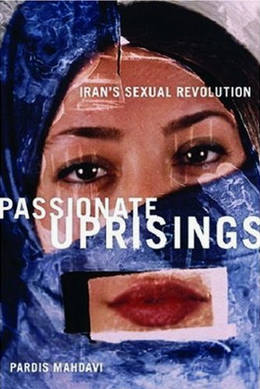
Researched the sexual revolution in Iran

cover

Girls wear makeup, go with their hair uncovered, drink, have boyfriends and premarital sex: For seven years, anthropologist Pardis Mahdavi has studied the sexual revolution in Iran, the Ventura Country Star reports.

Those actions could have brought harsh punishment and even jail time in the past. But now the sheer numbers of young people overwhelm the morality police, who must often turn a blind eye on offenders, she said during a lecture.

Many parents are onboard with the changes:

Before 2002, women could not wear open-toe shoes, and then suddenly women began to openly defy the law, and you saw many, many women wearing sandals and flip-flops without any recrimination. I think they wear red lipstick just to irritate authority.

Ian Chesley has reviewed her book “Passionate Uprisings: Iran’s Sexual Revolution”:

Several of Mahdavi’s research subjects reported that by the summer of 2007, their parents considered premarital dating normal and acceptable. And while a parent in the US might be mortified by having to bail out their child from jail after an arrest at a rowdy party, some of Mahdavi’s adults happily come to their children’s rescue and forego any punishment of their own.

Mahdavi also writes of several parties put on by parents for their children and friends, and the parents come out looking more unrestrained than the younger generation. This observation is probably the most startling in the entire book: the fact that the older generation has begun to consider social behaviors as a form of protest against governmental restrictions is a clear piece of evidence that behavioral fashions are spreading to new segments of the population, beyond the young, wealthy and secular.

He writes that “the most startling and groundbreaking aspect of Mahdavi’s book is her description of the activities of young Iranians behind their bedroom doors. Not only are the book’s subjects frank and honest about their own liberal attitudes to sex, they have even provided Mahdavi with direct access to a group-sex party.

>> read the review i Gozaar

Mahdavi, who is a trained medical anthropologist and Del Jones Award Winner, adds that the sexual revolution has its problematic aspects:

I started this project looking at things from a public health standpoint — what about sex education, HIV, sexually transmitted diseases? The public health aspect is alarming. There is much premarital sex, but no sex education in schools, and almost all sex is unprotected. A condom can’t be purchased without proof of marriage. The young are largely uninformed about the risks of sex.

>> read the whole story in the Ventura County Star

>> Daily Sundial: Iranian youth continue sexual revolution against government

UPDATES:

Laura Secor has written a long review in The Nation (15.12.08)

The book was reviewed in The Australian (22.11.08)

Violet Blue sees similarities to white American evangelical teens (31.10.08)

SEE ALSO:

Weblogs are sweeping the political and social landscape of Iran

Anthropologist explores heavy metal in Asia, South America and the Middle East

Lila Abu-Lughod: It’s time to give up the Western obsession with veiled Muslim women

Chronicles Women’s Social Movements in India

cover

Girls wear makeup, go with their hair uncovered, drink, have boyfriends and premarital sex: For seven years, anthropologist Pardis Mahdavi has studied the sexual revolution in Iran, the Ventura Country Star reports.

Those actions could have brought harsh punishment and even…

Read more

“A new interdisciplinary approach to the perception of art”

When, why and how are individuals moved by a piece of art in a museum or gallery? How can art change people’s lives? Anthropologist Sandra Dudley, and neuroscientist Rodrigo Quian Quiroga will develop a new, interdisciplinary approach to the perception of gallery art according to a press release.

The anthropologist explains:

What we’re studying is a basic level of human experience of the material and visual world. It doesn’t always happen that an individual will feel the wow factor when they look at a piece of art in a museum, but it does happen sometimes. What causes that? Why does certain art appeal to certain people? What lasting impact does it have on their lives?
(…)
(The study) will inform how galleries are laid out, how art is contextualised. Potentially, there are big implications in how this research may change practice.

Rodrigo Quian Quiroga adds:

It will be interesting from a scientific angle too. What makes people interested in a particular piece of art in a gallery? Is it lighting? The surrounding environment? Previous information? How will they explore this art, or will they just pass by and miss it? For me, from a neuroscience point of view, this is very interesting.

The two researchers work together with the Art Fund. Director David Barrie says:

The Art Fund firmly believes that art can really change people’s lives: that’s at the heart of everything we do. But it’s very hard to prove. My hope is that this pioneering piece of work will be the start of a much wider programme of research which will, over time, help us to understand just how art can exercise its power over us. Maybe then it won’t be so hard to persuade our political leaders to invest in it!

Dudley’s research has previously led her to spend a year in a jungle refugee camp on the Thai-Burma border:

It may sound a long way from gallery art, but my work there shares the same focus on human experience of, and aesthetic response to, the material world.

Quian Quiroga is known for his research on how the brain responds to images.

The project will combine participant observation and interviews with the use of an eye tracker. Quian Quiroga explaines:

When you look at something, you don’t see it as a whole. Your eyes are continually moving, gazing at a tiny portion of the visual field, and the picture is reconstructed in your brain. From the eye tracker we can infer exactly what you’re looking at. Then we can reconstruct the signal and see exactly how people look at different pieces of art.

The research project is part of the ‘Beyond Text’ initiative by the Arts and Humanities Research Council.

>> read the whole press release

SEE ALSO:

Social Neuroscience – Psychologists neuroscientists and anthropologists together

Neuroanthropology: “Different cultures produce different brains”

Neuroanthropology.net – neuroanthropology blog

Connecting Art and Anthropology

Contemporary art from Africa is branching out in radical ways

Ricksha art as political indicator in Bangladesh

When, why and how are individuals moved by a piece of art in a museum or gallery? How can art change people's lives? Anthropologist Sandra Dudley, and neuroscientist Rodrigo Quian Quiroga will develop a new, interdisciplinary approach to the…

Read more