search expand

Accused of being CIA-spy: Anthropologist on fieldwork among Cambodian muslims

Are muslim communities getting more sceptical towards anthropologists? In an interview with Phnom Pen Post, anthropologist Bjørn Blengsli tells about his research among muslims in Cambodia – “one of the fastest-changing Muslim societies in the world”.

After September 11, he got arrested and expelled from the village and the district. He was accused of being one of “60 identified CIA spies”. (After a letter from the Ministry of Religion and meetings with undersecretaries of state, he could continue his research.)

Furthermore, Blengsli is concerned about reports of certain researchers who have pretended to convert to Islam in order to gain the confidence of Muslim informants. Muslims consider such people hypocrites, or munafiq – one who is more dangerous to Muslims than the enemies of Islam, he says. “I am afraid that this kind of devious behavior will negatively impact legitimate researchers in the future.”

Blengsli is especially interested in religious change and the impact of foreign donors on religious schooling. He found out that the schools’ religious content is closely linked to the type of religion practiced in the donor countries – often conservative Arab countries. Islamic schooling has led to a “growing sympathy for fundamentalist understandings of the faith and terrorism”.

In his opinion, secular education should be implemented in all Muslim schools:

The secular education among Muslims is still low when compared to that of the Khmer, with Muslim girls most disadvantaged in their pursuit of secular education. Increased knowledge not only about the Khmer society, but also the different sects within Islam is also imperative. As many as 99 percent of Muslim religious students believe there is only one correct interpretation of their religion and this is extremely dangerous.

>> read the whole interview

Earlier, he told Arab News:

In Cambodia … religious activists from the Arab world are arriving with a new view on religion and they preach an austere version of Islam. These organizations want to purify Cham Islamic practice by getting rid of the many influences from Buddhism.

He was also interviewed by the New York Times. He said:

‘This country is ripe for Muslim missionaries. They had to start all over again. They had no religious leaders, nothing. They lost almost everything — their script, their rituals, almost all their written material. They were left with a couple of myths. That’s why today a purification movement is so easy. They are very vulnerable, and a lot of people are coming into Cambodia and telling them how to change.

But he added that ”being fundamentalist does not mean being a terrorist.” And ”If you have radical, militant Muslims living in Cambodia, I have not seen any proof.”

SEE ALSO:

Protests against British research council: “Recruits anthropologists for spying on muslims”

“Arabs and Muslims should be wary of anthropologists”

Anthropology and CIA: “We need more awareness of the political nature and uses of our work”

Religious divide grows amid Thai unrest

Doctoral Thesis: Is Islam Compatible with Secularism?

Islam in Morocco: TV and Internet more important than mosques

Are muslim communities getting more sceptical towards anthropologists? In an interview with Phnom Pen Post, anthropologist Bjørn Blengsli tells about his research among muslims in Cambodia - "one of the fastest-changing Muslim societies in the world".

After September 11, he got…

Read more

George Marcus: "Journals? Who cares?"

(LINKS UPDATED 20.5.2022) When George Marcus, one of the most influential anthropologists, was in Oslo recently, I asked him what he thinks about Open access. His answer surprised me. “Journals? Who cares?”, he replied. There is in his opinion little original thinking in journals, there are no longer exciting debates. “Maybe it’s because I’m getting older”, he said. “I don’t care.” He explained that “journals are meant to establish people”, to advance careers.

George Marcus offered similar pessimistic views in an interview in the journal Cultural Anthropology (subscription needed) in spring. Among other things, he said, that there are “no new ideas in anthropology”.

Maximilian Forte at Open Anthropology does not agree with Marcus and summarizes parts of the interview in his post George Marcus: “No New Ideas” (2.0) & the After-Life of Anthropology (1.1)

I mentioned Forte’s critique. Marcus replied “Of course Forte does not agree. Younger anthropologists are interested in progress and new ideas.”

Additionally, Marcus explained me his vision of the anthropologist as collaborator. Anthropologists should not study other people, but work together with them, and treat them as co-researcher. Nowadays, our informants may be interested in the same questions as the anthropologst, and they might even have studied anthropology as well. Marcus wrote an experimental book about the nobility in Portugal called Ocasião: The Marquis and the Anthropologist, A Collaboration.

George Marcus talkes about these issues in another interview in the Open Access journal After Culture, see Elise McCarthy, Valerie A. Olson: After Writing Culture: an interview with George Marcus.

See also the website of the Center of Ethnography that he has established and the website of the Anthropology of the Contemporary Research Collaboratory where there are lots of papers, among others Marcus’ Notes on the Contemporary Imperative to Collaborate, the Traditional Aesthetics of Fieldwork That Will Not Be Denied, and the Need for Pedagogical Experiment in the Transformation of Anthropology’s Signature Method – check also the 2020 update

George Marcus is best known for the books Writing Culture (edited together with James Clifford) and “Anthropology as a cultural critique” (written together with Michael Fischer)

For those of you who can read Norwegian, there’s an article by me on George Marcus here.

UPDATE: Peter Suber (Open access news) comments:

Did this transcript miss something or did George Marcus miss something? Even if we concede for the sake of argument that there are no new ideas in the field of anthropology, and that journals are more about advancing careers than advancing research, Marcus’ answer was not responsive. Apparently he thinks OA is all about journals, which it isn’t. It’s all about access, which may be through journals or repositories or many other vehicles (like wikis, ebooks, multimedia webcasts, P2P networks, RSS feeds…). It’s as if someone had asked, “What do you think about freedom of speech?” and he answered, “Public speaking? Who cares? It’s all grandstanding and vanity.”

Good point! I have to admit that Marcus was very busy and did not have much time for this interview – and I had lots of questions! We talked just a few minutes on Open Access while we we took the subway from the city up to the university campus at Blindern. He said he admires Chris Kelty’s work on open source and open access, but he does not seem to be up to date in regard to blogging, web2.0 etc (few anthropologists actually are, and most anthropologists have never heard of the Open Access movement)

ANOTHER UPDATE Dorothea Salo does not agree with Peter Suber. Yes, its about journals, she writes.

What is it we’re asking faculty to self-archive? Theses and dissertations, yes; (…) If we weren’t talking about the journal literature, why would repository-rats get so much flak (…) when we take in other things?

So follow Dr. Marcus’s train of thought here: if the journal literature isn’t all it’s cracked up to be, why would he waste time fighting for open access to it? There’s a lot to fight for in the world!

Interesting comment by Chris Kelty on journals:

I think George is right that journals are not where the action is—- and this is related to why I and others are so passionate about open access. Journals are increasingly getting slower, more clogged with submissions, finding it difficult to get reviewers, cash strapped and so on. And at the same time, getting published in a “good” journal (i.e. one with “prestige”) is getting more and more important for people who want permanent jobs in the academy.

the result is that the interesting debates and discussions have moved elsewhere… in some fields (though not anthropology, I fear) they have moved online and into the blogosphere. In others (anthropology I fear) they have retreated into departments and enclaves of other sorts, or have produced and increased sense of alienation from things.

(LINKS UPDATED 20.5.2022) When George Marcus, one of the most influential anthropologists, was in Oslo recently, I asked him what he thinks about Open access. His answer surprised me. "Journals? Who cares?", he replied. There is in his opinion…

Read more

Neue Blicke auf “das Fremde”: Sozialanthropologie-Studentinnen geben Buch heraus

cover

Seminararbeiten verstauben oft in Schubladen. Wiener Sozialanthropologie-Studentinnen dagegen haben aus den Arbeiten ein Buch gemacht. Es hat den Titel “Das Fremde: Konstruktionen und Dekonstruktionen eines Spuks“.

Ich habe mich mit den beiden Redakteurinnen Stephanie Krawinkler und Susanne Oberpeilsteiner, Studierende der Kultur- und Sozialanthropologie an der Universität Wien, kurz per email unterhalten

antropologi.info: Wieso (noch) ein Buch ueber Fremde?

Stephanie Krawinkler und Susanne Oberpeilsteiner: Unser Sammelband umfasst 6 Beiträge, die in verschiedenen interdisziplinären Feldern angesiedelt sind: Philosophie, Psychologie, Wirtschaft, Politik, Geschichte – immer kombiniert mit einer kultur- und sozialanthropologischen Perspektive. Diese Interdisziplinarität ist eher ungewöhnlich und bietet daher einen neuen Zugang zum Thema. Uns war es ein Anliegen aufzuzeigen, welchen Beitrag Kultur- und SozialanthropologInnen in diesen Feldern leisten können.

Die Auseinandersetzung mit dem, was fremd ist, führt unweigerlich zur Frage nach Grenzen und der Überschreitung dieser Grenzen – was unserer Meinung nach auch für die Wissenschaften gelten sollte. Durch die interdisziplinären Beiträge möchten wir zeigen, dass besonders junge WissenschafterInnen ein Interesse haben über die Disziplingrenzen hinaus zu arbeiten und dabei den anthropologischen Fokus vertreten können.

Ueber welche Fremden schreibt Ihr und warum redet Ihr von einem Spuk?

DAS Fremde gibt es nicht. Es steht immer im Kontrast zum Eigenen und daher ist das Fremde auch für jede Person anders definiert. Den Texten liegt keine gemeinsame Definition des Fremden zu Grunde. Ein Spuk ist etwas, das man sich rational nicht erklären kann. Auf unseren Untertitel übertragen meint Spuk weniger genaues Wissen, als vielmehr eine Ahnung bzw. eine Annahme.

Dies trifft unserer Meinung gerade auf das Thema “Das Fremde” zu. Ein Stammtischthema, zu dem viele meinen, sie müssten mitreden – ohne sich mit “dem Fremden” direkt auseinanderzusetzen, ohne zu definieren, was damit gemeint ist. Jeder spricht über etwas anderes. Durch konkretes Hinschauen auf “Das Fremde” kann der Spuk dekonstruiert werden.

So zeigen etwa der Beitrag über Kritische Diskursanalyse und jener über die Begegnung zwischen Afrikanern und ÖsterreicherInnen in der Nachkriegszeit auf, wie diffuse Vorstellungen vom Fremden den Umgang mit ihnen im Alltag bestimmen. Mithilfe eines psychoanalytischen Zugangs macht die Autorin des Beitrags über einen Fanta-Werbespot deutlich, wie verdrängte Bedürfnisse dem Fremden zugeschrieben werden: Bamboocha, ein an sich inhaltsleerer Begriff, wird in Verbindung mit den Tugenden der Bevölkerung Hawaiis gebracht und im Rahmen des Werbespots auch mit Fanta gleichgesetzt. Durch den Kauf von Fanta können KonsumentInnen jene Bedürfnisse befriedigen, die sie in der westlichen, von Kapitalismus und Wettbewerb geprägten Gesellschaft verdrängen mussten.

In allen drei Beiträgen werden durch die Thematisierung der Fremdzuschreibungen die in den Köpfen der Menschen herumspukenden Vorstellungen vom Fremden dekonstruiert.

Hat das Buch eine Hauptaussage? Bietet ihr “Loesungen” oder alternative Perspektiven auf “die Fremden” an?

Das Buch bietet keine direkten Lösungen an. Einige Beiträge zeigen Dekonstruktionsmöglichkeiten auf, manche schlagen vor, die verwendeten Begriffe zu überdenken, – etwa zu hinterfragen, was man unter „Kultur“ tatsächlich versteht – eine isolierte Einheit, zu der man dazugehört oder nicht, oder einen Sinn- und Deutungshorizont, der allen offen steht; je nach Definition ergeben sich unterschiedliche Konsequenzen für Konzepte des Multikulturalismus.

Wieder andere Beiträge verweisen auf die Vorteile, die Vielfalt mit sich bringt und wie diese auch im Unternehmen sichtbarer gemacht und gefördert werden kann. Im Sinne der Kritischen Diskursanalyse machen alle Beiträge auf die Konstruiertheit „des Fremden“ aufmerksam, und darauf, dass man – je nach Perspektive – auch selbst der/die Fremde sein kann. Nur wenn man weiß, was man selbst und die Gesprächspartner unter diesem Begriff verstehen, kann man sich sinnvoll damit auseinandersetzen.

Habt Ihr schon mal ein Buch herausgegeben? Es ist, nehme ich an, nicht gerade alltaeglich, dass Studenten ein Buch herausgeben? Wie habt Ihr das auf die Reihe gekriegt? Ein langer muehsamer Prozess oder einfacher als man denkt?

Wir hatten keine Herausgeberinnenerfahrung als wir mit dem Projekt begannen. Dass Studierende ein Buch herausgeben ist nicht sonderlich alltäglich. So gab es zu Beginn auch etliche Unkenrufe, dass wir keinen Verlag und keine Förderer finden würden.

Doch die Skeptiker behielten nicht recht, unser Optimismus war überzeugend: Der LIT-Verlag hatte Interesse an unserem Manuskript und die Stadt Wien, das Land Vorarlberg, die Österreichische HochschülerInnenschaft und die Institutsgruppe Kultur- und Sozialanthropologie förderten unser Publikationsprojekt.

Von der Idee bis zur Verwirklichung sind beinahe 1,5 Jahre vergangen. In dieser Zeit wurden die Texte von den AutorInnen intensiv überarbeitet, der Verlag gesucht, die Finanzierungsanträge geschrieben, das Buch lektoriert und gelayoutet. Der Verein fokus_irrt hat uns über diesen Zeitraum hinweg unterstützt und uns viele Tipps zum Thema Veröffentlichung gegeben. Es war ein langer, arbeitsintensiver Weg – aber wir finden es hat sich gelohnt!

Besteht das Buch aus Seminararbeiten oder wurden die Texte extra fuer das Buch geschrieben?

Die Basis für die Beiträge wurde im Sommersemester 2006 im Rahmen eines Seminars erarbeitet. Begeistert von der Vielfalt der thematischen Inhalte und der intensiven Auseinandersetzung, wollten wir die Texte nicht nach der Benotung in der Lade bzw. in den PCs ‘verstauben’ lassen.

Als sich unsere Idee der Veröffentlichung konkretisierte, wurden die besten Seminararbeiten vom Seminarleiter Herrn Mag. Karall ausgewählt. Wir konnten dann die AutorInnen für unser Projekt begeistern.

Die Texte wurden zu einem Artikelentwurf umgearbeitet. In weitere Folge kontaktierten die AutorInnen erfahrene WissenschafterInnen und ersuchten Sie um eine Art review. Daraufhin wurden die Texte überarbeitet. Im Frühjahr 2008 folgte ein weiterer Qualitätskontrollschritt: KollegInnen vom Verein fokus_irrt haben die Texte nochmals lektoriert (reviewed). Nach einem weiteren Überarbeitungsschritt folgte eine letzte Kontrolle der Einarbeitungen bevor es ans Layouten ging.

An wen wendet sich das Buch? Ist es ein Fachbuch oder ist es allgemeinverstaendlich geschrieben?

Das Buch richtet sich an Studierende und Interessierte mit unterschiedlichstem fachlichen Hintergrund, die einen außergewöhnlichen Querschnitt zum Thema “Das Fremde” lesen möchten. Sprachlich richten sich die Texte nicht an ein rein ethnologisches Publikum – so haben wir auch darauf geachtet, kultur- und sozialanthropologische Fachbegriffe zu erklären. Der Sammelband ist vor allem für all jene interessant, die sich über die Grenzen ihrer Disziplin hinaus mit dem Thema beschäftigen wollen.

Hier ist das Inhaltsverzeichnisses des Buches, das vor ein paar Tagen im Lit-Verlag erschienen ist:

  • Peter H. Karall: Vorwort
  • Stephanie A. Krawinkler & Susanne Oberpeilsteiner: Einleitung
  • Caroline Purps: Die Kritische Diskursanalyse
  • Aleksandra Kolodziejczyk: _wien ist eine weltoffene stadt_
  • Susanne Oberpeilsteiner: Konzepte von Multikulturalität und Multikulturalismus
  • Stefan Weghuber: Begegnungen zwischen Afrikanern und ÖsterreicherInnen um 1945, am Beispiel Vorarlbergs
  • Stephanie A. Krawinkler: Diversity Management
  • Hanna M. Klien: Was ist Bamboocha?

AKTUALISIERUNG: Siehe auch meine Rezension des Buches: Buchbesprechung: Unser merkwürdiger Umgang mit "Fremdem"

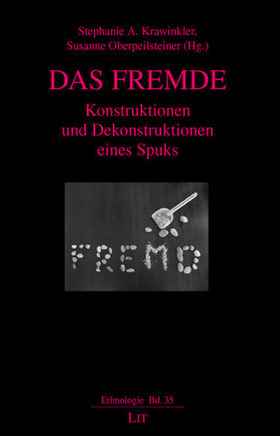
cover

Seminararbeiten verstauben oft in Schubladen. Wiener Sozialanthropologie-Studentinnen dagegen haben aus den Arbeiten ein Buch gemacht. Es hat den Titel "Das Fremde: Konstruktionen und Dekonstruktionen eines Spuks“.

Ich habe mich mit den beiden Redakteurinnen Stephanie Krawinkler und Susanne Oberpeilsteiner, Studierende…

Read more

“YouTube ist der Pulsschlag unserer Kultur” – jetzt.de interviewt Michael Wesch

Seine YouTube-Videos machten ihn zu einen der bekanntesten Ethnologen der Welt. In einem Interview mit jetzt.de erzaehlt Michael Wesch von der neuen Kultur der Beteilung auf YouTube und warum das Internet unser Leben genauso veraendert wie es das Auto getan hat.

In den 90er-Jahren war er auf Feldforschung in Papua New Guinea, nun schaut er sich stundenlang YouTube-Videos an und stellt selber welche ins Netz. Schuld haben seine Studis. Denn “YouTube ist fester Bestandteil ihrer Kultur”, erzaehlt er.

Auf YouTube entstehen neue Arten von Beziehungen:

Die Menschen auf YouTube fühlen sich mit der ganzen Welt verbunden, empfinden aber dennoch ein hohes Maß an Autonomie, ja manchmal auch an Einsamkeit.

jetzt.de: Woran liegt das?

Wesch: Naja, die meisten Nutzer sitzen ja alleine vor ihrem Rechner, in ihrem eigenen Zimmer. Da kann so etwas wie Einsamkeit entstehen, die in besonderen Momenten mit anderen geteilt werden kann. Wenn zum Beispiel Menschen über ihre Webcams sprechen – vielleicht sogar über ihre Einsamkeit – dann ensteht wieder eine Verbindung.

jetzt.de: Es geht also um eine globale Verbindung in einem privaten Rahmen?

Wesch: Kann man so sagen. Es geht darum, Gefühle zu teilen. Nehmen Sie das Beispiel des „Numa Numa“-Songs. Der heißt nach dem Refrain des Lieds „Dragostea din tei“. Dieser Song ging um die Welt, weil ein Junge in New Jersey ihn nachgesungen und online gestellt hat. Das war der Startpunkt für zahlreiche Menschen, diesen Song auch zu singen und sich gemeinsam mit Gary Broslma aus New Jersey darüber zu freuen. Aber „Numa Numa“ ist nur ein Beispiel für die Kultur der Beteiligung, die auf YouTube gepflegt wird. Menschen teilen sich mit, teilen ihre Gefühle und werden dabei selber aktiv. Das ist eine kraftvolle Entwicklung.

(…)

Früher ging es aber meist um Live-Webcams: Einer spricht in die Kamera, der andere sieht zu oder antwortet im Chatroom. Bei YouTube haben viel mehr Menschen die Möglichkeit, sich selber ins Bild zu setzen. Hier beginnt die kulturelle Veränderung: Junge Menschen sehen nicht mehr passiv fern; es geht schon beim Sehen um die Frage, wie ich die TV-Inhalte kommentieren, remixen oder umgestalten kann. Das ist eine neue Einstellung gegenüber den Medien.

Auf die Frage warum er private Home-Videos wissenschaftlich erforscht, antwortet er dass wir an diesen Videos “den Pulsschlag unserer Kultur ablesen” koennen:

Dabei geht es nicht so sehr um die Inhalte, sondern darum, dass jeder Mensch diese Technologie nutzen kann. Ich vergleiche das mit dem Automobil und wie es die Gesellschaft verändert hat: Beim Auto wurden die Städte den Ansprüchen der mobilen Fortbewegung angepasst. Wir untersuchen, welche Veränderungen das Internet auslöst. Dabei schauen wir uns ein spezifisches Phänomen wie YouTube und all die Filme an, die dort hochgeladen werden. Man muss all diese Details zusammentragen, um einen Blick auf das große Ganze zu kriegen.

>> weiter auf jetzt.de

SIEHE AUCH:

Interview with Michael Wesch: How collaborative technologies change scholarship

Via YouTube: Anthropology students’ work draws more than a million viewers

“YouTube clips = everyday ethnography”

antropologi.info survey: Six anthropologists on Anthropology and Internet

Journal Ethnologie über Second Life und andere “digitale Welten”

Seine YouTube-Videos machten ihn zu einen der bekanntesten Ethnologen der Welt. In einem Interview mit jetzt.de erzaehlt Michael Wesch von der neuen Kultur der Beteilung auf YouTube und warum das Internet unser Leben genauso veraendert wie es das Auto…

Read more

A short summary of recent open access news

AAA Creates “Open Access” to Anthropological Research announced the American Anthropological Association two weeks ago. But in reality, open access is only granted to two journals (American Anthropologist and Anthropology News) and to articles that are at least 35 years old!

AAAs move has received mixed reactions as Peter Suber’s Open Access News and Inside Higher Ed summarize.

Is it a first step as Alex Golub suggests or is it rather a way to avoid discussions about actual Open Access as Alexandre Enkerli argues?

Will AAAs recent move lead to greater divisions between the AAA and anthropologists who want to engage with the wider world by making their research more accessible online?

Additionally, the AAA has announced that they are going to conduct preliminary research on the economic issues faced by scholarly society publishers in the humanities and social sciences as consequence of the demand for open access to their peer reviewed journals, Culture Matters informs.

Until now, the AAA has opposed Open Access to journal articles.

More than 80% of all anthropology open access journals are published outside of the U.S, as Maximilian Forte has found out.

As last year, the Savage Minds bloggers are going to promote the Open Access issue at the annual meeting of the AAA. Chris Kelty writes:

Ergo, I am hereby inaugurating an independent awards show to be performed at the AAA. I’m willing to organize it this year, if others are willing to help out (please!?). Nothing too extravagant or long, I’m thinking a guerrilla ceremony in the lobby. I’ll need people to hold the signs, act as paparazzi, maybe a little musical act before and after… and especially: NOMINATIONS. Post them here, or email me (ckelty at ucla etc ). I’m not sure what the prizes will be yet, but they will be good, I promise.

These are the categories I’ve come up with so far:

1. most excellent (and second most excellent) open access article in anthropology or associated disciplines, 2007-8. open access = green, gold, self-archived or institutional repository.

2. most excellent open access teaching materials 2007-8. Syllabus, teaching materials, assessment ideas, technologies or tools, ideas for teaching.

3. most excellent idea for making anthropology public.

4. most (or least?) excellent new theoretical fad.

5. most excellent anthropology blog (SM recuses itself, naturally).

6. most excellent business plan idea for the AAA.

7. most excellent award category not listed here.

>> more at Savage Minds

As the Open Acess Anthropology blog, I forgot that the 14th of october was the Open Access Day

AAA Creates "Open Access" to Anthropological Research announced the American Anthropological Association two weeks ago. But in reality, open access is only granted to two journals (American Anthropologist and Anthropology News) and to articles that are at least 35 years…

Read more