search expand

The Double Standards of the “Uncontacted Tribes” Circus

The story of the so-called “uncontacted tribes” in the Amazon has made its way around the world (even to Norway!). At the same time, there is a complete lack of interest in the story of indigenous people being publicly humiliated in Bolivia, the CultureMatters author Jovan Maud notes.

Are indigenous groups only interesting as long as they are “uncontacted” and “lost”? Has this something to do with obscure notions of “purity”?

Anyway, the anthropology blog CultureMatters has done a great job in deconstructing the “uncontacted tribes”-myth and criticizing organisations like Survival International that use this myth in their work to help indigenous peoples. CultureMatters-blogger Greg Downey writes:

While I certainly agree that small pockets of cultural diversity should not be aggressively assimilated, I feel a little queasy that we have to sell the drive for cultural autonomy and respect for foraging peoples with the whole ‘never seen a white man’ drivel. The term ‘uncontacted’ is part of the problem; ‘isolated’ would be better, as these groups have seldom ‘never seen a white man.’

(…)

One of the reasons these groups are attracting attention is that they are under pressure, especially on the Peruvian side of the border, not only from the usual suspects (miners, loggers, and ranchers), but also from a French petroleum company that wants to drill in the area.

Why can’t we go with that story: protecting the environment, wildlife, and the local people’s ways of life against the shattering impact of wreckless resource extraction to feed petroleum addiction? Why do we have to stoop to the whole ‘they think the plane is a giant bird or spirit’ and ‘their way of life was unchanged for 10,000 years’ cannard?

The CultureMatters-author was interviewed by ABC Radio in Melbourne about this issue and they started discussing the common idea that it is ‘inevitable’ through ‘progress’ that people like this will have to disappear.

He comments:

I wonder if all those ‘well, it’s sad but that’s the inevitable cost of progress’ really even think for thirty seconds about what they’re saying: are they saying that every acre of land that might support people who want to hunt or gather food, inevitably, must be drilled, logged, burned, or dug up for minerals? Really?

>> read the whole story on Culture Matters “‘Uncontacted Indians?!’ — contact an anthropologist!”

Savage Minds followed up with Stone-Age Links and a post The myth of the “untouched” Amazon that concludes that “today’s hunter-gatherers might be descended from the builders of four-lane highways, bridges, moats and canals”.

And Maximilian Forte writes (in a satirical post) about a maybe even greater discovery Four New Tribes Discovered: 3 in the USA, 1 in Iraq

With similar thoughs in my head, I wrote one year ago “Help the Hadza!” – Why focus on culture and not on human rights?

See also earlier posts:

Peru: Another “uncontacted tribe”?

Anthropologists condemn the use of terms of “stone age” and “primitive”

Our obsession with the notion of the primitive society

Primitive Racism: Reuters about “the world’s most primitive tribes”

“Stone Age Tribes”, tsunami and racist evolutionism

“Good story about cannibals. Pity it’s not even close to the truth”

Ancient People: We are All Modern Now – Debate on Savage Minds

Do anthropologists have anything relevant to say about human rights?

The story of the so-called "uncontacted tribes" in the Amazon has made its way around the world (even to Norway!). At the same time, there is a complete lack of interest in the story of indigenous people being publicly humiliated…
Read more

Beeld voor Beeld 2008 – Festival of Visual Anthropology (Amsterdam)

4-8 June 2008, Tropentheater Amsterdam (NL)

Beeld voor Beeld (Image by Image) positions itself at the crossroads of visual anthropology, documentary filmmaking and politics.

Counterbalancing preconceived ideas is the main focus of the Beeld voor Beeld Festival. Rituals surrounding death in different societies, the influence of globalization on African ‘traditional’ societies, as well as the life of illegal immigrants in The Netherlands and in Spain, and Moroccan women participating in women’s running groups in their free time: these are all themes which hopefully will give the audience a better understanding of human societies.

More information: http://www.beeldvoorbeeld.nl/2en/fs.html

4-8 June 2008, Tropentheater Amsterdam (NL)

Beeld voor Beeld (Image by Image) positions itself at the crossroads of visual anthropology, documentary filmmaking and politics.

Counterbalancing preconceived ideas is the main focus of the Beeld voor Beeld Festival. Rituals surrounding death in…

Read more

Antropolog for legalisering av flerkoneri

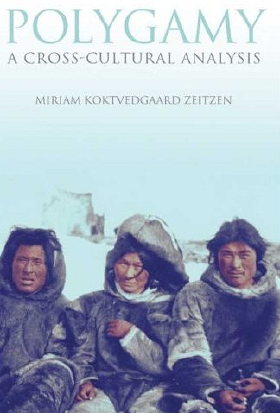
cover

Når to voksne av samme kjønn kan gifte seg og få barn, burde vi kanskje også tillate flerkoneri som et individuelt livsstilsvalg, mener antropolog Miriam Koktvedgaard Zeitzen som er bokaktuell med Polygamy: A Cross-cultural Analysis.

Miriam Koktvedgaard Zeitzen er ekstern lektor på Center for Komparative Kulturstudier ved Københavns Universitet.

Til avisa Information sier hun:

Ved at tillade homoseksuelle ægteskaber har vi allerede taget skridtet ud over den konventionelle, vestlige familie. Når man har accepteret det på linje med det tagselvbord af samlivsformer, vi har i Danmark – papirløse ægteskaber, åbne forhold, seriel monogami og så videre – hvor langt er skridtet så til den polygame familie? Er det rimeligt, at staten skal begrænse voksne menneskers mulighed for at vælge polygami eller flermanderi som et individuelt livsstilsvalg, såfremt de ikke gifter sig med mindreårige eller under tvang?

I flere land, bl-a. USA, er polygami blitt del av en moderne kamp for rettigheter, forteller antropologen. Fundamentalistiske mormoner har i USA inngått et samarbeide med homoseksuelle aktivister og lobbyister. De kjemper for retten til å leve annerledes ut fra argumentet om at ekteskaper med flere menn og koner er noe som et moderne samfunn burde ha plass til.

Polygami forekommer i mange deler av verden. Variasjonen blant polygame forhold er like stor som blant monogame forhold. Derfor er det ikke mulig å si noe generelt om polygami er kvinneundertrykkende eller ikke, sier hun.

>> les hele saken i Information

For noen uker siden skrev Miriam Koktvedgaard Zeitzen kronikken i Politikken Flerkoneri på dagsordenen

I Norge gikk Unge Venstre inn for å legalisere polygami

SE OGSÅ:

– Flerkoneri handler om solidaritet

Der en kvinne er gift med flere menn: Doktorgrad på flermanneri i Tibet

(Lenker oppdatert 9.11.15)

cover

Når to voksne av samme kjønn kan gifte seg og få barn, burde vi kanskje også tillate flerkoneri som et individuelt livsstilsvalg, mener antropolog Miriam Koktvedgaard Zeitzen som er bokaktuell med Polygamy: A Cross-cultural Analysis.

Miriam Koktvedgaard Zeitzen er ekstern lektor…

Read more

Stjerneantropolog sier opp i protest

For mye byråkrati, for mye toppstyring, for lite tid til forskning: Jonathan Friedman, en av antropologiens fremste teoretikere om globalisering, har fått nok og forlater Lunds universitet, melder avisa Skånsken.

Friedman har i flere år jobbet både i Lund og i Paris. I ett år har Friedman kranglet med fakultetsledelsen om oppdelingen av sin arbeidstid og spesielt sin arbeidsinnsats i Paris. Her var det mange regler og skjemaer – noe som han syns er underlig på et universitet:

– I Paris är de intresserade av hjärnan och vad den gör för något. I USA är det samma sak. De lägger inte så stor vikt vid tjänstgöringstider. Efter ett års trakasserier och missförstånd har jag bestämt mig

Avisen skriver at Friedman har fått mye støtte fra sitt institutt. Men antropologen gidder altså ikke lenger og skal fortsette sin forskningsvirksomhet i Paris og snart også i San Diego.

>> les hele saken i Skånsken

Friedman er ikke den eneste som er kritisk til utviklingen innen akademia, se et utvalg av tidligere saker:

Farvel til gaveøkonomien? Hylland Eriksen varsler døden for den frie kunnskapsutvikling

– Kvalitetsreformen truer antropologifaget

Opprop: Forskningsfinanseringen en trussel mot vitenskapen og demokratiet

Protests at Yale: When Walmart’s management principles run an anthropology department

For mye byråkrati, for mye toppstyring, for lite tid til forskning: Jonathan Friedman, en av antropologiens fremste teoretikere om globalisering, har fått nok og forlater Lunds universitet, melder avisa Skånsken.

Friedman har i flere år jobbet både i Lund og…

Read more

Skaper “Second Life” et mer rettferdig “First Life”?

For en drøy uke siden var Arjun Appadurai, en av de store innen antropologien, på besøk i Oslo. Han holdt et veldig optimistisk foredrag om digitale medias muligheter til å forandre verden. Digitale media og nettsamfunn som Second Life kan hjelpe marginaliserte grupper til å designe en alternativ humanitet, sa han.

De nye mediene inspirerer, engasjerer og skaper dermed aktive borgere. De styrker noe som Appadurai kaller menneskenes “capacity to aspire”. Denne evnen til å ville noe, til å lengte og strebe etter noe annet og bedre er etter hans overbevisning et av de viktigste ressursene for å bekjempe urettferdighet.

Han går inn for å trekke et mindre drakonisk skille mellom “virtuelt” og “reelt” og mellom informasjon og imaginasjon. Viljen til å oppnå noe er nemlig direkte knyttet til ens fantasi og evnen til å kunne forestille seg alternativer.

Hans argumentasjon er inspirert av hans feltarbeid blant slumbeboere i indiske Mumbai og andre steder, fortalte han på seminaret som ble organisert av forskningsprogrammet Kulturell kompleksitet i det nye Norge (Culcom).

>> les hele oppsummeringen på Culcoms hjemmeside

SE OGSÅ:

Interview with Arjun Appadurai: “An increasing and irrational fear of the minorities”

Majoritetens redsel for minoriteten: Appadurais nye bok nå på svensk

Internett – samenes og antropologens beste venn

– Vi bør fjerne skillet mellom virtuelt og virkelighet

How Media and Digital Technology Empower Indigenous Survival

Ethnographic study: Social network sites are “virtual campfires”

Internet and development in India

Ethnographic reports about the uses of ICT in low-income communities

For en drøy uke siden var Arjun Appadurai, en av de store innen antropologien, på besøk i Oslo. Han holdt et veldig optimistisk foredrag om digitale medias muligheter til å forandre verden. Digitale media og nettsamfunn som Second Life kan…

Read more