search expand

The global trade with poor people’s kidneys – Interview with Nancy Scheper-Hughes Part 2/3

By Aleksandra Bartoszko. Oslo University Hospital, Equality and Diversity Unit
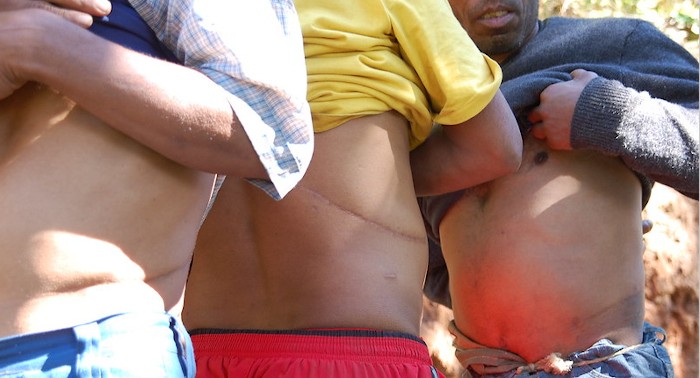

Scars after removal of a kidney. Photo: bee free patrrizia grandicelli, flickr

See part I of the interview Being radical critical without being leftist and part 3: Writing an anthropological detective story

Spring 2011 I attended seminar “Engaging medicine” at the University of Oslo in honor of one of the most prominent medical anthropologists in Norway – Benedicte Ingstad. One of the speakers was Nancy Scheper-Hughes with a paper “Medical Migrations – From Pilgrimage and Medical Tourism to Transplant Trafficking».

Scheper-Hughes is professor of anthropology and director of the program in Critical Studies in Medicine, Science, and the Body at the University of California at Berkeley. She is known for her research on structural and political violence, anthropology of body, illness, suffering, maternity and poverty. Her most famous publications are monographs Saints, Scholars and Schizophrenics: Mental Illness in Rural Ireland and Death without Weeping: the Violence of Everyday Life in Brazil.

Since I got engaged in medical and critical anthropology, Scheper-Hughes has been to me a constant source of inspiration and provocation. As an anthropologist who supports and has been doing public and applied anthropology she co-founded Organs Watch, a medical human rights project focusing on organ trafficking. In more than ten years she has been working on the global organ trade. Following the illegal flow of kidneys, she has mapped the tragic network of rich buyers and poor sellers all over the world.

I always wondered how her adventure with kidneys started. She answers:

– It was a very different kind of a project and it was not one that I ever could have imagined spending so much time on.

– I wrote an article that emerged from chapter 6 of my book “Death without weeping” where I write about bodies in dangers, the dead body and favela residents’ fears and their feelings of ontological security or insecurity of the body. And I was studying the emergence of local death squads that were operating after the end of the military period, taking the place of the militarized state. I found that there was real medical mistreatment of poor bodies in clinics, in forensic institutes, and in the graveyard. And above all of this was hovering a terror that people had that their bodies would be used for organs. So I wrote some articles trying to explain why people thought they would be subject to kidnapping for the purpose of organ theft.

– At the time I still thought that this was mainly an urban legend. But then underneath the legend were these real experiences that poor people encountered in forensic medical institutes or police morgues where the unidentified, unclaimed body was, in fact, state property, and (to be crude) chopped up and harvested. So the people were right in fearing that their bodies were not safe.

[teaserbreak]

– Then I was invited to the Rockefeller Institute’s Bellagio Conference Center in 1996 for a high powered international meeting with transplant surgeons from several countries, North and South, East and West. And my job was, I think, to reinforce the confidence of these transplant surgeons that there was really no need to worry about theft of organs, that it was an urban legend but this is why people believe it. And because I was the only anthropologist and the meetings were long, I took walks with several of the surgeons from Russia, USA, Israel, Taiwan and elsewhere. And each one told me stories that led me to realize that the traffic in organs was real. Then, in 1997 on a trip to Israel I heard about the transplant and organ brokers.
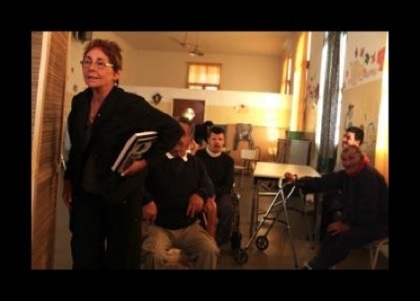

Nancy Scheper-Hughes. Photo: UC Berkeley

– So bit by bit I began to realize that this was serious business. By the end of this Bellagio meeting, I was nominated to do some ethnographic work on that subject. In fact it was simply to discover and to document: what in world is going on?

Since the Bellagio meeting, Scheper-Hughes has traveled all over the globe and followed the organ transplant community:

– In the early days when I thought: “Oh God, this traffic is really damaging people, both the buyers and the sellers, I need to stop this”, I would go to the International Transplant meeting, then I would go to the American transplant meeting, to the Canadian, Polish, Brazilian. But then I said: “No, I can’t spend the rest of my life going to the transplant meetings”.

– But each place I traveled as an anthropologist I would learn very different notions of the body, organs, what is acceptable and what is ethical. I was surprised to learn that in France there is very little living kidney donations; it is just not done. And I am talking about within loving families and altruistically. “No”, I was told, “That’s barbaric, why would we ask healthy people to sacrifice a body part to someone else when we should be getting from the dead?” And also, some transplant coordinators in some countries say that dealing with deceased donation is also very difficult. “It’s too hard because you have to deal with people in grief and mourning, it’s undignified to be asking them over the dead body. It’s easier to ask living people”.

– But then you go to countries where living donation is common and people will say: “You know, it’s good for the solidarity of the country for people to do this”. So you really see these alternative ethics that work. So some of these travels were really important.

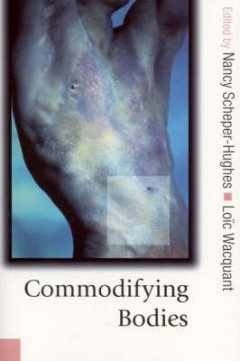
Working on the organ trade she became interested in understanding commodification process and the reification of parts and body parts. These interests resulted in “Commodifying Bodies” co-edited with Loïc Wacquant. She also developed interest in the body itself, the meaning of scars and the differential experiences of selling a kidney.

She gives an interesting example:

– In the Philippines the scars of the surgical removal of a kidney means you are person of honor. It means: “I have taken care of my family”. As opposed to Moldavians who are ashamed of being caught up in the transplant trade and they say they had an accident when I looked at their scars. Or in Brazil where the kidney sellers who were recruited to South Africa to provide kidneys to wealthy transplant tourists, they are called the mutilated ones because the beautiful body is so important to Brazilians. Men and women love their bodies. It’s interesting how they defend themselves in neoliberal, but it really is pre-neoliberal notion of “it’s my body”. It’s almost an anarchy of the body, of the self.

When I asked if I understood correctly that she doesn’t see all the organ sellers as victims she said she had two answers:

– Yes, the kidney sellers were exploited. Pure and simple. They were deceived. They were considered objects. Sometimes they have personal relationships with the brokers. So in that sense, yes, they were victims.

– But is there still agency? Yes, of a limited sort. I usually rephrase Marx: people make history but they don’t make it just as they please. Or under conditions of their making. Well, people here are making choices but not just as they please.

– The kidney sellers in Manila want to sell an eye, a whole eye ball. They want to sell a testicle. They want to sell any organ of which they have two. Why? Because if it’s a job, if they are commercial workers, a kidney is a one off deal. It is not reproducible. The only other option for a kidney seller who is still in debt is to allow their teenage children to sell, or their wives to sell, and by recruiting within their family, they can get a little bonus of about $50.00 for handing them over to the organs brokers. Not very pretty. Structural violence gets reproduced within the household.
– But the Brazilian kidney sellers don’t want publicly to be called victims. Brazil has a pretty good organized system for the capture of organs, but the bureaucracy is corrupted in different parts of the country and the waiting lists there were a mess.

– And this was leading to what I would call patron-client kidney donations. They are people who are life long retainers, household servants, nannies and cane cutters with their bosses asking them to provide kidneys. What kind of choice is that? But it fits very well into a very classic patron-client relation. And the people would say that they gave their consent: “Oh, willingly”. Or: “Of course I would give to this household I’ve been serving”. Because their livelihood, their very survival depends on their bosses. So they must do it. It doesn’t even make any sense to think that you wouldn’t do it.

– So choice is there, but if choice were the only thing that mattered the answer is very simple – that everybody sells. But choices are not the only thing that matters because the choices are over determined, part of the logic of a bad faith economy, as Pierre Bourdieu would put it.

Scheper-Hughes is critical towards the jargon used by transplant community and terms like “organ scarcity”, which contributes to the development of the moral obligation to be a donor. She responses with term “artificial scarcities”, which expresses the socially and politically created phenomenon.

This term arises strong reactions. She is also criticized by many of the potential kidney buyers who accuse her of «producing extraordinary suffering in the world» as she is against the black markets. In a response to one of the many letters she receives she wrote a brochure on what you should think about before you buy or sell a kidney. She explains:

– It’s not a cogito ergo sum, I think therefore I am, but “embodied, therefore I am”. So the first principal is that you have a right to your body. You are existentially thrown into the world with your body. Sometimes they are imperfect. Sometimes they are disabled bodies. But they are your bodies. And they are your treasure, your legacy. You do have a right to donate. But you don’t have an obligation to donate. No one has a right to demand it of you. Because that demand is a kind of invisible sacrifice that’s being asked. And it puts the asker, the demander into a moral and ethical gray zone. You know, making demands of another in the desire for self-survival.

– If you have absolutely made up your mind that you must have, as one of the potential buyers calls it, “a fresh native kidney” from someone, and you say that you don’t want to ask a relative and it’s better to pay somebody who is doing it for a living, I will make one adjustment to that. I’m not against money. We live in a world where markets mean a lot of different things to different people, I mean desires and friendship and sociability, as in many parts in the Middle East. And of course markets can be a good thing.

– So, why can’t we maybe bargain over a kidney? Well, I have argued that the kidney is not a redundant organ, that there is no such thing as a ‘spare’ kidney. You pay a big price in bartering over the value of your ‘spare part’. So I would ask the buyers that if they feel it is what you must do, then pay a relative, pay a dear friend. Because you’ll make then sure you will look after them. Pay your wife. Put a nephew through college who has no way of going to college.

– Is there any objection to that? Families are doing it all the time in different ways, circulating money through wedding obligations, making loans. And being indebted to someone is not necessarily servitude. There were times and places where gifts and debts were the same. And so, a gift is a kind of debt after all. That’s what Marcel Mauss is all about. So why not kidney debts within families?

– But just be sure you are not asking a sacrifice. People are not angels. They are not sprits, they have a body and its organs are limited. They have a right to those organs. But if they are in a relationship with kinship and affection and love, don’t just take it. Give something back that really matters to you and that obligates you to further gifting and responsibility for each other’s welfare and wellbeing. Don’t pay a stranger to whom you owe nothing but a one off payment.

– So I think these are anthropological questions. They have to do with kinship, with nature of gifting, the nature of debt and body debts.

The engaged anthropologist has been addressing the uncomfortable truth about the organ trafficking to transplant surgeons, politicians, the House of Lords etc. What was the major challenge with addressing her work to these groups? What were the reactions? Do they want to hear all that? Do they get angry?

– Well, it’s changed. Sure they get angry. Often, in the early days, I was in the international transplant meeting and transplant coordinator got up and called me a kidney terrorist because I was preventing kidneys from being moved around.

– I used to say to some transplant people, if you are satisfied living in a world where the third world have to pay a body tax to help the rich and you are satisfied with that, then I have nothing else to say to you. If that worries you a little bit than I think we can sit down and have a conversation.

– But of course there is resistance. Since the Istanbul Summit in 2008 there are now a key core of transplant doctors who really are rephrasing everything that I’ve been saying over the years. So I feel like a good part of my job is over. I mean, I don’t think that any profession can totally police itself without some outsider perspectives. I think that transplant profession needs help from social scientists who are critical thinkers and independent of medicine. It is not a job for bioethicists because they often share a worldview with the surgeons. They are not critical or independent enough. But basically I feel that more or less political job is done.

2010 - Body and State - Buying and Selling the Body, Pt 1 | The New School

Video: Nancy Scheper-Hughes at the Body and State conference, Buying and Selling the Body

Scheper-Hughes is done with research on organ trade now and she is making plans for new projects:

– Well, I have a lot of unfinished work. I would probably go back to South Africa. I have a series of essays about the transition from Apartheid to the new South Africa that is historical now because I was first there in 1993–1994, but I was working in one newly formed shantytown. And I visited there several times since and I have witnessed many changes there. So I would probably go back. And I have also a draft, a manuscript, which may end up being a series of essays. But that will be my next project.

– And then I’m still always working in the Pernambuco town I call Bom Jesus da Mata. I have been asked to bring my book “Death without weeping” up to date because the situation has changed so completely there. The death of infants is not happening anymore, because of the demographic transition that all of Brazil has experienced in the past two decades. So I want to put it in a more historical perspective. But also to maybe write a book on the death squad that has terrorized the town. On this particular squad and how it came to take over the entire government of the municipio. Not just of a favela. But in an area that includes rural hamlets of 50.000 people, not gigantic but a substantially sized town.

– The judiciary, courts, the town counselors and the prefeito – everybody was in the hands of and employed by the death squad. How did it happen? In a town which was fairly distinguished as a sugar plantation town, which also had some shoe factories, that had an educated class, they were educated outside the place, that had also a radical class of organic intellectuals, had a lot of resistance, had very strong liberation theology movement – how was it possible? And that’s the question I’ve been asking and still don’t have the answer. They don’t have the answer.

– So I want to return. I think in terms of understanding violence that is beyond the everyday violence – how vigilantes can come to become the governing force? It’s seems to me a large enough question.

Part 3 of the interview: Writing an anthropological detective story and part 1: Being radical critical without being leftist

By Aleksandra Bartoszko. Oslo University Hospital, Equality and Diversity Unit

Scars after removal of a kidney. Photo: bee free patrrizia grandicelli, flickr

See part I of the interview Being radical critical without being leftist and part 3: Writing an anthropological detective story

Spring…

Read more

Being radical critical without being leftist: Interview with Nancy Scheper-Hughes Part 1/3

Antropologi.info contributor Aleksandra Bartoszko has recently met medical anthropologist Nancy Scheper-Hughes. In an interview in three parts, she talks with her about the neo-cannibalism of the global organ trade, about her forthcoming book, an anthropological detective story, and about new ways of doing fieldwork in a world where local communities are more influenced by what goes on outside of it than what’s going inside of it.

Here is part one. Part two and three will follow Sunday and Monday


Interview with Nancy Scheper-Hughes, Part One

By Aleksandra Bartoszko, Oslo University Hospital, Equality and Diversity Unit

Critical Medical Anthropology (CMA) focuses on the power relations within health context and political economy of health and health care. It asks why so many people die when there is a cure? Why will I live 20 years longer than my friend from Nicaragua? How do global pharmaceutical markets exclude poor populations? Which body is more worth to be saved? Who decide if you have access to necessary care? What are human rights in every day life, in practice, not on paper?

Critical anthropologists seem to unanimously agree and point out the significant role of neoliberal politics in the construction of inequalities in society. A lot of CMA-writing end up as harsh (and unfortunately often uncritical) critique of “neoliberalism” and “capitalism”.

Reading, listening and talking to critical anthropologists has always left me with a feeling that this part of our discipline is dominated by one political view (which is never good) and every researcher focusing on inequalities is a leftist. Reasons for that can be discussed, but this unwritten agreement has been troubling me for years

I was always wondering if people who grounded CMA think it is possible to do CMA without being a leftist. I asked Nancy Scheper-Hughes. She replied:

Nancy Scheper-Hughes. Photo: UC Berkeley

– Well, that’s a great question, I mean we can always be critical in the scholarly sense, obviously, which can mean critical theory as produced by the Frankfurt school, the new left, Marxists, Neo-Marxists, Gramsci, anarchist socialist, or whatever, but I think that in the anthropological sense critical means essentially realizing your positionality, understanding power relations as outsider looking or as an insider looking out. It means taking these radical juxtapositions of making the familiar strange and making the strange familiar. I think all of that is radical critical without necessary being leftist. These definitions of left and right are not so useful. I simply say, often to raised eyebrows, that I am radical. Take it or leave it.

Paul Rabinow once said to me, he always plays devil’s advocate, and once he said when he taught about public anthropology: “Well, then, what is private anthropology?” My answer is that private anthropology is anthropology written for 50 people who understand what you are talking about and excludes everybody else.

– So I feel that there is a place for that, there is a time, and where it’s absolutely necessary to speak in an encoded language – it’s a form of shorthand, just like the physicists do or mathematicians do. The audience will be small and a closed circuit one. It would be critical, but private, undemocratic because so many are excluded from participating in the conversation.

– But public anthropology doesn’t only mean making things more readily available to the layman, let’s say. To me it means like making things public that are private. Making invisible things into public issues, making visible secrets that empower some and disempower others who are not privy to the information.

– So I think that part of being a critical anthropologist is getting to the underside of things, the dimensions of social and political life that people cannot ordinarily see. In the end, I see the critical anthropologist, medical or cultural, as necessarily alienated, as politically situated class traitors, race traitors, national traitors and gender traitors. But lets leave that for another discussion.

Read part 2 of the interview: The global trade with poor people's kidneys and part 3: Writing an anthropological detective story

SEE ALSO

Nancy Scheper-Hughes: Public anthropology through collaboration with journalists

Antropologi.info contributor Aleksandra Bartoszko has recently met medical anthropologist Nancy Scheper-Hughes. In an interview in three parts, she talks with her about the neo-cannibalism of the global organ trade, about her forthcoming book, an anthropological detective story, and about new…

Read more

Ikke muslimer mot kristne, men militæret mot folket

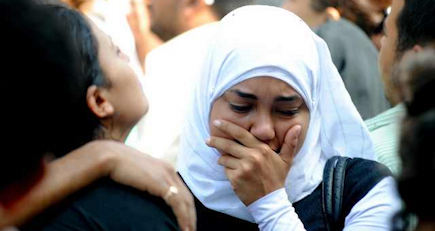
En muslimsk jente som deltar i begravelsen av de kristne ofre. Hun støtter venninnen sin som mistet sin bror. Foto: Lilian Wagdy, flickr

Mens egypterne roper “Kristne og muslimer er én hånd” og “islamister” bærer korset i solidaritet med de kristne, skriver norske journalister “Når muslimer og kristne slåss”.

(utkast, fortsatt i arbeid) Optimistisk kom jeg fredag kveld tilbake fra en kort tur til Tahrirplasssen i Kairo. Flere hundre egyptere var samlet der for å demonstrere for nasjonal enhet. “Kristne og muslimer er en hånd”, ropte de. Tidligere på dagen hadde de allerede marsjert fra Al Azhar moskeen til den ortodokse katedralen der ofrene av søndagens militærvold ble begravet.

Som de fleste vel har fått med seg, ble under en demonstrasjon mot diskriminering av Egypts kristne minoritet 27 personer drept. Protestene startet fredelig, men endte i et blodbad etter at militæret angrep demonstrantene foran det statlige TV-huset Maspero. Bildene der panservogner kjørte på demonstranter gikk verden rundt.

“Christians, muslims, one hand! Foto: Lorenz Khazaleh, flickr

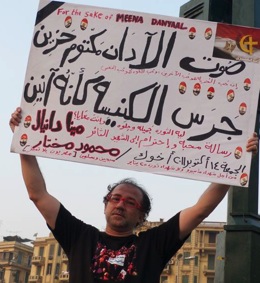
“En trist tid for kristne og muslimer”, sa en mann til meg på Tahrirplassen. Han holdt et plakat som han har laget til minne av Mina Daniel, en av de mest kjente koptiske revolusjonærene, som mistet livet forrige søndag, bare 25 år gammel. I høyre hjørne av plakatet sitt har han plassert det egyptiske flagget med både det kristne korset og den muslimske halvmånen på.

Mannen som holder plakatet er muslim.

Når jeg ser gjennom norske aviser ser jeg lite av denne muslimsk-kristne forbrødringen. Norske medier har nemlig – i likhet med internasjonale medier – valgt å beskrive volden i Kairo som en religionskonflikt.

De kunne valgt en annen vinkling som med stor sannsynlighet ville ha vært nærmere sannheten: Ikke muslimer mot kristne, men militæret mot folket. Volden bunner i en konflikt mellom krefter som er for revolusjonen (folk flest) og krefter som motarbeider den (det regjerende, USA-støttede, militærrådet SCAF).

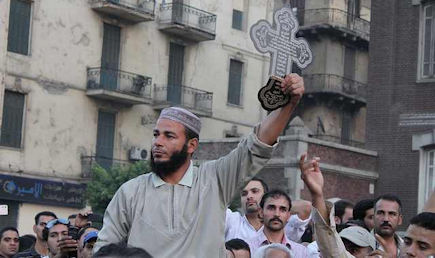
Det var ikke bare koptere som demonstrerte for bedre rettigheter til Egypts åtte millioner kristne, men også mange muslimer. Flere av dem risikerte livet sitt i kampen mot militæret. Blogger Hossam el-Hamalawy skriver også om en muslimsk geistlig som bar et kors mens demonstrantene gikk over Nilbruen. Kampropene deres rettet seg mot militærregjeringen, ikke mot muslimer.

Det er altså ikke muslimer som hater kristne, men militæret som hater folkestyret.

De fleste demonstranter, bloggere og kommentatorene i (engelskspråklige) egyptiske mediene insisterer på at årsaken til volden forrige søndag ikke var religiøse spenninger i befolkningen, men militærets ønske etter å opprettholde og utvide sin makt. “Dette er ikke en religiøs konflikt, men et militærmassaker”, ropte demonstranter dagene derpå.

I lang tid har Mubarak-regimet benyttet seg av en splitt-og-hersk taktikk. Hver gang opposisjonen mot ham ble for stor, framprovoserte Mubarak konflikter mellom kristne og muslimer. “Det er enten meg eller kaos”, pleide han å si for å bringe opposisjonelle stemmer til taushet, skriver Yasmine Fathi i Ahram Online. SCAF viderefører denne tradisjonen. Det er ikke få som mener at Mubarak-regimet står bak kirkebombingen i Aleksandria i desember 2010.

Andre, som for eksempel Sameh Naguib mener SCAF vil også gi et advarsel til andre deler av samfunnet som i det siste har protestert mot regimet. Egypt har vært vitne til et av de største streikebølgene på lenge. Dette fikk militæret til å se rødt.

– Men kan de massakrere streikende arbeidere? Nei, dette ville ha ført til enda større streiker. Derfor har de valgt å angripe kopterne, som er mye lettere siden koptere en svak og sårbar gruppe, sier Naguib til Ahram Online.


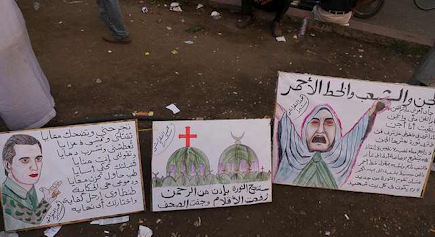
Utstilling på Tahrirplassen mot militærrådets forsøk på å skape splid mellom kristne og muslimer. Foto: Lorenz Khazaleh, flickr

Selv om forholdet mellom kristne og muslimer er et sensitivt tema, og kopterne har all grunn til å demonstrere mot diskriminering, så ønsker folk flest leve i fred og fordragelighet med med hverandre.

– Jeg er helt sikker på at vi har 80 % av muslimene med oss, sa en eldre koptisk kvinne til meg.

Det er få aviser som ikke bruker den sekteriske retorikken. Blant unntakene finner vi reportasjene fra Kairo-korrespondentene Amal Wahab i Klassekampen og Sigurd Falkenberg Mikkelsen i NRK.

En av de få forskere som retter fokuset på militæret i norske mainstreampresse er den norsk-egyptiske antropologen Nefissa Naguib. Til VG sier hun:

– Hæren dyrker fram spenninger mellom kristne og muslimer for å gjøre seg uunnværlig. Dette er strategi fra øverste hold.

Demokratiforkjemperne, understreker hun, ser på de militære som en del av det gamle regimet. Nå frykter mange av dem at militærrådet vil holde fast ved makten, tross løftene om valg og reformer.

VG intervjuer også Jacob Høigilt, Egypt-forsker ved Fafo. Han er enig. Betalte bøller har på ved flere anledninger har skapt bråk i landet på vegne av militærrådet, sier han:

– Det gamle regimet var et stort apparat med mange og lange armer. Det er elementer derfra som aktivt forsøker å motarbeide revolusjonen. Det kan godt være at noen av disse hadde en finger med i spillet i det som har skjedd de siste dagene. Det man kan si ganske sikkert, er at militæreærrådet nok vil ønske å ha ganske mye å si i det postrevolusjonære Egypt. De vil ha minst én hånd på rattet.

SCAF har vært skyteskive for kritikk på mange fredagsdemonstrasjoner på Tahrirplassen i Kairo og andre steder i landet. Når du drar på et av byens tallrike “åpen mikrofon” arrangementer vil det heller ikke ta lang tid før noen framfører et anti-SCAF dikt eller en anti-SCAF-rap.

Men det er altså ikke dette perspektivet som dominerer i norsk media. Det er ikke først og fremst militæret som det settes kritisk søkelys på, men landets muslimske befolkning. Mest bekymret er journalistene for muslimbrødrene . Dette til tross for at muslimbrødrene virker langt mer demokrativennlige enn militæret.


“Muslims, Christians, One Hand”: En salafist bærer korset og leder slagropene under begravelsen av ofrene til militærmassakeret. Foto: Omar Robert Hamilton, flickr

En kan lure på hvorfor mainstreammediene rapporterer slik de gjør. En mulig forklaring er fordommer og generelt overfokus på religion når det gjelder Midtøsten. En annen forklaring er at de stoler for mye på internasjonale nyhetsbyråer som ap og Reuters. Nyhetsbyråene har nemlig stort sett overtatt den sekteriske retorikken fra egyptisk stats-tv. Altså at muslimer og kristne er i klinsj med hverandre og at hæren trengs for å opprettholde orden.

I påfallende mange nyhetssaker framstår det regjerende militærrådet og “statspresidenten” som ansvarsfulle krefter som maner befolkningen til ro.

“Hæren satt inn store styrker for å hindre at demonstrasjonene uttartet seg”, bruker for eksempel NRK som bildetittel i en ellers god militær-kritisk sak. Jeg antar bildetittelen stammer fra Reuters som de har bildet fra. Og VG stille seg på samme måte på overgripernes side når de skriver: “Demonstranter satte fyr på biler og avfyrte skudd mot politet i Kairo forrige søndag. 25 personer ble drept i sammenstøtet” og samtidig ukritisk omtaler den nye anti-diskrimineringsloven som regjeringen har vedtatt.

Jeg kan tenke meg at SCAF er glad over denne vinklingen.

For mens nordmenn, tyskere og amerikanere diskuterer islam og muslimbrødrene, kan de i ro og mak sørge for at det er snart slutt med den “arabiske våren”.

“Dette er ingen religionskonflikt”, skriver sosiolog Mona Abaza i Ahram Online, “men begynnelsen på en målrettet kontrarevolusjon”.

Christians and Muslims are One Hand

Se mer bakgrunn i saken jeg skrev om den internasjonale mediedekningen The Cairo massacre and How to invent "religious conflicts"

En muslimsk jente som deltar i begravelsen av de kristne ofre. Hun støtter venninnen sin som mistet sin bror. Foto: Lilian Wagdy, flickr

Mens egypterne roper “Kristne og muslimer er én hånd” og “islamister” bærer korset i solidaritet med de…

Read more

Die Mythen über angebliche religiöse Gewalt in Kairo

Koptische Christen und Muslime geraten in Kairo tödlich aneinander. So wie diese Schweizer Agenturmeldung tönen die meisten Meldungen in deutschsprachigen und internationalen Medien.

Auch Kulturanthropologe Stefan Haderer reduziert in seinem Gastkommentar in der Wiener Zeitung das Massaker in Kairo auf einen religiösen Konflikt.

Kaum jemand erwähnt, dass das Militär (inklusive Staats-Fernsehen), hinter der Gewalt stand, und vermutlich bezahlte Provokateure wie damals Mubarak benutzte, um Christen und Muslime aufeinander zu hetzen, um so ungestört weiterzuherrschen (“Divide and Rule”). Stattdessen präsentieren deutschsprachige Medien, u.a. die Sueddeutsche den regierenden Militärrat (SCAF) und den Präsidenten als verantwortungsvolle Kräfte, die die Bevölkerung zur Besinnung aufrufen. Dabei gilt SCAF für viele Aktivisten als einer der Hauptfeinde der Revolution.

Kaum jemand erwähnte, dass nicht nur die Christen (Kopten) demonstriert hatten, sondern auch viele Muslime für die Rechte der Christen auf die Strasse gingen und beim Kampf gegen das Militär ihr Leben einsetzten, und vermutlich hat keine Zeitung das Bild des Salafisten, der ein Kreuz trägt, gedruckt und die Demonstranten zitiert, die laut ruften, es drehe sich nicht um ein Religionskonflikt, sondern um ein Militärmassaker und “Christen und Muslime sind eine Hand”.

Ein Blick auf lokale Medien und Blogs gibt ein ganz anderes Bild als die Lektüre internationaler Medien.

Ich habe mehr dazu in meinem Beitrag in Englisch geschrieben The Cairo massacre and How to invent “religious conflicts”.

Koptische Christen und Muslime geraten in Kairo tödlich aneinander. So wie diese Schweizer Agenturmeldung tönen die meisten Meldungen in deutschsprachigen und internationalen Medien.

Auch Kulturanthropologe Stefan Haderer reduziert in seinem Gastkommentar in der Wiener Zeitung das Massaker in Kairo auf…

Read more

Wissenschaft als “Prachtbildband”: Buch zur Wittenberg-Studie erschienen

Fast drei Jahre lang haben 28 Ethnologen und Soziologen das Leben der Stadt Wittenberge im Niedergang teilnehmend beobachtet. Vor einem guten Jahr wurden die Forschungsergebnisse gross in einer Sonderausgabe der ZEIT präsentiert.

Nun liegt das Buch zur Studie vor. Die Märkische Allgemeine stellt es in zwei Beiträgen vor. ÜberLeben im Umbruch. Am Beispiel Wittenberge: Ansichten einer fragmentierten Gesellschaft heisst das von Heinz Bude herausgegebene Werk.

Die Wittenberg-Forschenden sind in vieler Weise neue Wege gegangen. Sie banden Künstler in den Forschungsprozess ein. Sie vermittelten Forschung via Theaterstücke und ZEIT-Sonderbeilage. Gar nicht so typisch akademisch also.

Das Buch scheint auch alles andere als typisch zu sein. Forschung wird via Essays und Bildreportagen einem breiten Publikum vermittelt.

Als “hybriden Klotz” beschreibt Jan Sternberg in der Märkischen Allgemeinen das 360 Seiten starke Buch, als “Prachtband über Niedergang und Weiterwursteln in Wittenberge” mit “aufwendig gestalteter Bild-Text-Kombination”.

Sein Kollege Andreas König ist nicht besonders glücklich über diese Darstellungsform. Der ungewöhnliche Mix aus Reportagen, wissenschaftlichen Beiträgen, Ausschnitte aus Theaterstücke und längeren Foto-Strecken, schreibt er, mache sowohl den Reiz als auch die Schwäche des Buches aus.

SIEHE AUCH:

Forschungsthema: Wie überleben in Wittenberge?

Das Potenzial der Wirtschaftskrise – Riesen-Forschungsprojekt in Wittenberge zu Ende

Webseite des Forschungsprojektes

Fast drei Jahre lang haben 28 Ethnologen und Soziologen das Leben der Stadt Wittenberge im Niedergang teilnehmend beobachtet. Vor einem guten Jahr wurden die Forschungsergebnisse gross in einer Sonderausgabe der ZEIT präsentiert.

Nun liegt das Buch zur Studie vor. Die Märkische…

Read more