search expand

An anthropologist on sex, love and AIDS in a university campus in South Africa

“It has sometimes been difficult persuading the girls to do interviews about love and sex with a white, foreign male researcher”, anthropologist Bjarke Oxlund says in an interview with OhMyNews. Oxlund traveled to South Africa in 2006 and 2007 to conduct research among students at the University of Limpopo.

South Africa has the highest number of people living with AIDS in the world, and therefore issues of gender equality and sexuality have been according to Oxlund propelled to the forefront of South African politics. Many have pointed to men as the driving force and explained this with reference to male dominance and female vulnerability. But is this correct?

The anthropologist shared some of his insights at a recent presentation in Pretoria:

  • Combined female and male agency (rather than male agency and female passivity)
  • Reciprocity of love and sex and the material and the immaterial (rather than ’transactional’ sex or prostitution)
  • Particularity of the concept of personhood in a resource poor setting rather than a particular (South) African sexuality

He said that we need to move away from the concept of transactional sex (or prostitution). His research showed that it’s wrong to juxtapose transactional sex / prositution with a normative notion of pure love which is supposed to be free from socio-economic interests or lust and desire:

(I)n many students’ lives it is the other way around – values of romance and finance are deeply intertwined. Young people navigate a social terrain of love, sex and materialism where exchanges are used to signal who you are. These exchanges take centre stage in processes of becoming, which can be summarised as the attempt to be the person you want to be and being recognised as such by others.

There are very few studies on love in Africa and lots of them are somehow problematic. For example, public health studies tend to look at sex in Africa as instrumental and loveless and anthropology always interpreted relationships as a mechanical exchange of women between kinship groups.

>> download the presentation

In another paper he writes:

I would like to argue that there are important social meanings of relationship dynamics that some of the more public health oriented studies have not grasped, and that in research and program interventions issues of female agency have been downplayed when it comes to love, sex and relationships.

He also notes that, overall, little attention has been given to notions of love or affection in academia, “while in the social reality of Limpopo informants spend huge proportions of their time living out and discussing love and how it relates to sex and relationships” (well, not only there, we could add…).

>> download the paper by Bjarke Oxlund: Of cheese-boys, course-pushers, ministers and the right ones: Sex, love and relationships in a South African university campus (pdf)

There is one more paper by him: Bjarke Oxlund: Masculinities in student politics: Gendered discourses of struggle and liberation at University of Limpopo, South Africa (Microsoft Word Document)

SEE ALSO:

Sexual anthropologist explains how technology changes dating, love and relationships

Anthropologist Priscilla Reining Broke Ground on AIDS

Male circumcision prevents AIDS?

“There’s no AIDS here because men and women are equal”

AIDS:”Traditional healers are an untapped resource of great potential”

The emerging research field of medical ethnomusicology: How music fights AIDS

Cultural values and the spreading of AIDS in Africa

AIDS and Anthropology – Papers by the AIDS and Anthropology Working Group

Taking as many lovers she pleases: Where women rule the world and don’t marry

"It has sometimes been difficult persuading the girls to do interviews about love and sex with a white, foreign male researcher", anthropologist Bjarke Oxlund says in an interview with OhMyNews. Oxlund traveled to South Africa in 2006 and 2007 to…
Read more

– Voldtektene har ingenting med somalisk kultur å gjøre

Ingen antropolog blir spurt om råd når hvite menn voldtar kvinner. Men i etterforskningen av en voldtekt der flere somaliere var involvert, har politiet kontaktet antropologen og Somalia-eksperten Jan M. Haakonsen, skriver Dagbladet.

I etterforskningen kommer det fram at vitner hevder at «voldtekt ikke er så alvorlig for somaliere». Kvinnen hevder at voldtektene hadde ikke skjedd dersom hun hadde vært med i en annen klan, men hun skal ha skiftet forklaring mange ganger.

Antropologen har nå skrevet en lang utredning der han ifølge Dagbladet skriver blant annet:

Med bakgrunn til den uforholdsmessige store andelen somaliske menn som har vært involvert i voldtektssaker i Oslo, pågikk det på begynnelsen av året (2007) en debatt der enkelte bl.a spurte om dette skyldtes noe i somaliernes kulturelle bakgrunn (…) Som undertegnede har forsøkt å påvise ovenfor, er det imidlertid lite – om noe i det hele tatt – som til sier at somaliere generelt, eller somaliere i Norge spesielt, bærer på en historisk kulturarv som gjør at de skulle utvikle et mer tolerant syn overfor seksuelle overgrep overfor kvinner, deriblant voldtekt og gruppevoldtekt, enn andre. Dette gjelder også saken som er utgangspunkt for denne utredningen.
(…)
Undertegnede kan ikke se at de siktedes og offerets somaliske bakgrunn på noen måte har hatt noen innvirkning på hendelsene de siktede står anklaget for. Det er ingenting i somalisk tradisjon, rettsforståelse eller historie som skulle tilsi at en gruppe menn skal kunne utføre alvorlige overgrep overfor en kvinne i Norge, fordi hun tilhører en annen klan enn de siktede

Advokat René Ibsen, som forsvarer en 45-åring, mener det har vært en diskriminerende etterforskning:

Politiet la til grunn at dette var kulturelt begrunnet. De er framstilt nærmest som villmenn, og det er spesielt at politiet har brukt argumenter om somalisk kultur i fengslingsmøter. Jeg synes politiet fullstendig har manglet objektivitet, og jeg har funnet saken skremmende. De siktede har ikke fått individuelle vurderinger de har krav på, men er blitt satt i bås som en gruppe.

>> les hele saken i Dagbladet

Denne forskjellsbehandlingen av hvite og ikke-hvite mennesker i kriminalsakrer er ganske vanlig og blitt kritisert tusenvis av ganger, se tidligere innlegg:

Æresdrap og dovaner: Kun innvandrere har kultur

Skal vi slutte å snakke om kultur?

Kritiserer undervurdering av klasseforskjeller i innvandringsdebatten

Hasjsalg ved Alerselva: – Heller gate- enn æreskultur

Se også en tidligere kronikk av Jan M. Haakonsen Somaliere: Er de verre enn andre?

Ingen antropolog blir spurt om råd når hvite menn voldtar kvinner. Men i etterforskningen av en voldtekt der flere somaliere var involvert, har politiet kontaktet antropologen og Somalia-eksperten Jan M. Haakonsen, skriver Dagbladet.

I etterforskningen kommer det fram at vitner hevder…

Read more

Genealogical Practices – Transdisciplinary Cartography of a Style of Thinking

Internationaler Workshop des Graduiertenkollegs „Geschlecht als Wissenskategorie“
und des Forschungsprojekts „Verwandtschaftskulturen“ (TP C4)
im Sonderforschungsbereich 640, „Repräsentationen sozialer Ordnung im Wandel“,
in Kooperation mit C:SL, dem „Collaboratory Social Anthropology and Life Sciences“
und dem Forschungscluster „Das Präventive Selbst“ am Institut für Europäische Ethnologie

an der Humboldt-Universität zu Berlin,
Institut für Europäische Ethnologie,
Mohrenstraße 40/41, 10117 Berlin,
Raum 211/212 (2. Etage)

Programm / Programme:

Donnerstag / Thursday, 13.12.07

Achtung: Der Eröffnungsvortrag findet an diesem Ort statt /
Important: The keynote lecture will be held at this location:
HU Berlin, Hauptgebäude
Unter den Linden 6, 10117 Berlin
HS 2097 (1. Etage)

16:15
Geoffrey C. Bowker (CSTS, Santa Clara University, California):
Memory and Forgetting Practices in Social and Natural Science

17:45 Empfang / Reception

Freitag / Friday, 14.12.07

9:30-10:00 Einführung in das Thema / Introduction to the subject:

Kartographische Koordinaten / Cartographic coordinates

* Martina Schlünder (Geschichte der Medizin, Justus-Liebig-Universität Gießen)
* Sonja Palfner (Graduiertenkolleg Geschlecht als Wissenskategorie, HU Berlin)
* Michi Knecht (Europäische Ethnologie, HU Berlin)

10:00-11:00 Diskussion des Eröffnungsvortrages / Discussion of the key note lecture

Geoffrey C. Bowker (CSTS, Santa Clara University, California)

Kommentare / Discussants:
* Staffan Müller-Wille (Centre for Genomics in Society, University of Exeter)
* Stefan Beck (Europäische Ethnologie, HU Berlin)

11:30-13:30 Genealogische Praktiken I / Genealogical practices I:

Christina Brandt (MPIWG, Berlin):
Between “genealogy” and “identity”: Historical perspectives on the clone concept

Stefan Sperling (History of Sciences, Harvard University):
Genealogies of the future: Law, science, and the making of potential persons

Kommentare / Discussants:
* Susanne Bauer (Medical Museion / Institute of Public Health, University of Copenhagen)
* Eric J. Engstrom (Geschichte der Medizin, Charité Berlin)

Moderation / Chair:
* Michalis Kontopodis (Europäische Ethnologie, HU Berlin)

15:00-17:00 Genealogische Praktiken II / Genealogical practices II:

Bernd Gausemeier (MPIWG, Berlin):
Don’t miss the forest for the family trees: Genealogy as representative model and technical mode

Elisabeth Timm (Europäische Ethnologie, Universität Wien):
Finds and fictions. The quest for ancestors in Austria between noble reign, bourgeois associations, fascist policy, and individualized practice

Kommentare / Discussants:
Maren Klotz (Europäische Ethnologie, HU Berlin)
Elvira Scheich (Gesellschaftswissenschaften, TU Berlin)

Moderation / Chair:
Jörg Niewöhner (Europäische Ethnologie, HU Berlin)

17:00-17:30 Kaffepause / Coffee and tea

17:30-19:00 Kartographische Übung I / Cartographic practice I:

Open space for the presentation and circulation of visual material and artefacts

20:00 Abendessen / Conference dinner

Samstag / Saturday, 15.12.07

9:30-11:30 Genealogische Praktiken III / Genealogical practices III:

Elizabeth A. Povinelli (Anthropology, Columbia University):
The Genealogies of Liberalism

Eva Johach (Graduiertenkolleg Geschlecht als Wissenskategorie, HU Berlin):
Human and animal forms of nation building. Elective affinities between men and insects in the 19th century

Kommentare / Discussants:
* Susan Leigh Star (CSTS, Santa Clara University, California)
* Axel C. Hüntelmann (Geschichte der Medizin, Charité Berlin)

Moderation / Chair:
+ Anja Laukötter (Geschichte der Medizin, Charité Berlin)

12:00-13:30 Genealogische Praktiken IV / Genealogical practices IV:

Jeanette Edwards (Social Anthropology, University of Manchester):
Of family history, ancestors and pedigrees: Genealogical research in the north of England

Ohad S. Parnes (ZFL, Berlin):
Epigenetic genealogies

Kommentare / Discussants:
*René Gerrets (MPI für Sozialanthropologie, Halle)
* Skúli Sigurdsson (MPIWG, Berlin and Science Institute Reykjavik)

Moderation / Chair:
*Sven Bergmann (Graduiertenkolleg Geschlecht als Wissenskategorie, HU)

13:30-15:00 Mittagessen / Lunch break

15:00-16:30 Kartographische Übung II / Cartographic practice II:

Where lines are crossing – How does it work?
Wie könnte eine interdisziplinäre Kartographie funktionieren?

Stefan Hesper:
Karte oder Genealogie? – Anmerkungen zur Genealogie der Kartographie bei Deleuze und Guattari und Ausblicke

* Michi Knecht (Europäische Ethnologie, HU)
* Martina Schlünder (Geschichte der Medizin, Justus-Liebig-Universität Gießen)
* Sonja Palfner (Graduiertenkolleg Geschlecht als Wissenskategorie, HU)

17:00-18:30 Kartographische Übung III / Cartographic practice III:

Round table discussion: “What makes the ‘re’ in the re-making of genealogies?”: Emergent patterns, transdisciplinary perspectives

mit / with

Susan Leigh Star (CSTS, Santa Clara University, California)
Tanja Michalsky (Kunstgeschichte und Ästhetik, UDK Berlin)
Staffan Müller-Wille (Centre for Genomics in Society, University of Exeter)
Skúli Sigurdsson (MPIWG, Berlin and Science Institute, Reykjavík)
Elizabeth A. Povinelli (Anthropology, Columbia University NY)

Moderation / Chair:
* Michi Knecht (Europäische Ethnologie, HU Berlin)

Konzeption und Organisation:
• Dr. Martina Schlünder (m.schluender@gmx.de)
Dr. Michi Knecht (michi.knecht@rz.hu-berlin.de)
• Sonja Palfner (spalfner@gmx.de)

Internationaler Workshop des Graduiertenkollegs „Geschlecht als Wissenskategorie“
und des Forschungsprojekts „Verwandtschaftskulturen“ (TP C4)
im Sonderforschungsbereich 640, „Repräsentationen sozialer Ordnung im Wandel“,
in Kooperation mit C:SL, dem „Collaboratory Social Anthropology and Life Sciences“
und dem Forschungscluster „Das Präventive Selbst“ am Institut für…

Read more

Culture, Religion and Identity Conference (UK)

St Mary’s University College, Twickenham (UK) 24th November 2007

Panels will be based on the Irish migrant community; Irish identity; the Catholic Church; identity and popular culture; diaspora; new hybridities and Israel and Palestine.

Speakers already confirmed include Prof. Michael Chanan of Roehampton University, Dr John McLeod of the University of Leeds and Kenan Malik of the University of Surrey.

Michael Chanan is a professor of Film & Video at Roehampton University, London. He is a documentary film-maker, author, editor and translator of books and articles on film and media and the social history of music. In 2006 he collaborated with George Steinmetz (University of Michigan) to produce Detroit: Ruin of a City, a unique documentary about Detroit and its ruination.

John McLeod works primarily in the field of postcolonial studies, and has a particular interest in postcolonial representations of London, England and Britain. His book Postcolonial London: Rewriting the Metropolis (Routledge 2004) explores how London has been rewritten by a variety of post-war writers, and his co-edited collection The Revision of Englishness (Manchester University Press 2004) considers the ways in which Englishness has been imaginatively reconsidered by different kinds of writers and film-makers.

Kenan Malik is a Senior Visiting Fellow at the Department of Political, International and Policy Studies at the University of Surrrey. He is a presenter of Analysis on BBC Radio 4 and has written and presented a number of radio and TV documentaries. His books include The Meaning of Race (1996) and Man, Beast and Zombie (2000).

Contact: Dr Richard Mills, Programme Director, Cultural Studies at millsr (AT) smuc.ac.uk, telephone +44 20 8240 4090

St Mary’s University College, Twickenham (UK) 24th November 2007

Panels will be based on the Irish migrant community; Irish identity; the Catholic Church; identity and popular culture; diaspora; new hybridities and Israel and Palestine.

Speakers already confirmed include Prof. Michael Chanan…

Read more

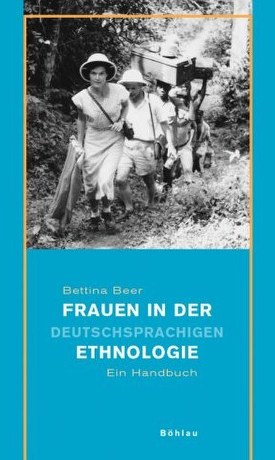
Frauen in der Ethnologie: Habilitieren eine Maennersache?

cover

“Habilitieren? Das liegt Ihnen doch gar nicht als Dame.” Mit diesen Worten wurde Ulla Johansen, der späteren Professorin und Direktorin des Kölner Instituts für Ethnologie, von ihrem Habilitationswunsch abgeraten. Caro Kim schreibt in Ethmundo begeistert ueber das neue Buch Frauen in der deutschsprachigen Ethnologie. Ein Handbuch von Bettina Beer.

Ethnologie ist eigentlich ein Frauenfach an der Uni. Caro Kim schreibt, dass die Rolle der Frauen in der Ethnologie lange uebersehen wurde. Schon im 19. und frühen 20. Jahrhundert waren etliche Frauen von großer Bedeutung für unseres Fach. „Frauen in der deutschsprachigen Ethnologie“ gibt Aufschluss über die Anfänge des Faches aus weiblicher Sicht.

Mehr als 100 Ethnologinnen und Ethnographinnen, die auf Deutsch veröffentlichten, bringt die Heidelberger Institutsleiterin Bettina Beer in ihrem Handbuch zusammen. Die aufgenommenen Frauen sind zwischen 1797 und 1930 geboren:

Durch zahlreiche Interviews mit Ethnologinnen oder mit ihren Nachkommen, Literaturrecherchen und Briefkontakte hat die Autorin in akribischer Arbeit eine beachtliche Sammlung von Lebensgeschichten zusammengestellt. Diese sagen nicht nur viel über die Frauen selbst aus, sondern geben ebenso Aufschluss über den damaligen Zeitgeist und die Etablierung des Faches in Deutschland.
(…)
Es liest sich weniger wie ein bloßes Nachschlagewerk, sondern enthält spannende Lebensgeschichten und Informationen über die Bedingungen von Lehre und Forschung in einer männerdominierten Wissenschaft.
(…)
Interessant sind die verschiedenen Wege, die die portätierten Frauen bestritten, um Berufstätigkeit und Familie unter einen Hut zu bringen. Dabei gab es einige, die ganz im Gegensatz zu damaligen Konventionen, nie Kinder bekamen oder gar unverheiratet blieben. Selbst die „älteste“ Frau aus dem Handbuch und eine der ersten reisenden Frauen in Deutschland, Ida Pfeiffer, geboren 1797, war allein erziehende Mutter zweier Kinder und wartete mit ihren Reisen bis ihre Söhne aus dem Haus waren.

Das Verständnis der Ethnologie im Kolonialismus und Nationalsozialismus wird im Handbuch auch dargestellt. Die meisten Frauen standen dem Kolonialsystem jedoch unkritisch gegenüber. Wir erfahren auch, dass viele der frühen Ethnologinnen ihrer Zeit voraus waren und sich mit genderspezifischen Fragestellungen beschaeftigten.

>> zur Buchbesprechung in Ethmundo

SIEHE AUCH:

Neue Ausgabe von journal-ethnologie.de: Feministische Ansätze in der Ethnologie

“Es gibt nichts Gutes, ausser Frauen tun es” – Fundamentalismus in der Forschung

Symbolische Güter: Der Soziologe Pierre Bourdieu über «männliche Herrschaft»

Where women rule the world and don’t marry

cover

"Habilitieren? Das liegt Ihnen doch gar nicht als Dame." Mit diesen Worten wurde Ulla Johansen, der späteren Professorin und Direktorin des Kölner Instituts für Ethnologie, von ihrem Habilitationswunsch abgeraten. Caro Kim schreibt in Ethmundo begeistert ueber das neue Buch Frauen…

Read more