search expand

essays.se: Open access to Swedish university papers

Swedish universities have launched a new website www.essays.se which gives access to several thousands University papers:

Every year tens of thousands of Swedish university students spend many million hours researching and writing their final theses. The end result – all the essays – is a knowledge resource of great weight. However, up until quite recently, it was common that the finished essays where stored away in the darkest corners of the university libraries, where no-one would ever find them.

This problem led way to the Swedish website Uppsatser.se. The website was launched in 2004, with the goal to become a knowledge platform that could bridge the knowledge-gap between university students, schools and companies in Sweden.

Essays.se – the english language version of Uppsatser.se, was launched in november 2007. It is meant for all of people who do not speak Swedish, but still want to take part of the research carried out by Swedish students.

Essays.se and Uppsatser.se co-operate with the LIBRIS-department at the National Library of Sweden.

A search for anthropology gives 23 matches.

Additionally, there is the portal http://www.diva-portal.org/ that lets you find theses, dissertations and other publications in full-text from a number of mainly Swedish universities.

For Norwegian archives, see:DUO (University of Oslo)MUNIN (University of Tromsø)BORA (University of Bergen) and Theses from Norwegian University of Science and Technology (Trondheim)

SEE ALSO:

2006 – The Year of Open Access Anthropology?

Swedish universities have launched a new website www.essays.se which gives access to several thousands University papers:

Every year tens of thousands of Swedish university students spend many million hours researching and writing their final theses. The end result - all the…

Read more

Journal Ethnologie 6/2007 über Papua Neu-Guinea

Die neue Ausgabe von Journal-Ethnologie, herausgegeben vom Frankfurter Museum der Weltkulturen widmet sich einer Region, die bei Ethnologen sehr beliebt ist: Papua Neu Guinea. Die meisten Beiträge handeln um den Sepik – eine Region die, wie Jürg Wassmann in seinem Beitrag schreibt “auf allen Gebieten Superlative aufweist”:

in der dualen Organisation der Sozialstruktur, die heute noch an der Anordnung der Wohnhäuser ablesbar ist; der mythologischen Bedeutung der urzeitlichen Ereignisse und Totems – durchaus mit dem „Dreamtime“-Konzept der australischen Aborigines vergleichbar; in den Initiationsritualen für junge Männer mit ihrem stufenweisen Zugang zu immer stärker esoterischem religiösem Wissen;

bei den heiligen und geheimen Flöten, Schlitztrommeln und weltberühmten Schnitzereien; bei den eindrucksvollen Männerhäusern, die sowohl religiöses als auch soziales Zentrum sind; schließlich im Namensystem, das allen Dingen dieser Welt eine Ordnung gibt, indem es alles mit einem Namen versieht und diese zu Tausenden in bestimmten Reihenfolgen memoriert werden müssen.

Die neue Ausgabe ist sehr umfangreich. Wegen der etwas komplizierten Navigation auf der Webseite hier die Links zu den Texten:

Meinhard Schuster: Einheimische und Ausländer im Landschaftsraum Sepik, 1961

Katja Reuter: “Überall nur Männer” Gesellschaftliche Veränderungen am Mittelsepik, Papua Neuguinea

Christian Kaufmann: Kunst vom Sepik. Ornament, Skulptur und Malerei im Wettstreit

Eva Ch. Raabe: Vom Sepik an den Main. Stücke aus der Neuguinea-Sammlung des Museums der Weltkulturen

Brigitta Hauser-Schäublin: Feldforschung bei den Iatmul. Zwischen Erlebnis und Wissenschaft

Jürg Wassmann: Sozialordnung und Landschaft in Papua Neuguinea

Christin Kocher Schmid: Merbau – Baum der Mythen. Indigene Waldwirtschaft in Nordneuguinea

Zum Schluss ein paar “moderne” Themen. Das Stadtleben scheint gefährlich zu sein. Hauptstaft Port Moresby zählt offenbar zu den kriminellsten Hauptstädten der Welt. Die Anwendung von Gewalt habe sich seit der Unabhängigkeit des Landes im Jahre 1975 “zunehmend als normales Verhaltensmuster zur Lösung von Problemen und Konflikten etabliert”, schreibt Politikwissenschaftler Roland Seib:

Roland Seib: Kriminalität in Papua Neuguinea. Eine Annäherung an gesellschaftliche Verhältnisse

Noch ein Problem ist AIDS, Neuguinea habe offenbar die Kontrolle über das Problem bereits verloren. Der ländliche Raum werde in der AIDS-Bekämpfung vernachlässigt. Erschwerend für die Aufklärungsarbeit seie zudem “das geringe Bildungsniveau und die immense kulturelle und Sprachenvielfalt des Landes”:

Marion Struck-Garbe: HIV/AIDS und Menschenrechte in Papua Neuguinea

Zu guter letzt ein Beitrag eines Pfarrers und “Entwicklungshelfers” (benutzt man diesen Begriff noch?), der in der Hauptstadt mit Flüchtlingen aus West-Papua arbeitet:

Clemens Schermann: Die „Mantras“ der Europäer. Als Entwicklungshelfer in Papua Neuguinea

Der Themenschwerpunkt Sepik – Papua Neuguinea ist zugleich Thema der Ausstellung Reisen und Entdecken. Vom Sepik an den Main, die das Museum der Weltkulturen in Frankfurt am Main vom 27. Oktober 2007 bis zum 19. Oktober 2008 zeigt.

SIEHE AUCH:

Fieldwork in Papua New Guinea: Who are the exotic others?

Auf zum Zoo der archaischen Riten in Papua New Guinea!

Anthropology and Colonial Violence in West Papua

“Good story about cannibals. Pity it’s not even close to the truth”

Papua New Guinea and Paternalistic anthropology
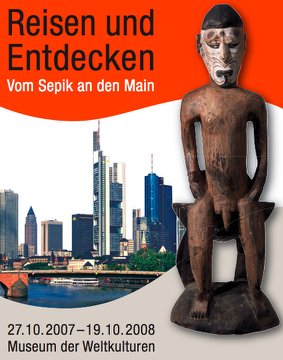
Die neue Ausgabe von Journal-Ethnologie, herausgegeben vom Frankfurter Museum der Weltkulturen widmet sich einer Region, die bei Ethnologen sehr beliebt ist: Papua Neu Guinea. Die meisten Beiträge handeln um den Sepik - eine Region die, wie Jürg Wassmann in seinem…

Read more

Ethnologie- und Kunststudierende stellen riechende Strassen aus

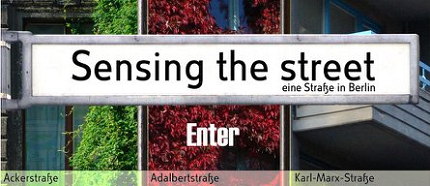
Das Ausstellungsprojekt “Sensing the street” erforscht die Sinnlichkeit von Straßen. Studierende der Ethnologie und Kunst zeigen, wie die Ackerstraße riecht, die Adalbertstraße tönt und die Karl-Marx-Straße sich anfühlt, schreibt die taz:

“Sensing the street” heißt das interdisziplinäre studentische Ausstellungsprojekt, das drei Straßen unter die sinnliche Lupe nimmt. Drei Semester lang haben Studierende des Instituts für Europäische Ethnologie an der Humboldt-Universität (HU) und des Instituts für Klangkunst der Universität der Künste (UdK) zusammen geforscht und experimentiert: Wie fühlt sich Berlin an? Diese Frage wollen sie anhand der Ackerstraße, der Kreuzberger Adalbertstraße und der Neuköllner Karl-Marx-Straße beantworten.

Die drei Straßen stehen exemplarisch für typische Berliner Erfahrungen: Teilung, Wiedervereinigung, wirtschaftlicher Niedergang. “Künstlerisch-ethnologische Verdichtung” nennt der Ethnologie-Professor Rolf Lindner die Methode, mittels derer seine Studierenden die besondere Stimmung einer Straße wiedergeben.

>> weiter in der taz

>> Webseite der Ausstellug

UPDATE: Der Tagesspiegel berichtet ueber die Ausstellung: So schmeckt die Großstadt

Das Ausstellungsprojekt "Sensing the street" erforscht die Sinnlichkeit von Straßen. Studierende der Ethnologie und Kunst zeigen, wie die Ackerstraße riecht, die Adalbertstraße tönt und die Karl-Marx-Straße sich anfühlt, schreibt die taz:

"Sensing the street" heißt das interdisziplinäre studentische Ausstellungsprojekt, das drei…

Read more

“You can’t understand America without understanding the world”

Nice interview with anthropologist Alan Klima in University paper The California Aggie about anthropology in general.

For example the anthropologist’s answer to the question how he became interested in anthropology:

I was always interested in social theory, thinking about what is going on in the world and at one point in college I realized that there are all of these different ways of thinking, ways of doing things around the world – that there is no way you could really understand humans and society and history without understanding all of the variety in the world.

So I guess I was eventually very interested in U.S. society and social problems and had a lot of thoughts about that and realized that you can’t really understand these things unless you understand the tremendous variety in the world.

Or his definition of anthropology:

Sociocultural anthropology is the study of all alternative world knowledges. Political knowledges, religious knowledges, scientific knowledges, medical knowledges – that there are a lot of different ways to think about things.

The situation of anthropology in the US:

I think for most professors in the U.S., that you’re sort of a class of people that’s not very well respected in the wider society, and often your voice doesn’t count in a direct way, unlike in other countries in the world, where if there’s an issue the television might come to the university and ask professors what they think. But that doesn’t happen so much in the U.S.

Or look at his his comparision of anthropologists with garbage collectors when he is asked if anthropologists can change the world:

I also think of it (work as anthropologist) as sometimes as similar to people who collect the garbage. They are not changing the world, but if they didn’t do it, things would get really messy. Somebody’s got to do that. Somebody’s got to be in the academy thinking all kinds of experimental and critical thoughts and sharing that with students and thinking that over with students. If we didn’t have that, things would be a lot worse. I can’t really say that I or any of the other professors are totally changing the world for the better.

>> read the whole interview in The California Aggie

SEE ALSO:

Why anthropology fails to arouse interest among the public – Engaging Anthropology (2)

Interview: “Anthropology Is Badly Needed In Eastern Europe”

Keith Hart and Thomas Hylland Eriksen: This is 21st century anthropology

The Five Major Challenges for Anthropology

“Anthropology not less scientific than physics”

Nice interview with anthropologist Alan Klima in University paper The California Aggie about anthropology in general.

For example the anthropologist's answer to the question how he became interested in anthropology:

I was always interested in social theory, thinking about what is…

Read more

How anthropological research can reduce the paper usage in offices

(Links updated 14.2.2025) Another example of anthropologists in product development: As a consequence of anthropological research, Xerox is developing a new kind of paper where the printed information simply disappears within about 16 hours, allowing the paper to be reused.

Why this? Xerox-anthropologist Brinda Dalal, an anthropologist at Xerox, found out that 21 percent of copier documents ed up in the recycling bin on the same day they are produced. In most offices, paper is used as a medium of display rather than storage. Paper is only only printed out or copied when needed for meetings, editing and annotating, or reading away from a computer. The result is, of course, an enormous quantity of waste paper and environmental problems.

>> read the whole story on ZDNet

Actually, the New York Times wrote about this self-erasable paper one year ago. They called anthropologist Brinda Dalal for “garbologist”. She told, she was surprised by the results: “Nobody looks at the ephemeral information going through people’s waste baskets.”

>> Some papers by Brinda Dalal

SEE ALSO:

Tagging and Folksonomies: Xerox Scientists Apply Insights From Ethnography

Timo Veikkola – The Anthropologist as Future Specialist at Nokia

Popular IT-anthropologists: Observe families until they go to bed

“The science of ethnography is an ideal tool to designing mobile phones”

Anthropologists find out why we (don’t) buy organic food

Ethnography, cross cultural understanding and product design

(Links updated 14.2.2025) Another example of anthropologists in product development: As a consequence of anthropological research, Xerox is developing a new kind of paper where the printed information simply disappears within about 16 hours, allowing the paper to be reused.…

Read more