search expand

“Isolerte indianerstammer”: Koloniale stereotyper i Aftenposten

Journalistikken om innvandrersaker er i ferd med å bli bedre. Men når journalister skriver om minoriteter og urbefolkninger i fjerne strøk, skriver de fortsatt som på 1800-tallet: “De andre” er “usiviliserte”, mens “vi” representerter toppen av utviklingen. “Myndighetene i Brasil har funnet en indianerstamme som aldri tidligere har hatt kontakt med sivilisasjonen”, leser vi i Aftenposten. Slike historier om “isolerte indianerstammer” er dessuten stort sett et fantasiprodukt av sensasjonslystne journalister og romantiske forskere. Og hvorfor omtales indianere som stamme og ikke som samfunn?

>> les saken i Aftenposten

Samme type rasisme fant jeg i dekningen av tsunamikatastrofen der Dagbladet skrev “Et livstegn fra primitive stammer”, se teksten min Skriver rasistisk om tsunamiofre.

SE OGSÅ:

Anthropologists condemn the use of terms of “stone age” and “primitive”

Journalistikken om innvandrersaker er i ferd med å bli bedre. Men når journalister skriver om minoriteter og urbefolkninger i fjerne strøk, skriver de fortsatt som på 1800-tallet: "De andre" er "usiviliserte", mens "vi" representerter toppen av utviklingen. "Myndighetene i…

Read more

Den ukjente fattigdommen på Nord-Grønland

En hører lite fra dem. Men nå er de blitt intervjuet av antropolog Sissel Lea Nielsen på oppdrag av Grønlands Hjemmestyre (MIPI). Fattige barn oppe i Nord-Grønland. Til den grønlandske radiostasjonen KNR sier antropologen:

– Vi har i rapporten eksempler på børn, der lader deres søskende spise sig mætte først, inden de selv spiser, fordi familien mangler penge til mad. Vi har også eksempler på børn, der ikke får mand med i skole, og nogen får ikke altid aftensmad.

– Det mest bemærkelsesværdige i rapporten er, at børnene er meget bevidste om familiens økonomiske situation. De er bekymrede, og de ældre børn hjælper familien økonomisk. Stort set alle de ældre børn giver udtryk for, at de enten gerne vil have et fritidsjob eller allerede har et. Som årsag siger de, at de gerne vil hjælpe familien økonomisk og hjælpe med at få mad på bordet.

– Børnene kommer med en appel til både private og offentlige aktører i Grønland, der handler om at få flere i uddannelse, højere lønninger og lavere priser på dagligvarer.

Dette er første del i en serie på tre rapporter fra MIPI om barnas levestandard på Grønland.

>> les hele saken på knr.gl

>> last ned rapporten

SE OGSÅ:

Fattigdomsforskning: Sats på universelle ordninger!

– Vi trenger mer kunnskap om fattigdom

Etnisk fattigdom i Norge?

En hører lite fra dem. Men nå er de blitt intervjuet av antropolog Sissel Lea Nielsen på oppdrag av Grønlands Hjemmestyre (MIPI). Fattige barn oppe i Nord-Grønland. Til den grønlandske radiostasjonen KNR sier antropologen:

- Vi har i rapporten eksempler på…

Read more

The art of fieldwork

For 3-4 months I’ve been so immersed in fieldwork that I’ve taken it to be my one and only life. Vaguely, I’ve remembered that there exist a parallel universe up north (which seem to be my one and only life when I’m not elsewhere), but it wasn’t before I actually dipped back into that life for 9 days that it all crashed back into my conscience: There is an office there waiting to host me at inhumane working hours in just a few months time. There are students to be taught and colleagues to exchange with, and loads and loads of books to read… (Unfortunately, there isn’t any home with a view over Oslo to hibernate me, my plethora of succulents and dusty books anymore…).

When I entered the field again after a short trip outside of it, I couldn’t get one sentence from a book on anthropological method and the darker arts of fieldwork out of my head:
[teaserbreak]

“Is seduction one of our darker arts? As craftspeople, are we so crafty that others don’t know when they are being seduced?” (Wolcott 2005: 141).

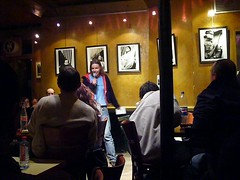
I realised that I’m so crafty when doing fieldwork that the participant role of my persona seduces even me. I appear so sincere because I belive it myself. I want to stay here (or in London when I was there), it’s my genuine one and only wish. For the moment. I also tell people that I’m here to write a thesis and yes, it is actually my paid work to hang around in bars listening to slam poetry. But I forget at the same time that what I’ve been doing the last months, is not part of my life-to-come but part of my academic career. I suspect people around me are more aware of the fact that I’m simply dropping in and then out of their lives again, than I am myself. But I wouldn’t be surprised that the genuine enthousiasm I express by saying that I want to settle here helps strengthening my relationships with people. Wolcott calls this superficiality and seduction the darker arts of fieldwork. I was surprised to realise that my self-deception actually is treated in a book on fieldwork methods.

Both my fieldworks have been in environments close to my own interests. I could have been – and I surely would have loved to be –hanging around with policial activists in Brixton and mucisians in Tower Hamlets as well as slammeurs and slammeuses in Belleville, even without the excuse of doing fieldwork. Partly, I see this as a more honest anthropology as it is entirely based on the idea of an anthropology without radical difference, and more so, I don’t have to fake or hide anything – not what kind of information I’m looking for, neither my political views, my artistic interests and my way of life in any sense. On the other hand, as I’ve found myself asking the last week; what if I’m faking it all (so well that I believe it myself!), getting access through this perhaps naïve enthusiasm.

“Fieldworkers willing to make research commitments on such a grand scale [as to spend at least 12 months away from home] are also likely to be overcommitted in other aspect os their lives,” Wolcoff writes (2005: 117), and he continues further down: “Fieldworkers have an understandable but perhaps unfortunate tendency to represent themselves not only as different from those who do quick-and-dirty studies but somehow as more sensitive and caring humans as well.”

So, maybe this self-deception, the going native, is part of the darker arts of fieldworkers’ repertoir?

Ever since my early teens, perhaps my whole life, there has been a tension between the safe framework of academia and the attraction of adventurous escapes. In Oslo, the adventurer apparently does the head in on my entourage, and here she has been pushing the academic in the background for a while now. But almost as the conflict is about to be won, the adventurer evaporates into a cunning and crafty anthropologist…? Is that how it is?

Participant observation:
The anthropologist as Slammeuse,
at Lou Pascalou 11.04.07

For 3-4 months I’ve been so immersed in fieldwork that I’ve taken it to be my one and only life. Vaguely, I’ve remembered that there exist a parallel universe up north (which seem to be my one and only life…

Read more

Protests against British research council: “Recruits anthropologists for spying on muslims”

Reading my earlier post “The dangerous militarisation of anthropology” you might get the impression that this is something that only regards the U.S. But the same thing is happening in Britain. A few weeks ago the Association of Social Anthropologists of the UK and Commonwealth (ASA) passed a resolution that criticized a huge British research program that recruits anthropologists for “anti-terror” spying activities, and anthropologist Susan Wright (Danish University of Education) called for global coordination on this issue.

Here is ASAs resolution:

The ASA notes with concern the formulations of the recent ESRC/AHRC/FCO funding initiatives (Programmes) on ‘New Security Challenges’. While welcoming the withdrawal of the first proposed Programme, it considers that the revised initiative, particularly as set out in section 3.2. (that the research should inform UK Counter Terrorism policy overseas), is prejudicial to the position of all researchers working abroad, including those who have nothing to do with this Programme”.

This meeting thus proposes as follows:

* that all anthropologists in the UK, and members of the ASA in particular who might have applied for funding under this Programme, consider carefully the position in which they could place themselves, the people with whom they work in the field, and other colleagues. They should also note that research of this kind may well conflict with the ASA’s Code of Ethics,

* that the office-holders and Committee have the confidence of the ASA membership to discuss these issues with colleagues within this and other disciplines, both through networks and professional associations, and decide on what further actions are appropriate.

“This is a major issue that professional associations in the UK and the US need to take a hard line on”, writes Susan Wright in Anthropology Today February 2007:

It’s no use one country’s professional association taking a hard line and another not: it will make it impossibly difficult for politically marginalized people to decide who to work with and who not to if any country’s professional association condones academic enquiry being confused with spying, surveillance or counterinsurgency.

What’s this all about?

In July 2006, the British Foreign and Commonwealth Office (FCO) invited chosen academics to bid for funding under a £1.3-million research initiative entitled ‘Combating terrorism by countering radicalisation’. It is a research program that is based on the premise of a link between Islam, radicalization and terrorism. ‘Radicalization’ is a new buzzword in intelligence circles and was nowhere defined.

As Gustaaf Houtman explained in Anthropology Today 6/2006:

The ‘initiative’ was not openly advertised and MI5’s Joint Terrorism Analysis Centre (which in 2003 brought together counter-terrorist expertise from 11 key government departments and agencies, including the police), was understood to have participated in its design. The programme was jointly sponsored by the Economic and Social Research Council (ESRC) and the Arts and Humanities Research Council (AHRC) under the direction of Professor Stuart Croft, the Director of the ESRC’s five-year New Security Challenges Programme (a programme that began in 2003, and sponsors 40 research projects aiming ‘to try to offer fresh insight into the security challenges faced in the post-Cold War and post-9/11 globalized world’).

Under the ‘Combating terrorism programme’ six regions – Europe, Central Asia, South Asia, Southeast Asia, North Africa and the Gulf – and five specific countries – Jordan, Nigeria, Somalia, Sudan and Turkey – were chosen for study.

Academics would be asked to ‘scope the growth in influence and membership of extremist Islamist groups in the past 20 years’, ‘indicate where intervention strategies might have a disproportionate influence’, ‘name the key figures (moderate and extreme) and key groups (including charities and proselytising religious groups) influencing the local population’ and ‘understand the use of theological legitimisation for violence’. Among the main topics mentioned were ‘radicalisation drivers and counter- strategies in each of the country studies’ and ‘future trends likely to increase/decrease radicalisation’.

But these plans were suspended soon after the Times Higher Educational Supplement got hold of the story and this spring, a revised version was launched.

Nevertheless, the focus doesn’t seem to have changed a lot as we see in these lines in paragraph 3.2:

The FCO’s interest in this initiative stems from the recognition that independent, high-quality research on radicalisation issues can inform UK Counter Terrorism policy overseas. As part of the Prevent strand of that policy in particular, the FCO seeks to use research to increase its knowledge and understanding of the factors associated with radicalisation in those countries and regions identified as high priority. The Prevent strand is concerned with tackling the radicalisation of individuals, both in the UK and elsewhere, which sustains the international terrorist threat.

(…)

Proposals with a country or regional focus should address questions arising out of a critical engagement with the conventional wisdom and scholarship on topics of relevance to the initiative.

These include:
• Key political, social, cultural and demographic factors that impact upon Muslim populations in the area of study
• The social profile of those who may support or be attracted to violence, in terms of gender, age, class and ethnicity
• Diverse forms of avowedly Islamist mobilisation, both political and non-political, violent and non-violent
• The diversity of Islamic schools, organisations, political parties and social movements and the divisions between such bodies, movements and sects
• Patterns of migration, identity formation, and mobilisation among Muslim diasporic communities and their impact on ‘radicalisation’

The project is not an entirely British affair. According to Jeremy Keenan (Anthropology Today February 2007) it has been designed to meet the needs of its US ally, whose counter-terrorism initiatives have been running into an increasing number of difficulties in several places in the world. The FCO, he writes, had been asked by the Americans to help them in their “counterterrorist efforts” in the Sahara-Sahel. The FCO was now asking the ESRC and AHRC to get British academics involved. Keenan who has done reearch in this area for 30 years in this area has also been asked to advise them.

This ‘second front’, he writes, has played a key role in furthering US interests over the last five years. In particular, it has created the ideological conditions used to justify and legitimize the current militarization of Africa for the purposes of securing US strategic national resources – notably oil. The ‘front’ has also been used by the Pentagon’s controversial Office of Special Plans to ‘cherry-pick’ now largely disproved intelligence to support its invasion of Iraq. It has also helped to keep a more sceptical ‘old Europe’ supportive of the ‘global’ ‘war on terror’.

But as his research has shown, there are no terrorists there. Most, if not all, of the ‘terrorist’ incidents in this region, which justified the launch of the ‘second front’, Keenan writes, were fabricated by US and/or Algerian military intelligence services.

SEE ALSO:

The dangerous militarisation of anthropology

“Tribal Iraq Society” – Anthropologists engaged for US war in Iraq

Fieldwork reveals: Bush administration is lying about the “war on terror” in the Sahara

San Jose: American Anthropologists Stand Up Against Torture and the Occupation of Iraq and AAA Press Release: Anthropologists weigh in on Iraq, torture at annual meeting

“War on terror”: CIA sponsers anthropologists to gather sensitive information / see also debate on this on Savage Minds

Anthropology and Counterinsurgency: The Strange Story of Their Curious Relations

Bush, “war of terror” and the erosion of free academic speech: Challenges for anthropology

USA: Censorship threatens fieldwork – A call for resistance

Two Books Explore the Sins of Anthropologists Past and Present

Reading my earlier post “The dangerous militarisation of anthropology” you might get the impression that this is something that only regards the U.S. But the same thing is happening in Britain. A few weeks ago the Association of Social Anthropologists…

Read more

Ny masteroppgave: Under huden på Koranskolebevegelsen

Både forskere og tyrkiske myndigheter ser ofte på den tyrkiske Koranskolebevegelsen som fundamentalistisk. Men egentlig holder de på med helt vanlige religiøse aktiviteter, mener antropolog Johannes Elgvin. Han mener at det er viktig å ufarliggjøre det som er ufarlig.

I sin masteroppgave “Koranskolens folk. En kvalitativ studie av en tyrkiskdominert islamsk menighet i Oslo” tar han et oppgjør med tidligere forskning på Koranskolebevegelsen. Han la bl.a. merke til at mange studier (stort sett skrevet av religionsvitere) bygger på de samme kildene og lite originalt feltarbeid. På den måten reproduseres delvis uriktige eller problematiske forestillinger om bevegelsen. Mange forskere formidler de merkelappene som andre har gitt bevegelsen:

I et intervju med meg sa han:

– Mange forskere bruker begrepene “islamisme” og “fundamentalisme” når de beskriver bevegelsen. Men dette gjør de ofte uten å forklare hva de mener med disse begrepene. Kanskje religionsviterne omtaler bevegelsen som fundamentalistisk fordi de oppfatter fundamentalister som bakoverskuende og opptatt av islams fundamenter, Koranen og sunna. Men islamsk fundamentalisme har fått sterke negative konnotasjoner festet ved seg i ”Vesten”, som ofte er knyttet til vold og terrorisme.

– Når en vet hvordan disse begrepene brukes i media så må jeg si at forskerne gjør en slett jobb. Vi bør være forsiktigere med å benytte oss av termen, mener jeg, og alltid presisere hva vi legger i begrepene vi bruker.

>> les intervjuet

>> last ned oppgaven

SE OGSÅ:

Drar til Tyrkia for å forstå Norge: Hvorfor er de, selv om de har vokst opp her, så opptatte av å være tyrkisk?

Pamuk og den tyrkiske ære

Både forskere og tyrkiske myndigheter ser ofte på den tyrkiske Koranskolebevegelsen som fundamentalistisk. Men egentlig holder de på med helt vanlige religiøse aktiviteter, mener antropolog Johannes Elgvin. Han mener at det er viktig å ufarliggjøre det som er ufarlig.

I…

Read more