search expand

“Die Frage ist, ob die Unis ein Fach wie Ethnologie brauchen”

Der abtretende Rektor der Uni Bern, Urs Wüngler, wird in einem Interview in der Berner Zeitung gefragt, ob es nicht Zeit wäre sich von “elitären Fächern” wie der Ethnologie zu verabschieden, die “mehr Abgänger heranzieht, als es auf dem Arbeitsmarkt Nachfrage gibt”. Sollte sich die Uni nicht stärker an den Bedürfnissen von Gesellschaft und Wirtschaft ausrichten? Die Frage, so die Journalisten Jürg Steiner und Urs Egli sei, “ob Bern ein Fach wie Ethnologie braucht”.

Wüngler gibt eine meiner Meinung nach sehr gute Antwort.

Die Universität ist in erster Linie der Wissenschaft verpflichtet, sie ist kein Dienstleistungsbetrieb zugunsten der Wirtschaft. Wenn allerdings durch ihre Arbeit wirtschaftlich verwertbare Ergebnisse erzielt werden, umso besser.

Es sei zudem nicht richtig, dass Ethnologen nicht gefragt seien auf dem Arbeitsmarkt. “Die Arbeitslosigkeit unter den Abgängern unserer Uni ist extrem klein, auch in Fachgebieten, von denen man meint, es gebe zu viele Absolventen”, so Wüngler.

Zur Ethnologie sagt er:

Natürlich überlebt Bern auch ohne Ethnologen, aber die Kulturwissenschaften an unserer Universität würden es ohne Sozialanthropologie – so nennt sich die Ethnologie heute – nicht. Und es sind gerade die Kulturwissenschaften, die weltweit eine Wachstumsbranche darstellen. Eine Volluniversität lebt von der Diversität, von der Interdisziplinarität. Das ist nicht nice to have, sondern absolut fundamental. Wir sind keine Ingenieurschule, die Berufsausbildungen anbietet. Und deshalb ist die Frage, ob wir in Bern Sozialanthropologie brauchen, tendenziös und geht in die falsche Richtung. Man muss die Universität als Ganzes sehen.

>> zum Interview in der Berner Zeitung

SIEHE AUCH:

Thomas Hylland Eriksen: On the fundamental uselessness of universities

University reforms – a threat to anthropology?

Exzellenzinitiative bedroht Geisteswissenschaften

Uni Bonn schafft Volkskunde / Kulturanthropologie ab

Ethnologie in Halle: Wieder Proteste gegen Kürzungen

Gute Aussichen für die Ethnologie und andere “Orchideen-Fächer”

Arbeitsmarkt: “Auch der überzeugte Ethnologe hat gute Perspektiven.”

Informationstag in München: Ethnologie als Schlüsselkompetenz im 21. Jahrhundert

Der abtretende Rektor der Uni Bern, Urs Wüngler, wird in einem Interview in der Berner Zeitung gefragt, ob es nicht Zeit wäre sich von "elitären Fächern" wie der Ethnologie zu verabschieden, die "mehr Abgänger heranzieht, als es auf dem Arbeitsmarkt…


Read more

Lærdommer fra mer enn 40 års feltforskning – Ulf Hannerz med ny bok

Café du Monde. Platser, vägar och människor i världsvimlet heter en ny bok av Ulf Hannerz, en av de store navnene i antropologien.

I denne essayboka deler han sine innsikter fra sitt feltarbeid på så ulike steder som bl.a. New Orleans, Kafanchan i Nigeria, Tel Aviv og Tokyo.

Magnus Persson anmelder boka i Svenska Dagbladet. Han er begeistret:

Det är en njutning att läsa Hannerz avslappnade och stilfulla prosa, sprängfylld av spännande och viktiga iakttagelser om alltifrån nordamerikansk ghettokultur och postkolonialism, till utrikeskorrespondenternas säregna yrkeskultur och den politiska maktens nya former i en globaliserad värld.

>> les hele anmeldelsen (dessverre ikke så grundig som ellers i SvD)

SE OGSÅ:

Intervju med Ulf Hannerz: – Vi blir mer vidsynte

Ulf Hannerz: – Samfunnsforskningen utarmes

Beyond platitudes of globalisation – Thomas Hylland Eriksen anmelder “Transnational Connections: Culture, People, Places” av Ulf Hannerz

Over there – anmeldelse i San Diego Union Tribune av Hannerz’ bok om utenrikskorrespondenter

Café du Monde. Platser, vägar och människor i världsvimlet heter en ny bok av Ulf Hannerz, en av de store navnene i antropologien.

I denne essayboka deler han sine innsikter fra sitt feltarbeid på så ulike steder som bl.a. New Orleans,…

Read more

Ingen kopling mellom befolkningsvekst og fattigdom

– Ordet ”befolkningsvekst” har fått en klangbunn av katastrofe, kaos, konflikt, og naturødeleggelse i media. Men det finnes ingen enkel eller entydig kopling mellom befolkningsvekst og fattigdom, sier sosialantropolog Vigdis Broch-Due i et intervju med forskningsmagasinet Hubro.

Det er politiske beslutninger som får størst konsekvenser, forklarer hun. Et eksempel “beslutningen av etiopiske myndigheter, uten konsultasjon med nabolandene, om å demme opp Omoelven, som er livsblodet i hele regionen”.

Internasjonale miljøorganisasjoner spiller også en tvilsom rolle:

– Europeere og amerikaneres drømmer om uberørt natur, fauna og eksotiske folkeslag er en ”melkeku” for investorer som kjøper opp store landområder for å utvikle øko-turisme i luksuriøs drakt. (…) Nomadene mister sine beitemarker og skvises sammen på mindre områder, væpnende konflikter øker og naturgrunnlaget utarmes. De som presses ut bosetter seg i nærheten av turistdestinasjonene som igjen fører til mellom annet avskoging, overbeiting og blokkering av migrasjonskorridorene for elefanter.

>> les hele saken fra Hubro

Antropologen har også laget en film med tittelen Producing Poverty

SE OGSÅ:

What anthropologists can do about the decline in world food supply

Antropologer: – Regnskogvern forverrer Kongokonflikten

EUs landbrukspolitikk skaper millioner av sultflyktninger

Sammenhengen mellom rasisme og fattigdom i Iran – masteroppgave

Poverty and health policies: Listening to the poor in Bangladesh

Thesis: Conservation for Whom? Telling Good Lies in the Development of Central Kalahari

Mining and tourism more important: Bushmen forcibly removed from Central Kalahari

– Ordet ”befolkningsvekst” har fått en klangbunn av katastrofe, kaos, konflikt, og naturødeleggelse i media. Men det finnes ingen enkel eller entydig kopling mellom befolkningsvekst og fattigdom, sier sosialantropolog Vigdis Broch-Due i et intervju med forskningsmagasinet Hubro.

Det er politiske…

Read more

Visions of Students Today – More Digital Ethnography

(LINKS UPDATED 22.4.2020)

Michael Wesch and his Digital Ethnography Research Team of 2011 has released Visions of Students Today: an exciting “video collage” about student life created by students themselves.

The collage consists of a large number of vidoes that can be watched seperately by clicking directly on the thumbnails (or on YouTube). Each of the students has been working for months to put together their own vision.

Striking: Several students criticize the current education system… (here the video by Derek Schneweis)

Academic Vaccination

Or check here a summary:

A Vision of Students Today

One of the aims of the project is to enhance the students and the public’s media literacy in the digital age and to prevent that many of the basic freedoms we have become accustomed to” as for example net neutrality”, sharing and mixing (…) may be stripped away without the public even noticing”.

>> more about the project

Wesch is the creator of the most popular anthropology videos online, among others

” and

SEE ALSO:

Interview with Michael Wesch: How collaborative technologies change scholarship

Via YouTube: Anthropology students’ work draws more than a million viewers

Interview: Meet Dai Cooper from The Anthropology Song on YouTube!

“YouTube clips = everyday ethnography”

New media and anthropology – AAA meeting part III

antropologi.info survey: Six anthropologists on Anthropology and Internet

Anthropology and the challenges of sharing knowledge online: Interview with Owen Wiltshire

(LINKS UPDATED 22.4.2020)

Michael Wesch and his Digital Ethnography Research Team of 2011 has released Visions of Students Today: an exciting “video collage” about student life created by students themselves.

The collage consists of a large number of vidoes that can…

Read more

Criticizes “scholarly and political indifference toward the workers’ lives”

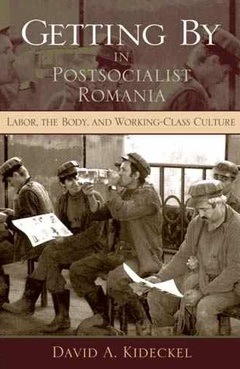
Mass media and intellectuals have typically portrayed them as aggressive, uneducated, and morally spoiled. In his recent book, anthropologist David A. Kideckel challenges these views and lets the Romanian working class speak for themselves.

“Most east and southeast European scholars tend to avoid labor and workers in postsocialist science, a topic that Kideckel embraces”, writes Simona C. Wersching in her review in the Monthly Review.

Kideckel points out the scholarly and political indifference toward the workers’ lives, their physical states, and embodied perceptions. Workers are only visible when they appear threatening and protest.

In Getting By in Postsocialist Romania. Labor, the Body, and Working-Class Culture, he provides according to Wersching “refreshing perspectives” about life coping strategies of two distinct working-class groups in Romania, the miners of the Jiu Valley and the industrial workers of the Nitramonia factory in Făgăraş/Transylvania:

Kideckel’s contribution pays particular attention to workers’ words and thoughts about themselves, their work, their families, their societies, their fears, and their dreams, and highlights the diverse legal and illegal practices of “getting by” (a se descurca) in this changing world after 1989.

Health, living standards, and consumption possibilities have deteriorated. Postsocialist pressures on labor and bodies produce “frustrated agency”. These problems have according the anthropologist nothing to do with ‘socialist legacies’ or ‘culture’, but should be understood as responses to “neo-capitalism”, “a system that reinterprets the main principles of capitalism in a new way and that promotes social injustice much more than does the Western model from which it derives”:

Kideckel interprets the workers’ words as typical preoccupations of workers confronted with the “effects of the forced diet of neo-liberalism” (p. 8), such as changing and uncertain status of property due to privatization, inequalities, instrumentalization, commodification of basic social relations by the market democracy, weak state structures that allow the existence of mafia and corruption, the misusage of funds and foreign assistance, the decline in agricultural markets, the return to subsistence farming, and emigration. Kideckel connects the effects of neoliberalism to his critics’ notion of “transition” as an academic representation of triumphalist politics.

Kideckel, who conducted his first fieldwork in Romania in 1974, also claims that the workers’ “selective perception of the past” (when workers had high status) and their present feeling of alienation from society at large, create a feeling of frustration that hinders effective agency.

>> read the whole review

SEE ALSO:

Durham Anthropology Journal: How “post-socialist” is Eastern Europe?

Doing fieldwork in Eastern Europe – New issue of Anthropology Matters

– Use Anthropology to Build A Human Economy

Ethnographic study: Why the education system fails white working-class children

Available for download: Alex Golubs dissertation on mining and indigenous people

Fieldwork as cab-driver: “An amazing other world”

Financial crisis: Anthropologists lead mass demonstration against G20 summit

Mass media and intellectuals have typically portrayed them as aggressive, uneducated, and morally spoiled. In his recent book, anthropologist David A. Kideckel challenges these views and lets the Romanian working class speak for themselves.

"Most east and southeast European scholars…

Read more