search expand

Anthropology and the challenges of sharing knowledge online: Interview with Owen Wiltshire

What’s the point of science when the public lacks access to it and researchers hide in their ivory towers? The internet provides new ways for researchers and the public to exchange knowledge. How do antropologists make use of blogging, Facebook, YouTube and new modes of publishing, for example Open Access journals?

Sharing Knowledge: How the Internet is Fueling Change in Anthropology is the title of Owen Wiltshire’s master’s thesis in anthropology at Concordia University, Montreal.

“Plans to study anthropological online communities and Open Access movement”, I wrote three years ago, when I first heard about his project. A few weeks ago, he’s defended his thesis. So, here’s a short email interview with him.
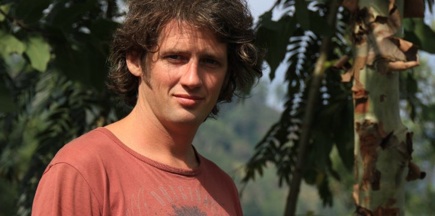

Owen Wiltshire. Photo: private

– How was the thesis defense? What kind of reactions did you get?

– It was much more dramatic than I expected. One reader took offense to what I had written in Chapter 2 about the history of anthropology. She felt the entire chapter should be removed.

The history of anthropology section was meant to reveal that anthropologists have reasons for increased collaboration with non-anthropologists, reasons to engage with public audiences, reasons to give people outside academia a place to respond to what anthropologists write.

Unfortunately, the way I did this led some people to think I was attacking them and their profession.

– Why did you choose to study your own discipline online instead of studying mobile phone use in Papua New Guinea or immigrants in Toronto?

– I saw open access publishing and new online publishing options as being important new developments that might contribute to “decolonizing” the creation and dissemination of anthropological work.

– So how is internet fueling change in Anthropology? Can you give us 3 examples?

– The desire for changes in anthropology that I discuss had been occurring well before the Internet became popular. But the Internet, of course, is a revolutionary technology that allows anthropologists to target all sorts of different audiences in new ways.

The main points of change I addressed were:

1. Open Access (OA) publishing is helping researchers disseminate work that might normally remain geographically bound due to the costs to access it.

As Max Forte pointed out, most OA journals in anthropology come from what would be the periphery of anthropological publishing. This is interesting when we see that that academic publishing, at least in terms of the American Anthropological Association, continues to be very geographically centered, even ethnocentric to a degree.

Open Access journals are a way for international scholars to make their work accessible to researchers abroad. OA might help scholars in places like Brazil have their work recognized in North America. Of course language divides remain.


2. Blogging and other ways of creating publicly accessible, archived, discussions are an awesome way to develop ideas throughout and after the research process!

It really opens the door for anyone to participate, to react, and to help guide research through feedback (however nasty it might be). It helps make writing research reports a more iterative process, where researchers can bounce ideas off each other and other audiences, prior to publishing.

For anthropologists who have been criticized for misrepresenting communities (as I have with anthropology!) it makes sense to work in as much discussion like this as possible. I tried to show how this could occur by incorporating blog responses into the thesis. Where I may have been wrong about anthropology as a whole (you can make that decision yourself), I think my biases are balanced out to a degree by the included responses.

3. Welcome the uncensored, unreviewed voice of the anthropology students.

I think we can be a pain in the ass, but I can’t imagine going through the program without reading so many other blogs by people going through the same thing in different institutions.

– Anthropologist have been described as “the last primitive tribe on earth”: They hide in their ivory towers and look with suspicion upon new technologies like the internet. Does your research challenge this assumption?

– I made this argument in my thesis, and its true to a degree, but I take it more as a argumentative point. Anthropologists and other academics are making use of the internet and just about every new tool that comes their way.

The point I make in my thesis is that the ivory tower remains even when we use these tools in public.

I used the distinction which had been developed in discussion with a number of anthros, including some people at Savage Minds, and Max Forte, and Erkan Saka, of there being “anthropology in public” and “public anthropology”.

Even if you write about anthropology in public, it doesn’t mean you are addressing interests outside the ivory tower. That is where public anthropology comes in, where anthropologists address issues outside the ivory tower. When they do this however, it is a challenge to identify what makes the work academic. Michael Wesch’s youtube videos are a great example of this that I discussed very briefly in the thesis.

An anthropological introduction to YouTube
47:32 Networked Production: The Collab. MadV's "The Message" and the message of YouTube 49:29 Poem: The Little Glass Dot, The Eyes of the World 51:15 Conclusion by bnessel1973 52:50 Dedication and Credits (Our Numa Numa dance) The Numa Numa quote is from *Douglas* Wolk (not Gary Wolk as I mistakenly said in the talk).">

– Why are some anthropologists interested in sharing and open access, while others are not?

– Some see the discipline of anthropology as being an expert and professional society. They want to share their work with other anthropologists who have the same interests and concerns as themselves. Feedback from random Youtube users, or even people in other disciplines, isn’t very valuable to them. The feedback they can get through peer review in professional anthropology journals is exactly what they want, as is the recognition.

Also, I don’t think every researcher agrees that expensive academic journals fail to disseminate work. They only want to share their work with a select audience, and don’t see the point in making it available free online. In the end they disagree that free access would improve the impact of their work (it comes down to who they are trying to impact).

– What are in your view the main barriers to open access publishing?

– Some professors encourage students to look at select journals, and they don’t consider the Open Access journals that are out there. If researchers only use Jstor and Anthrosource to find material, they are missing out on a lot of what is being discussed – yet this is standard practice and considered to be acceptable.

Is it a researchers responsibility to make themselves aware of everything that’s being published out there? Or is that unreasonable? The increasing number of journals around the world make it quite difficult to do a complete literature review! If we can’t funnel it down to a select number of publications, it is impossible to ask researchers to keep up to date. But if OA journals are ignored, many researchers may never realize how beneficial it is to be able to openly link to, discuss, and talk about publications online.

– But you stress that OA Publishing does not necessarily lead to a more public anthropology?

– Yes, OA publishing is just about making anthropological research more accessible to its desired audience. It doesn’t mean anthropologists are writing with the intention that public audiences interact with it, or that it be relevant to public interests. Also, if you look at OA repositories, theres still no effort being made to host responses, so we can’t say that OA is an attempt to get more feedback.

– Do you think we need a more public anthropology? OA Publishing is not enough?

– I think it’s easy to adapt anthropology and research to public contexts, but at that point it ceases to be anthropology as we know it. I would have loved to come out of my masters degree program with more experience producing video, and documentary-like productions. Maybe I should have studied communications. Speaking of which, my roommate studies Communications, and we shared many of the same readings. Finally, as I develop in the thesis, theres nothing inherently good about public engagement – take a look at the Human Terrain Teams for example.

– You’ve done your fieldwork mainly online. An interesting experience?

– Yes. I think the blog experiment worked out rather well, showing that the blog can be used to solicit feedback throughout the research process and not just as a way of disseminating/publishing ideas.

– The most interesting thing you have learned?

– It is really easy to piss people off when you critique anthropology.

– What are the implications of your research?

– Feedback is important, and sharing ideas openly online is a great way to solicit that feedback!

– Final words to the readers in front of the screen?

– Job wanted.

>> download the thesis

>> visit his blog

SEE ALSO:

Interview with Michael Wesch: How collaborative technologies change scholarship

antropologi.info survey: Six anthropologists on Anthropology and Internet

Open Source Anthropology : Are anthropologists serious about sharing knowledge?

Democratic Publishing = Web + Paper

Book and papers online: Working towards a global community of anthropologists

Paper by Erkan Saka: Blogging as a Research Tool for Ethnographic Fieldwork

Cicilie Fagerlid: “Blogging sharpens the attention”

Anthropology blogs more interesting than journals?

Anthropologists ignore Open Access Week – a report from Wellington

Interview: Meet Dai Cooper from The Anthropology Song on YouTube!

(updated) Danah Boyd on Open Access: “Boycott locked-down journals”

Marianne Gullestad and How to be a public intellectual

Open Access Anthropology in Africa – an introduction

More and more anthropologists, but they’re absent from public debates – “Engaging Anthropology” (1)
“Minimal willingness to post one’s own work online”, survey by the American Anthropological Association reveals

What's the point of science when the public lacks access to it and researchers hide in their ivory towers? The internet provides new ways for researchers and the public to exchange knowledge. How do antropologists make use of blogging, Facebook,…

Read more

Er det virkelig vi som er staten?

Vi plyndres av staten! Staten undertrykker minoriteter! Staten detaljstyrer livene våre! Når vi kommer med slike utsagn får vi ofte høre at det er jo vi som er staten. “Staten, det er deg!”, fastslår for eksempel Lars-Henrik Myrmel-Johansen fra Fornyings-, administrasjons og kirkedepartementet.

“De der oppe” er bare våre representanter. Er det virkelig slik? Stemmer det slik vi ofte hører at det er vi som er staten? Eller er staten noe separat, en egen elite med sine egne interesser og som derfor er så interesserte i å kontrollere oss? Var det ikke engang en hersker som sa “staten det er meg?”

Slike spørsmål stiller antropolog Iver B. Neumann i et innlegg i Dagsavisens nyemeninger.no. Han savner en slik debatt om staten.

Vi tar staten for gitt som noe som bare er der, som på en måte er det samme som samfunnet. Hvorfor er det slik? Dette skyldes dominansen av angloamerikansk teori, mener han. Han mener vi heller bør la oss inspirere av fransk og tysk samfunnsteori. Durkheim for eksempel er opptatt av relasjonen mellom staten og samfunnet som er under stadig forandring.

Den tidlige staten, skriver Neumann, er for Durkheim organisert separat fra samfunnet, en organisasjon som la under seg territorium, først og fremst ved våpenmakt, og kommuniserte med andre stater. Jo større grensesnitt staten har med samfunnet, desto mer demokratisk er staten ifølge Durkheim.

Med et slikt perspektiv er staten altså noe som kan studeres empirisk. Den er ikke bare der og svever i luften.

Heidi Stakset har skrevet en interessant kommentar til Neumanns artikkel, der hun viser til flere eksempler på at kontrakten mellom staten og samfunnet er radikalt brutt, blant annet i spørsmål rundt asyl og funksjonshemmedes situasjon. Enkeltpersoner har ingenting å stille opp mot “staten som styrkens herredømme”.

>> les innlegget og kommentaren på nyemeninger.no

Neumann har nylig gitt ut boka Antropologien og staten og har tidligere iår skrevet en kronikk i Dagbladet. I Kongene som forsvant (Dagbladet, 15.2.11) skriver han om kreativ historieskriving som får staten til å framstå som hevet over det timelige.

“Staten”, skriver han, “bør helst være så gammel at den er tidløs, for en gammel stat er en ærverdig stat.” Hvis innbyggerne tar staten for gitt, og endatil identifiserer seg med den, får statens ledere enklere dager.

Boka har fått en positiv anmeldelse i Universitas. “I motsetning til det som preger selvforståelsen til mange norske samfunnsvitere, nemlig at du som forsker ikke er berettiget en politisk mening, slår Neumann et velrettet slag for antropologens rolle som maktkritiker”, skriver Magnus Løvold.

Neumann har i 2009 levert sin doktoravhandling om diplomatiet, der kjønn- og klassehierarkiene lever i beste velgående.

SE OGSÅ:

Iver B. Neumann: Antropologi må være maktkritikk

Er staten i ferd med å dø eller ikke? Hva innebærer dette for antropologien?

“Tilliten mellom mennesker og til staten gjør Norden så rik”

– Støtt heller grasrota enn staten!

Michael Herzfeld: “Antropologi er en motvekt til nyliberalismen”

Tvangsretur: Når politiansatte klamrer seg til den “byråkratiske religionen”

Avviste asylsøkere, papirløse og myndighetenes vold

Vi plyndres av staten! Staten undertrykker minoriteter! Staten detaljstyrer livene våre! Når vi kommer med slike utsagn får vi ofte høre at det er jo vi som er staten. "Staten, det er deg!", fastslår for eksempel Lars-Henrik Myrmel-Johansen fra Fornyings-,…

Read more

Pieces into place: Décroissance, another life and another politics – And making sense of the data

(Writing is progressing so fast now, that I’m not able to keep up here. This post I wrote several weeks ago, but haven’t found a free moment to post it before now. I’ll try to find some more time to keep up the blog in this final stage, as it would be good to document this part of the project as well. I’ll see what I can manage.)

Smaller and larger parts of the puzzle find their place at the moment. Phenomena that have only flickered past my attention in a superficial, disconnected manner suddenly add up to a larger picture.[teaserbreak] The last of these epiphanies was triggered by a request to hold a seminar at National Institute of Consumer Research (SIFO). They asked me because they’ve a project running on migration and consumption, and certainly, migration is relevant in my research on Paris as postcolonial. On consumption on the other hand, I wasn’t so sure what I could come up with. When I discussed some bland idea I’d got with a fellow anthropologist, he said right away that it’s exactly the lack of consumption in one of the large consumer countries of the west that it interesting here. Of course! One of the definitions of French slam is that it should be for free.

About the same time, a Norwegian journal published an article on the French Décroissance (Degrowth) movement. Although I had noticed the thought-provoking term around, for instance in demonstrations, I wasn’t aware that it concerned a socio-political movement. I started wondering if parts of the slam milieu was inspired by this movement, as several texts make similar statements to their “live better consume less” ideas, as well as mocking contradiction in terms like a “fair trade” (J’aime ma planète, j’achète, “I love my planet, so I buy it” by Zéor, for instance).
"Productivisme - deadly dangerous: Let's enter degrowth"
“Productivisme – deadly dangerous: Let’s enter degrowth”
From a demonstration in Paris in October 2005

I had also noticed the relatively low material standard of living (without going into detail) many slammers lived under. These observations had made an impression on me, but they didn’t start to make sense before I read Sociologie de Paris (Pinçon and Pinçon-Charlot) and connected them to the brute reality of the cost of life in Paris proper compared to the poorer suburbs: Even in the cheapest arrondissments in the north and east of the city is the price per square metre double compared to in the suburban towns in Seine-Saint-Denis.

But the observations still weren’t more than signs of relative poverty in an affluent society, added perhaps some traits of degrowth-ideas present in some texts. Until I was told (by a man almost double my age, what a humiliation!) that I had to free my analysis because what I was observing seems much more radical than old ways of thinking about politics. He commented on another part of the thesis (republicanism and cosmopolitanism), but it’s pertinent in relation to the question of consumption as well. From this perspective, all these disparate observations click together in the puzzle to such a degree that it all seems utterly banal, and how come I haven’t seen it before? Maybe particularly since I’ve even proclaimed here before that I recognise in the slam scene something of Foucault’s dictum (1982) to refuse what we are and find new subjectivities liberated from the state and its individualisation.

A life with less material goods is certainly not only “relative poverty”, it is also part of larger ethical questions on local and global solidarity, ecology, how to lead the good life and so on. The Décroissance movement and the slam phenomenon are probably just different expressions of larger currents in French and western society. Suddenly, I see the slam scene as even deeper situated within a long and broad history of poetic and eventful rebellion. And the great thing for the progress of my thesis is that all these recent epiphanies don’t seem to broaden the scope of my work, spreading it out in unmanageable directions. Quite the contrary, they tie the loose ends into a nuanced and detailed tapestry and click seemingly unfitting pieces into the puzzle.

"Productivisme - deadly dangerous: Let's enter degrowth"

(Writing is progressing so fast now, that I’m not able to keep up here. This post I wrote several weeks ago, but haven’t found a free moment to post it before now. I’ll try to find some more time to…

Read more

Thomas Kochan ist Schnapsethnologe

Fünf Jahre hat Ethnologe Thomas Kochan zur Kulturgeschichte des Alkohols in der DDR geforscht. Kurz nach seiner Dissertation hat er seinen eigenen Schnapsladen eröffnet. “Dr. Kochan Schnapskultur“ steht im geschwungenen Rund des Schaufensters in Prenzlauer Berg, meldet der Tagesspiegel.

Soeben ist seine Arbeit als Buch erschienen. „Blauer Würger“ heisst es – in Anlehnung an den Spitznamen für „Kristall Wodka“ laut Tagesspiegel “ein geschmacklich zweifelhafter, aber stets verfügbarer Fusel mit blauem Etikett aus dem Warenangebot in der DDR”.

Die Ostdeutschen waren grosse Trinker. In kaum einem Land wurde so viel getrunken wie in der DDR. “Der Ethnologe Thomas Kochan sucht in seinem Buch “Blauer Würger” eine Erklärung für den Durst der Ostler – und widerspricht dem gängigen Klischee”, erfahren wir in einem ausführlichen Bericht im Spiegel:

“Die DDR-Gesellschaft war nicht alkoholisiert”, lautet sein Fazit. Kochan spricht von einer “alkoholkonzentrierten” Gesellschaft, in der Alkohol Genuss,- Stärkungs- und Tauschmittel war, und immer ein willkommenes Präsent. Alles, was darüber hinaus gehe, sei “Legende”. (…) “Nirgends ist von einer Trinkkultur, in der der Alkohol primär als Sorgenbrecher und Kummertöter diente, die Rede”, schreibt er.

“Auf das Thema ist er gekommen, weil er etwas untersuchen wollte, das Spass macht”, erfahren wir in der Sächsischen Freien Presse.

“Dem Autor gelingt es auf hervorragende Weise die Leser auf 446 Seiten blendend zu unterhalten”, meint Thomas Cieslik.

Das Buch wurde auch in den Norddeutschen Neuesten Nachrichten und Mitteldeutschem Rundfunk besprochen.

Sein Schnapsladen ist auch im Netz zu finden, und zwar auf www.schnapskultur.de

AKTUALISIERUNG:

Auch beim Schnaps-Trinken war die DDR Weltmeister (die WELT)

Interview: Buch beschreibt Schnapsweltmeister DDR (otz.de)

Doktorarbeit über die Trinkkultur in der DDR (Schleswig-Holsteinischer Zeitungsverlag)

SIEHE AUCH:

Feldforschung am Tresen: Magisterarbeit über Münchens Bierstüberl

Stadtethnologie: Münchner Stüberl meets Techno-Underground

The Anthropologist as Barman – Durham Anthropology Journal fulltext online

In Darkest Leipzig – Ethnologiestudent erfolgreich mit Buch über Leipziger Clans und Stämme

Deshalb sind Ossis eine Ethnie – Ethnologe Thomas Bierschenk im Stern

Initiationsriten: Merkwürdige Weisse

Fünf Jahre hat Ethnologe Thomas Kochan zur Kulturgeschichte des Alkohols in der DDR geforscht. Kurz nach seiner Dissertation hat er seinen eigenen Schnapsladen eröffnet. "Dr. Kochan Schnapskultur“ steht im geschwungenen Rund des Schaufensters in Prenzlauer Berg, meldet der Tagesspiegel. …

Read more

Global apartheid: Are you expat or immigrant? (updated)

What comes into your mind, when you’re reading the following lines?

“We tend to gather in certain locales (cities, sometimes specific neighbourhoods); we frequent particular businesses – some of the services being unique to our community; we have dedicated media, strong social networks and political tendencies; we even have certain etiquette, social rules and beliefs we would likely agree on (a topic for another day), all the result of shared experiences distinct to our clique.”

Sounds like one of those popular descriptions of “immigrants living in a parallel society”? Wrong, anthropologist Sarah Steegar writes about a group of people called “expats”.

Why doesn’t she call them migrants? Well, it’s a question of class and “race”: The people she writes about aren’t from Somalia or Iraq. They’re white people and wealthy. By using a different term, a distance to “the other” is established.

So, it’s not surprising to see that no Somali people are interviewed on the website about Expats in Norway.

In Wikipedia we get this revealing definition:

In its broadest sense, an expatriate is any person living in a different country from where he or she is a citizen. In common usage, the term is often used in the context of professionals sent abroad by their companies, as opposed to locally hired staff (who can also be foreigners).

The differentiation found in common usage usually comes down to socio-economic factors, so skilled professionals working in another country are described as expatriates, whereas a manual labourer who has moved to another country to earn more money might be labelled an ‘immigrant’. There is no set definition and usage does vary depending on context and individual preferences and prejudices.

I always found the usage of the word expat interesting. Personally, I never use it, and call everybody for migrants regardless their class or “race”. Inspired by Steegar’s text I googled around and found that the usage of the terms expat and migrant is contested.

On Wikipedia’s talk page long there’s a long debate about the meaningfulness of this distinction.

Aaron Hotfelder points to a long interview in the journal Reason. There, Kerry Howley writes:

“If you picked up, moved to Paris, and landed a job, what would you call yourself? Chances are, if you’re an American, you’d soon find yourself part of a colorful community of ‘expats.’ If, while there, you hired an Algerian nanny– a woman who had picked up, moved abroad, and landed a job– how would you refer to him or her? Expat probably isn’t the first word that springs to mind. Yet almost no one refers to herself as a ‘migrant worker.'”

Yes, that’s because, as Laura María Agustín says in the interview with Howley, ” ‘migrants’ travel because they are poor and desperate, ‘expatriates’ travel because they are curious, self-actualizing cosmopolites.”

Or as Andrew Kureth writes:

Westerners don’t like referring to themselves as immigrants because the word “immigrant” has such nasty connotations. (…) An immigrant is an unwanted job-stealer, while an expat is a foreigner who could be leaving any day now. An immigrant is on a desperate search for a better life. An expat is on an adventure. (…) Our usage of these words reveals a certain double standard. Whether you’re an expat or an immigrant depends not on your residency plans, but on the relative wealth of your native country.

I might add, the usage of this term suits very well to the rhetoric of the political elite in the West who is building and enforcing Fortress Europe, as part of the larger project of Global Apartheid

UPDATE 1: (via richmondbrige) Great commentary in the Guardian by sociologist Peter Matanle, British migrant in Japan, published today. He feels uncomfortable when British people overseas, or the Guardian, use the term “expat” with reference to Britons abroad, then use words such as “immigrant” when describing people from other countries who are in the UK:

So, my proposal is for the Guardian to amend its style guide to discourage the use of the word “expat” in its pages. The word is too redolent of the days of empire and sipping gin and tonic in the shade while the locals toil beyond the fence. It is too easily used as a cultural marker to distinguish people from one another, making it easy for some Britons to feel both superior to and separated from the local people in their host cultures. I suggest that words such as resident, visitor, settler, immigrant and tourist be used instead in order to equalise the way we describe ourselves with the ways in which we describe others. It is only fair and just to do so.

UPDATE 2: Brendan Rigby has written an excellent post: Are you a Greek or a Barbarian?

UPDATE 3: Great post by Julie Sheridan, “native Scot” in Spain: Double acts & double standards. She asks: What makes me an expat but my neighbour an immigrant? She also draws attention to the etymology of “expat” (excluded, absent from one’s “fatherland”) and ends her post with these sentences:

No idea how long I’ll be here, but while I am, I want to feel settled, and ideally integrated. And try to remember that being here is an experience, rather than an identity.

SEE ALSO:

Paperless underclass exposes dark side of Europe

“Human smugglers fight global apartheid”

The “illegal” anthropologist: Shahram Khosravi’s Auto-Ethnography of Borders

Racism: The Five Major Challenges for Anthropology

How to challenge Us-and-Them thinking? Interview with Thomas Hylland Eriksen

What comes into your mind, when you're reading the following lines?

"We tend to gather in certain locales (cities, sometimes specific neighbourhoods); we frequent particular businesses - some of the services being unique to our community; we have dedicated media, strong…

Read more