search expand

Arrangerte ekteskap: Å gripe leseren med et komplekst budskap

Hvordan går det an å forfekte en nyansert mellomposisjon og likevel være interessant? Hvordan formidle et komplekst buskap? Det er spørsmål som ikke bare sosiolog Anja Bredal har tenkt mye over. Bredal er aktuell med en ny bok om arrangerte ekteskap. Et av hovedpoengene i doktoravhandlingen “Vi er jo en familie” er at tvang og press er et alvorlig problem for mange unge som inngår et arrangert ekteskap. Men samtidig synes mange andre at det er en god og naturlig måte å gifte seg på.

Media dyrker ytterpunktene og gir sjelden plass til en både-og-argumentasjon.

– Det var flere aviser som ringte etter at jeg hadde levert doktoravhandlingen, men jeg har inntrykk av at journalister sjelden får det de vil når de ringer meg.

Hun har flere ganger opplevd at forskningen sin ble misbrukt, bl.a. for å fremme et lovforslag mot søskenbarnekteskap i Danmark.

I intervjuet med meg går hun også inn for å tenke mer på klasse og sosial ulikhet. Flere kulturforskjeller kunne blitt forklart som klasse- eller klassekulturforskjeller, mener hun.

>> les intervjuet

Hvordan går det an å forfekte en nyansert mellomposisjon og likevel være interessant? Hvordan formidle et komplekst buskap? Det er spørsmål som ikke bare sosiolog Anja Bredal har tenkt mye over. Bredal er aktuell med en ny bok om arrangerte…

Read more

Doktoravhandling: “Antropologer forstår forbruk og salg bedre enn markedsførere”

Oskar Korkman er økonom, men bruker antropologiske metoder. I konsulentfirmaet Vectia der han jobber har han nylig ansatt en antropolog. På fredag disputerte ved Svenska handelshögskolan i Helsinki (!?) om konsumentadferd. Til Hofvudstadsbladet sier han: “Sociologer och antropologer förstår konsumtion bättre än marknadsundersökare.”

For å undersøke hvordan forbrukere “fungerer”, har Korkman tatt Svenskebåten mellom Helsinki og Stockholm og fulgt nøye med hva seks familier holdt på med under turen og intervjuet dem etterpå. Han fant ut at – og det er ingen overraskelse for antropologer – at det er en stor diskrepans mellom det som folk gjør og det de sier. Derfor, mener Korkman, har psykologiske verktøy (spørreskjema, fokusgrupper etc) begrenset verdi for å analysere menneneskenes tanker:

– Det går inte att ta ut en kund från vardagen till ett laboratorium och fråga: vad har du för behov? Det blir konstlat. Människor styrs till stor del ändå av kontext – det vill säga sammanhang och omgivning.

Derfor, legger han, vil vi “se en radikal skiftning där sociologer och antropologer utnyttjas allt mer”. Antropologer er flink til å forstå og analysere kundenes hverdag. Og dette er gull verdt:

– Jag hävdar att företagen förstår sina kunder men inte deras vardag. Ändå är det i den tråkiga vardagen där den verkliga marknadspotentialen finns.

>> les hele saken i finske Hufvudstadsbladet

>> les pressemeldingen

>> last ned hele doktoravhandlingen “Customer value formation in practice – A practice-theoretical approach” (208sider, pdf)

SE OGSÅ:

Designantropologi: På feltarbeid for å designe espressomaskiner og lekeplasser

Veileder IT-selskaper: IT-antropolog startet eget firma

Hovedoppgave i fulltekst: Hvorfor sliter salget av økologiske produkter i Norge?

“Norske bedrifter mangler kulturkunnskap”

Smugling som protest: Antropologisk forskning på grensehandel

Antropologi og interiør: Retro som status

Øye ser deg: Øye ser deg: Hun er sosialantropolog og kartlegger smaken vi har.

nyhetsarkiv: antropologi og business

artikkelsamling: antropologer utenfor akademia

Oskar Korkman er økonom, men bruker antropologiske metoder. I konsulentfirmaet Vectia der han jobber har han nylig ansatt en antropolog. På fredag disputerte ved Svenska handelshögskolan i Helsinki (!?) om konsumentadferd. Til Hofvudstadsbladet sier han: "Sociologer och antropologer förstår…

Read more

Métro Charonne, 8 février 1962

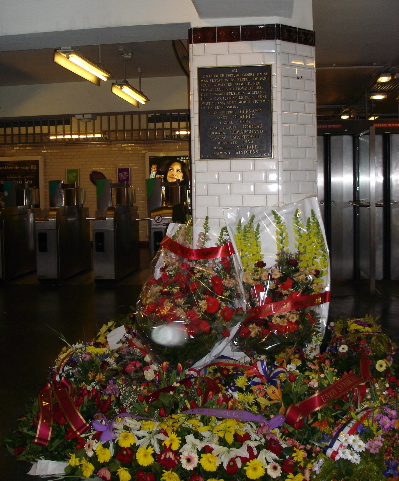
“Here, the 8th of February 1962, in the middle of a demonstration for peace in Algeria by the people of Paris, 9 male and female workers; communists and union activists, of whom the youngest was 16 years, were killed in the repression. CGT, PCF.”
[teaserbreak]
They were mainly pensioners at the commemoration Wednesday, more men than women, mostly white, but also quite a few Maghrebins. A Maghrebi father had brought his two sons in their early teens. Apart from them, there were no children and not many young people (11 o’clock being of course in the middle of work for most people). I spotted a couple of other students or researchers like me (white women), with their notebook and camera, and a handful of photographers or journalists (non-white men of varous ages – one from France 3 (who has a strong regional news coverage) asking an elderly woman in front of me for an interview. To my knowledge it hasn’t been shown yet. There was also a cameraman there, filming for a documentary, I heard later).

I arrived late, and the loudspeakers were of not very good quality. Thus as I stood in the back of the crowd of maybe some hundreds(?), I didn’t hear much of what was said. However, the member of the Communist Party concluding the event spoke in a loud voice and I heard him make reference to the ongoing realities of everyday discrimination and the deportations of sans papiers (see manif). But above all, he spoke of the commemoration as a travail de mémoire (memory work) to force awareness upon the nation and also an effort to make “the martyrs of Charonne” recognised by state.

Where are the young Maghrebins?”, a white female pensioner asked at the meeting at the townhall afterwards. As I’m reading a book for the moment on the lack of collective memory of this generation (Abdellali Hajjat, 2005: Immigration Postcoloniale et mémoire), I think it’s a good question. But, it shouldn’t go for only the young French Maghrebins; it goes for all the young French. The participants were all but a very few of a certain age, and the memory of the events in 1961-2 is about to perish with them. The meeting took place at the hall of festivities at the town hall of the 11th arrondissement, an imposing place imbued with symbolic meaning that I haven’t got time to go into now. After two brief speeches by an historian (Alain Dewerpe at EHESS, 2006: Charonne, 8 février 1962, anthropologie d’un massacre d’État) and a journalist (Jean-Luc Einaudi: La bataille de Paris, on 17th of October 1961), numerous people in their 60s and 70s testified of their experiences of the time.

Finally, before I go out and take a photo of the memorial plaque at the station, a few words on what took place that day in February, 44 years ago. It was state of emergency in France and 6 weeks later a ceasefire was to be signed. From what I have read, the outcome of the war was already given and acknowledged – except by the illegal OAS (Organisation de l’armée secrete, who in fact has been in the news again lately in relation to the law from February last year on colonialism… more on that later) who were fighting to keep Algeria French. The demonstration was held against the continuous attacks and assassinations carried out by the OAS at the time, and it was organised by a number of trade unions and the Communist Party.

“Here, the 8th of February 1962, in the middle of a demonstration for peace in Algeria by the people of Paris, 9 male and female workers; communists and union activists, of whom the youngest was 16 years, were killed in…

Read more

“The martyrs of Charonne”

Yesterday, I had planned an academic expedition to L’École des Hautes Études en Sciences Sociales again, this time for a lecture on the sociological use of documentaries where they would also screen a “cinema verité” film on young Parisians’ vision on happiness from 1960 (Chronique d’un été). But chances wanted that I should stay in the neighbourhood and, in fact, be witnessing the making of a documentary on recent French history.
[teaserbreak]
Not long ago, I had included the communist newspaper L’humanité to my RSS desktop reader (that every morning kindly fills my laptop with hundreds of news in English and French). L’humanité appears for some reason high on that list of news, just under BBC and À toutes les victimes. In this instance that was luck, because about 20 minutes from the time I was turning on my computer and having my morning coffee there were to take place a commemoration ceremony for 9 people who died due to police brutality in a demonstration 8th of February 1962, during the Algerian war… It had happened at Métro Charonne, just 10 minutes from where I live. And I had no idea about it…

(The Internet was conspicuously silent on the ceremony to take place, but I found out that Indymedia had published a text the one day that I was unable to access the web (or even leaving the bed due to some stomach ailment anthropologists possibly are subjected to experience qua anthropologists in the field, wherever that field might be).)

What is the point of this long intro? Apart from making a (methodological) point of the importance of serendipity in fieldwork, I of course also want to make a claim about the invisibility of certain facts in the collective memory and history of this country.

In the autumn, I learnt that on 17th of October 1961 the Parisian police threw more than 200 (we will never know the exact number) peaceful Algerian demonstrators into the river. The recentness of such a brutality in a European capital is shocking to me. So is the lack of attention devoted to it. After the commemoration ceremony yesterday, I scrutinised the buildings around the metro entrance to see if there were a memorial plaque there. I found nothing that would remind the passer-byes of what had happened just some 40 years ago (but it seems there is one on the inside of the station, I’ll have to go and check…). However, at the open debate/meeting at the town hall afterwards I was to hear that the intersection between Boulevard Voltaire and Rue Charonne is to be named Place de 8 février 1962.

After the crushing of the demonstrators (150 wounded, in addition to the 9 deaths) the police tried to make up the most ridiculous lies, as they had after La nuit noire, 17th October 1961. However, between 500 000 and 1 million people participated in the funeral cortège to the cemetery Père Lachaise. But the chief of police, Maurice Papon continued in his job for years afterwards… (The same Papon – and this is something I must admit I don’t understand – had also had a high position during the Vichy Nazi collaborating government and taking part in sending more than 1500 French Jews to extinction…) These facts are known to the French today, but I must admit that they are so shocking to me that I don’t understand why they haven’t got more attention.

The French state has probably known better than most that l’oubli (forgetfulness, oblivion, omission, oversight) is fundamental for any nation (Ernest Renan, 1882: Qu’est-ce qu’une nation?) But over and over again the recent years, not to say months, it has become apparent that this long lasting and biased oblivion has to come to an end.

(As I write this, France 2 is broadcasting a critical American documentary on the laïque (secular) French state, at the moment focusing on the controversy around the Muslim headscarf. I hear a veiled girl say; “Integration, that’s finished. That was our parents’ generation. I am French. I’m born here”).

Yesterday, I had planned an academic expedition to L’École des Hautes Études en Sciences Sociales again, this time for a lecture on the sociological use of documentaries where they would also screen a “cinema verité” film on young Parisians’ vision…

Read more

Er OL-fanatismen typisk norsk?

– Spør du en nordmann hva han er stolt av, så er det ikke velferdsstaten, kunst eller litteratur, men sport. Vinteridretten har en stor plass i nordmenns hjerter og hjerner. Den er med på å løfte landet opp og frem, sier sosialpsykolog Arnulf Kolstad til Aftenposten. Imorgen begynner Vinter-OL i Torino.

Sosialantropolog Arne Martin Klausen, forfatter av boken “Lillehammer-OL og olympismen” mener ikke at OL-fanatismen er typisk norsk:

– Vi bruker skiidretten som et nasjonalt ikon. Det går en rød tråd frem til i dag fra den største av dem alle, Nansen. Paradoksalt var han ikke begeistret for eliteidrettens idé.

(…)

– Interessen og iveren er ikke typisk norsk. Man må se hvilken rolle idrett har i verden. Fotball har jo for eksempel ført til krigslignende tilstander, og sportsinteresse er noe av det mest typiske for det moderne samfunnet. Den er på sitt mest markante annet hvert år, hver gang det er OL. Da ofres tid, penger, krefter og ressurser på et gigantisk ritual. De økonomiske overskridelsene vi opplevde på Lillehammer ville vært utenkelig i alle andre arenaer enn idrettens.

>> les hele saken i Aftenposten

SE OGSÅ:

Sjåvinisme eller fellesskap? Anmeldelse av Arne Martin Klausens bok “Lillehammer-OL og olympismen” (Dagbladet, 11.12.96)

Ski-VM er vårt karneval – Lang lunsj med Arne Martin Klausen (NRK, 27.2.03)

Olympismen & norskheten (Bladet Forskning 1/94)

Norsk selvfølelse bygges på sportsresultater. Blir Norge en nasjon av tapere om glansen fra gullmedaljene forsvinner? (UnderDusken, 28.1.04)

antropologi og idrett – nyhetsarkiv

- Spør du en nordmann hva han er stolt av, så er det ikke velferdsstaten, kunst eller litteratur, men sport. Vinteridretten har en stor plass i nordmenns hjerter og hjerner. Den er med på å løfte landet opp og frem,…

Read more