“Jeg kan kun se tomme menneskehylstre uden sjæl og folk der udnytter dem. Ligemeget hvor mange fine ord man pakker det ind i, er det fornedrende at udstille desperate mennesker.”
Det er lett å uttale seg nedlatende om programmer som Paradise Hotel som “Richard”. Han kommenterer refleksjonene til masterstudent i antropologi, Sarah Warny Berg, som har skrevet kronikken Til fest med guderne fra ‘Paradise Hotel’ i Politiken.
Antropologen har vært på feltarbeid for å finne ut hva det er som får folk til å delta i denne reality-serien.
Som antropolog studerer man slike serier som fenomen for å forstå samfunnet vi lever i – helt uavhengig av om det er latterlig for noen eller ikke.
Det er blitt en fin tekst om en Paradise Hotel-fest der Sarah Warny Berg samtidig forteller leserne om at antropologi slett ikke handler om såkalte eksotiske folkeslag på fjerne kontinenter:
Blikket på de andre gjorde, at man senere i antropologien begyndte at vende blikket hjemad og forundre sig over, hvorfor det egentlig var, at man gjorde, som man gjorde i antropologens egen kultur. Jeg spænder derfor tropehjelmen og begiver mig ud på en postmodernistisk safari for at finde ud af, ’hvorfor de gør, som de gør på Diskotek IN’. (…) Tropehjelmen minder mig om, at jeg skal se det fremmede i det velkendte og det velkendte i det fremmede. (…) En tilsyneladende kaotisk diskoteksfest åbenbarer måske en dybereliggende diskurs i samfundet.
Og denne diskursen handler blant annet om medier, ritualer og behovet for å bli sett og anerkjent.
"Jeg kan kun se tomme menneskehylstre uden sjæl og folk der udnytter dem. Ligemeget hvor mange fine ord man pakker det ind i, er det fornedrende at udstille desperate mennesker."
Det er lett å uttale seg nedlatende om programmer som Paradise…
“Jeg skal se, hvad det er, der virker for Viby Skole. Det handler rigtig meget om hverdagsrutiner og de små ting. Det er det, jeg kalder for tavs viden. Det er noget, man bare gør uden at tænke over det, for sådan gør man bare. Det er de helt små ting, jeg kigger efter, når jeg observerer.”
For to år siden ansatte en kommune i Danmark en antropolog for å få ned sykefraværet. Nå har Viby skole i Danmark engasjert en antropolog for å forklare det lave fraværet blant elevene.
Mens statskirkene gradvis tømmes for folk, popper kristne innvandrermenigheter opp over hele Oslo, melder Aftenposten.
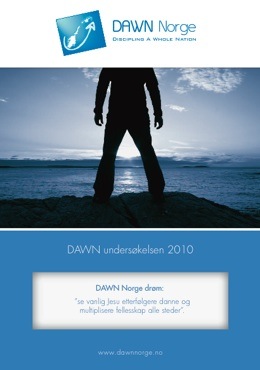
Samme trend gjelder også resten av landet ifølge rapporten som den kristne organisasjonen DAWN Norge har utarbeidet.
I 2005 var ifølge DAWN om lag tre prosent av Oslos befolkning såkalte aktive kristne. Nå har andelen økt til fem prosent – grunnet innvandring. Hver uke gjennomføres det gudstjenester på nær 35 språk i Oslo, sier Øivind Augland, leder i Dawn Norge, til Aftenposten.
– Vi er blitt så opptatt av å snakke om muslimske innvandrere at vi ikke har lagt merke til at mange av dem er kristne, kommenterer sosialantropolog Berit S. Thorbjørnsrud.
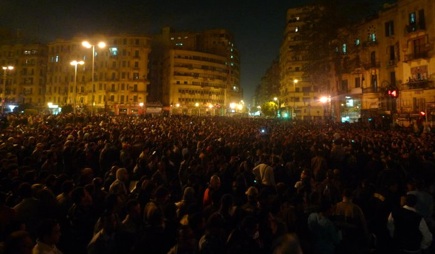
More than one million Egyptians protesting for democracy. Photo: Al Jazeera, flickr
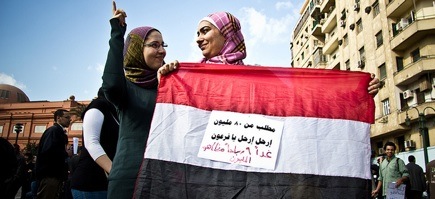
(last updated 6.2.2011, 21:30 – updates in bold – check also new post: Saba Mahmood: Democracy is not enough – Anthropologists on the Arab revolution part II 22.2.2011 ) “The government would come down hard on even the smallest protest, and everyone would be arrested. Now, it’s as if the people are saying, ‘We’re not going to be afraid anymore.’ “I am very, very happy for the Egyptian people. I really am. It’s a wonderful development for the Egyptian people.”
That’s how anthropologist Carolyn Fluehr-Lobban comments the recent protests in Egypt. She has spent six years since 1970 living and conducting research in the Sudan, Egypt and Tunisia and is currently teaching “Arab-Islamic Culture and the West”.
In contrast to Carolyn Fluehr-Lobban, Norwegian anthropologist Unni Wikan is worried.
She claims that “Mubarak is not a despot” and that he is “considered a very honorable man”. In her opinion, Mubarak “did well / prove worthy of the situation in not giving in to the peoples’ voices on the streets”. People – especially the poor she has studied for decades – don’t care for democracy. They want stability! Without Mubarak, the “criminal mob on the streets” would lead the country into chaos, she writes. Even today, when more than a million people protested in Cairo and other cities in Egypt, she insisted that Mubarak has the peoples’ support.
Of course, her article “traveled”, among others to the Lebanese-American professor of political science As’ad AbuKhalil at at California State University, who posted a Google translation of her article and comments: “I suspect that you will both laugh and cry while reading this piece of rubbish”.
UPDATE: Comment by anthropologist David H. Price in Counterpunch: “We can expect Wikan’s incredible claims to be paraded out by Fox News and CNN as part of a distortion campaign to support Mubarak’s efforts to cling to power, all in the name of balance.”
Forte quotes Hillary Clinton who said that ”our assessment is that the Egyptian Government is stable and is looking for ways to respond to the legitimate needs and interests of the Egyptian people.”
“Let’s be really clear about what is happening in Tunisia, Egypt, perhaps soon Israel/Palestine, and now Lebanon and Yemen”, he states. “A wall of U.S. supported dictatorships and clients is collapsing.”
UPDATE: How should the West react? “The discussion in the West should focus on the factor we are responsible for and we can influence – the role our governments have played in suppressing the Egyptian people, writes Johann Hari in Huffington Post. “Your taxes have been used to arm, fund and fuel this dictatorship.”
Meanwhile, over 150 academics have signed an Open letter to President Barack Obama, calling on Obama to support Egypt’s democratic movement. (You see the irony here of course… Western leaders fearing for a democratic Middle East. “The hypocrisy of western liberals is breathtaking: they publicly supported democracy, and now, when the people revolt against the tyrants on behalf of secular freedom and justice, not on behalf of religion, they are all deeply concerned”, writes Slavoj Žižek in the Guardian).
UPDATE: Maximilian Forte ay Zero Anthropology criticizes the AAA statement. Archaeologist Rosemary Joyce addresses the issue “valuing things over people” in a very interesting post. She also questions protection of Egyptian antiquities out of concern for their status as “global cultural heritage”.
The keys to understanding what has driven millions of citizens to the streets are the tragic circumstances surrounding the deaths of two young men, writes anthropologist Linda Herrera in her text Two Faces of the Revolution at the blog Closer.
She tells the story of Mohammed Bouazizi in Tunesia who “overwhelmed by the burden of fines, debts, the humiliation of being serially harassed and beaten by police officers, and the indifference of government authorities”, set himself on fire” and the Egyptian Khaled Said who was brutally murdered by Police.
She stresses that “contrary to a number of commentators in news outlets in North America and parts of Europe the two revolutions overtaking North Africa are not motivated by Islamism.” “These are inclusive freedom movements for civic, political, and economic rights” as this video below shows as well and is described in Robert Fisk’s report in the Independent: Secular and devout. Rich and poor. They marched together with one goal
UPDATE: In the Western hype about Islamists the Muslim Brotherhood, who denounced violence a long time ago has been demonized for too long”, says anthropologist Petra Kuppinger. “While militant Islamist groups exist, they are increasingly marginal. The Brotherhood is certainly not one of them.”
“It is a revolution without a leader”, says Adrienne Pine from the Department of Anthropology at the American University in Washington in the interview below. But that does not mean chaos. She’s blogging at http://quotha.net/
He gives us the bigger picture, conntects the local with the global:
Revolutions don’t happen out of the blue. It’s not because of Tunisia yesterday that we have one in Egypt mechanically the next day. You can’t isolate these protests from the last four years of labour strikes in Egypt, or from international events such as the al-Aqsa intifada and the US invasion of Iraq.
UPDATE: Anthropologist Karl Lorenz from Shippensburg University agrees. He’s not surprised about the protests. He believes that it is too late for reforms from Mubarak, because the people have wanted it for 30 years and it has not been done.
UPDATE: Anthropologist Farha Ghannam writes about the rich symbolism of the Tahrir Square: “In a society sharply divided by class and gender, the square has been a place where all feel comfortable – young and elderly, rich and poor, men and women, Muslim and Christian.”
The Truth Behind The Egyptian Revolution 2011. Protesters Singing. World MUST MUST Watch!
When looking for scientific publications, I made the same experience as Barbara Miller at anthopologyworks. Most articles deal with the (very distant) past. Miller concludes:
Clearly, you will have a better chance of finding out about early cat domestication, prehistoric ships, vessel residue analysis and even infant weaning during Roman times than you will have of learning about the social dimensions of today’s street protests.
(…)
I used the single search term “Egypt,” and I chose the publication dates of 2000-2010. Nearly 400 articles popped up. In scanning through them, I found that only 10 percent were related to contemporary social life. The other 90 percent of the references are dominated by archaeology with a sprinkling of biological anthropology as well as some non-anthro sources.
Mats Ivarsson from the University in Lund (Sweden) has written a paper that sounds interesting: Impact of authoritarian pressure on the political blogosphere in Egypt. He “proposes the hypothesis that an authoritarian state actually will strengthen the quality of the information disseminated in the blogosphere” (pdf)
This is just a small selection of texts about the ongoing revolution in Egypt and around.
Maybe the best and most comprehensive round-up with links to tons of articles (and less chaotic than this one here) can be found at the blog Closer, compiled by anthropologist Martijn de Koning: Closing the week 5 – Featuring the Tunisia & Egypt Uprising
Riz Khan - Tariq Ramadan and Slavoj Zizek on the future of Egyptian politics
“Stupid multiculturalism, no clash of civilisations: When we’re fighting tyrants we’re universalists and building global solidarity. I’m proud of the Egyptians! They understand democracy better than we in the West (Zizek) – “This is the time to support Egypt” (Ramadan)
More than one million Egyptians protesting for democracy. Photo: Al Jazeera, flickr
(last updated 6.2.2011, 21:30 - updates in bold - check also new post: Saba Mahmood: Democracy is not enough - Anthropologists on the Arab revolution part II 22.2.2011 )…
Merkelig verden. I flere dager har vi nå vært vitne til et bredt folkelig opprør mot et udemokratisk styre, og for demokrati i Egypt. Men i en kronikk i Aftenposten forsvarer Unni Wikan mannen som har styrt Egypt i 30 år: “Mubarak er ingen despot. Han har vist seg situasjonen verdig ved ikke å gi etter for demonstranter som er ute av kontroll.”
Folk vil ikke ha demokrati, men “ro, trygghet, stabilitet, få livet sitt tilbake”. Når hun omtaler demonstrantene så først og fremst i sammenheng med “kriminelle horder og kaos”. Hun tror at “Mubarak forblir ved roret, med sitt folks støtte”.
Også i Dagsavisen skriver hun at Mubaraks eventuelle avgang “ikke vi bli møtt med bare applaus”. Mange, spesielt i fattigkvarterene, “sitter på nåler og frykter for fremtiden. Demokrati er ikke alt.” Samme budskap formidlet hun på TV2.
Wikan reagerer på lignende måte som den politiske eliten i Vesten inkl Israel: De er mer opptatt av “stabilitet” enn demokrati. Det er som Zenia Stampe skriver i Politiken: “Arabisk demokrati druknes i vestlig tavshed”.
OPPDATERINGER:
Til tross for at det er idag (1.2.2011) er 1-2 millioner på gatene i Kairo holder Wikan fast ved at Mubarak har befolkningen med seg. Hun mener media har “gitt et skjevt bilde” av det som skjer i Egypt. Journalistene følger strømmen og har ikke har kontakt med folkedypet, påstår hun.
Etter angrepet på demonstrantene skal Unni Wikan ha sagt “Ja endelig har de som støtter Mubarak kommet på banen” ifølge Shoaib Sultan på verdidebatt.no. “Jeg tror ikke hun gleder seg over voldsbruken, men det var absolutt ingen klar fordømmelse av disse angrepene”, legger han til. Nettavisen skriver også om NRK-intervjuet. Hun sa også at “flere som tidligere har demonstrert for å få Mubarak til å gå av som president har byttet side”.
“Ikke bare er Wikans beskrivelse en forenkling av samfunnet hun snakker om, men den er også helt på linje med det regimet i Egypt har forsøkt å overtale folket med så lenge at de tror på det selv”, skriver Hanna Yousef i Aftenposten
Mubarak har ikke mye å vise til, mener Unger Bigum (også Aftenposten)
“Unni Wikans debattinnlegg i Aftenposten mandag, er mildt sagt ukorrekt og viser at hennes analyse er gått ut på dato”, skriver Mohamed Mahgoub. Det er de unge, velutdannede folk som har reist seg og talt, mens Wikans kilder i Egypt er de fattigste, uten utdannelse (Aftenposten 3.2.11)
Though Wikan has been working in Egypt since the late 1960s and is famous for her work studying Egypt’s urban poor, her analysis is unrecognizable to me as representing the mainstream views of the Egyptians.
Magnus på Polytropical kommenterer denne saken. Han kritiserer ikke Wikan, men belyser “hva som skjer når man tar et avvikende standpunkt”, se Veien pendelen svinger. Wikan får ros på høyreradikale document.no, der vi også får vite at hun på TV skal ha sagt at demonstrantene er “kjøpt og betalt”, se Modige Unni Wikan.
Merkelig verden. I flere dager har vi nå vært vitne til et bredt folkelig opprør mot et udemokratisk styre, og for demokrati i Egypt. Men i en kronikk i Aftenposten forsvarer Unni Wikan mannen som har styrt Egypt i…