search expand

The "illegal" anthropologist: Shahram Khosravi’s Auto-Ethnography of Borders

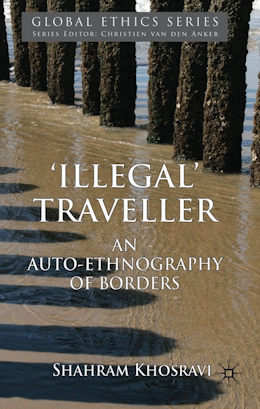
Globalisation means for most people on this planet higher fences and less movement across borders. The new book by anthropologist Shahram Khosravi is an auto-ethnography of illegalised border crossing.

‘Illegal’ Traveller is based on the anthropologists’s own journey from Iran to Sweden and his informants’ border narratives. “Studies of migrant illegality are often written by people who have never experienced it”, he writes in the introduction. “My aim has been to offer an alternative, partly first-hand, account of unauthorized border crossing that attempts to read the world through ‘illegal’ eyes:

This book is the outgrowth of my own ‘embodied experience of borders’, of ethnographic fieldwork among undocumented migrants between 2004 and 2008, and of teaching courses on irregular migration and the anthropology of borders. It also emerges from my activities outside academia: freelance journalism, helping arrange events such as film festivals about border crossing, and volunteer work for NGOs helping failed asylum seekers and undocumented migrants in Sweden.
(…)

Auto-ethnography lets migrants contextualize their accounts of the experience of migrant illegality. It helps us explore abstract concepts of policy and law and translate them into cultural terms grounded in everyday life.

(…)
In my years as an anthropologist, I have been astonished at how my informants’ experiences overlapped, confirmed, completed, and recalled my own experiences of borders. One interesting aspect of the auto-ethnographic text is that the distinction between ethnographer and ‘others’ is unclear.

I haven’t found any reviews yet, but what I have found is a fascinating paper by him, published in Social Anthropology three years ago. The title: The ‘illegal’ traveller: an auto-ethnography of borders (subscription required now open access!).

In this paper he describes his journey from Iran to Europe as “illegal” refugee and theoreticizes about the ‘world apartheid’ we live in according to him and criticizes the ways we think about borders and migration:

Based on a capitalist-oriented and racial discriminating way of thinking, borders regulate movements of people. However, borders are also the space of defiance and resistance.

It is because of this resistance he is still alive. In September 1986 he tried to leave Iran ‘illegally’ for the first time. “I had then just finished high school and I was called up to do military service during the ongoing terrible war between Iran and Iraq. To come back alive from the front was a chance I did not want to take”, he writes.

It was a long journey via Afghanistan, Pakistan and India. He ended up in Sweden via human smugglers. They saved him his life.

Human smuggling is in his opinion recurrently misrepresented by the media and politicians as an entirely mafia-controlled criminality. One of his helpers was Homayoun, a 25-year-old Afghani man, an undocumented immigrant, who had lived clandestinely in Iran since he was 15:

According to immigration law, Homayoun was a human smuggler, a law breaker and a criminal. But in fact he saved my life in one of the most dangerous places, under the rule of ruthless criminal gangs, corrupt border guards and fanatic Mujaheddin. (…) Homayoun facilitated my escape from undesired martyrdom in a long and bloody war.

Maybe one can say that the smugglers did what the UN Refugee Agency (UNHCR) was supposed to do? Khosravi tells shocking stories about the UNHCR who seems to be responsible for several deaths, including suicides, among refugees. Almost everyone in the refugee community had the same answer: “There is no point in going to the UNHCR”. You won’t get any help. Khosravi’s application was rejected as well. In the view of the UNHCR officer, his “fear of being killed in a horrible war was not ‘well-grounded’ enough.

He tells us the story of Henry’s suicide:

Henry, a young Iranian-Armenian man (…) was an activist within a communist militia, Cherikhaye Fadai, in Iran. But the UNHCR did not believe him. The reason was a wall painting in a corridor in the basement of a prison in Isfahan, where Henry had been detained for several months before his escape to Pakistan. In the interview Henry was asked by the UNHCR official to say what was painted on the wall in the corridor, to test his reliability. Henry had not seen such a painting and consequently his application was rejected. How did the UNHCR officer know about the wall painting? How could she or he be sure that there was any painting at all in that corridor?

Henry was desperate and did not know what to do. Just a few weeks before my departure from Karachi, one morning when the UNHCR officials arrived in their dark-windowed cars, he poured gasoline on himself and struck a match in front of the UNHCR.

With a false passport, Khosravi escaped to India. There he found a smuggler with good reputation, Nour:

During my five months in New Delhi I shared rooms with many persons in transit. All are now residents of Europe or North America – thanks to the smugglers.

He finally ended up in Sweden, a country that he at that time was not able to locate on a world map.

He explains:

The choice of destination was rarely as it was intended and designed. An ‘illegal’ journey is after all arbitrary. Sometimes the migrants end up in a country just coincidentally.
(…)
First of all, the destination was determined by the payment. A few hundred dollars could change the destination from one continent to another. Masoud, a roommate, was Nour’s mosafer (client) at the same time as I was. He had US$500 more than me and today he is a Canadian citizen, lives in Toronto and his children’s mother tongue is English. I am a Swedish citizen, live in Stockholm and my children’s language is Swedish: US$500 destined our lives so differently.

Border crossing is, he continues, is in anthropological sense a ritual:

The border ritual reproduces the meaning and order of the state system. The border ritual is a secular and modern sort of divine sanctity with its own rite of sacrifice. Several hundred clandestine migrants die en route to Europe each year. From January 1993 to July 2007 the deaths of more than 8800 border-crossers were documented in Europe. The Mediterranean Sea is turned into a cemetery for the transgressive travellers.

Border crossing can be experienced in terms of honour and shame:

A legal journey is regarded as an honourable act in the spirit of globalism and cosmopolitanism. The legal traveller passes the border gloriously and enhances his or her social status, whereas the border transgressor is seen as anti-aesthetic and anti-ethical (they are called ‘illegal’ and are criminalised). We live in an era of ‘world apartheid’, according to which the border differentiates between individuals. While for some the border is a ‘surplus of rights’, for others it is a ‘color bar’ (Balibar 2002: 78–84).

Khosravi ends his paper with some “final remarks” from 18 years later (2006), when he arrives at Bristol airport, along with colleagues from Stockholm University. He was convener for a workshop on ‘irregular migration in Europe’ at the biannual conference of the European Association of Social Anthropologists (EASA).

At the immigration control, he is illegalised again in the name of the “war on terror”:

After passing immigration control, I was stopped by a security official who let my blond fellow travellers pass. In the middle of a narrow corridor a mini interrogation began which lasted for half an hour.
(…)

My status as a Swedish citizen disappeared at the border because of my face. I answered questions about myself, my education, work, purpose of visit to Bristol. Then she asked about my parents, where they lived and what they did. I was not willing to disclose to her any kind of information about my elderly parents, who have been subjected to persecution by the Iranian state for decades. When I refused to answer her questions about my parents, she threatened to detain me first for nine hours and then, if necessary, for nine days according to the Anti- Terrorism Act.

I protested that she had targeted me because of my ‘Middle Eastern’ look and her selection of suspicious persons was racist. She did not even deny it and said ‘you [me and who else?] want to kill us. We have to protect ourselves’.

Khosravi has published some articles in Swedish, see my earlier post – Ikke kall dem for illegale

SEE ALSO:

More Global Apartheid?

For free migration: Open the borders!

Why borders don’t help – An engaged anthropology of the US-Mexican border

Research in refugee camps: Too political for anthropology?

Nina Glick Schiller: Who belongs where? A Global Power Perspective on Migration (ASA-blog)

Globalisation means for most people on this planet higher fences and less movement across borders. The new book by anthropologist Shahram Khosravi is an auto-ethnography of illegalised border crossing.

'Illegal' Traveller is based on the anthropologists's…
Read more

Antropolog: Slutt å bruke ordet “innvandrer”!

Svensker som ble født i utlandet fortjener like mye respekt som alle andre svensker. Derfør bør vi “skrota” ordet “innvandrere”, mener antropolog Claes Corlin og den utenlandsfødte forskeren Milena Cvetic.

I en debatt-artikkel i Göteborgs-Posten forklarer de to at begrepet brukes selektivt om visse grupper mennesker (heller om folk med bakgrunn i Somalia enn USA), og ofte på en nedverdigende måte. Forskerne kritiserer også begreper som annen- og tredjegenerasjonsinnvandrer (som ikke lenger er mye i bruk i Norge og ble erstattet av førstegenerasjonsnordmann): “När ska vi egentligen sluta vandra?” er noe som mange lurer på.

De foreslår å bruke ordet immigranter eller utenlandsfødte. Men det viktigste er å bli klar over at grensen mellom svensker og ikke-svensker er kunstige:

Ett något mer neutralt ord är immigranter (från latinets immigro, att flytta in) och som används i engelska och franska. Utlandsfödda är också möjligt och betecknar enbart de som verkligen är födda utanför Sveriges gränser, alltså inte deras barn och barnbarn enligt den tidigare ”arvsyndsmodellen”. I många andra fall är det helt enkelt inte relevant om en person råkar vara född i Arvika eller i Teheran.

Viktigast är dock att inse att uppdelningen mellan svenskar och ickesvenskar är konstgjord och bygger på en förlegad uppfattning om nationell kultur som en tidlös essens. Kultur är istället en process som ständigt förändras och berikas i samspelet mellan människor oavsett deras ursprung. Vi är alla ättlingar till ”invandrare” från istiden och framåt, och alla dessa har bidragit till formandet av den svenska kulturens historia.

>> les hele saken i Göteborgs-Posten

SE OGSÅ:

Assad Nasir: Hvem er en innvandrer?

How to challenge Us-and-Them thinking? Interview with Thomas Hylland Eriksen

– Vi må slutte å snakke om røtter

Skal vi slutte å snakke om kultur?

– Ikke kall dem for illegale

For mer kosmopolitisme – ny bok for “Verdensborgeren som pædagogisk ideal”

Svensker som ble født i utlandet fortjener like mye respekt som alle andre svensker. Derfør bør vi "skrota" ordet "innvandrere", mener antropolog Claes Corlin og den utenlandsfødte forskeren Milena Cvetic.

I en debatt-artikkel i Göteborgs-Posten forklarer de to at begrepet…

Read more

Afghanistan: Minner om maktkampen mellom multinasjonale selskap

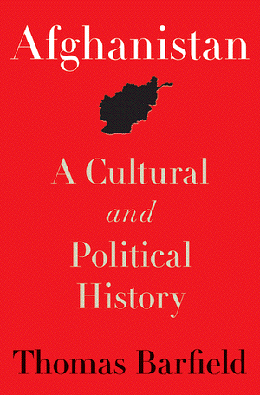
(Links updated 15.8.2021) Bøker om land som Afghanistan er gjerne ideologisk ladet, skrevet ut fra aktuelle politiske vinklinger som den såkalte “krigen mot terror”. Hvordan forholder det seg med den nye Afghanistan-boka av antropologen Thomas Barfield, som blir beskrevet som en av USAs ledende Afghanistan-eksperter?

Jeg har ikke lest boka, men Dagens Nyheter har anmeldt boka. Det skjer ikke ofte at engelskspråklige fagbøker får medieomtale her. Anmelderen Carl Rudbeck er begeistret:

Det har skrivits flera historiska böcker om Afghanistan. Barfields bok skiljer sig från flertalet; en orsak är att Barfield, som undervisar vid Bostonuniversitetet, inte är historiker eller statsvetare utan antropolog och har tillbringat långa perioder i landet. Han var då inte främst intresserad av landets eliter utan av folket, vars röster och intressen han vill förmedla.

Landet blir ofte beskrevet som uregjerlig. Nasjonalistisk ideologi har aldri fått fotfeste der. Barfield sammenligner den ustabile situasjonen i Afghanistan med en vedvarende maktkamp mellom multinasjonale selskap:

Barfield jämför i stället med multinationella företag där investerare, konsulter och advokater slåss om makten över ett företag medan arbetarna jobbar som vanligt. I Afghanistan har eliterna traktat efter makt utan att folket har tillfrågats eller i många fall ens brytt sig. Erfarenheten har sagt dem att det inte spelar någon större roll för deras dagliga liv vad härskaren i Kabul heter eller om han kallar sig kung eller president.

Taliban kom ifølge antropologen til makten i en periode da ingen stormakt interesserte seg for landet.

>> les hele saken i Dagens Nyheter

>> les innledningen av boka (pdf)

Intervju med Barfield:

A Cultural and Political History of Afghanistan: An interview with Thomas Barfield

Barfields bok kom har fått ganske stor omtale i engelskspråklig media, se bl.a.

Afghanistan: Six Questions for Thomas Barfield (Harper’s magazine)

Thomas Barfield: Is Afghanistan ‘Medieval’? (Foreign Policy)

A Conversation with Thomas Barfield (Saudi Gazette)

Afghanistan: A Cultural and Political History (Newsweek)

SEE ALSO:

“Afghanistan is a mess” or The return of colonial anthropology?

Slakter Fredrik Barths bok “Afghanistan og Taliban”

Fredrik Barth: “Jo tyngre NATO-krigføring, jo mer støtte til Taliban”

How can anthropology help us understand Swat and Taliban? Interview with Akbar Ahmed

Thesis by Elisabet Eikås: The limits of youth activism in Afghanistan

Afghanistan / Iraq: More and more anthropologists are recruited to service military operations

Norske antropologer som spioner for E-tjenesten?

Antropologi og militær: – Norske antropologer bør si NEI

(Links updated 15.8.2021) Bøker om land som Afghanistan er gjerne ideologisk ladet, skrevet ut fra aktuelle politiske vinklinger som den såkalte “krigen mot terror”. Hvordan forholder det seg med den nye Afghanistan-boka av antropologen Thomas Barfield, som blir beskrevet som…

Read more

Things to remember when presenting papers at conferences

(Points gathered both from personal experience as well as from listening to others)

* If you want to show some of the great video material you’ve worked hard to collect and that will visualize your speech wonderfully, be sure to bring any possible transformer or connection cable that might be needed with your particular Mac (which might not be the same connection cable that the earlier speaker with a Mac used)

* Make sure you know how to compensate if the visual presentation do not work (even though you followed the previous point)

* Know the text very well and don’t lose the flow of recitation

* Know the time it takes to go through every section and how slow it should be recounted (so you don’t get stressed and lose the pace when the shair shows you the 5 minutes sign)

* If you are of the sensitive kind, remember to ignore the audience when they start moving around in their chairs, yawn or flip their sheets – some people just becomes like that after sitting straight listening for two hours in a row. Very likely people will come afterwards and say that the atmosphere was just electric during the empirical quotes and it was all so moving and so on. So, either focus on the attentive faces that follow you or just turn inward and follow the flow of your text

* Please, state the purpose and aim of the presentation! What does all this lead to? In my opinion, the listeners can’t be reminded too often…

* Reading or not reading, I don’t really have any strong views, but too quick is not good, whether it is read or spoken. Neither is too many diversions from the line of argument and too many ehs…

* And now, in the all-embracive age of powerpoint, why not reflect on what the visual aids can and cannot do for exactly your purpose.

(Points gathered both from personal experience as well as from listening to others)

* If you want to show some of the great video material you’ve worked hard to collect and that will visualize your speech wonderfully, be sure to bring…

Read more

Book review: The deep footprints of colonial Bombay


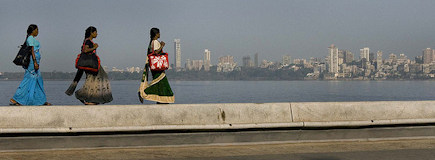
Three Women of Mumbai. Photo: Steve Evans, flickr

Antropologi.info book reviewer Tereza Kuldova has read another book for us.

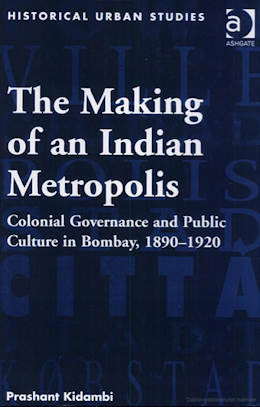
“One wonders how little has changed”, she writes in her review of The Making of an Indian Metropolis: Colonial Governance and Public Culture in Bombay, 1890-1920 by historian Prashant Kidambi. The book is in her opinion “a great read also for any urban anthropologist, not only for historians who are the main target group”.

—-

The deep footprints of colonial Bombay

Review: Kidambi, Prashant. 2007. The Making of an Indian Metropolis: Colonial Governance and Public Culture in Bombay, 1890-1920. Ashgate

Tereza Kuldova, Ph.D. student in social anthropology, University of Oslo

At times, when you read about old Bombay, about the ‘lost’ times when ‘Bombay’ was not ‘Mumbai’, you are faced with idealized narratives of a golden era, now long gone and mourned. A picture of Bombay is painted in which people of diverse religions, classes, castes and live harmoniously together; it is a picture of a conflict-free era, where rules and obligations are followed and mutual respect prevails.

It is then only refreshing to read an account of colonial Bombay (1890-1920) that confronts us with a much more realistic picture. A picture of Bombay struck by two global pandemics, as well as by episodes of collective violence. A picture of Bombay, where the ruling elites try to handle the ‘unintended city’ – a result of industrialization and intense immigration – and its issues of sanitation, slums, famine, plague, riots, order and criminality.

Divided by caste, class and religion

Reading Kidambi’s account, it becomes obvious that, as he himself says, the imagined ‘ideal’ Bombay is “essentially an exercise in ‘historical fantasy’ that elides over the extent to which the city has always been divided by caste, class and religion” (236). If one has some knowledge of contemporary Mumbai, reading this book makes one realize how little has changed and how deep footprints have the colonial rule left in today’s Mumbai.

Prashant Kidambi’s inquiry into the urban history of Bombay manages to grasp the dynamics of urban change at the same time as it catches the reader’s attention – and that even though the wealth of historical detail can be overwhelming. 

He focuses on three decades in which, in his own words, “the city was restructured in accordance with the dictates of modern urban planning and intrusive modes of governance were deployed in response to the challenges posed by rapid industrialization and massive labor migration” and in which “the city became the site of a vigorous associational culture and ‘modernizing’ social activism that infused its civil society with new dynamism” (p. 9). 

Prashant Kidambi argues, that the city was a ‘contested terrain’, shaped as much by acts of resistance as by the operations of power (p. 12).  Contrary to the “widely entrenched perception that the norms and practices of civil society were solely internalized by the Anglophone intelligentsia and were more or less alien to the cultural worldview and dispositions of the lower orders” (p. 14), the lower strata of society actually took part in the associational civility, the civil society of the emerging Bombay (pp. 157-202).

An interesting part of the book, particularly for an anthropologist such as me, is the discussion of the urban middle class formation in colonial India in relation to the concepts of ‘social reform’ and ‘social service’ and the way in which middle class became formed by these practices.

The distinction between ‘social reform’ and ‘social service’ is I believe useful in this respect.  Kidambi argues that “while ‘social reform’ during the late nineteenth century had largely denoted the internal attempts at ‘self-improvement’ within particular castes and communities, the emergent discourse and practice of ‘social service’ articulated by members of the high-status Anglophone intelligentsia was directed at the destitute, the downtrodden and the disadvantaged” (p. 15).

A leading cosmopolitan commercial center

Kidambi’s account of the colonial Bombay is centered around several topics. Firstly he introduces the reader to the rising city of Bombay, a city that had by 1860 “become, after New York and Liverpool, the largest cotton market in the world” (p. 18) and that “by the last decade of the nineteenth century (…) could justifiably lay claim to being a leading commercial and financial center” (p. 23), where a “highly cosmopolitan culture amongst the business elites” (p. 24) developed. At that time “Bombay was also home to a nascent, but dynamic, English-educated Indian middle class comprising lawyers, doctors, engineers, businessmen, journalists, teachers and clerks employed in mercantile and government offices. This middle class was a product of colonial policies that dated back to the second quarter of the nineteenth century” (p. 26). 

The growth of Bombay as a business and industrial center also “attracted a large, predominantly male, proletarian population”, which “found employment in the cotton-textile industry” (p. 29). However, the “city’s modernization had resulted in ‘two Bombays’, the one inhabited by a cosmopolitan elite that nestled in the fashionable enclaves of the city, the other full of chawls, crowded, insanitary, ill-ventilated slums and filthy lanes, stables and godowns” (p. 36). (One wonders here, how little has changed, when in today’s Mumbai 95% of its population lives on 5% of its space and the richest 5% occupies 95% of the land).

Diseases and segregation: Urban poor as threat

Overcrowding, slums, sanitary issues, disease, increased criminality, all these were the issues that increasingly kept the colonial administration preoccupied. And in 1896 this was only to get more intense as the plague epidemic attacked Bombay. 

The plague and its handling by the administration becomes another interesting topic. Kidambi argues that “for nearly a decade after the initial outbreak in the city, long-standing assumptions that viewed epidemic diseases as a product of locality-specific conditions of filth and squalor exercised significant influence over the colonial state’s war against plague” (p. 50).

These localist perceptions meant that the policies were aimed at sanitary regeneration of the city, cleaning of the infected areas, their evacuation or eventual demolition. Furthermore a notion that Kidambi labels as “contingent contagionism” has developed, which could be summarized as follows: “If plague was a disease either generated by, or nurtured in, filth and squalor, many officials argued, it followed that Bombay’s poor who resided in ill-ventilated, overcrowded tenements would be more susceptible to its ravages. This, in turn, buttressed the belief that it was the poor, rather than the ‘respectable’ classes, who were the ‘natural’ bearers of contagion” (p. 64). “Consequently, the colonial state’s antiplague offensive was in large measure directed at segregating the urban poor, who were perceived as posing threat to the physical well-being of Bombay’s elites” (p. 70). 


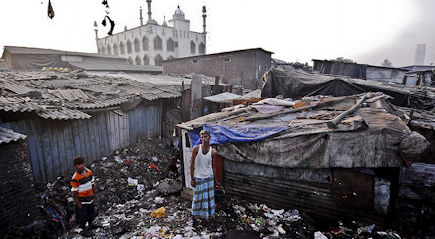
Shadow City – Dharavi, Mumbai. Photo: Akshay Mahajan, flickr

The next chapter deals with the Bombay Improvement Trust (1898), which was meant as a solution to the sanitary problems of the city; it dealt with the issues of town-planning, slum clearance, tried to expand the city’s residential area and provide sanitary housing for the poor.

Kidambi concludes that “(b)y the end of the First World War, it was widely acknowledged that the Bombay Improvement Trust failed to redress the civic problems that had led to its creation. On the contrary, most contemporary observers agreed that the Trust’s activities had worsened Bombay’s housing and sanitary problems” (p. 112).  However, “notwithstanding the Trust’s failure to carry out the tasks for which it had been established, its policies has profound, albeit unintended, consequences for the development of Bombay’s spatial organization and social geography” (p. 113).

The emerging importance of the ‘street’

Kidambi goes on to discuss colonial policing strategies and control and regulation of the urban spaces and the perceived threats to urban ‘order’, particularly after the experience of two major riots in the 1890s. He presents an interesting discussion of the emerging importance of the ‘street’ and the life of and on the street and in neighborhoods.

“The street was the principal locus of working-class social life and recreational activities ranging from akharas (gymnasia) and tamashas (street theatre) to the liquor shops where many workers congregated after work” (p. 121). 

He concludes that in the 1890s “the traditional colonial strategy of ‘indirect’ control began to give way to a more intrusive approach vis-à-vis the urban neighborhoods and the emergent plebeian public sphere. The 1902 Police Act vastly enhanced the discretionary powers of the police over a range of ‘public’ activities and urban spaces that had hitherto been unregulated. Their newly consolidated powers, in turn, increased the scale and dimension of conflict between the colonial police and the populace. Consequently, the relationship between the colonial administration and plebeian society in Bombay grew markedly fractious in the years leading up to the end of the Great War” (p. 155). 


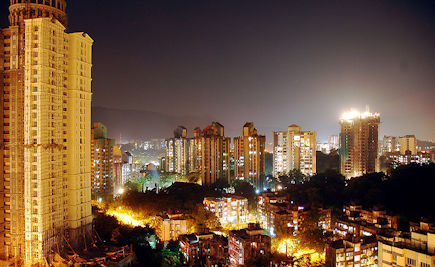
Mumbai at night. Photo: Premshree Pillai, flickr

Towards the end of the book, Kidambi takes on topics such as the emergence of the civil society in Bombay and the involvement of particularly the English-educated elite and middle class in various educational, scientific, religious and social reform oriented associations.

He concludes that “the rich diversity of associational activity within Indian civil society rendered its public sphere a ‘segmented’ domain in which the fashioning of the ‘autonomous, reason-bearing individual’ was offset by a countervailing process ‘through which community identities were reworked and reaffirmed’. It also invested urban public culture in colonial India with an intrinsic plurality and polyphony that has continued to inflect its post-colonial career” (p. 201). 

The last chapter of the book is devoted to the question of social reform and social service and the social activism of Bombay’s intelligentsia directed at the uplifting of the depressed classes. These efforts of the educated middle and upper classes were both integral to the process of nation building and also had the effect of strengthening “the claims to public leadership of the educated middle class during the first two decades of the twentieth century. By the end of the First World War, educated men were able to tout their credentials as the ‘real’ leaders of the citizenry far more confidently than during the late nineteenth century” (p. 231).

Relevance for today?

There are several things that I have been missing in the book (but that may be likewise a general problem with the genre of historical accounts).

The book deals with a period of three decades (1890-1920). Except for a brief note in the conclusion there is no reflection on the effects of these three decades on the later developments. One is simply left to conclude on one’s own. It feels as if relating to present days or even decades following the three decades under thorough investigation, would not be rigorous enough.  I would prefer at least some reflections, that would give the reader a sense of continuity and change and put things into a broader context of events that followed and issues that Mumbai is faced with now. This would turn a historical narrative, largely of interest only to specialists, into a reading of relevance for a much broader audience. 

Another thing that at times bothered me was what I experienced as a continual struggle of the author to give the account an appearance of factuality, of presenting matters ‘as they were’ and the very little space left to polemics with one’s own material and the works of others. This appearance of an authoritative account is greatly supported by the referencing system that uses footnotes at the bottom of each page (and not references directly in the text) and by the use of single quotes for both quotations from other’s works and archival materials and author’s own expressions in ‘quotes’. This is not very lucky as the reader very often looses track of who says what. 

Nevertheless, reading this book was enjoyable and would be definitely a great read also for any urban anthropologist, not only for historians who are the main target group. 

>> information about the book by the publisher (Ashgate)

>> read the first chapter of the book (pdf)

>> read another review: Bombay on the brink of modernity (Hans Schenk)

>> Article by Prashant Kidambi: ‘The Ultimate Masters of the City’: Police, Public Order and the Poor in Colonial Bombay (Crime, Histories and Societies 2004)

SEE ALSO:

Tereza Kuldova: Networks that make a difference. The production of social cohesion in Lucknow, North India

Colonialism, racism and visual anthropology in Japan: Photography, Anthropology and History part II

How the Ganges boatmen resist upper-caste and state domination

Sheds light on the collaboration between science and colonial administration in Naga ethnography

Three Women of Mumbai. Photo: Steve Evans, flickr

Antropologi.info book reviewer Tereza Kuldova has read another book for us.

“One wonders how little has changed”, she writes in her review of The Making of an Indian Metropolis: Colonial Governance and Public Culture…

Read more