search expand

No more conferences in Arizona: Anthropologists condemn Immigration Law

Even (seemingly?) rather conservative organisations are able to act and protest: In an official resolution, passed on Saturday, The American Anthropological Association has condemned the new immigration law in Arizona.

The association will refuse to hold scholarly conferences in Arizona until the law is ”either repealed or struck down as constitutionally invalid”, as we read in the AAA blog:

“The AAA has a long and rich history of supporting policies that prohibit discrimination based on race, ethnicity, national origin, religion or sexual orientation,” AAA Executive Board Member (and resolution author) Debra Martin said in a statement issued today. “Recent actions by the Arizona officials and law enforcement are not only discriminatory; they are also predatory and unconstitutional.”

The AAA describes the so-called Arizona Senate Bill (SB) 1070 as ”the broadest and most strict law on immigration enacted in generations”. The organisation sees the law as a movement to target and harass Arizona’s large population of Hispanic immigrants.

>> read more on the AAA blog

In December, the AAA condemned the coup in Honduras. And in 2006, the AAA stood up against torture and the occupation of Iraq

Last week, Indigenous and American Indian Studies scholars called for an economic boycott of Arizona.

See also the post at Savage Minds: Whiteness as Ethnicity in Arizona’s New Racial Order

Arizona immigration law sparks controversy

SEE ALSO:

Demonstrations against tougher immigration policy = birth of a new civil rights movement?

“Anthropologists Should Participate in the Current Immigration Debate”

Interview with Arjun Appadurai: “An increasing and irrational fear of the minorities”

Why borders don’t help – An engaged anthropology of the US-Mexican border

More Global Apartheid? New French immigration law

“Discuss politics!” – How anthropologists in Indonesia engage with the public

Even (seemingly?) rather conservative organisations are able to act and protest: In an official resolution, passed on Saturday, The American Anthropological Association has condemned the new immigration law in Arizona.

The association will refuse to hold scholarly conferences in Arizona…

Read more

Der kvinnene går på jakt og menn passer hus og barn

Kjønnroller varierer mye rundt omkring i verden. I Sydsvenskan leser vi om Sørkoreas haenyoer – ”havskvinnor” som ”utmanar tron på mannens överlägsenhet”.

Kvinner, dels i høy alder, dykker 20 meter ned i havet og jager etter havets delikatesser, mens mennene passer hus og barn.

– Å leve som dykkere krever nok en viss styrke, sier Kim Ok Mae, som er 77 år gammel men fortsatt bærer 20kilo skalldyr på ryggen når hun kommer tilbake tilbake til overflaten.

Som de andre kvinnene dykker hun uten surstoff eller spesielt dykkerutstyr.

Kjønnsroller er ofte et resultat av politiske prosesser, slik også her. Allerede for mer enn 400 år siden var det først og fremst kvinner som dykket og jaget. I motsetning til mennene slapp de å betale skatt og levere halvparten av fangsten til kongens hoff. Men litt biologi spiller også inn. ”Med en större andel kroppsfett klarade de också kylan bättre än männen”, skriver avisen.

– Ingen gledet seg over en nyfødt sønn, alle håpet de ville få en en jente, sier antropolog An Mi-jeong fra Koreas maritima universitet. Forskeren er pessimistisk angående havkvinnenes framtid. For de blir eldre og færre.

>> les hele saken i Sydsvenskan

SE OGSÅ:

Where women rule the world and don’t marry

On African Island: Only women are allowed to propose marriage

Der en kvinne er gift med flere menn: Doktorgrad på flermanneri i Tibet

Kjønnroller varierer mye rundt omkring i verden. I Sydsvenskan leser vi om Sørkoreas haenyoer - ”havskvinnor” som ”utmanar tron på mannens överlägsenhet”.

Kvinner, dels i høy alder, dykker 20 meter ned i havet og jager etter havets delikatesser, mens mennene passer…

Read more

“Ritualboom in Deutschland”

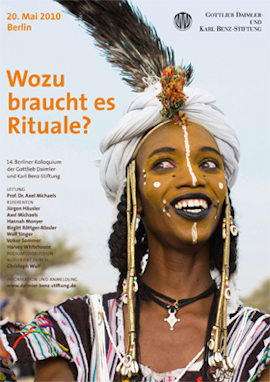
Public Viewing auf der WM-Fanmeile, Junggesellinnen-Abschiede, Scheidungspartys: Rituale sind beliebter denn je. “Ich vermute stark, dass es in unserer industrialisierten Welt mehr Rituale gibt als in traditionellen Gesellschaften”, sagt Axel Michaels, Leiter der Tagung “Wozu braucht es Rituale?”, in einem Interview mit der WELT.

Ritualforschung boomt auch, sagt der Ethnologe auf der informativen Webseite der Konferenz, die auch Podcasts, Medienecho und diverse Berichte anbietet.

Michaels leitet den Sonderforschungsbereichs “Ritualdynamik” an der Universität Heidelberg. Auch hier wird auf Oeffentlichkeitsarbeit Wert gelegt. Die Ritualdynamik-Webseite bietet u.a. Einblicke und die Open Access Zeitschrift Forum Ritualdynamik

SIEHE AUCH:

Forschungsprojekt untersucht Rituale in Internet

Earth Hour – The first globalized ritual?

DDR-Ritual wird immer beliebter

World Cup Enthusiasm: “Need for a collective ritual, not nationalism”

Initiationsriten: Merkwürdige Weisse

Was einem blüht, wenn man 30 und noch ledig ist – Magisterarbeit in Kulturanthropologie

Fetsawa Umamane – a wedding ceremony in support of durable solutions in West Timor

Public Viewing auf der WM-Fanmeile, Junggesellinnen-Abschiede, Scheidungspartys: Rituale sind beliebter denn je. "Ich vermute stark, dass es in unserer industrialisierten Welt mehr Rituale gibt als in traditionellen Gesellschaften", sagt Axel Michaels, Leiter der Tagung "Wozu braucht es Rituale?", in einem…

Read more

Mainzer Ethnologinnen dokumentieren Unabhängigkeitsfeiern in Afrika

17 afrikanische Staaten feiern in diesem Jahr 50 Jahre Unabhängigkeit. Studierende und Doktorandinnen des Instituts für Ethnologie und Afrikastudien an der Uni Mainz besuchen neun davon und berichten im Netz über ihre Erfahrungen.

Doktorandin Kathrin Tiewa Ngninzégha hat am Freitag ihren Bericht von den Feiern in Kamerun ins Netz gestellt. Wir lesen u.a., dass die Fußballweltmeisterschaft von 1990 nachgespielt wurde. Damals erreichten die Kameruner nämlich das Viertelfinale. Eine grosse Konferenz thematisiert die Rolle Afrikas in der Welt im 21. Jahrhundert. Egal bei welcher der Feierlichkeiten, das Bild des amtierenden Präsidenten Paul Biya ist immer in überlebensgroßer Version sichtbar, so die Ethnologin.

In ihrem ersten Beitrag vom 13. Januar besucht sie kamerunische Denkmäler.

>> Uebersichtsseite “50 Jahre Unabhängigkeit in Afrika – Vor-Ort-Berichte Mainzer NachwuchsforscherInnen”

>> Projektbeschreibung “Erinnerungspolitik und Nationalfeiern in Afrika”

Die Jubiläumsfeiern waren auch Thema einer Konferenz, worüber Ethnologe Thomas Bierschenk einen Gastbeitrag bei der ARD geschrieben hat.

Das Institut für Ethnologie und Afrikastudien an der Uni Mainz hat übrigens eine imponierende Sammlung an Arbeitspapieren im Netz, derzeit sind es 116. Darunter befindet sich auch “Was heißt (schon) Unabhängigkeit? Autobiographie eines Konzeptes” von Patrice Nganang.

SIEHE AUCH:

Ethnologe Leo Frobenius und der koloniale Blick auf Afrika

“Afrikaner hatten hohes Ansehen an europäischen Fürstenhöfen”

Open Access Anthropology in Africa – an introduction

The resurgence of African anthropology

17 afrikanische Staaten feiern in diesem Jahr 50 Jahre Unabhängigkeit. Studierende und Doktorandinnen des Instituts für Ethnologie und Afrikastudien an der Uni Mainz besuchen neun davon und berichten im Netz über ihre Erfahrungen.

Doktorandin Kathrin Tiewa Ngninzégha hat am Freitag ihren…

Read more

What is it that I’m studying “the making of…”?

For a long time, the preliminary title of my research project was communities in the making… I was thinking of Britain and France as the two communities that were in a constant state of creation and recreation. Then I realised how flawed this title was. First of all, many misunderstood what I meant by “community”, thinking that I had such an old-fashioned perspective on society as consisting of different (“ethnic” or whatever) “communities” that were reproducing themselves. (Perhaps I lost a PhD scholarship that way). Second, I finally realised that it wasn’t strange that people misunderstood, as “community” is the very word particularly favoured in multicultural thinking of ethnic minorities. The word then seemed to be useless for my usage in general, and particularly useless, as I wanted to employ it on the situation in France. There, the word seemed most commonly used in relation to communautarisme; the community-making of religious or “ethnic” minorities which threatens the societal cohesion of society as a whole. “Society” seemed thus a better choice.

But what is “society”? [teaserbreak]Ouch… when I start think about it, I really hate such words. The advice given in Pelto and Pelto’s Anthropological research: The structure of inquiry concerning the nature of concepts is excellent when it comes to such words. They emphasise that concepts are “arbitrary selections from the universe of experience”, and that they are “abstractions from concrete observations” (P&P 1978: 9). Therefore: “All terms in the stated problem must relate to observable natural phenomena of the universe, however indirect the path of abstraction involved” (P&P 1978: 27). Whatever they might mean by “observable natural phenomena”, P&P acknowledge that all terms used by anthropologists do not have “accessible empirical referents” (ibid.). However, they emphasise that if abstract, relational terms are used in research, “the research design must (…) make clear to the reader just what observational procedures will be taken as evidence supporting a proposition involving the abstract concept” (ibid.).

What observational procedures will be taken as evidence of “a society in the making”, then? “Society” must to be taken apart [… this reminds me of Foucault’s title society must be defended. Should check that one out; what might he have meant by that?], just like “culture”, which Eric Wolf and Adam Kuper tore to pieces once and for all for me with this – oh, so simple – quote:

if the elements of a culture are disaggregated, it is usually not difficult to show that the parts are separately tied to specific administrative arrangements, economic pressures, biological constraints, and so forth. “A culture,” Eric Wolf concluded, “is thus better seen as a series of processes that construct, reconstruct, and dismantle cultural materials, in response to identifiable determinants” (Kuper 1999: 246 (Wolf 1997: 387)).

Then, what are the series of processes making up the thing we call society? What are the identifiable determinants and what kind of material is being constructed, reconstructed or dismantled in the processes creating the unstable and unbound unit called society. The “material”, I suppose, must be relations. Relations are built, rebuilt and broken between people, between people and places, and probably between larger units of people and between people working within and on behalf of institutions… The identifiable determinants can be values, rules, laws, power relations, (lack of) knowledge, prohibitions, traditions… The series of processes constantly reproducing social units are thus all these exchanges going on in the various relationships within different shaping frameworks.

When I chose the term society for the title of my thesis, I of course also thought about the slam poetry scene in Paris as a society in the making, maybe even as France in miniature.

The Parisian slam society, or community – which has a better ring to it, I think – is certainly created and recreated through ongoing series of processes: People meet at various places, usually at slam sessions, but also often in the streets of the neighbourhoods of Belleville, Ménilmontant, metro line 2 (the northern and eastern section)… There they exchange poems, greetings and kisses, opinions… They might eat, smoke and drink together, arrange things together… and drop out of the community for a while and then come back… The territory (=important ingredient in old definition of society) of the slam community is perhaps defined by the density of slammers present: Some places, as the areas (and metro stretch) I mentioned, the density is high, while sometimes – but probably very rarely – two or more slammers (≈distinct people = another important ingredient in old def.) meet in Champs Elysees or the Latin Quarter, and for a brief moment re-enact social bonds in the slam community. And what about the “determinants” these social processes are responses to? I’m running out of time here, but the “ethos” (≈specific “culture” = important ingredient in old def.) of French slam poetry is important here, but this ethos is of course shaped by values and forces in the larger society. I should say something about “institutions” as well, which is the fourth ingredient in the old def. but that must be for later…

I have a feeling that I’ve jumbled things together a little in this piece, but hopefully it will help me to sort out my answer to Pelto and Pelto’s commandment for anthropological research when time has come to write my methods chapter.

For a long time, the preliminary title of my research project was communities in the making… I was thinking of Britain and France as the two communities that were in a constant state of creation and recreation. Then I realised…

Read more