
search expand

John Postill on media anthropology and internet activism in Malaysia

Is Internet making any significant difference to the governance of an multiethnic middle-income suburb of Kuala Lumpur? Anthropologist John Postill has been on fieldwork there and sent me a working paper about his research Field theory and the political process black box: analysing Internet activism in a Kuala Lumpur suburb.

The suburb is renowned in Malaysian ICT policy circles for its rich diversity of ‘e-community’ initiatives – and it was the vibrant Internet scene that attracted Postill to the locality. In his paper he discusses several approaches within media anthropology:

In recent years Pierre Bourdieu’s field theory has received increased attention from sociologists, anthropologists, media scholars and others (Benson and Neveu 2005). (…) Yet instead of adopting Bourdieu’s field theory wholesale I concentrate on an area of field theory that is underdeveloped in Bourdieu but has an earlier history within political anthropology, namely the field-theoretical study of political processes such as social dramas undertaken by Victor Turner and other Manchester scholars.

>> read the whole paper

On his website, Postill has published lots of related papers.

SEE ALSO:

Now online: EASA-conference papers on media anthropology

How Media and Digital Technology Empower Indigenous Survival

Is Internet making any significant difference to the governance of an multiethnic middle-income suburb of Kuala Lumpur? Anthropologist John Postill has been on fieldwork there and sent me a working paper about his research Field theory and the political process…
Read more

Malaysia: Penan people threatened by demand for “green” bio-fuels

The Penan people from the jungles of Sarawak are threatened by rampant commercial logging and palm oil plantations for bio-fuel, a Malaysian government report said. European and North American demand for “green” bio-fuels made from palm oil means rainforests across the region are being replaced with plantations writes the Telegraph:

For 20 years the Penan people from the jungles of Serawak have mounted a peaceful campaign to protect their ancestral lands, only to be driven back by soldiers, police and contractors.

Earlier this year, as police firing shots in the air tore down the latest blockades of bamboo tied with grass, Penan leaders said that if the loggers were not stopped their jungle would be entirely destroyed within two years.

Now at last they have received some official backing. “Claims made [by Penans] on ancestral land are often not considered by the relevant authorities and those who clear the forest areas and commence logging and oil palm activities,” said the report, recommending that the land code be reviewed to include customary rights.

It may already be too late for the Penan. The rainforests of Serawak are millions of years old but have been decimated by the Malaysian logging companies which, campaigners say, have felled trees at a faster rate than anywhere else in the world.

>> read the whole story in the Telegraph

The Penan leaders also met with officials from the Sarawak state government to demand that it recognise their rights to their land and stop issuing logging and plantation licences on their land. Groups of Penan have set up blockades on roads through their forest to stop loggers destroying their homes according to Survival International.

>> more Penan-news by Survival International

This story reminds me of the article Eco-junk by George Monbiot. Ecological of ethical shopping is not the solution, but less shopping.

SEE ALSO:

“Help the Hadza!” – A United Arab Emirates royal family is trying to use the land of the Hadza as a “personal safari playground”

Dissertation: Survival in the Rainforest

Criticizes the “apathy of anthropologists toward the human rights situation in Balochistan”

But We Are Still Native People” – Tad McIlwraith’s dissertation is online

Arctic refuge saved from oil drillers – Inuit divided

The Penan people from the jungles of Sarawak are threatened by rampant commercial logging and palm oil plantations for bio-fuel, a Malaysian government report said. European and North American demand for "green" bio-fuels made from palm oil means rainforests across…

Read more

Good anthropological writing: “Nuclear Borderlands” and “Global Body Shopping”

Examples of good anthropological writing? In his constant search to find books he can hand to students and say: “Here is anthropology”, Christopher Kelty is two books richer in 2007: Global Body Shopping: An Indian Labor System in the Information Technology Industry by Xiang Biao’s and Nuclear Borderlands: The Manhattan Project in Post-Cold War New Mexico by Joseph Masco.

On Savage Minds he reviews both books.

Xiang’s book, he writes “could serve as an excellent starting point for a new generation of comparative ethnography of quasi-formal labor systems”. But what is body shopping? Laborers as a commodity in the new global labour market? A new form of slave trade? The anthropologist explains:

(…) a usually Indian intermediary firm hires a bunch of “qualified” Indian IT employees, deals with immigration and visa issues, and in turn sends them off to work for EU, Aus or US IT firms. Often the intermediary can be taking up to half (or more) of the employee’s wages, but they also take all the risk in terms of immigration and labor-market surpluses. It leads to lots of unemployed Indian IT workers (“benched”) milling about places like Central New Jersey and Southern Silicon Valley waiting for IT firms to take up the slack. There are all kinds of horrible results, but it has been central to making Indian labor so globally visible and accessible in the IT industry…

>> read the whole review on Savage Minds

>> read the introduction of the book

Whereas Xiang’s book was excellent for its simplicity, Masco’s book Nuclear Borderlands: The Manhattan Project in Post-Cold War New Mexico is excellent for its controlled complexity, he writes. It is “a frankly cosmological book; it is about how the bomb makes us who we are today”:

The naive anthropology student might approach New Mexico as a place with many different populations: anglo scientists, pueblo indians, neuvomexicanos, hippie anti-nuke activists — each with their own distinctive lifeworld and worldview. But Masco is having none of that: for him, the bomb is the bomb. It has determined nearly every aspect of our lives (and “our” means basically everyone on the planet) for 50 years… to say nothing of our futures. Thus, in the chapters that explore the lives and thoughts of these different groups, the same cosmological questions about the impact of Nuclear Weapons and the Cold War keep coming up—and keep providing ways to connect these seemingly diverse groups to each other: through the lab, through secrecy and hypersecurity measures, and through politics of race and sovereignty.

>> read the whole review on Savage Minds

>> read the introduction of the book

SEE ALSO:

The Secret of Good Ethnographies – Engaging Anthropology Part III

Examples of good anthropological writing? In his constant search to find books he can hand to students and say: "Here is anthropology", Christopher Kelty is two books richer in 2007: Global Body Shopping: An Indian Labor System in the…

Read more

How to save Tibetan folk songs? Put them online!

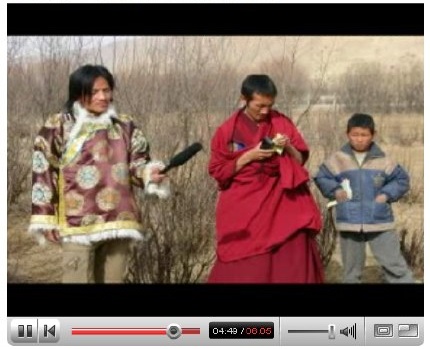
More and more Tibetan folk songs are disappearing. Led by anthropology professor Gerald Roche, the Tibetan Endangered Music Project (TEMP) uses digital media to capture tunes that are being lost. The volunteer-run program aims to put all the digital songs they collect online, as a way of archiving the material for future generations, the National Geographic writes.

So far the students at Qinghai Normal University have recorded more than 250 songs, including melodies for herding, harvesting, singing babies to sleep, and coaxing yaks into giving more milk. “The goal is to digitalize the songs we record and return them to our communities,” said 20-year-old student Dawa Drolma. “We want to record as many songs as possible.”

“It is quite remarkable how much they have been able to accomplish from such a remote place, thanks to the Internet and digital recording technology,” said Jonathan C. Kramer, a professor of music at North Carolina State University who has worked with the students. “It is hard to imagine such a project even 20 years ago.”

>> read the whole story in the National Geographic

“One of the biggest challenges that we face at the moment is how to return the music to the communities it comes from,” says Roche, as there are few Tibetan communities with Internet access. “Putting it online is a start, but just a small start.” Tsering Lhamo from Ngawa, Sichuan suggests, “the music we have recorded [could be] taught in primary schools of Tibetan areas in order to preserve them.” according to That’s Beijing.

TEMP is remarkable for many reasons according this blog: its ease of growth, use of existing technology with no budget, a method of preservation by people from the culture itself, and a prospect for real use by both local and global communities.

The Tibetan Endagered Music Project has its own website at YouTube with currently five videos.

Related: On the Digital Himalaya website you can listen to music by the Laya (Bhutan and Tibet)

SEE ALSO:

“A new approach to the collection of traditional Aboriginal music”

Multimedia Music Ethnography of Yodelling and Alphorn Blowing

How Media and Digital Technology Empower Indigenous Survival

watch the video on youtube

More and more Tibetan folk songs are disappearing. Led by anthropology professor Gerald Roche, the Tibetan Endangered Music Project (TEMP) uses digital media to capture tunes that are being lost. The volunteer-run program aims to put all the digital songs…

Read more

Book review: An Anthropological history of the Adivasis of Bastar

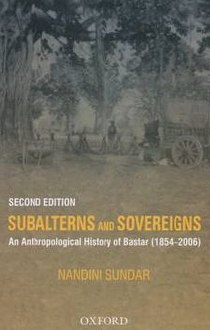
adivasi-cover According to Hindu-reviewer Jyotirmaya Sharma, anthropologist and sociologist Nandini Sundar has written an interesting book about the Adivasi in India. The book Subalterns and Sovereigns — An Anthropological History of Bastar (1854-2006) “tells a very complex and nuanced story of the ‘adivasis’ of Bastar being displaced by centralised models of “development”, losing, in turn, their rights over land, water and forests”:

The book is a very skilful coming together of anthropology and history. It exhaustively chronicles the story of Bastar from the time colonial administrative structures sought to impose “order” and “civilisation” on the ‘adivasis’ by imposing colonial prejudices and stereotypes to the present time when state-sponsored private vigilantism in the name of countering the Maoist movement threatens to wreck an entire way of life. It also details the way in which the ‘adivasis’ have resisted the colonial state in the past and a repressive state now.

But Sundar’s study is not an attempt to romanticise either the ‘adivasis’ or their history as one of “undiluted innocence or even heroism.”

>> read the whole review in The Hindu

On her own website, the anthropologist writes about her book:

Anthropologists are often accused of wanting to keep tribals or indigenous people as museum pieces. Subalterns and Sovereigns shows how misplaced this charge is, arguing that forested and hill areas like Bastar have never been outside the ‘mainstream’ of history, and that the flattening out of local politics to create the appearance of isolation and homogeneity is essentially a product of colonialism and post-colonialism. The choice today, as in the past, has never been one between ‘tradition’ and ‘modern civilisation’ or between ‘development’ and ‘backwardness’, but over alternative visions of democracy.

By exploring the expansion of the state in Bastar over the past century and a half, and resistance to the particular forms it has taken, this book has been part of redefining the way in which history and anthropology are thinking of tribal India.

For more info about the Adivasi see Wikipedia and Kerim Friedman’s posts about Adivasi and Adivasi Rebels

adivasi-cover

According to Hindu-reviewer Jyotirmaya Sharma, anthropologist and sociologist Nandini Sundar has written an interesting book about the Adivasi in India. The book Subalterns and Sovereigns — An Anthropological History of Bastar (1854-2006) "tells a very complex and nuanced story of…

Read more