
search expand

The special thing about the Tibet protests

Six months after the protests for democracy in Burma, we see similar things happen in Tibet. That’s of course not the first time but according to anthropologist Carole McGranahan, China has for the first time acknowledged that there is something like protests in Tibet. And that the protests are widespreead, committed by Tibetans from all backgrounds (monks, laypeople, and students, and by men and women, young and old) and not only by a few extremists.

“Knowing about it privately as they have for decades is one thing, but to acknowledge it publicly signals a turning point”, Carole McGranahan writes in her blog post at SavageMinds. For five decades, China has done everything they can to give the impression that resistance in Tibet is a rare and unwise exception to their benevolent rule.

>> read her whole post at Savage Minds

Savage Minds has collected more ressources on the situation in Tibet, see On Tibet. See also the Guardian special on Tibet and the overview by Global Voices

Additionally, Al Jazeera has a story about Xinjiang: China’s ‘other Tibet’

SEE ALSO:

Wear red shirts on friday – Anthropologists on the protests in Burma?

David Graeber: There never was a West! Democracy as Interstitial Cosmopolitanism

Do anthropologists have anything relevant to say about human rights?

Six months after the protests for democracy in Burma, we see similar things happen in Tibet. That's of course not the first time but according to anthropologist Carole McGranahan, China has for the first time acknowledged that there is something…
Read more

“Visual Anthropology of Japan” and more new blogs

Visual Anthropology of Japan” is the name of the blog by anthropologist Steven Fedorowicz (Kansai Gaidai University). All of his students in his class with the same name are required to blog. He links to more than a dozen student blogs.

He explains:

The blog was set up in the Fall of 2006 when I began teaching the class “Visual Anthropology of Japan” at Kansai Gaidai University in Hirakata City, Osaka, Japan. Originally it was set up as a place where links to student project blogs were posted. Every semester the class, blog and student projects have changed, evolved and hopefully improved.

The blog is done in the spirit of collaboration, discussion, dialogue, open text and open access. It is my hope that people will check out my students’ blogs, leave feedback and advice and take part in the dialogue of visual anthropology in Japan.

Students have various backgrounds (both international and Japanese students), interests, levels and experience in anthropology. Their common goal is to explore how to represent Japanese culture through visual means, and their individual blogs serve as the medium where they present their work. Visual Anthropology of Japan also includes resources, announcements, photo essays and other information that might be of interest to a wider audience.

His own blog has blog posts with titles as Globalization Visual Anthropology Photo Essay: Japan in Hawaii, and Can you do visual anthropology with your cell phone? and Visualizing Terror in Japan.

In his most recent post, he asks:

What do all the photos in this post have in common? At least part of the picture is blurry. And why? The Japanese people pictured here are deaf. That means part of their body is being used to communicate while I was attempting to photograph them. Japanese Sign Language entails more than movements of hands and arms – it uses the entire body.

>> visit the blog “Visual Anthropology of Japan

It is getting crowdy in my blog overview, the antropologi.info Anthropology newspaper, so I’ve removed some inactive blogs. Links to blogger-blogs are corrected.

SEE ALSO:

Professor lets students blog their field experiences: More than 20 new blogs online!

On fieldwork: “Blogging sharpens the attention”

Paper by Erkan Saka: Blogging as a Research Tool for Ethnographic Fieldwork

New Ethnography: The Deaf People – A Forgotten Cultural Minority

Visual Anthropology of Japan" is the name of the blog by anthropologist Steven Fedorowicz (Kansai Gaidai University). All of his students in his class with the same name are required to blog. He links to more than a dozen student…

Read more

Sheds light on the collaboration between science and colonial administration in Naga ethnography

book cover

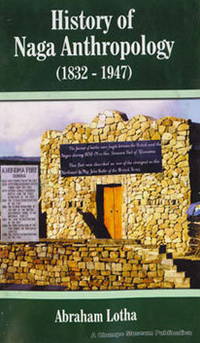
Paul Pimomo reviews in The Morung Express a book that might not only be interesting for area specialists. The History of Naga Anthropology is, he writes, “a valuable contribution to the broad area of postcolonial studies“.

In History of Naga Anthropology (1832-1947), Abraham Lotha sheds light into a darker part of the history of our discipline. Among other things, he documents the “intimate collaboration between science and colonial administration in the development of Naga ethnography”. The book is based on research for the master’s degree in Cultural Anthropology at Columbia University in New York:

Like other postcolonial studies of history, Abraham Lotha’s book places the first hundred years of writings about Nagas in the category of “colonial anthropology,” that is to say, ethnography by colonial administrators and others enabled by them in ways that directly or indirectly served the colonial functions of the powers that be.
(…)
British writing on Nagas up to 1866 portrayed them as ignorant, stubborn, and hostile to British interests. Several monographs came out of the military expeditions into Naga territory at this time, and shorter individual soldiers’ accounts of their experiences were published in the Journal of Asiatic Society of Bengal. These early articles, mostly in the manner of descriptive reports, sold the Nagas as exotic, wild, and savage tribes to their scholarly readers in India and in England.

The projects of the colonial administration and Christian missionaries resulted in that the Nagas were socialized into the ideology of colonial subordination and, after they left the Naga Hills, into the position of second-class citizens in postcolonial India, he writes.

>> read the whole review in The Morung Express

SEE ALSO:

Book review: An Anthropological history of the Adivasis of Bastar

An exhibition and a movie: The French, colonialism and the construction of “the other”

On Savage Minds: Debate on the Construction of Indigenous Culture by Anthropologists

Anthropology and Colonial Violence in West Papua

Rethinking Nordic Colonialism – Website Sheds Light Over Forgotten Past

“No wonder that anthropology is banished from universities in the ‘decolonized’ world”

book cover

Paul Pimomo reviews in The Morung Express a book that might not only be interesting for area specialists. The History of Naga Anthropology is, he writes, "a valuable contribution to the broad area of postcolonial studies".

In History of Naga…

Read more

Open Access: South Asia Multidisciplinary Academic Journal

Migration and Constructions of the Other is the topic of the first (and most recent) issue of the Open Access journal South Asia Multidisciplinary Academic Journal.

According to their self-description, the journal “seeks to ‘democratize’ research-based studies on South Asia by giving them a greater visibility through a free and worldwide access. It is the “first academic and peer-reviewed on-line journal devoted to social sciences studies on South Asia.” It covers studies in history, geography, anthropology, sociology, political science and economy.

The next issue (due in Spring 2008) will deal with the mobilization of ‘offended communities’ in South Asia.

>> visit the journal’s website

Migration and Constructions of the Other is the topic of the first (and most recent) issue of the Open Access journal South Asia Multidisciplinary Academic Journal.

According to their self-description, the journal "seeks to ‘democratize’ research-based studies on South Asia…

Read more

Australian anthropologist is Japan’s first-ever foreign geisha

website screenshot

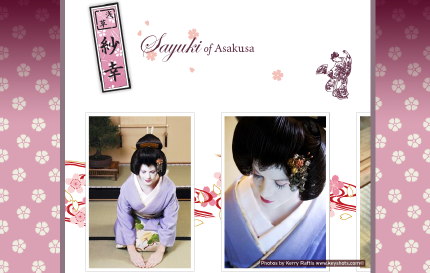
A documentary film-maker and academic with a doctorate in anthropology from Oxford University, Fiona Graham has just become what she says is the first non-Japanese in 400 years to debut as a geisha. But she hasn’t become a geisha for private reasons: She is now recording her life on film according to The Independent:

Sometime soon, she says, the world will see the results: a rare, scholarly inside look into one of the most closed societies in Japan. “It will be unique,” she insists. “Most Westerners who have tried to write about the traditions have failed because they never really lived the life. I’m going to represent the society that I’m living in now, as it is.”

Graham (or Sayuki as she now is called) has been doing anthropological fieldwork in Asakusa – one of the oldest of Tokyo’s six remaining geisha districts – for the past year, living in a geisha house (okiya), and participating in banquets as a trainee. She first came to Japan on an exchange programme from Melbourne aged 15. Fluent in Japanese, she has spent time working in Japanese companies and as a journalist.

It seems that it was during her fieldwork she learned to become a geisha:

The training involves learning how to walk, talk and dress, and master several skills, such as the tea ceremony and the three-stringed shamisen, and her own speciality, the Japanese bamboo flute, which she practises every day. Then there are the rules of being in an okiya, or geisha house.
(…)
Her duties will include attending parties at these venues, pouring drinks and entertaining guests. “Everything is carefully rehearsed,” she explains. “When I open a sliding door I have to be on my knees, and stand up. Then close the door again on my knees. Learning what kimono to wear and when … there are many, many little customs like that.” Despite a year of training, she says she is still “not confident” about choosing the appropriate kimono to wear.

Geishas are traditional, female Japanese entertainers, who dance, sing and chat to high-paying guests, usually men (Wikipedia on Geishas / BBC Photo journal Geisha / about.com about Geishas)

According to Fiona Graham, Geishas are “strong, independent businesswomen who control their own lives. They were among the first independent women.”

>> read the whole story in the Independent

>> first coverage by the Telegraph

The anthropologist-geisha has her own website http://www.sayuki.net/ (not so much content there yet, though)

SEE ALSO:

Book review: Ritual praxis in modern Japan

“A unique art form” – Anthropological Research on Anime

Pop goes Japanese culture: Japan’s most visible export isn’t economic, but cultural

Why cellular life in Japan is so different – Interview with anthropologist Mizuko Ito

Anthropologist examines influence of robots in Japan

website screenshot

A documentary film-maker and academic with a doctorate in anthropology from Oxford University, Fiona Graham has just become what she says is the first non-Japanese in 400 years to debut as a geisha. But she hasn't become a geisha for…

Read more