search expand

The "illegal" anthropologist: Shahram Khosravi’s Auto-Ethnography of Borders

Globalisation means for most people on this planet higher fences and less movement across borders. The new book by anthropologist Shahram Khosravi is an auto-ethnography of illegalised border crossing.

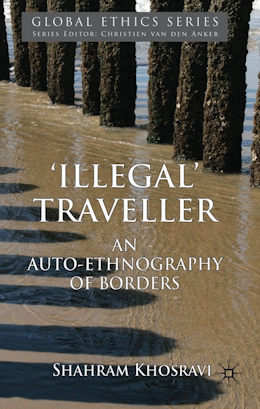
‘Illegal’ Traveller is based on the anthropologists’s own journey from Iran to Sweden and his informants’ border narratives. “Studies of migrant illegality are often written by people who have never experienced it”, he writes in the introduction. “My aim has been to offer an alternative, partly first-hand, account of unauthorized border crossing that attempts to read the world through ‘illegal’ eyes:

This book is the outgrowth of my own ‘embodied experience of borders’, of ethnographic fieldwork among undocumented migrants between 2004 and 2008, and of teaching courses on irregular migration and the anthropology of borders. It also emerges from my activities outside academia: freelance journalism, helping arrange events such as film festivals about border crossing, and volunteer work for NGOs helping failed asylum seekers and undocumented migrants in Sweden.
(…)

Auto-ethnography lets migrants contextualize their accounts of the experience of migrant illegality. It helps us explore abstract concepts of policy and law and translate them into cultural terms grounded in everyday life.

(…)
In my years as an anthropologist, I have been astonished at how my informants’ experiences overlapped, confirmed, completed, and recalled my own experiences of borders. One interesting aspect of the auto-ethnographic text is that the distinction between ethnographer and ‘others’ is unclear.

I haven’t found any reviews yet, but what I have found is a fascinating paper by him, published in Social Anthropology three years ago. The title: The ‘illegal’ traveller: an auto-ethnography of borders (subscription required now open access!).

In this paper he describes his journey from Iran to Europe as “illegal” refugee and theoreticizes about the ‘world apartheid’ we live in according to him and criticizes the ways we think about borders and migration:

Based on a capitalist-oriented and racial discriminating way of thinking, borders regulate movements of people. However, borders are also the space of defiance and resistance.

It is because of this resistance he is still alive. In September 1986 he tried to leave Iran ‘illegally’ for the first time. “I had then just finished high school and I was called up to do military service during the ongoing terrible war between Iran and Iraq. To come back alive from the front was a chance I did not want to take”, he writes.

It was a long journey via Afghanistan, Pakistan and India. He ended up in Sweden via human smugglers. They saved him his life.

Human smuggling is in his opinion recurrently misrepresented by the media and politicians as an entirely mafia-controlled criminality. One of his helpers was Homayoun, a 25-year-old Afghani man, an undocumented immigrant, who had lived clandestinely in Iran since he was 15:

According to immigration law, Homayoun was a human smuggler, a law breaker and a criminal. But in fact he saved my life in one of the most dangerous places, under the rule of ruthless criminal gangs, corrupt border guards and fanatic Mujaheddin. (…) Homayoun facilitated my escape from undesired martyrdom in a long and bloody war.

Maybe one can say that the smugglers did what the UN Refugee Agency (UNHCR) was supposed to do? Khosravi tells shocking stories about the UNHCR who seems to be responsible for several deaths, including suicides, among refugees. Almost everyone in the refugee community had the same answer: “There is no point in going to the UNHCR”. You won’t get any help. Khosravi’s application was rejected as well. In the view of the UNHCR officer, his “fear of being killed in a horrible war was not ‘well-grounded’ enough.

He tells us the story of Henry’s suicide:

Henry, a young Iranian-Armenian man (…) was an activist within a communist militia, Cherikhaye Fadai, in Iran. But the UNHCR did not believe him. The reason was a wall painting in a corridor in the basement of a prison in Isfahan, where Henry had been detained for several months before his escape to Pakistan. In the interview Henry was asked by the UNHCR official to say what was painted on the wall in the corridor, to test his reliability. Henry had not seen such a painting and consequently his application was rejected. How did the UNHCR officer know about the wall painting? How could she or he be sure that there was any painting at all in that corridor?

Henry was desperate and did not know what to do. Just a few weeks before my departure from Karachi, one morning when the UNHCR officials arrived in their dark-windowed cars, he poured gasoline on himself and struck a match in front of the UNHCR.

With a false passport, Khosravi escaped to India. There he found a smuggler with good reputation, Nour:

During my five months in New Delhi I shared rooms with many persons in transit. All are now residents of Europe or North America – thanks to the smugglers.

He finally ended up in Sweden, a country that he at that time was not able to locate on a world map.

He explains:

The choice of destination was rarely as it was intended and designed. An ‘illegal’ journey is after all arbitrary. Sometimes the migrants end up in a country just coincidentally.
(…)
First of all, the destination was determined by the payment. A few hundred dollars could change the destination from one continent to another. Masoud, a roommate, was Nour’s mosafer (client) at the same time as I was. He had US$500 more than me and today he is a Canadian citizen, lives in Toronto and his children’s mother tongue is English. I am a Swedish citizen, live in Stockholm and my children’s language is Swedish: US$500 destined our lives so differently.

Border crossing is, he continues, is in anthropological sense a ritual:

The border ritual reproduces the meaning and order of the state system. The border ritual is a secular and modern sort of divine sanctity with its own rite of sacrifice. Several hundred clandestine migrants die en route to Europe each year. From January 1993 to July 2007 the deaths of more than 8800 border-crossers were documented in Europe. The Mediterranean Sea is turned into a cemetery for the transgressive travellers.

Border crossing can be experienced in terms of honour and shame:

A legal journey is regarded as an honourable act in the spirit of globalism and cosmopolitanism. The legal traveller passes the border gloriously and enhances his or her social status, whereas the border transgressor is seen as anti-aesthetic and anti-ethical (they are called ‘illegal’ and are criminalised). We live in an era of ‘world apartheid’, according to which the border differentiates between individuals. While for some the border is a ‘surplus of rights’, for others it is a ‘color bar’ (Balibar 2002: 78–84).

Khosravi ends his paper with some “final remarks” from 18 years later (2006), when he arrives at Bristol airport, along with colleagues from Stockholm University. He was convener for a workshop on ‘irregular migration in Europe’ at the biannual conference of the European Association of Social Anthropologists (EASA).

At the immigration control, he is illegalised again in the name of the “war on terror”:

After passing immigration control, I was stopped by a security official who let my blond fellow travellers pass. In the middle of a narrow corridor a mini interrogation began which lasted for half an hour.
(…)

My status as a Swedish citizen disappeared at the border because of my face. I answered questions about myself, my education, work, purpose of visit to Bristol. Then she asked about my parents, where they lived and what they did. I was not willing to disclose to her any kind of information about my elderly parents, who have been subjected to persecution by the Iranian state for decades. When I refused to answer her questions about my parents, she threatened to detain me first for nine hours and then, if necessary, for nine days according to the Anti- Terrorism Act.

I protested that she had targeted me because of my ‘Middle Eastern’ look and her selection of suspicious persons was racist. She did not even deny it and said ‘you [me and who else?] want to kill us. We have to protect ourselves’.

Khosravi has published some articles in Swedish, see my earlier post – Ikke kall dem for illegale

SEE ALSO:

More Global Apartheid?

For free migration: Open the borders!

Why borders don’t help – An engaged anthropology of the US-Mexican border

Research in refugee camps: Too political for anthropology?

Nina Glick Schiller: Who belongs where? A Global Power Perspective on Migration (ASA-blog)

Globalisation means for most people on this planet higher fences and less movement across borders. The new book by anthropologist Shahram Khosravi is an auto-ethnography of illegalised border crossing.

'Illegal' Traveller is based on the anthropologists's…
Read more

The world’s only anthropology professor of indie music?

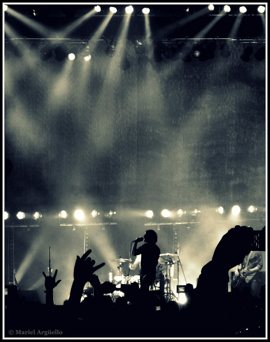
Arctic Monkeys @ Explanda del Estadio Azteca. Photo: monophonic.grrrl / Mariel A. M., flickr

“Ask the indie professor” is the name of a new series in the Guardian. The indie professor in question is Wendy Fonarow. At a music festival she was recently introduced as “the world’s only professor of indie music”.

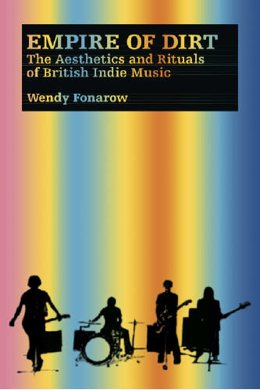
“I’m not sure if I’m the only indie professor, but I’ve spent the last 18 years recording, examining and writing about the culture of indie and the international music industry”, Wendy Fonorow writes in her opening post. Her book “Empire of Dirt: The Aesthetics and Rituals of British Indie Music” tackles questions such as “Why are drummers the most ridiculed band members?”, she adds.

The readers of this new series are invited to ask questions. “So if you are curious about why cassettes are the new vinyl, or whatever else takes your fancy, here is your chance to ask”, she writes. “And please someone ask me about why Americans think they invented indie.”

After one day, there are already more than 250 comments.

The Guardian presented her book two years ago.

Here is what she according to the Guardian writes about indie culture and religion:

“Religious narratives show up in all expressive forms, from politics to music. I see a lot of the religious narrative of Puritanism in the indie music scene; the idea that, to have the pure divine experience, it has to be direct and unmediated. So the smaller and more intimate a show is, the ‘truer’ fans believe their experience was, compared to someone who saw them later on in a bigger venue. That’s why so many people claim to have seen the Sex Pistols at the 100 Club. You can also find the aesthetic of Puritanism in the way indie people present themselves, such as childlike clothing, this idea of returning to the golden age of childhood or the musical past.”

Or here about music as ethnicity:

One of my ex-students once said ‘music is my ethnicity’. People want to find other people who are like-minded so instead of finding their ethnic identity through birth they find it through aesthetic preferences and that becomes their identity. For each one of those music movements, there are modes of display. Desmond Morris talked about how different earrings can signify where you are in the age grade of certain tribes in central Africa. To outsiders these displays are subtle or hard to notice at all.”

Interesting! But it seems the anthropologist is extremely fond of theory and might tend to over-analyse her informants. Here is how the Guardian begins the presentation:

Remember that time you were crowd surfing at an Arctic Monkeys gig and thought you were just having a drunken laugh? Rubbish! You were, in fact, being “collaborative in a unique social space, expressing super-intimacy with strangers and rejecting the self-aggrandising that comes with stage-diving”. Oh yes you were. And that time you were standing at the bar and thought you were just, well, thirsty? Not at all: you were probably just “proving your credentials as an industry professional” or “communicating to others a disinterest in the act”.

These are the theories of professor Wendy Fonarow, anthropologist at UCLA in California and the author of Empire Of Dirt: The Aesthetics And Rituals Of British Indie Music.

Her book has received a lot of positive reviews, while Pichfork reviewer William Bower is less convined by the book and its language. Check also Wendy Fonarow’s website at http://www.indiegoddess.com/

SEE ALSO:

”Eurovision produces a new form of unity”

Hindi Film Songs and the Barriers between Ethnomusicology and Anthropology

Reggae, Punk and Death Metal: An Ethnography from the unknown Bali

Multimedia Music Ethnography of Yodelling and Alphorn Blowing

“Pop culture is a powerful tool to promote national integration”

Arctic Monkeys @ Explanda del Estadio Azteca. Photo: monophonic.grrrl / Mariel A. M., flickr

“Ask the indie professor” is the name of a new series in the Guardian. The indie professor in question is Wendy Fonarow. At a music festival…

Read more

”Eurovision produces a new form of unity”

The Eurovision Song Contest is torture to my ears”, was one of my recent Facebook status messages. But as I learnt, the mega event is not primarily about music, it’s a ritual, a transnational social event that connects people and that – according to a recent paper “produces a new form of unity among people in Europe”.

In the most recent issue of the European Review of History, anthropologist Marijana Mitrovic analyses some of the recent Serbian contributions (2004-2008) to the Eurovision Song Contest (ESC).

In her view, the ESC is a good place to discuss potentials for creating a critical, post-national and cosmopolitan European public sphere that challenges the governing paradigms of identity and belonging.

She writes:

My thesis is that both the ESC and the strategies of Serbia’s participation in this event present attempts to move on from bipolarisation (East/West on the geopolitical map of Europe and First Serbia/Second Serbia in Serbia), respectively, to turn bipolarisation to multiplicity – and through that, paradoxically or not, to produce a new form of unity.

The Western, more ironic stance towards the competition can be seen as opposed to a more strategic attitude of the Eastern European participants, she writes. Similar observations were made by Onnik Krikorian at Global Voices. “While some media reported lagging interest in the 54-year-old competition”, he writes, “countries such as those in the former Eastern bloc continue to take it seriously.”

Popular culture events such as the ESC have according to Marijana Mitrovic “the power and ability to reshape the geopolitical map of Europe and are also used in this way by the new and aspiring member states of the European Union”:

Those are mostly countries that are undergoing a post-socialist transition. Participation in the ESC and a potential victory are a chance for them to invert the social and economic order, on a symbolic level. But paradoxically or not, with that inversion, they also integrate into Europe and inscribe themselves into its symbolic map. Thus rite de passage becomes a transition ritual indeed.

The contributers used the ESC to transform the image of the Balkan/Serbian from a militant and non-cultivated savage, into someone civil, emotional, yet archaic – while at the same time promoting a ”certain level of (Balkan?) universality”. The “new face of Serbia” is “pacified and friendly” and “meets both European and local values”. This new Serbia “is a ‘country in the Balkans, a country of peasants’, but peasants who recognise European values.”

An example is the performance of Zeljko Joksimovic (2004)

Serbia and Montenegro - Eurovision 2004 - Lane moje (LIVE)
❤❤❤ Zeljko Joksimovic and Ad Hoc orchestra - Lane moje - The song came on the 2nd place after a great competition with Ukraine. Only a difference of 17 points !... About Zeljko - he plays 11 musical instruments!!! Istanbul 15 May 2004.">

The anthropologist comments:

Visual identity, crucial for the whole construction, is almost entirely recycled form the ‘memories’ of medieval Serbia. The members of his ad hoc orchestra are dressed in quasi medieval garments, while Joksimovic’s suit is modern, white and minimalist, but with an impressive ‘ethno’ accessory – modification of the belt typical of Serbian costume with an attached golden needle. He has a perfect haircut, his beard is tidy, he is sophisticated, reserved, unobtrusive and somewhat apart from the scene.

By means of a minimalist and modernised wardrobe, accessories and make-up which strongly referred to the medieval tradition of Serbia, the Balkans, but also the Byzantine Empire (not the Ottoman, although the Balkans are often associated with the Ottoman legacy), the Serbian team tried to transform the image of the Balkan/Serbian male, and people for that matter, from a militant and non-cultivated savage, or brute, always ready to fight, into someone civil, emotional, yet archaic

The recipe, she writes, was followed by the Croatians in 2005 and 2006, the Bosnians in 2006 and 2007, and peaked in the winning solution in Serbia’s 2007 winning song Molitva.

Many different groups, including socially marginalized groups, ethnic and sexual minorities invest their expectations and cultural preferences in this spectacle. Gay organisations are among the greatest fans of the event. They see this event as a symbolic representation of differences that guarantees the possibility of their social visibility according to Marijana Mitrovic:

Although some have derogatively proclaimed Marija Serifovic’s performance as an overtly lesbian one, that did not prevent their countrymen from awarding her a maximum 12 points. (…)

Preparing her ESC performance, her creative team reached the solution intentionally offered to be read as gay (with five female backing vocalists dressed in male suits the same as that of the lead singer, one of them locking hands with Marija to connect two halves of the heart tattooed on their hands). The symbolic value of her victory gained special weight through the association of her performance with lesbians and her origin with Roma communities in Serbia. It was argued that this was a victory for Serbian minorities as well.

But the problem with the new politics of Serbian identity is according to the researcher that the last revision of the past has erased all recent past, more than half a century of the region’s history:

Instead of continuity, ‘a time hole’ is opened up. This was reflected in the performances chosen to represent the state. For the turbulent sociocultural Serbian history, identity constructions based on the recycling of different memories turn out to be some of the main mechanisms for the construction of potential ‘new’ identities. Music themes and the way they are performed, as part of the representational and signifying system, manage to evoke and embody the nostalgia for the memory of the past in rational and affective ways; nonetheless, they also shape and direct the process of building and performing the national identity in the present and for the future.

I just picked some parts of her paper that is only available for subscribers.

On her webpage you can read a related paper about music and the “new face of Serbia”: Serbia – from Miki and Kupinovo to Europe: Public Performance and the Social Role of Celebrity (pdf).

Marijana Mitrovic is by the way member of the Eurovision Research Network.

Check also the overview over the ESC 2010 by anthropologist Erkan Saka

Links updated 23.5.2014

SEE ALSO:

Earth Hour – The first globalized ritual?

“Pop culture is a powerful tool to promote national integration”

Durham Anthropology Journal: How “post-socialist” is Eastern Europe?

How anthropology in Eastern Europe is changing

For an Anthropology of Cosmopolitanism

”The Eurovision Song Contest is torture to my ears”, was one of my recent Facebook status messages. But as I learnt, the mega event is not primarily about music, it’s a ritual, a transnational social event that connects people and…

Read more

Durham Anthropology Journal: How “post-socialist” is Eastern Europe?

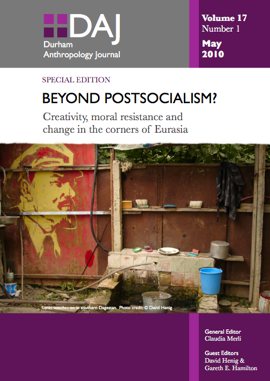
“Beyond postsocialism? Creativity, moral resistance and change in the corners of Eurasia” is the title of the new issue of Durham Anthropology Journal.

The authors want to give us alternative views on so called postsocialist societies.

Postsocialist studies, David Henig explains in his editorial, have been dominated by Western perspectives (the East as the “Other”) and also by discourses of capitalist “triumphalism” (from socialism or dictatorship to liberal democracy, from plan to market economy).

The reality is different. Anthropologists have found important continuities between socialist and post-socialist eras.

Míriam Torrens has been on fieldwork in rural Romania. Instead of postsocialism or new capitalism”, she writes, “what we find in these communities is the prevailing picture of a traditional peasanthood with some ‘innovations’”:

(B)oth socialist and liberal economists (…) have failed in taking into account the strength – and the reasons for this strength – of social institutions such as the family and the community, their customary law and the broad impact of communal and cooperative action.

Durham Anthropology Journal is an open access journal

>> download / overview over all articles in the new issue

"Beyond postsocialism? Creativity, moral resistance and change in the corners of Eurasia" is the title of the new issue of Durham Anthropology Journal.

The authors want to give us alternative views on so called postsocialist societies.

Postsocialist studies, David Henig…

Read more

Digital Anthropology Report: Attitudes to technology = basis of future class divides

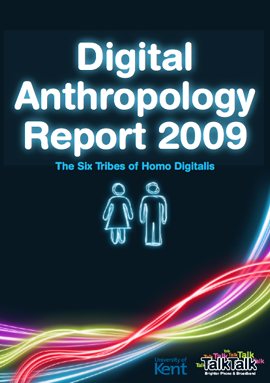
How do people in Britain use the internet? How do they behave online? The new Digital Anthropology Report. The Six Tribes of Homo Digitalis gives some answers.

The British communication company Talk Talk sent researchers from the University of Kent into the homes of people around the UK to ask them questions about their attitudes towards digital technology and to watch them use it. They also commissioned anthropology professor David Zeitlyn to analyse the findings.

They found that “homo digitalis” consists of Six Tribes with very different attitudes, usage patterns and modes of behaviour. Some of these tribes have embraced technology and put it at the centre of their lives. For other tribes, “the internet” is a rather frightening jungle.

The E-ager Beavers are the largest tribe by quite a distance, with 29% of the UK adult population. They use the internet heavily, but they are more passive users. They lack the confidence or the drive to get involved with uploading their own content or producing their own blogs.

The Timid Technophobes are the second largest group (23%). They have only limited internet skills and will only use it when they really need to. They still prefer to use pen and paper and prefer to send and receive letters. They don’t read blogs and are not interested in facebook either.

The tribe of the Digital Extroverts (9%) consists of people who are “always-on”. They are active bloggers, use twitter, flickr etc. “Regularly updating their online profile is as much a part of their daily routine as eating.” The ability to interconnect and share data is a prerequisite.

According to Zeitlyn, your willingness to embrace technology and integrate it into your life will dictate your success in life far more than your social class will. As class structures change quickly, he writes in his analysis, the extent to which people use social networking and promote themselves online will become more important in determining their careers than what school or university they went to.

>> read the whole report (nice presentation with quiz and videos!)

SEE ALSO:

Dissertation: Why kids embrace Facebook and MySpace

Ethnographic Study: Social Websites Important For Childhood Development

Ethnographic study: Social network sites are “virtual campfires”

Interview with Michael Wesch: How collaborative technologies change scholarship

John Postill on media anthropology and internet activism in Malaysia

Cyberanthropology: “Second Life is their only chance to participate in religious rituals”

How internet changes the life among the First Nations in Canada

On fieldwork: “Blogging sharpens the attention”

Microsoft anthropologist: Let people be online at work or risk losing stuff!

From housewife to mousewive – Anthropological study on women and Internet

Ethnographic Study About Life Without Internet: Feelings of Loss and Frustration

How do people in Britain use the internet? How do they behave online? The new Digital Anthropology Report. The Six Tribes of Homo Digitalis gives some answers.

The British communication company Talk Talk sent researchers from the University of Kent…

Read more