
search expand

“Tribal wives” – Pseudo-anthropology by BBC?

tribalwives

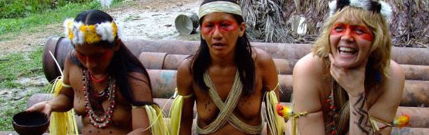
The BBC has sent six British women to be “second wives” to so-called “tribesmen” in – according to the BBC “some of the world’s most remote communities”. “Any anthropologist feels pleased when the hidden peoples of the world get a chance to appear on television, but the BBC series Tribal Wives is misleading”, anthropologist Michael Stewart comments in The Guardian.

The tv-programm, he writes, gives us “a romantic notion of a Shangri-La”, based on the idea “that we have lost something that only the “savage” can teach us”. This film claims to be a window on another world, but we mainly learn about what it means to be a westerner in that situation.

Steward watched the episode about a British woman who spent a month with the Huaorani in Ecuador. Their village is far from isolated. It is a well-known eco-tourism destination with an airstrip in the middle of the village, according to the anthropologist.

>> read the whole comment in The Guardian

In a comment on the Survial International blog, Guy Edwards writes that the “overall impression was that of a circus where Huaorani culture was portrayed as simple and backward” and adds: “The BBC and/or the other production organisations involved should apologize and compensate the Huaorani for any damages.”

For more info on the programm, see UK women to become ‘tribal wives’ (BBC 10.11.06) How the Waorani tribe made me relax (BBC 24.6.08), Mudhut life for Lana enough to drive her away from drink (Evening News Edinburgh 2.7.08) and a more positive review in The Times by Caitlin Moran Tribal Wives – the acceptable face of reality TV from the BBC

SEE ALSO:

Is this anthropology? African pygmies observe Britains in TV-show

“Good story about cannibals. Pity it’s not even close to the truth”

The Double Standards of the “Uncontacted Tribes” Circus

From Stone Age to 21st century – More “fun” with savages

tribalwives

The BBC has sent six British women to be "second wives" to so-called "tribesmen" in - according to the BBC "some of the world's most remote communities". "Any anthropologist feels pleased when the hidden peoples of the world get a…

Read more

The Double Standards of the “Uncontacted Tribes” Circus

The story of the so-called “uncontacted tribes” in the Amazon has made its way around the world (even to Norway!). At the same time, there is a complete lack of interest in the story of indigenous people being publicly humiliated in Bolivia, the CultureMatters author Jovan Maud notes.

Are indigenous groups only interesting as long as they are “uncontacted” and “lost”? Has this something to do with obscure notions of “purity”?

Anyway, the anthropology blog CultureMatters has done a great job in deconstructing the “uncontacted tribes”-myth and criticizing organisations like Survival International that use this myth in their work to help indigenous peoples. CultureMatters-blogger Greg Downey writes:

While I certainly agree that small pockets of cultural diversity should not be aggressively assimilated, I feel a little queasy that we have to sell the drive for cultural autonomy and respect for foraging peoples with the whole ‘never seen a white man’ drivel. The term ‘uncontacted’ is part of the problem; ‘isolated’ would be better, as these groups have seldom ‘never seen a white man.’

(…)

One of the reasons these groups are attracting attention is that they are under pressure, especially on the Peruvian side of the border, not only from the usual suspects (miners, loggers, and ranchers), but also from a French petroleum company that wants to drill in the area.

Why can’t we go with that story: protecting the environment, wildlife, and the local people’s ways of life against the shattering impact of wreckless resource extraction to feed petroleum addiction? Why do we have to stoop to the whole ‘they think the plane is a giant bird or spirit’ and ‘their way of life was unchanged for 10,000 years’ cannard?

The CultureMatters-author was interviewed by ABC Radio in Melbourne about this issue and they started discussing the common idea that it is ‘inevitable’ through ‘progress’ that people like this will have to disappear.

He comments:

I wonder if all those ‘well, it’s sad but that’s the inevitable cost of progress’ really even think for thirty seconds about what they’re saying: are they saying that every acre of land that might support people who want to hunt or gather food, inevitably, must be drilled, logged, burned, or dug up for minerals? Really?

>> read the whole story on Culture Matters “‘Uncontacted Indians?!’ — contact an anthropologist!”

Savage Minds followed up with Stone-Age Links and a post The myth of the “untouched” Amazon that concludes that “today’s hunter-gatherers might be descended from the builders of four-lane highways, bridges, moats and canals”.

And Maximilian Forte writes (in a satirical post) about a maybe even greater discovery Four New Tribes Discovered: 3 in the USA, 1 in Iraq

With similar thoughs in my head, I wrote one year ago “Help the Hadza!” – Why focus on culture and not on human rights?

See also earlier posts:

Peru: Another “uncontacted tribe”?

Anthropologists condemn the use of terms of “stone age” and “primitive”

Our obsession with the notion of the primitive society

Primitive Racism: Reuters about “the world’s most primitive tribes”

“Stone Age Tribes”, tsunami and racist evolutionism

“Good story about cannibals. Pity it’s not even close to the truth”

Ancient People: We are All Modern Now – Debate on Savage Minds

Do anthropologists have anything relevant to say about human rights?

The story of the so-called "uncontacted tribes" in the Amazon has made its way around the world (even to Norway!). At the same time, there is a complete lack of interest in the story of indigenous people being publicly humiliated…

Read more

The special thing about the Tibet protests

Six months after the protests for democracy in Burma, we see similar things happen in Tibet. That’s of course not the first time but according to anthropologist Carole McGranahan, China has for the first time acknowledged that there is something like protests in Tibet. And that the protests are widespreead, committed by Tibetans from all backgrounds (monks, laypeople, and students, and by men and women, young and old) and not only by a few extremists.

“Knowing about it privately as they have for decades is one thing, but to acknowledge it publicly signals a turning point”, Carole McGranahan writes in her blog post at SavageMinds. For five decades, China has done everything they can to give the impression that resistance in Tibet is a rare and unwise exception to their benevolent rule.

>> read her whole post at Savage Minds

Savage Minds has collected more ressources on the situation in Tibet, see On Tibet. See also the Guardian special on Tibet and the overview by Global Voices

Additionally, Al Jazeera has a story about Xinjiang: China’s ‘other Tibet’

SEE ALSO:

Wear red shirts on friday – Anthropologists on the protests in Burma?

David Graeber: There never was a West! Democracy as Interstitial Cosmopolitanism

Do anthropologists have anything relevant to say about human rights?

Six months after the protests for democracy in Burma, we see similar things happen in Tibet. That's of course not the first time but according to anthropologist Carole McGranahan, China has for the first time acknowledged that there is something…

Read more

Sheds light on the collaboration between science and colonial administration in Naga ethnography

book cover

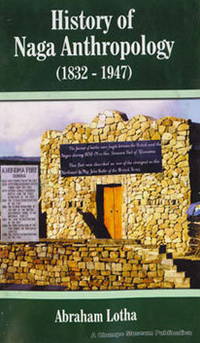
Paul Pimomo reviews in The Morung Express a book that might not only be interesting for area specialists. The History of Naga Anthropology is, he writes, “a valuable contribution to the broad area of postcolonial studies“.

In History of Naga Anthropology (1832-1947), Abraham Lotha sheds light into a darker part of the history of our discipline. Among other things, he documents the “intimate collaboration between science and colonial administration in the development of Naga ethnography”. The book is based on research for the master’s degree in Cultural Anthropology at Columbia University in New York:

Like other postcolonial studies of history, Abraham Lotha’s book places the first hundred years of writings about Nagas in the category of “colonial anthropology,” that is to say, ethnography by colonial administrators and others enabled by them in ways that directly or indirectly served the colonial functions of the powers that be.
(…)
British writing on Nagas up to 1866 portrayed them as ignorant, stubborn, and hostile to British interests. Several monographs came out of the military expeditions into Naga territory at this time, and shorter individual soldiers’ accounts of their experiences were published in the Journal of Asiatic Society of Bengal. These early articles, mostly in the manner of descriptive reports, sold the Nagas as exotic, wild, and savage tribes to their scholarly readers in India and in England.

The projects of the colonial administration and Christian missionaries resulted in that the Nagas were socialized into the ideology of colonial subordination and, after they left the Naga Hills, into the position of second-class citizens in postcolonial India, he writes.

>> read the whole review in The Morung Express

SEE ALSO:

Book review: An Anthropological history of the Adivasis of Bastar

An exhibition and a movie: The French, colonialism and the construction of “the other”

On Savage Minds: Debate on the Construction of Indigenous Culture by Anthropologists

Anthropology and Colonial Violence in West Papua

Rethinking Nordic Colonialism – Website Sheds Light Over Forgotten Past

“No wonder that anthropology is banished from universities in the ‘decolonized’ world”

book cover

Paul Pimomo reviews in The Morung Express a book that might not only be interesting for area specialists. The History of Naga Anthropology is, he writes, "a valuable contribution to the broad area of postcolonial studies".

In History of Naga…

Read more

Who are the people keeping the Jewish traditions alive in Cuba?

The Ann Arbor News (Michigan) interviews anthropologist Ruth Behar who has written a new book about Jewish life in Cuba. The island’s tiny Jewish community is among the most diverse in the world.

“An Island Called Home: Returning to Jewish Cuba” offers not only profiles of Jews who live in Cuba, but details the author’s own history – wherein she, at age 5, left Cuba with her family at the time of the 1959 revolution.

She tells she was surprised about how Cuban Jews try to preserve the past. A lot of young people are willing to emigrate to Israel. Many times in the book, people mention the absence of anti-Semitism in Cuba. The anthropologists explains, people in Cuba / in the Caribbean are more tolerant:

Definitely it is helpful to Jews if they live in a culture that’s more secular than in a culture that’s heavily Catholic and Christian – especially if that culture continues to say the Jews killed Christ. This kind of thing does not exactly create good feeling toward the Jews. …

But we can’t give full credit to the revolution for this, because even before ’59, Jews did not experience anti-Semitism, based on the stories that I heard from my family, my Polish grandmother. When she arrived, she said it was such a breath of fresh air from Poland that she just – people didn’t have the anti-Jewish stereotypes that they did in Poland and elsewhere in Europe.

So it was like a fresh slate. That was part of it, and I think the Caribbean is different, too, in that the African influence on Cuba is very important. The African religions are much more open and tolerant of difference.

>> read the whole interview

According to the Miami Herald, the book is “a narrative that tugs at the heart”: It’s a collection of anecdotes and observations accompanied by black and white images shot by Cuba-based photographer Humberto Mayol:

In many respects, this may be Behar’s most personal work. The University of Michigan anthropology professor has written poems and essays about the nostalgia, grief and displacement of exile. She was also awarded a MacArthur Foundation ”genius” grant 18 years ago and even has a short feature film about Cuban Sephardic Jews, Adio Kerida, to her credit. But here she lovingly intertwines her own thoughts and feelings with the more analytical observations of her profession. The result: a narrative that tugs at the heart.

>> continue reading in the Miami Herald

>> Excerpts from An Island Called Home by Ruth Behar

On her own website, she describes herself as a “cultural anthropologist who specializes in homesickness”:

I’m a memoirist who suffered from amnesia as a child after leaving Cuba. That must be why I’m obsessed with remembering and all the ways that history leaves traces on how we live in the present.

She has also started writing a web diary (a web1.0 blog)

SEE ALSO:

Kosher cell phones, kosher bus routes and kosher clothing: Israel’s Ultra-Orthodox economy

The Ann Arbor News (Michigan) interviews anthropologist Ruth Behar who has written a new book about Jewish life in Cuba. The island's tiny Jewish community is among the most diverse in the world.

"An Island Called Home: Returning to Jewish…

Read more