search expand

Open Access: New alliances threaten the American Anthropological Association

screenshot

(via media anthropology) What is the purpose of organisations like the American Anthropological Association? What is the point of publishing articles? The free software movement forces anthropologists to rethink these questions, Christopher Kelty says in a conversation about anthopology and open access to scholarship.

The discussion between seven anthropologists was published in the journal Cultural Anthropology. The article Anthropology of/in Circulation: The Future of Open Access and Scholarly Societies is of course available online.

They talk among other things about new divisions between scholary organisations like the AAA and anthropologists who want to engage with the wider world by making their research more accessible online. Now, the largest part of anthropological research is locked behind login forms that only members of subscribed institutions can pass through. The AAA has not taken side with the open access movement but with the commercial publishing industry.

“All anthropologists who want to be part of the revolution in scholarly communication must do so outside of the AAA”, Alex Golub says. The AAA has “made exactly the wrong allies”.

One common argument against free access to scholarship has to do with economics: Journal subscriptions are an important part of the budget of organisations like the AAA.

But Jason Baird Jackson explains:

(I)f we want to think seriously about “sustainability” we must realize that sustaining anthropology means more than sustaining the AAA budget—it means sustaining the viability of research libraries and of our not-for- profit university press partners as well.

More and more research libraries today are responding by partnering directly with scholars to “publish” (…) research, and thus they are expanding the library’s role in new ways. They are trying to make scholarship more open and more sustainable by cutting out the middleman, the publishing companies. In doing so, they might make commercial publishing less profitable and scholarly societies built around toll access publication profits less sustainable.

So whose interests do you align with?

I’d like my efforts to help sustain the AAA, but the association’s interests are now more congruent with those of the publishing industry, not my library or the university presses. As a result the interests of my ethnographic consultants, my university library, my students, and my colleagues are increasingly in conflict with those of my professional society.

Alex Golub adds:

One of the key things about Free Software and Open Access (…) is that it allows things to get done extremely cheaply if you have the people who know how to work the technology. The AAA has failed to develop low-cost solutions using these methods, it has alienated much of a generation of younger scholars willing to devote their time to developing these solutions, and as a result it has thrown up its hands and outsourced this work to institutions like WB (Wiley-Blackwell).

WB then doubles the price of American Anthropologist, and makes money off of the AAA’s inability to manage its own publications program. We are all literally paying the price of the AAA’s inability to keep our house in order.

The AAA has developped AnthroSource where AAA members can browse through hundreds of journals. Jason Baird Jackson says we do not need AnthroSource anymore because of all the blogs, open access and other online initiatives that he calls the “Shadow AnthroSource”:

(I)n a way what is happening now outside of the AAA is a “shadow AnthroSource” that fulfills the ambitions of the original AnthroSource. In its visionary phase, AnthroSource was going to have a subject repository in which we could have put our field notes, white papers, unpublished book manuscripts, etc. I saw this vision die during my first year as an editor.
(…)
However, we do not actually need AnthroSource anymore because we have already built it up out of various bits and pieces outside the AAA framework. We have a subject repository (Mana’o), we have a constellation of weblogs and key metablogs (such as antropologi.info), we have people like Mike Wesch and Chris showing us how to mix and match readily/freely available tools to build powerful research collaboratories (like Digital Ethnography and Anthropology of the Contemporary Research Collaboratory / ARC
(…)
We have organizations like the EVIADA project (Ethnomusicological Video for Instruction and Analysis Digital Archive; ) and individual researchers like Kim building powerful, innovative database tools for use in our research and our collaborations with students and communities, there are people (like Rob Leopold at the National Anthropology Archives) in many archives and museums building great projects to make the archival database more accessible, we have folks like the team organized by the American Folklife Center and the American Folklore Society building metadata tools like the new ethnographic thesaurus, and as Chris noted recently in a SavageMinds blog post, we have more and more OA journals spanning the topical and international diversity of world anthropology.

Will all this stuff somehow function better if it is centralized and put under the control of the home office?

Chris Kelty has recently published a book that is also available online. He compares the internet with a bookstore:

The Open Access argument is simply that making the book available on line was in my interest, because it will mean that it will be easy to find, easy to cite, and easy to use in classes.

But it might also be in Duke’s interest; I made the argument that people are more likely to buy the paper book if they can get a look at the book in its entirety digitally (Harper Collins buys this argument, and has just begun a similar experiment)

I told Duke to think of the website as a bookstore with a huge number of potential visitors, and the on-line version as the browseable version of the book. If a million people download my book, but only 1 percent of them then go on to buy a copy, Duke will still be selling far more copies then they ever dreamed. And what if I sell 5 percent? I’ll be a superstar!

>> read the whole article

>> blog of this publication

UPDATE See also Owen Wiltshire’s comments

SEE ALSO:

AAA: “Open access no realistic option”

American Anthropological Association opposes Open Access to Journal Articles

Open Access: “The American Anthropological Association reminds me of the recording industry”

For Open Access: “The pay-for-content model has never been successful”

Danah Boyd on Open Access: “Boycott locked-down journals”

Is it time to boycott SAGE?

The unacknowledged convergence of open source, open access, and open science

Why were they doing this work just to give it away for free? Thesis on Ubuntu Linux hackers

Plans to study anthropological online communities and Open Access movement

2006 – The Year of Open Access Anthropology?

screenshot

(via media anthropology) What is the purpose of organisations like the American Anthropological Association? What is the point of publishing articles? The free software movement forces anthropologists to rethink these questions, Christopher Kelty says in a conversation about…

Read more

Ainu in Japan: Cool to be indigenous

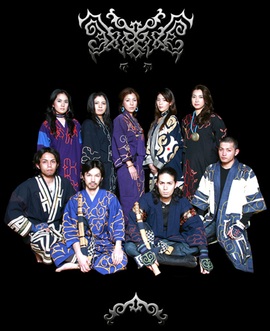
ainu rebels screenshot

Better times for the Ainu in Japan? There is an “revival of ethnic pride” going on in Japan according to ap.

At the forefront are the Ainu Rebels (image). They use music and dance to rebel against a history of institutionalized discrimination. They celebrate being an Ainu by mixing traditional dress, dance and language with hip-hop and rap.

And they’re getting an enthusiastic response from young Japanese. T-shirts, vests and handbags adorned with Ainu motifs are selling well, and Ainu rock musician Oki Kano is making it big with a band featuring the tonkori, a sort of Ainu guitar, ap journalist Malcolm Foster writes. Ethnicity is hip in Japan according to linguist John Maher.

When I visited the indigenous music festival Riddu Riddu in Northern Norway a few years ago, I noticed the strong ties between the Saami and other indigenous people around the world. Riddu Riddu started as a Saami festival but developped into an international festival with guests from Papua New Guinea, Botswana, New Zealand, Nunavut and Greenland.

Contact with other indigenous people was also critical to the Ainu revival. Mina Sakai from the Ainu Rebels tells that her awareness came at age 16 when, on a cultural exchange trip to Canada, she was struck by the passionate way Canadian indigenous people danced and sang:

“I was shocked. They were so cool and so proud of being native Canadians. I realized that I have a beautiful culture and strong roots. I decided that I should be a proud Ainu and express that in my life.”

In June, Japan’s parliament recognized the Ainu as an indigenous people – a major shift from the mid-1980s when Yasuhiro Nakasone, the then prime minister, declared that Japan was a homogenous nation with no minorities.

>> read the whole ap-story “Ainu rise up from the margins of society in Japan, celebrate long-hidden culture”

The article also mentions Ann-Elise Lewallen, an American cultural anthropologist at Hokkaido University who has worked closely with the Ainu community for 10 years. But I could not find info about her online.

LINKS UPDATED 18.7.2024

SEE ALSO:

Inuit language thrives in Greenland

“Pop culture is a powerful tool to promote national integration”

The cultural nationalism of citizenship in Japan and other places

How Media and Digital Technology Empower Indigenous Survival

“But We Are Still Native People” – Tad McIlwraith’s dissertation is online

Indigenous people no victims of globalisation: Alex Golubs dissertation on mining and indigenous people

Open Access to Indigenous Research in Norway

How filmmaking is reviving shamanism

Thomas Hylland Eriksen on Cosmoculture: Preferably more art than books!

ainu rebels screenshot

Better times for the Ainu in Japan? There is an "revival of ethnic pride" going on in Japan according to ap.

At the forefront are the Ainu Rebels (image). They use music and dance to rebel against a history of…

Read more

Development anthropology via the mobile phone

screenshot

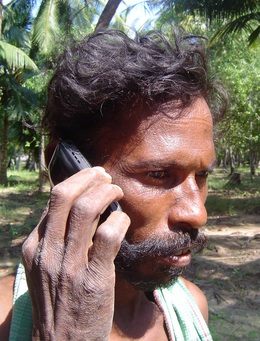
With mobile banking taking off around much of the developing world, how long will it be before international aid is delivered electronically, asks anthropologist Ken Banks in PC World.

Banks is the founder of kiwanja, an organisation, that helps non-profit organisations to make better use of information and communications technology in their work – of course with an anthropological perspective. “Anthropology is interestingly the area which raises the most eyebrows among delegates at conferences”, he writes on his website.

phone user

He writes:

As our ever-expanding digital world slowly reaches some of the poorest and marginalized members of society, opportunities to deliver financial aid to them electronically becomes less myth and more reality.

Mobile phone users in a growing number of developing countries can already pay for goods and services wirelessly through their mobile phones, and there are few technical challenges in allowing someone in the U.K., for example, to make a direct donation to a user in Kenya by way of airtime credit to their phone.

Just as the Internet redefined the way we shop, the mobile phone will likely end up doing the same for international aid.

>> read the whole article in PC World.

There’s a lot to explore on Kiwanja’s website and elsewhere on the web . Some weeks ago he wrote the article Anthropology’s Technology-driven Renaissance (PC World), Africa’s grassroots mobile revolution – a traveller’s perspective (Vodafone Retriever). And his projects were presented by the BBC (Mobile development rings true), Global Voices (Zimbabwe: Using New Technologies to Fight for Democracy) and Mongabay.com (Cell phones, text-messaging revolutionalize conservation approaches – An interview with IT conservation expert Ken Banks)

Some of you might remember an related article in the New York Times by ethnographer Jan Chipchase Can the Cellphone Help End Global Poverty?.

(Image courtesy of www.kiwanja.net)

SEE ALSO:

Why the head of IT should be an anthropologist

How Media and Digital Technology Empower Indigenous Survival

Ethnographic reports about the uses of ICT in low-income communities

“The science of ethnography is an ideal tool to designing mobile phones”

Mobile phone company Vodafone gets inspired by traditional Kula exchange system

screenshot

With mobile banking taking off around much of the developing world, how long will it be before international aid is delivered electronically, asks anthropologist Ken Banks in PC World.

Banks is the founder of kiwanja, an organisation, that helps…

Read more

Anthropologist explores heavy metal in Asia, South America and the Middle East

In 2005 his movie Metal – A Headbanger’s journey took the world with storm. Now anthropologist and metal musician Sam Dunn has released “Global Metal” – a film about the global expansion of heavy metal music.

Together with his co-director Scot McFayden, Dunn visited metal fans in Brazil, Japan, China, Indonesia, Israel and Iranian metal fans in Dubai.

The film seems to be especially relevant for theories on globalisation, cosmopolitanism, and social movements. As we read on the film’s homepage:

GLOBAL METAL reveals a worldwide community of metalheads who aren’t just absorbing metal from the West – they’re transforming it. Creating a new form of cultural expression in societies dominated by conflict, corruption and mass-consumerism.

Reviewer Liz Braun notes in the Winnipeg Sun:

In every country, metal has been bent and remade to reflect the culture. In India, metal fans talk about Bollywood music. In China, kids learn metal licks at a music school devoted to rock. Kaiser Kuo of the band Tang Dynasty talks about the underground metal scene in Beijing. In the Middle East, a Muslim says, “I got caught by the religious police for wearing a Slayer T-shirt and having long hair.”

(…)

Global Metal confirms that music is an international language. Particularly in countries where war and oppression are the norm, metal seems to represent a crucial outlet for emotional expression.

Unlike many facets of so-called “Western culture”, metal has not been spread by mass media, but rather by word of mouth and the internet. After the success of their first film, Dunn began receiving emails from places he didn’t even know had a metal culture, he tells to The Age:

There were a lot of countries that didn’t get proper distribution of the film, and we started to get emails from India and Iran, from people saying, “We’ve heard about the film or downloaded it, but come and check out metal in our country.”

We knew about metal in places like Brazil and Japan; we didn’t know the full extent of how metal is spread around the world.

In an interview with twitchfilm.net, Scot McFayden says that they even hired researchers for their movie.

Sam Dunn tells that he was especially surprised about heavy metal in Israel:

I was really struck by our experience in Israel actually and the degree to which the Metal that the Israeli kids listen to and perform has such a strong personal relevance for them.

When I was growing up as a Metalhead, the lyrics were never necessarily reflecting something I was going through as a person. (…) But to go to Israel and talk with people that are living through a day to day reality of conflict and war. It was quite eye-opening for me and I realized that Metal can mean something very different to people depending on where you come from.

In an interview with Victoria Times Colonist he says learning about metal communities in other countries changed his views on Heavy Metal:

Being a fan of metal in Iran means you’re putting, at some extent, your personal safety at risk. Kids have had their hair cut [off], their T-shirts taken away, rehearsal rooms raided and gear confiscated, so we realized being a metal-head is a far greater statement [there] than being a snotty-nosed teenager with a Slayer shirt who wants to piss off your parents.

According to the SeeMagazine, “Dunn is a major reason the film is so charming”:

He’s tall and lanky, forever wearing the same Mastodon t-shirt and awkwardly tucking his shoulder-length blond hair behind his ears. That earnest, unassuming quality makes him a likable character, but it also makes him an extremely effective interviewer: everyone seems to want to talk to the guy—not just Chinese record store owners and struggling metal bands from Iran, but ex-Megadeth guitarist Marty Friedman (who now makes his career appearing on Japanese variety television) and even Lars Ulrich, the notoriously prickly drummer for Metallica.

SEE ALSO:

The Rediff Interview/Nandini Chattopadhyay: Music and Protest

Socially conscious hip-hop is worldwide phenomenon

Cultures of Music Piracy: An Ethnographic Comparison of the US and Japan

How does music create community? Interview with Jan Sverre Knudsen and Stan Hawkins

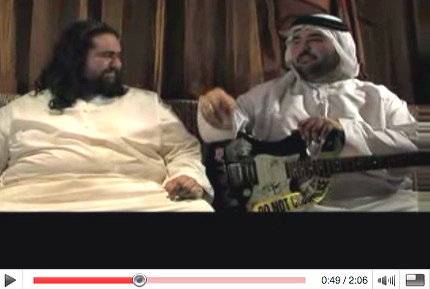
filmtrailer

In 2005 his movie Metal - A Headbanger's journey took the world with storm. Now anthropologist and metal musician Sam Dunn has released "Global Metal" - a film about the global expansion of heavy metal music.

Together with his co-director Scot…

Read more

Ethnographic study of anti-corporate globalization movements

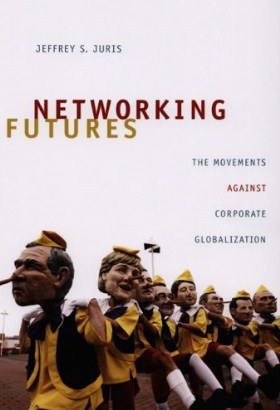
cover

“I had never seen anything like it. I knew immediately that I wanted to study this phenomenon”, says

 anthropologist Jeffrey S. Juris. In 1999 he participated in the protests against the World Trade Organization meeting in Seattle. Now he has published an ethnography of the transnational anti-corporate globalization movements called Networking Futures: The Movements Against Corporate Globalization.

The book chronicles his experiences organizing and participating in protests from Seattle to Prague to Barcelona. From his base in Barcelona, he followed their connections and movements around the world. He explains how activists are not only responding to growing poverty, inequality, and environmental devastation but also building social laboratories for the production of alternative values, discourses, and practices.

>> more information on the Arizone State University website

>> website of the book

I’ve been fascinated by this topic as well. When I was considering starting with a doctorate a few years ago, I wanted to do multisited field work at the World Social Forums where activists from all over the world meet. In 2004, I wrote an article for the Norwegian Attac magazine Utveier about the World Social Forum in Mumbai, India:

Hindus and Muslims eat breakfast together; Christian nuns join Tibetan monks in a chant. At the World Social Forum in India, getting to know the person sitting next to you was at least as important as hearing the speeches by the stars in the movement for a just globalisation.
(…)
The Indian newspapers were thrilled at the amount of people from all countries of the world who came seeking knowledge. “There’s something intoxicating about ordinary people from all parts of the world gathering at one place,” The Times of India writes, telling enthusiastically about an Australian woman trying to understand the struggle of the Telugu farmers, and about a burly Austrian asking a petite Tibetan girl about her leaflet against the Chinese occupation.

>> read the whole article

SEE ALSO:

Chronicles Women’s Social Movements in India

John Postill on media anthropology and internet activism in Malaysia

David Graeber: There never was a West! Democracy as Interstitial Cosmopolitanism

New journal: “Radical Anthropology” with David Graeber

Get Out of the Library and Into the Streets – new book by David Graeber

“Anthropology needs to engage in an activist way”

cover

"I had never seen anything like it. I knew immediately that I wanted to study this phenomenon", says

 anthropologist Jeffrey S. Juris. In 1999 he participated in the protests against the World Trade Organization meeting in Seattle. Now he has…

Read more