search expand

“Tribal wives” – Pseudo-anthropology by BBC?

tribalwives

The BBC has sent six British women to be “second wives” to so-called “tribesmen” in – according to the BBC “some of the world’s most remote communities”. “Any anthropologist feels pleased when the hidden peoples of the world get a chance to appear on television, but the BBC series Tribal Wives is misleading”, anthropologist Michael Stewart comments in The Guardian.

The tv-programm, he writes, gives us “a romantic notion of a Shangri-La”, based on the idea “that we have lost something that only the “savage” can teach us”. This film claims to be a window on another world, but we mainly learn about what it means to be a westerner in that situation.

Steward watched the episode about a British woman who spent a month with the Huaorani in Ecuador. Their village is far from isolated. It is a well-known eco-tourism destination with an airstrip in the middle of the village, according to the anthropologist.

>> read the whole comment in The Guardian

In a comment on the Survial International blog, Guy Edwards writes that the “overall impression was that of a circus where Huaorani culture was portrayed as simple and backward” and adds: “The BBC and/or the other production organisations involved should apologize and compensate the Huaorani for any damages.”

For more info on the programm, see UK women to become ‘tribal wives’ (BBC 10.11.06) How the Waorani tribe made me relax (BBC 24.6.08), Mudhut life for Lana enough to drive her away from drink (Evening News Edinburgh 2.7.08) and a more positive review in The Times by Caitlin Moran Tribal Wives – the acceptable face of reality TV from the BBC

SEE ALSO:

Is this anthropology? African pygmies observe Britains in TV-show

“Good story about cannibals. Pity it’s not even close to the truth”

The Double Standards of the “Uncontacted Tribes” Circus

From Stone Age to 21st century – More “fun” with savages

tribalwives

The BBC has sent six British women to be "second wives" to so-called "tribesmen" in - according to the BBC "some of the world's most remote communities". "Any anthropologist feels pleased when the hidden peoples of the world get a…

Read more

Thesis: How Indian women fight the stigma of divorce

Three weeks ago, anthropologist Siru Aura defended her doctoral dissertation Women and Marital Breakdown in South India: Reconstructing Homes, Bonds and Persons at the University of Helsinki. She has studied divorced, separated and deserted women from different socio-religious backgrounds in the city of Bangalore in South India.

In her conclusion she makes several interesting points. We all know that we should avoid essentializing. Particularly since the 1990’s, Siru Aura writes, there has been a tendency to emphasise the differences among the various groups of Indian women, based their cultural, social, religious or regional backgrounds. One should avoid presenting a “monolithic” picture of “an Indian woman” – a representation that does not exist in real life.

But this focus on diversity can make us blind to seeing what these divorced and separated women have in common. In her thesis, she challenges the popular notion that religion is a main determinator of a person’s social position in India. It’s rather being a wife and being in an unequal power relationship with the husband.

The Indian proverb “there are only two castes: men and women” highlights that the inequality between men and women is so enormous that it overpowers differences between the women, Siru Aura writes:

The significance of wifehood in the South Indian environment leads to my suggestion that there is such a thing as a South Indian marital breakdown. Although the women of different religious communities (Hindu, Muslim, Christian, Parsi) each have their own religious personal laws concerning marriage and divorce, they share similarities in their ways of constructing wifehood. Therefore the practical reasons and consequences of marital problems are often similar in different religious groups.
(…)
The women, from the richest to the most impoverished; from the most highly-educated and sophisticated to the most illiterate women; from their various religious backgrounds: all tolerated severe harassment throughout their marriages and their threshold of leaving the marriage was very high.

But as her study shows, more and more women question male domination. They use the cultural and social structures of their society creatively in order to improve their situation – for example by adopting the prestigious family roles of sons or fathers and by the means of legal procedures and public demonstrations and by the other activities of women’s organisations.

The anthropologist thinks that the womens’ activities “could gradually lead to a greater acceptance of divorce as an unfortunate but not unavoidable state of affairs and the abolishment of the stigma attached to divorced or separated women”:

I suggest that the transformation of social and kin relations will continue because marital breakdown may become a more common occurrence in Bangalore and even broaden further in South India and consequently the number of love marriages as well as the number of single women will also increase. Despite the importance of wifehood in South India, the conditions of wifehood are changing.

Marital breakdown is an anomaly in South India. In Siru Aura’s view, the focus on the margins of the kinship relations revitalises kinship studies:

It emphasises the importance of looking between the structures and highlights the worth of looking beyond the kinship rules and into the “exceptions” to the rules, which are, as I suggest, as frequent as the rules themselves.

As I have shown, although the exceptions are hard to pin down, they are of great consequence: ignoring them may in fact distort kinship theory. Moreover, this study demonstrates that examining something truly significant in Indian society such as personhood, gender or law, or the interplay between an agent and the structure, leads us to study kinship. This keeps the study of kinship at the heart of anthropology in India and makes the renewal of it an anthropological mission.

>> download the thesis

SEE ALSO:

Chronicles Women’s Social Movements in India

Unmarried Women in Arab Countries: Status No Longer Dependent upon the Husband

China: Where women rule the world and don’t marry

On African Island: Only women are allowed to propose marriage

Three weeks ago, anthropologist Siru Aura defended her doctoral dissertation Women and Marital Breakdown in South India: Reconstructing Homes, Bonds and Persons at the University of Helsinki. She has studied divorced, separated and deserted women from different socio-religious backgrounds in…

Read more

“Prostitution is not sex for money”

(via CultureMatters) Prostitution is a fascinating topic and means different things in different parts of the world. In the American Sexuality Magazine, anthropologist Lisa Wynn writes about her difficulties to understand what Egyptians meant when they said “prostitute”.

The article explains why we always have to think out of the box and leave our own preconceptions behind. She writes:

Eventually I realized that the reason I was struggling to understand the concept of a prostitute had everything to do with my own preconceptions about sex and money. I thought of prostitutes as women who had sex for money.

It was not the injection of money into a sexual relationship that defined it as prostitution:

What is involved in defining a prostitute in Egypt, then, is a complex moral judgment about a woman’s social behavior, the number of her sexual partners, the extent to which she submits to familial controls over her social life, and her loyalty to her current romantic partner.

>> read the whole story

Similar points have been made by anthropologist Bjarke Oxlund who conducted research among students at the University of Limpopo in South Africa, see my earlier post An anthropologist on sex, love and AIDS in a university campus in South Africa. Earlier this year, anthropologist Patty Kelly argued for a decriminalization of prostitution.

(via CultureMatters) Prostitution is a fascinating topic and means different things in different parts of the world. In the American Sexuality Magazine, anthropologist Lisa Wynn writes about her difficulties to understand what Egyptians meant when they said “prostitute”.

The…

Read more

Motorola anthropologists develop social TV

Some years ago, the researchers observed how people talked on the phone while watching the same TV show. Now Motorola-anthropologist Crysta Metcalf and her team are designing a Social TV, the Chicago Tribune reports.

The researchers designed a prototype and recruited friends of friends for the first phase of testing. “It looked like a PC attached to a television with a big microphone on a coffee table,” Metcalf says.

>> read the whole story

There are several publications by her and her team online, among others Ambient social tv: drawing people into a shared experience. There is also a pdf of a presentation at a conference by the Society of Applied Anthropology Investigating the Sharing Practices of Family & Friends to Inform Communication Technology Innovations

SEE ALSO:

Timo Veikkola – The Anthropologist as Future Specialist at Nokia

Why cellular life in Japan is so different – Interview with anthropologist Mizuko Ito

Kosher cell phones, kosher bus routes and kosher clothing: Israel’s Ultra-Orthodox economy

“The science of ethnography is an ideal tool to designing mobile phones”

Some years ago, the researchers observed how people talked on the phone while watching the same TV show. Now Motorola-anthropologist Crysta Metcalf and her team are designing a Social TV, the Chicago Tribune reports.

The researchers designed a prototype and recruited…

Read more

Is it time to boycott SAGE?

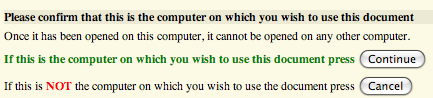
sage-instructions

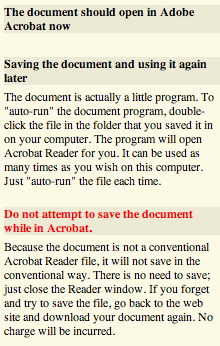
It sounds like a satire on capitalism but reality is often even worse. If you have written an article for SAGE you cannot send your own article to colleagues, you cannot copy nor save it. You can read it on one computer only according to anthropologist and Culture Matters blogger Lisa Wynn.

sage-instructions2

Wynn had published an article in the Journal of Social Archaeology. Instead of getting a PDF of the published article, which is what she gets from all the other journals, she received this e-mail:

Dear Contributor, Thank you for submitting your article titled “Shape Shifting Lizard People, Israelite Slaves, and Other Theories of Pyramid Building: Notes on Labor, Nationalism, and Archaeology in Egypt” to Journal of Social Archaeology, which was recently published in volume 8 issue 2 of the journal.

We invite you to visit http://articleworks.cadmus.com/doc/872534 to download an electronic version of your article (we are no longer sending out paper offprints/tearsheets). You can download this file as an .exe file, which will allow you to view and print the PDF an unlimited number of times on your own computer, and you can forward it as a link up to 25 times to your co-authors and other colleagues. Please note that it is a protected file and you will not be able to forward the file itself or upload it to a website.If you have difficulty please check our FAQs section http://articleworks.cadmus.com/open/sagehelp.html

“I will NEVER again consider publishing with them as long as Sage is running things this way”, she comments.

I have followed the download-link and made these two screenshots.

PS: Strangely enough, as a SAGE-subscriber via my university account, I could download a conventional pdf-file of her article.

Christopher Kelty wrote about similar difficulties to get a free copy of his own article, published in the journal Cultural Anthropology in his Savage Minds-post Recursive public irony.

UPDATE

The above procedure applies only if the author is no subscriber of the journal, as Lisa Wynn writes in reply to my question:

Yes, according to what Sage sent me, if your university subscribes, you can download a conventional PDF (and then spread it around as much as you like). But if you don’t belong to a subscribing university, then you can only get this executable file (and only 25 people, too). The irony is that even if an AUTHOR doesn’t have a subscription, then the author doesn’t get the normal PDF, just the executable protected PDF. Maddening!

“A boycott would be swell (but don’t see that happening). digital disobedience is even better”, somebody commented on the blog laguayabita.blogspot.com

Greg Downey has similar thoughts and comments on Culture Matters:

Yeah, I got one of these, too, recently from another journal, but I cheated on the whole thing: I printed off a copy and then scanned it as a .pdf on our departmental copier. It’s a bit bigger than a normal .pdf, so it’s harder to circulate, but it does give me a way to send the article to overseas colleagues.

SEE ALSO:

Danah Boyd on Open Access: “Boycott locked-down journals”

Open Access: “The American Anthropological Association reminds me of the recording industry”

For Open Access: “The pay-for-content model has never been successful”

Why Open Access?

sage-instructions

It sounds like a satire on capitalism but reality is often even worse. If you have written an article for SAGE you cannot send your own article to colleagues, you cannot copy nor save it. You can read it on…

Read more