
search expand

How to save Tibetan folk songs? Put them online!

More and more Tibetan folk songs are disappearing. Led by anthropology professor Gerald Roche, the Tibetan Endangered Music Project (TEMP) uses digital media to capture tunes that are being lost. The volunteer-run program aims to put all the digital songs they collect online, as a way of archiving the material for future generations, the National Geographic writes.

So far the students at Qinghai Normal University have recorded more than 250 songs, including melodies for herding, harvesting, singing babies to sleep, and coaxing yaks into giving more milk. “The goal is to digitalize the songs we record and return them to our communities,” said 20-year-old student Dawa Drolma. “We want to record as many songs as possible.”

“It is quite remarkable how much they have been able to accomplish from such a remote place, thanks to the Internet and digital recording technology,” said Jonathan C. Kramer, a professor of music at North Carolina State University who has worked with the students. “It is hard to imagine such a project even 20 years ago.”

>> read the whole story in the National Geographic

“One of the biggest challenges that we face at the moment is how to return the music to the communities it comes from,” says Roche, as there are few Tibetan communities with Internet access. “Putting it online is a start, but just a small start.” Tsering Lhamo from Ngawa, Sichuan suggests, “the music we have recorded [could be] taught in primary schools of Tibetan areas in order to preserve them.” according to That’s Beijing.

TEMP is remarkable for many reasons according this blog: its ease of growth, use of existing technology with no budget, a method of preservation by people from the culture itself, and a prospect for real use by both local and global communities.

The Tibetan Endagered Music Project has its own website at YouTube with currently five videos.

Related: On the Digital Himalaya website you can listen to music by the Laya (Bhutan and Tibet)

SEE ALSO:

“A new approach to the collection of traditional Aboriginal music”

Multimedia Music Ethnography of Yodelling and Alphorn Blowing

How Media and Digital Technology Empower Indigenous Survival
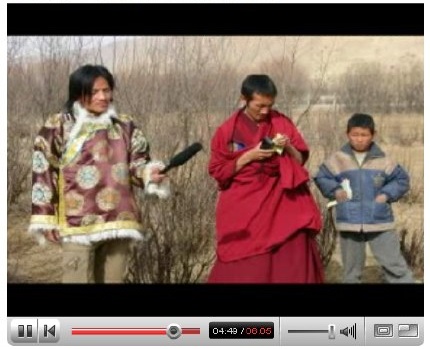
watch the video on youtube

More and more Tibetan folk songs are disappearing. Led by anthropology professor Gerald Roche, the Tibetan Endangered Music Project (TEMP) uses digital media to capture tunes that are being lost. The volunteer-run program aims to put all the digital songs…

Read more

Book review: An Anthropological history of the Adivasis of Bastar

adivasi-cover According to Hindu-reviewer Jyotirmaya Sharma, anthropologist and sociologist Nandini Sundar has written an interesting book about the Adivasi in India. The book Subalterns and Sovereigns — An Anthropological History of Bastar (1854-2006) “tells a very complex and nuanced story of the ‘adivasis’ of Bastar being displaced by centralised models of “development”, losing, in turn, their rights over land, water and forests”:

The book is a very skilful coming together of anthropology and history. It exhaustively chronicles the story of Bastar from the time colonial administrative structures sought to impose “order” and “civilisation” on the ‘adivasis’ by imposing colonial prejudices and stereotypes to the present time when state-sponsored private vigilantism in the name of countering the Maoist movement threatens to wreck an entire way of life. It also details the way in which the ‘adivasis’ have resisted the colonial state in the past and a repressive state now.

But Sundar’s study is not an attempt to romanticise either the ‘adivasis’ or their history as one of “undiluted innocence or even heroism.”

>> read the whole review in The Hindu

On her own website, the anthropologist writes about her book:

Anthropologists are often accused of wanting to keep tribals or indigenous people as museum pieces. Subalterns and Sovereigns shows how misplaced this charge is, arguing that forested and hill areas like Bastar have never been outside the ‘mainstream’ of history, and that the flattening out of local politics to create the appearance of isolation and homogeneity is essentially a product of colonialism and post-colonialism. The choice today, as in the past, has never been one between ‘tradition’ and ‘modern civilisation’ or between ‘development’ and ‘backwardness’, but over alternative visions of democracy.

By exploring the expansion of the state in Bastar over the past century and a half, and resistance to the particular forms it has taken, this book has been part of redefining the way in which history and anthropology are thinking of tribal India.

For more info about the Adivasi see Wikipedia and Kerim Friedman’s posts about Adivasi and Adivasi Rebels

adivasi-cover

According to Hindu-reviewer Jyotirmaya Sharma, anthropologist and sociologist Nandini Sundar has written an interesting book about the Adivasi in India. The book Subalterns and Sovereigns — An Anthropological History of Bastar (1854-2006) "tells a very complex and nuanced story of…

Read more

Military – social science roundtable: Anthropologists help mold counterinsurgency policy

A few weeks ago I wrote about the deepening connections between anthropologists, military and intelligence agencies. Yesterday, Fort Leavenworth (USA) conducted a roundtable discussion among anthropologists and military veterans who have experience in Iraq and Afghanistan. Among the participants self-described “left-leaning” anthropologist and an associate professor at Kansas University; Bart Dean.

Dean said “the landscape today is beginning to turn for anthropologists’ relations with the military, which reached a low level of trust in the Vietnam War era”. “People will criticize me,” Dean said of his participation in the roundtable. “I will be viciously criticized. … But that’s OK. I like controversy.”

Both Dean ad his colleague Felix Moos acknowledged they are in the minority among their peers because they are working with the military. But Dean said anthropologists through World War II had a seat at the table when leaders planned military operations.

The military’s new counterinsurgency doctrine, produced last year at Kansas’ Fort Leavenworth, hinges on the government getting the consent of the people. By understanding the culture, the military can neutralize insurgents, the doctrine says.

Read more about the round table discussion:

Academics, soldiers team to examine war issues (Lawrence Journal & News, 22.6.07)

Leavenworth turns to anthropologists on Iraq (ap / Army Times, 22.6.07)

U.S. Army leaders turn to anthropologists to help solve war puzzles ap / Herald Tribune, 21.6.07)

SEE ALSO:

The dangerous militarisation of anthropology

Protests against British research council: “Recruits anthropologists for spying on muslims”

“Tribal Iraq Society” – Anthropologists engaged for US war in Iraq

San Jose: American Anthropologists Stand Up Against Torture and the Occupation of Iraq and AAA Press Release: Anthropologists weigh in on Iraq, torture at annual meeting

“War on terror”: CIA sponsers anthropologists to gather sensitive information / see also debate on this on Savage Minds

Anthropology and Counterinsurgency: The Strange Story of Their Curious Relations

Bush, “war of terror” and the erosion of free academic speech: Challenges for anthropology

A few weeks ago I wrote about the deepening connections between anthropologists, military and intelligence agencies. Yesterday, Fort Leavenworth (USA) conducted a roundtable discussion among anthropologists and military veterans who have experience in Iraq and Afghanistan. Among the participants self-described…

Read more

Infanticide: “We are fighting against anthropologists”

Babies born into some Indian societies in the Amazon are being buried alive, a practice that is being covered up by the Brazilian authorities and anthropologists “out of respect for tribal culture” according to the Telegraph. “We are fighting against doctors and anthropologists who say we must not interfere with the culture of the people”, Marcia and Edson Suzuki founder of a campaign group called Atini – Voice for Life.

Sounds quite unbelievable that one can justify killing humans this way. But the Telegraph quotes anthropology professor Erwin Frank from the Federal University of Roraima State in the Amazon who says: “This is their way of life and we should not judge them on the basis of our values. The difference between the cultures should be respected.”

Some societies consider that if a child has any deformity or disability, it does not have a soul and so – as an animal – should be killed. According to Dr Marcos Pelegrini, a doctor working in the Yanomami Tribe Health Care District, 98 children were killed by their mothers in 2004 alone.

According the comment below, Marcos Pelegrini never has given this information

>> read the whole story in the Telegraph

SEE ALSO:

Do anthropologists have anything relevant to say about human rights?

The Culture Struggle: How cultures are instruments of social power

Babies born into some Indian societies in the Amazon are being buried alive, a practice that is being covered up by the Brazilian authorities and anthropologists "out of respect for tribal culture" according to the Telegraph. "We are fighting against…

Read more

Cyberanthropology: “Second Life is their only chance to participate in religious rituals”

You can light virtual candles for Shabbat, teleport to a Buddhist temple or consult the oracle for some divine guidance. In Second Life, an online virtual universe with 3.7 million users, religious diversity and participation have skyrocketed. For some people, Second Life is their only chance to participate in religious rituals according to the Washington Post.

Anthropologist Tom Boellstorff is going to publish a book on “cybersociality” in Second Life called “Coming of Age in Second Life: An Anthropologist Explores the Virtually Human.” The avatar of the anthropologist (Tom Bukowski) has an office there, “Ethnographia,” where you can visit him. These emerging virtual worlds pose fundamental challenges to anthropological theory, he writes on his website. “We are witnessing the birth of a significant new modality of human interaction.”

He expected — but hasn’t found any evidence — that Second Life would foster relationships among far-flung members of minority faiths. But the game does seem to be sparking community among followers of more mainstream faiths like among Jews, Muslims and Christians.

Washington Post also writes about Yunus Yakoub Islam who is writing his dissertation on religion in Second Life and runs Second Faith, an educational resource about religion in Second Life. Islam believes he’s the only Muslim in his village in England and uses Second Life to interact with more than 200 members of the game’s Islamic Society.

>> read the whole story in the Washington Post

>> Interview with Tom Boellstorff in the Second Life Herald

>>Anthropologist Grant McCracken: Second Life: the new Disney or vaporville?

>> Anthropologist Alexander Knorr: Second life creation. A guide to in- and offworld online resources

SEE ALSO:

Ethnographic research on Friendster’s online communities

Ethnographic Skype

Ethnographic Flickr

Ethnographic Study on “Digital Kids”

The Internet Gift Culture

The Birth of a Cyberethnographer: The MU5 is to Blame

You can light virtual candles for Shabbat, teleport to a Buddhist temple or consult the oracle for some divine guidance. In Second Life, an online virtual universe with 3.7 million users, religious diversity and participation have skyrocketed. For some…

Read more