search expand

Maurice Bloch: Religion is a Figment of Human Imagination

Why did religions evolve? According to anthropologist Maurice Bloch, there is nothing special with religion. It’s just a product of human imagination – in the same way as nations are, Bloch writes in an article to be published in June, the New Scientist informs.

The development of religion is dependent on the development of imagination. We had to evolve the necessary brain architecture to imagine things and beings that don’t physically exist, and the possibility that people somehow live on after they’ve died, Bloch argues according to New Scientist:

Once we’d done that, we had access to a form of social interaction unavailable to any other creatures on the planet. Uniquely, humans could use what Bloch calls the “transcendental social” to unify with groups, such as nations and clans, or even with imaginary groups such as the dead. The transcendental social also allows humans to follow the idealised codes of conduct associated with religion.

“What the transcendental social requires is the ability to live very largely in the imagination,” Bloch writes.

“One can be a member of a transcendental group, or a nation, even though one never comes in contact with the other members of it,” says Bloch. Moreover, the composition of such groups, “whether they are clans or nations, may equally include the living and the dead.”

(…)

“Once we realise this omnipresence of the imaginary in the everyday, nothing special is left to explain concerning religion,” he says.

>> read the whole story in the New Scientist

Bloch has recently been interviewed in Vikerkaar / Eurozine and was presented as an anti-anthropologist: “It may well be that anthropology departments disappear, and that wouldn’t bother me very much”, he said.

UPDATE Maximilian Forte has written a summary of the interview with Bloch, see Maurice Bloch: “Reluctant Anthropologist” or “Anti-Anthropologist”?

See also the tutorial Anthropology and Religion

Why did religions evolve? According to anthropologist Maurice Bloch, there is nothing special with religion. It's just a product of human imagination - in the same way as nations are, Bloch writes in an article to be published in June,…
Read more

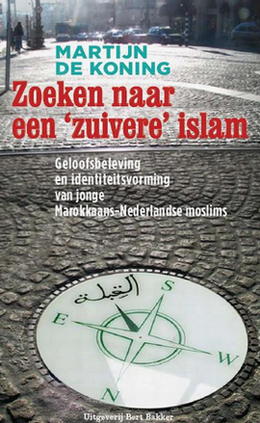
Phd-Thesis: That’s why they embrace Islam

cover

Our fellow anthro-blogger Martijn de Koning was awarded his doctorate at the Free University of Amsterdam last week.

In his Ph.D. thesis he shows how Islam has become the most important frame of reference for Moroccan-Dutch youth to reflect upon who they are and what they want to be.

In the late 1990s, the general perception was that young muslims were turning away from their religion. But things went differently, he says in an interview with Radio Netherlands. Young Dutch Moroccans are increasingly turning to their religion.

According to Martijn de Koning this is a direct result of the current polarisation of the debate on Islam:

Even before 9/11 there was already an increase in interest for religion among young Moroccans. But once the debate on Islam flared up, their interest increased enormously. They were continually asked about their Muslim identity; not just by the media, but also by school mates and teachers and by people at their sports club. They started looking into Islam so that they could answer these questions.

These group of young Muslims searched for an identity with which they could distinguish themselves from Dutch society as well as from their parents:

They wanted a pure Islam, without compromise. Not an Islam that had been watered down because they happened to live in the Netherlands. Nor did they want an Islam peppered with Moroccan traditions.

The Islam they found was not the traditional type from Morocco. They found their answers on the Internet in the conservative, Saudi-Arabian version called Salafism, the anthropologist says:

It is a form of Islam with clear rules, which makes a clear distinction between good and evil. An Islam which is stricter and more orthodox than that of the older generation, but nevertheless seemed to provide better answers to their complicated lives in modern Dutch society.

>> read the whole story in Radio Netherlands

>> visit his blog (in both Dutch and English)

Interestingly, researchers in Norway came to similar conclusions, for example anthropologist Christine M. Jacobsen – see Doctoral thesis: Towards a transnational Islam and the culture historian Liv Bjørnhaug Johansen – see Moving toward a Cultureless Islam

cover

Our fellow anthro-blogger Martijn de Koning was awarded his doctorate at the Free University of Amsterdam last week.

In his Ph.D. thesis he shows how Islam has become the most important frame of reference for Moroccan-Dutch youth to reflect…

Read more

Interviews about moral cosmopolitanism, India-Pakistan, faith, populism, minoritiy-issues

Recently, several of my interviews with researchers of the interdisciplinary research program Cultural Complexity of the New Norway (Culcom) have been translated into English. Here are the most recent ones:

Does the answer exist in human nature?
What is justice? Can research on infants give us new insight into global moral questions? Yes, according to Culcom’s Ph.D. fellow Odin Lysaker. Drawing on theory from psychology, sociology, and biology, the philosopher will try to find out what unites people on this earth with regard to moral questions

Taking the India-Pakistan-conflict to Norway?
A million and a half people were killed under the Partition of British-India into India and Pakistan. How has this conflict affected the relationship between Norwegian-Pakistanis and Norwegian-Indians and their integration into Norway? Lavleen Kaur is going to interview three generations of Indians and Pakistanis in Norway, Pakistan, and India.

– A symptom of large societal changes
It is important to understand the growth of these parties in connection with an elitist and normative judgment of populist parties, says Culcom Master’s student, Tor Espen Simonsen. In his Master’s thesis, the historian studied right-wing populism in Denmark and Norway.

– Focus on minority background undermines the principle of equality
Students who end up in the “minority language speakers” category risk receiving an inferior education. All students should receive an individually adapted education. But this principle does not seem to apply to everyone according to Nina Lewin.

Going their own way without breaking away from the family
The parents are concerned with status, relations with their home country, and job possibilities. Even though obedience and respect for the parents is important, the girls are concerned with choosing an education that they are interested in. This is shown in Culcom Master’s student Vibeke Hoem’s thesis.

Different life histories lead to different faiths
“Through studies of individual faith we can gain a better understanding of a religion,” says Culcom’s Master’s student Marie Toreskås Asheim. For her Master’s thesis she studied young Muslims’ personal relationship to Allah.

Forced to be a victim?
In doing research, start out with people’s experiences, not theory! Sociologist Helga Eggebø has put Dorothy Smith’s theories into practice. With the help of Smith’s “institutional ethnography” she shows how the victim discourse can help reproduce stereotypes and create a divide between “us” and “them”.

>> all interviews

Recently, several of my interviews with researchers of the interdisciplinary research program Cultural Complexity of the New Norway (Culcom) have been translated into English. Here are the most recent ones:

Does the answer exist in human nature?
What is justice? Can research…

Read more

Dissertation: Imam’s influence on Muslims overestimated

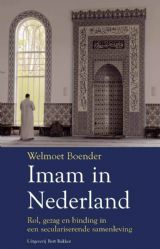
Participants in the debate on Islam often overestimate the authority and influence of imams. The role of the imam is especially limited when it comes to so-called “second and third generation immigrants”. This is the conclusion reached by anthropologist Welmoet Boender in her dissertation Imam in Nederland, for which she was awarded her doctorate at the University of Leiden on Tuesday, according to expatica.com:

Boender’s research shows that not only the imam in the mosque defines appropriate standards and values and behaviour for the faithful, but television sheiks, internet imams, friends and family members and (translated) books also play a role. (…) In the public debate the imam is often seen as an instrument to integrate Muslims in Dutch society. (…) In light of the limited role that imams play for many Muslims, he will most likely fall short of this task.

>> read the whole story on Expatica.com

The dissertation is not online (yet?). I have not found any information in English. For those who do read Dutch, the blog Closer by Martijn de Koning of course provides more information in his post Imam in Nederland – Welmoet Boender.

I’ve found an older texts by Welmoet Boender though Imams in the Netherlands: An Impression.

SEE ALSO:

Doctoral thesis: Towards a transnational Islam

Islam in Europe: Mainstream society as the provider of conditions

How Islamic cassette sermons challenge the moral and political landscape of the Middle East

Islam in Morocco: TV and Internet more important than mosques

Doctoral Thesis: Is Islam Compatible with Secularism?

Extremism: “Authorities -and not Imams – can make the situation worse”

New blog: Islam, Muslims, and an Anthropologist

What does it mean to be Muslim in a secular society? Anthropologist thinks ahead

Book review: Mahmood Mamdani: “Good Muslim, Bad Muslim”

Participants in the debate on Islam often overestimate the authority and influence of imams. The role of the imam is especially limited when it comes to so-called "second and third generation immigrants". This is the conclusion reached by anthropologist Welmoet…

Read more

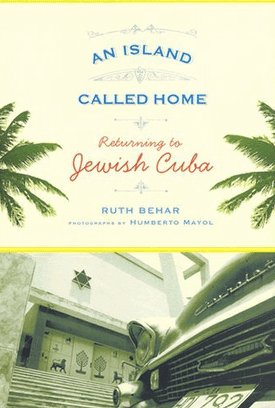
Who are the people keeping the Jewish traditions alive in Cuba?

The Ann Arbor News (Michigan) interviews anthropologist Ruth Behar who has written a new book about Jewish life in Cuba. The island’s tiny Jewish community is among the most diverse in the world.

“An Island Called Home: Returning to Jewish Cuba” offers not only profiles of Jews who live in Cuba, but details the author’s own history – wherein she, at age 5, left Cuba with her family at the time of the 1959 revolution.

She tells she was surprised about how Cuban Jews try to preserve the past. A lot of young people are willing to emigrate to Israel. Many times in the book, people mention the absence of anti-Semitism in Cuba. The anthropologists explains, people in Cuba / in the Caribbean are more tolerant:

Definitely it is helpful to Jews if they live in a culture that’s more secular than in a culture that’s heavily Catholic and Christian – especially if that culture continues to say the Jews killed Christ. This kind of thing does not exactly create good feeling toward the Jews. …

But we can’t give full credit to the revolution for this, because even before ’59, Jews did not experience anti-Semitism, based on the stories that I heard from my family, my Polish grandmother. When she arrived, she said it was such a breath of fresh air from Poland that she just – people didn’t have the anti-Jewish stereotypes that they did in Poland and elsewhere in Europe.

So it was like a fresh slate. That was part of it, and I think the Caribbean is different, too, in that the African influence on Cuba is very important. The African religions are much more open and tolerant of difference.

>> read the whole interview

According to the Miami Herald, the book is “a narrative that tugs at the heart”: It’s a collection of anecdotes and observations accompanied by black and white images shot by Cuba-based photographer Humberto Mayol:

In many respects, this may be Behar’s most personal work. The University of Michigan anthropology professor has written poems and essays about the nostalgia, grief and displacement of exile. She was also awarded a MacArthur Foundation ”genius” grant 18 years ago and even has a short feature film about Cuban Sephardic Jews, Adio Kerida, to her credit. But here she lovingly intertwines her own thoughts and feelings with the more analytical observations of her profession. The result: a narrative that tugs at the heart.

>> continue reading in the Miami Herald

>> Excerpts from An Island Called Home by Ruth Behar

On her own website, she describes herself as a “cultural anthropologist who specializes in homesickness”:

I’m a memoirist who suffered from amnesia as a child after leaving Cuba. That must be why I’m obsessed with remembering and all the ways that history leaves traces on how we live in the present.

She has also started writing a web diary (a web1.0 blog)

SEE ALSO:

Kosher cell phones, kosher bus routes and kosher clothing: Israel’s Ultra-Orthodox economy

The Ann Arbor News (Michigan) interviews anthropologist Ruth Behar who has written a new book about Jewish life in Cuba. The island's tiny Jewish community is among the most diverse in the world.

"An Island Called Home: Returning to Jewish…

Read more