search expand

Rethinking Nordic Colonialism – Website Sheds Light Over Forgotten Past

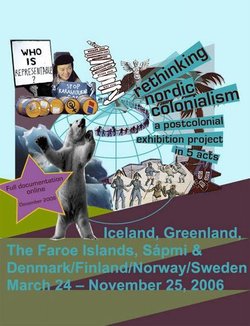
plakat 56 artists, theorists, politicians, and grassroots activists from all over the world participated in the project that took place in Iceland, The Faroe Islands, Sapmi, Norway, Sweden and Finland. They exchanged colonial and postcolonial experiences and strategies, examined why this past has been forgotten and how it continues to reproduce itself as waves of intolerance, xenophobia, and nationalism.

A week ago the (impressive!) website of this project (which has also been published on DVD) has been launched in Oslo. You can spend hours and days, reading the papers, watching videos and movies, looking at exhibitions, listening to presentations.

In the introduction Frederikke Hansen and Tone Olaf Nielsen explain:

The colonial history of the Nordic region is a dark chapter that seems to have slipped the memory of many of the Nordic populations. Although it continues to make itself very much felt in the region’s former colonies, this history is alarmingly absent in the collective memory of the once-colonizing Nordic countries.

With Rethinking Nordic Colonialism: A Postcolonial Exhibition Project in Five Acts, we aim to shed light over this history. Not only do we hope to explain why this past has been forgotten in some parts of the region. We also want to show how this history continues to structure the Nordic societies today, and how our contemporary problems of intolerance, xenophobia, and nationalism have their roots in this past.

I’ll come back with more blog posts about this website

>> visit Rethinking Nordic Colonialism

SEE ALSO:

An exhibition and a movie: The French, colonialism and the construction of “the other”

Anthropology and Colonial Violence in West Papua

“A postcolonial urban apartheid”: Two anthropologists on the riots in France

The Five Major Challenges for Anthropology

plakat

56 artists, theorists, politicians, and grassroots activists from all over the world participated in the project that took place in Iceland, The Faroe Islands, Sapmi, Norway, Sweden and Finland. They exchanged colonial and postcolonial experiences and strategies, examined why this…

Read more

Open Access to Indigenous Research in Norway

More and more theses in Norway are published in digital archives and are freely available in full text. In MUNIN – the digital library of the University in Tromsø (Northern Norway), you can download eight master theses in indigenous studies. They look very interesting, so here they are:

Sargylana Zhirkova: School on the “move”. A case study: Nomadic schooling of the indigenous Evenk children in the Republic of Sakha Yakutia (Russian Far East)
Abstract: It seems strange that in a modern time the indigenous people decided to return not only to their traditional culture but also to the type of schooling which was used by their parents. The first nomadic school in Russia was created in the 1930s and now this kind of school starts to work again in nomadic communities. I have decided to write about the nomadic school because education is an important aspect of life of the indigenous people: it opens doors for indigenous people. Today the nomadic school is a new educational institution for the indigenous nomadic children.

Abdul Hoque: Radio and indigenous peoples. The role of radio in the sustainable livelihoods of indigenous peoples: A case study of the Rakhaing and the Garo people in Bangladesh
Abstract: Radio has the strong role in the sustainable livelihood of indigenous people. Promoting the recognition and practice of mother language media, especially radio, has its distinctive role. (…) Rakhaing has no radio programme of their own. So their language and culture has no significant development, even diminishing day by day. Study findings showed that the Rakhaing feel them excluded from the world; and only a single programme in radio can give them a feeling of being a member of the world.

Gilbert Ansoglenang: Rural women and micro-credit schemes. Cases from the Lawra District of Ghana
Abstract: The study concluded that micro-credit schemes help reduce rural poverty and empower women. Despite the enhanced and visible roles assumed by these women due to the credit schemes, there were serious operational lapses. (…) In the light of this, inter alia, the study made the following recommendation towards the empowerment of women: an appreciable increase in the loans, prioritizing girl-child education, developing and encouraging the use of appropriate technology, and engendering the loan scheme or helping rural women side-by-side their men folk.

Priscilla Felicity De Wet: “Make our children proud of the heritage”
A case study of the Commission for the Promotion and Protection of the Rights of Cultural, Religious and Linguistic communities in SA with specific reference to the emerging Khoe and San indigenous peoples in the Republic of South Africa

Victoria Phiri: When knowledge is not power. The integration of traditional midwifery into the health system. The case study of a traditional midwife among the Toka of Zambia
Abstract: In this thesis, I argue that what the traditional midwife practices is knowledge. Based on the local experiences and traditions, this knowledge may be different from what is commonly called “western” knowledge.

Sundar Bhattarai: The bola or parma of the Newar in Manamaiju Village. The significance of a farm labor exchange system among indigenous peasants in Nepal
Abstract: The key queries of this study are: what does the bola system look like in the village; and, how are they maintaining it as a successful living practice when there is a liberal economic policy in front of them?

Ciren Yangzong: The household responsibility contract system and the question of grassland protection. A case study from the Chang Tang, northwest Tibet Autonomous Region
Abstract: I attempt to demonstrate how common property systems have traditionally served and benefited the Shenchen nomads, and how they have traditionally co-existed with the wildlife using this system. (…) I analyze how HRCS is working in my particular area; especially in the Chang Tang conservation area and whether it is having an effect on nomad’s culture and environment.

Abebe Gizachew Abate: Contested land rights. Oromo peasants struggle for livelihood in Ethiopia
Abstract: Based on the contemporary ethnographic and historical data from Oromia regional state of Ethiopia the study examines complex relationships and contradictory processes of the effects of resource based-development policies of the Ethiopian regimes on land rights related to Oromo peasant livelihoods, environment and development. (…) Analytically, a new ethnographic paradigm of approaching the notions of land rights, power and resistance that problematize custom as static culture vs. dynamic understanding of culture opens up a more dynamic, practical , contextual and relational understanding of ` rights`.

>> overview over all theses

>> information on the Master Degree in Indigenous Studies

SEE ALSO:

Already 76 signatures for more Open Access Anthropology

American Anthropological Association opposes Open Access to Journal Articles

antropologi.info survey: Six anthropologists on Anthropology and Internet

antropologi.info’s special on Open Access Anthropology (multilingual)

Open Access News

More and more theses in Norway are published in digital archives and are freely available in full text. In MUNIN - the digital library of the University in Tromsø (Northern Norway), you can download eight master theses in indigenous…

Read more

Online: Thesis about Up-Country Tamil Students

“Their history deserves to be known in every other country where one can expect to be served a cup of Ceylon tea”, Norwegian anthropologist Haakon Aasprong writes in his thesis Making a Home Away from Home: On Up-country Tamil identity and social complexity at a Sri Lankan university that now is available online.

He has conducted field work among Up Country Tamils at the University of Peradeniya from January to August 2006. Up-country Tamils are descendents from workers sent from South India to Sri Lanka in the 19th and 20th centuries to work in coffee, tea and rubber plantations.

He writes:

There are a number of reasons why Up-country Tamils deserve anthropological attention. The people itself is a young one and an idea of a unique ethnic identity is still in the process of articulation. Their immigration to the island [Sri Lanka] began as late as in the 1830’s at which time they arrived as labour immigrants from South India.

Today, they are in many ways a “diaspora next-door” (Bass 2004:375) and in a difficult situation vis-à-vis their Sri Lankan contemporaries, who have tended to be suspicious of their true loyalties and treated them as tools of Indian imperialism. Their employment as plantation labour in the up- and midcountry has to a large degree isolated them from mainstream society and while they enjoyed citizenship and limited voting rights under British rule, they were, following Independence, disenfranchised and rendered stateless.

Confined to conditions of semi-slavery in the plantation sector, the Up-country Tamils have been lagging behind the national averages with regard to indicators of quality of life. They are, moreover, as the Pastor of the Peradeniya campus church explained to me, “a voiceless community,” or in anthropological terms “a muted group”, and have been largely ignored when not suspected of disloyalty.

(…)

The 15 CG Up-country Tamils I have followed are all among the first in their communities to obtain a university education. They are, in other words, treading new ground, relying on each other and their own decisions, in a place which is conceptually, if not physically, far removed from their home communities. It is their task to make of campus a home away from home.

>> download the thesis “Making a Home Away from Home: On Up-country Tamil identity and social complexity at a Sri Lankan university” (pdf – 5,6MB )

UPDATE: Just found that Haakon Aasprong has been blogging on Globen Cafe

SEE ALSO:

Wikipedia about Up Country Tamils

"Their history deserves to be known in every other country where one can expect to be served a cup of Ceylon tea", Norwegian anthropologist Haakon Aasprong writes in his thesis Making a Home Away from Home: On Up-country Tamil identity…

Read more

“Good story about cannibals. Pity it’s not even close to the truth”

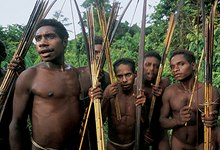
Great commentary (and a good example of engaged anthropology) by anthropologist Sarah Hewat about a recent TV story on Wa Wa, a Korowai boy in Papua, who should be “rescued” from “cannibals”. Hewat says, the journalists should have read some work by anthropologist Rupert Stasch before talking about cannibalism. Stasch did his doctoral research on the Korowai of West Papua in the mid-1990s:

If they did, they would learn that as a Korowai, Wa-Wa does not live as a member of a lost tribe, tyrannised by tradition. (…)
The Korowai may live in the forest, but that does not exclude them from having a certain style of modern life. Korowai may fly in planes, go to church, attend school, have meetings with government officials, or sell produce at the market — or gaharu (agarwood) to black-market traders. Even in the peripheries of Korowai territory, where Wa-Wa lives, people no longer kill and eat witches. Times have changed, and in any case, they fear the barbaric repercussions of the Indonesian police.

Part of the story is Paul Raffaele, who brought the TV-team to Wa-Wa. Raffaele has written this doubtful article I’ve mentioned two weeks ago “They still eat their fellow tribesmen”. Hewat writes about Raffaele:

His work does not enhance understanding of the KorowaI but panders to a Western public hungry to consume the primitive.

The Korowai, like other tribal groups portrayed by Raffaele, are presented by him through a series of either/ors: either they are bright-eyed upholders of a fragile Eden, or else they are darkly menacing, horrifying us with their cruel customs.

But if we pay attention to who they are rather than what we want them to be, then we will find ordinary people trying to come to terms with their place in the world. The Korowai, like other ethnic peoples in their position, are simply struggling to engage state and global forces in their own way.

In her view, the journalists should have rather talked with her and other people who have lived in Papua for years, about “the cannibalistic nature of the tourism industry” there. “Primitiveness” is, she writes, after natural resources, a prize commodity in Papua. Tour operators have perfected the art of selling “first contact tours”. She continues:

I have known locals who have been paid a measly sum to take off their clothes, brandish spears and speak of a barbaric past to satisfy the voyeurism of white tourists, journalists or filmmakers seeking a close encounter with our ancestral past. The cash-strapped locals who stage such performances are, unfortunately, adjuncts to people who get paid much more to bring Westerners to them.

(…)

Our debates about human rights should focus on real issues: supporting the growth of democracy and the rule of law in Papua, building a strong education system that extends to the villages, and, not least, interrogating the exploitative relations between the West and the “primitive other” in the international tourist industry.

>> read the whole story in The Age

PS: Thanks to Peter Keough for alterting me to this article and sorry for not having posted more often recently

UPDATE (24.9.06): I’ve just found an Sydney Morning Herald article where Raffaele conceded he did not know Stasch’s research, doesn’t speak Indonesian or any Papuan language and had spent less than six weeks of his life in the restive province. And Wa-Wa is apparently not Korowai after all. Anthropologist Chris Ballard says, says that Raffaele, two television networks and millions of viewers were misled: The Korowai depend on the tourism trade and have learnt to say what rich foreigners want to hear. “Most of these groups have 10 years’ experience in feeding this [cannibal] stuff to tourists,” Ballard said.

MORE ABOUT THIS ISSUE:

Savage Minds: Breaking News: Intrepid Explorer’s First Contact with a Vanishing Race of Noble Savages

Australian networks clash over cannibal boy (afp, 15.9.06)

Spears fly over ‘cannibal’ expedition (The Age, 15.9.06)

Experts decry cannibalism claims (The Age, 15.9.06)

SEE ALSO:

Rubert Stasch: Giving up homicide: Korowai experience of witches and police (West Papua) (Oceania, Sep 2001)

“They still eat their fellow tribesmen”

Brief history of cannibal controversies

Our obsession with the notion of the primitive society

Ancient People: We are All Modern Now

On Savage Minds: Debate on the Construction of Indigenous Culture by Anthropologists

Great commentary (and a good example of engaged anthropology) by anthropologist Sarah Hewat about a recent TV story on Wa Wa, a Korowai boy in Papua, who should be "rescued" from "cannibals". Hewat says, the journalists should have read…

Read more

“They still eat their fellow tribesmen”

(via del.icio.us) If you miss “good old-style” stories about cannibals in far away places like Papua or New Guinea, read this story by Paul Raffaele in the Smithsonian Mag. It starts like this:

For days I’ve been slogging through a rain-soaked jungle in Indonesian New Guinea, on a quest to visit members of the Korowai tribe, among the last people on earth to practice cannibalism.

And about cannibalism: A local guide with “dark eyes” explains:

It’s because of the khakhua, which comes disguised as a relative or friend of a person he wants to kill. “The khakhua eats the victim’s insides while he sleeps,” Boas explains, “replacing them with fireplace ash so the victim does not know he’s being eaten. The khakhua finally kills the person by shooting a magical arrow into his heart.” When a clan member dies, his or her male relatives and friends seize and kill the khakhua. “Usually, the [dying] victim whispers to his relatives the name of the man he knows is the khakhua,” Boas says. “He may be from the same or another treehouse.”

I ask Boas whether the Korowai eat people for any other reason or eat the bodies of enemies they’ve killed in battle. “Of course not,” he replies, giving me a funny look. “We don’t eat humans, we only eat khakhua.”

The killing and eating of khakhua has reportedly declined among tribespeople in and near the settlements. Rupert Stasch, an anthropologist at Reed College in Portland, Oregon, who has lived among the Korowai for 16 months and studied their culture, writes in the journal Oceania that Korowai say they have “given up” killing witches partly because they were growing ambivalent about the practice and partly in reaction to several incidents with police.

(…)

Still, the eating of khakhua persists, according to my guide, Kembaren. “Many khakhua are murdered and eaten each year,” he says, citing information he says he has gained from talking to Korowai who still live in treehouses.

The travel writer even meets “true cannibals”:

Two men approach through the gloom, one in shorts, the other naked save for a necklace of prized pigs’ teeth and a leaf wrapped about the tip of his penis. “That’s Kilikili,” Kembaren whispers, “the most notorious khakhua killer.” Kilikili carries a bow and barbed arrows. His eyes are empty of expression, his lips are drawn in a grimace and he walks as soundlessly as a shadow.

The other man, who turns out to be Kilikili’s brother Bailom, pulls a human skull from a bag. A jagged hole mars the forehead. “It’s Bunop, the most recent khakhua he killed,” Kembaren says of the skull.

The story ends like this:

Three years earlier I had visited the Korubo, an isolated indigenous tribe in the Amazon, together with Sydney Possuelo, then director of Brazil’s Department for Isolated Indians [SMITHSONIAN, April 2005]. This question of what to do with such peoples—whether to yank them into the present or leave them untouched in their jungles and traditions—had troubled Possuelo for decades. “I believe we should let them live in their own special worlds,” he told me, “because once they go downriver to the settlements and see what is to them the wonders and magic of our lives, they never go back to live in a traditional way.”

So it is with the Korowai. They have at most a generation left in their traditional culture—one that includes practices that admittedly strike us as abhorrent.

>> read the whole story in The Smithsonian

>> BBC about the Kombai (Korowai)

>> Rupert Stasch: Giving up homicide: Korowai experience of witches and police (West Papua) (Oceania, Sep 2001)

On Papua Adventures we read:

Due to this very recent exposure to outside influences, the Korowai tribes are not as open and welcoming to tourists as the Yali, Dani and Lani for example. They remain on guard and suspicious of ways different to their own. This does of course make for an exciting and truly adventurous visit flying in by chartered Cessna from Jayapura to Yaniruma and trekking into Korowai country by foot and canoe.

UPDATE: Anthropologist Sarah Hewat comments: “Good story about cannibals. Pity it’s not even close to the truth”

SEE ALSO:

Disney-Film depicts indigenous people as involved in cannibalism

Inuit cannibalism?

Brief history of cannibal controversies

Our obsession with the notion of the primitive society

Is this anthropology? African pygmies observe Britains in TV-show

Ancient People: We are All Modern Now

Primitive Racism: Reuters about “the world’s most primitive tribes”

(via del.icio.us) If you miss "good old-style" stories about cannibals in far away places like Papua or New Guinea, read this story by Paul Raffaele in the Smithsonian Mag. It starts like this:

For days I've been slogging through a rain-soaked…

Read more