search expand

How to challenge Us-and-Them thinking? Interview with Thomas Hylland Eriksen

As some of you might know, I work as a journalist at the interdisciplinary research programme Culcom – Cultural Complexity in the New Norway. I’ve just put online the English translation of my interview with Thomas Hylland Eriksen, research director of Culcom.

We talk about how hard it is to challenge conventional academic thinking and to establish a new analytical view of the world.

Thomas Hylland Eriksen says:

– What we are trying to do is shift the analytical gaze in a direction where the nation-state and the ethnic group are not viewed as the most important unit. It is here researchers like Knut Kjeldstadli have been vital in insisting on the significance of class, or Oddbjørn Leirvik, who points out that differences in value-based questions cuts across the majority and minority population.

– In this way, lines of distinction that are somewhat different than those common to immigrant research, in which an us-and-them way-of-thinking is common, get established. And in addition, the transnational perspective leads to a de-centering of the nation-state; it is almost like a small Copernican revolution.

We also talk about open access and dissemination via our website. He says:

– Working in a place where most of what is published is electronically available and can be downloaded as a PDF has been a dream of mine for many years, even in the transnational sense: Then people who are in Switzerland and India can get onto our webpages, download texts and use our research in their own work. There is no reason why this should cost money.

>> read the whole interview with Thomas Hylland Eriksen

There are two more new interviews online about related issues.

Hans Erik Næss criticizes in his thesis the methodologicial nationalism in sociology text books. Sociology does not focus enough on transnational aspects in society. His thesis contains not only suggestions for a better sociology, but also an alternative required reading list.

>> read the whole interview: “In favor of a more transnational sociology”

Gunn Camilla Stang has written one of the first studies on Polish labour migrants in Norway. She says that debates about migration should focus more on the possiblities of learning. In viewing Polish laborers primarily as (cheap) labor, companies miss out in a great deal of knowledge they could have used to improve routines and products.

>> read the whole interview “More than “social dumping””

And Arnfinn Haagensen Midtbøen explains us why Scandinavia should be illuminated as an interesting region in migration research.

>> Interview: Does migration strengthen the nation-state?

We have relaunched our website, and our English pages are “still under construction”

As some of you might know, I work as a journalist at the interdisciplinary research programme Culcom - Cultural Complexity in the New Norway. I've just put online the English translation of my interview with Thomas Hylland Eriksen, research director…
Read more

Ainu in Japan: Cool to be indigenous

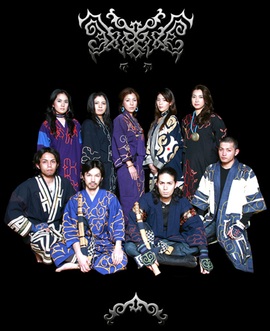
ainu rebels screenshot

Better times for the Ainu in Japan? There is an “revival of ethnic pride” going on in Japan according to ap.

At the forefront are the Ainu Rebels (image). They use music and dance to rebel against a history of institutionalized discrimination. They celebrate being an Ainu by mixing traditional dress, dance and language with hip-hop and rap.

And they’re getting an enthusiastic response from young Japanese. T-shirts, vests and handbags adorned with Ainu motifs are selling well, and Ainu rock musician Oki Kano is making it big with a band featuring the tonkori, a sort of Ainu guitar, ap journalist Malcolm Foster writes. Ethnicity is hip in Japan according to linguist John Maher.

When I visited the indigenous music festival Riddu Riddu in Northern Norway a few years ago, I noticed the strong ties between the Saami and other indigenous people around the world. Riddu Riddu started as a Saami festival but developped into an international festival with guests from Papua New Guinea, Botswana, New Zealand, Nunavut and Greenland.

Contact with other indigenous people was also critical to the Ainu revival. Mina Sakai from the Ainu Rebels tells that her awareness came at age 16 when, on a cultural exchange trip to Canada, she was struck by the passionate way Canadian indigenous people danced and sang:

“I was shocked. They were so cool and so proud of being native Canadians. I realized that I have a beautiful culture and strong roots. I decided that I should be a proud Ainu and express that in my life.”

In June, Japan’s parliament recognized the Ainu as an indigenous people – a major shift from the mid-1980s when Yasuhiro Nakasone, the then prime minister, declared that Japan was a homogenous nation with no minorities.

>> read the whole ap-story “Ainu rise up from the margins of society in Japan, celebrate long-hidden culture”

The article also mentions Ann-Elise Lewallen, an American cultural anthropologist at Hokkaido University who has worked closely with the Ainu community for 10 years. But I could not find info about her online.

LINKS UPDATED 18.7.2024

SEE ALSO:

Inuit language thrives in Greenland

“Pop culture is a powerful tool to promote national integration”

The cultural nationalism of citizenship in Japan and other places

How Media and Digital Technology Empower Indigenous Survival

“But We Are Still Native People” – Tad McIlwraith’s dissertation is online

Indigenous people no victims of globalisation: Alex Golubs dissertation on mining and indigenous people

Open Access to Indigenous Research in Norway

How filmmaking is reviving shamanism

Thomas Hylland Eriksen on Cosmoculture: Preferably more art than books!

ainu rebels screenshot

Better times for the Ainu in Japan? There is an "revival of ethnic pride" going on in Japan according to ap.

At the forefront are the Ainu Rebels (image). They use music and dance to rebel against a history of…

Read more

Anthropologist explores heavy metal in Asia, South America and the Middle East

In 2005 his movie Metal – A Headbanger’s journey took the world with storm. Now anthropologist and metal musician Sam Dunn has released “Global Metal” – a film about the global expansion of heavy metal music.

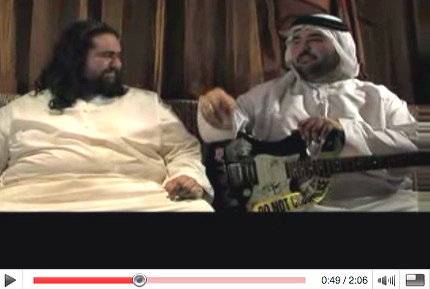
Together with his co-director Scot McFayden, Dunn visited metal fans in Brazil, Japan, China, Indonesia, Israel and Iranian metal fans in Dubai.

The film seems to be especially relevant for theories on globalisation, cosmopolitanism, and social movements. As we read on the film’s homepage:

GLOBAL METAL reveals a worldwide community of metalheads who aren’t just absorbing metal from the West – they’re transforming it. Creating a new form of cultural expression in societies dominated by conflict, corruption and mass-consumerism.

Reviewer Liz Braun notes in the Winnipeg Sun:

In every country, metal has been bent and remade to reflect the culture. In India, metal fans talk about Bollywood music. In China, kids learn metal licks at a music school devoted to rock. Kaiser Kuo of the band Tang Dynasty talks about the underground metal scene in Beijing. In the Middle East, a Muslim says, “I got caught by the religious police for wearing a Slayer T-shirt and having long hair.”

(…)

Global Metal confirms that music is an international language. Particularly in countries where war and oppression are the norm, metal seems to represent a crucial outlet for emotional expression.

Unlike many facets of so-called “Western culture”, metal has not been spread by mass media, but rather by word of mouth and the internet. After the success of their first film, Dunn began receiving emails from places he didn’t even know had a metal culture, he tells to The Age:

There were a lot of countries that didn’t get proper distribution of the film, and we started to get emails from India and Iran, from people saying, “We’ve heard about the film or downloaded it, but come and check out metal in our country.”

We knew about metal in places like Brazil and Japan; we didn’t know the full extent of how metal is spread around the world.

In an interview with twitchfilm.net, Scot McFayden says that they even hired researchers for their movie.

Sam Dunn tells that he was especially surprised about heavy metal in Israel:

I was really struck by our experience in Israel actually and the degree to which the Metal that the Israeli kids listen to and perform has such a strong personal relevance for them.

When I was growing up as a Metalhead, the lyrics were never necessarily reflecting something I was going through as a person. (…) But to go to Israel and talk with people that are living through a day to day reality of conflict and war. It was quite eye-opening for me and I realized that Metal can mean something very different to people depending on where you come from.

In an interview with Victoria Times Colonist he says learning about metal communities in other countries changed his views on Heavy Metal:

Being a fan of metal in Iran means you’re putting, at some extent, your personal safety at risk. Kids have had their hair cut [off], their T-shirts taken away, rehearsal rooms raided and gear confiscated, so we realized being a metal-head is a far greater statement [there] than being a snotty-nosed teenager with a Slayer shirt who wants to piss off your parents.

According to the SeeMagazine, “Dunn is a major reason the film is so charming”:

He’s tall and lanky, forever wearing the same Mastodon t-shirt and awkwardly tucking his shoulder-length blond hair behind his ears. That earnest, unassuming quality makes him a likable character, but it also makes him an extremely effective interviewer: everyone seems to want to talk to the guy—not just Chinese record store owners and struggling metal bands from Iran, but ex-Megadeth guitarist Marty Friedman (who now makes his career appearing on Japanese variety television) and even Lars Ulrich, the notoriously prickly drummer for Metallica.

SEE ALSO:

The Rediff Interview/Nandini Chattopadhyay: Music and Protest

Socially conscious hip-hop is worldwide phenomenon

Cultures of Music Piracy: An Ethnographic Comparison of the US and Japan

How does music create community? Interview with Jan Sverre Knudsen and Stan Hawkins

filmtrailer

In 2005 his movie Metal - A Headbanger's journey took the world with storm. Now anthropologist and metal musician Sam Dunn has released "Global Metal" - a film about the global expansion of heavy metal music.

Together with his co-director Scot…

Read more

“Tribal wives” – Pseudo-anthropology by BBC?

tribalwives

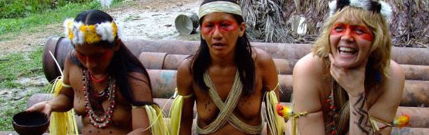
The BBC has sent six British women to be “second wives” to so-called “tribesmen” in – according to the BBC “some of the world’s most remote communities”. “Any anthropologist feels pleased when the hidden peoples of the world get a chance to appear on television, but the BBC series Tribal Wives is misleading”, anthropologist Michael Stewart comments in The Guardian.

The tv-programm, he writes, gives us “a romantic notion of a Shangri-La”, based on the idea “that we have lost something that only the “savage” can teach us”. This film claims to be a window on another world, but we mainly learn about what it means to be a westerner in that situation.

Steward watched the episode about a British woman who spent a month with the Huaorani in Ecuador. Their village is far from isolated. It is a well-known eco-tourism destination with an airstrip in the middle of the village, according to the anthropologist.

>> read the whole comment in The Guardian

In a comment on the Survial International blog, Guy Edwards writes that the “overall impression was that of a circus where Huaorani culture was portrayed as simple and backward” and adds: “The BBC and/or the other production organisations involved should apologize and compensate the Huaorani for any damages.”

For more info on the programm, see UK women to become ‘tribal wives’ (BBC 10.11.06) How the Waorani tribe made me relax (BBC 24.6.08), Mudhut life for Lana enough to drive her away from drink (Evening News Edinburgh 2.7.08) and a more positive review in The Times by Caitlin Moran Tribal Wives – the acceptable face of reality TV from the BBC

SEE ALSO:

Is this anthropology? African pygmies observe Britains in TV-show

“Good story about cannibals. Pity it’s not even close to the truth”

The Double Standards of the “Uncontacted Tribes” Circus

From Stone Age to 21st century – More “fun” with savages

tribalwives

The BBC has sent six British women to be "second wives" to so-called "tribesmen" in - according to the BBC "some of the world's most remote communities". "Any anthropologist feels pleased when the hidden peoples of the world get a…

Read more

The Double Standards of the “Uncontacted Tribes” Circus

The story of the so-called “uncontacted tribes” in the Amazon has made its way around the world (even to Norway!). At the same time, there is a complete lack of interest in the story of indigenous people being publicly humiliated in Bolivia, the CultureMatters author Jovan Maud notes.

Are indigenous groups only interesting as long as they are “uncontacted” and “lost”? Has this something to do with obscure notions of “purity”?

Anyway, the anthropology blog CultureMatters has done a great job in deconstructing the “uncontacted tribes”-myth and criticizing organisations like Survival International that use this myth in their work to help indigenous peoples. CultureMatters-blogger Greg Downey writes:

While I certainly agree that small pockets of cultural diversity should not be aggressively assimilated, I feel a little queasy that we have to sell the drive for cultural autonomy and respect for foraging peoples with the whole ‘never seen a white man’ drivel. The term ‘uncontacted’ is part of the problem; ‘isolated’ would be better, as these groups have seldom ‘never seen a white man.’

(…)

One of the reasons these groups are attracting attention is that they are under pressure, especially on the Peruvian side of the border, not only from the usual suspects (miners, loggers, and ranchers), but also from a French petroleum company that wants to drill in the area.

Why can’t we go with that story: protecting the environment, wildlife, and the local people’s ways of life against the shattering impact of wreckless resource extraction to feed petroleum addiction? Why do we have to stoop to the whole ‘they think the plane is a giant bird or spirit’ and ‘their way of life was unchanged for 10,000 years’ cannard?

The CultureMatters-author was interviewed by ABC Radio in Melbourne about this issue and they started discussing the common idea that it is ‘inevitable’ through ‘progress’ that people like this will have to disappear.

He comments:

I wonder if all those ‘well, it’s sad but that’s the inevitable cost of progress’ really even think for thirty seconds about what they’re saying: are they saying that every acre of land that might support people who want to hunt or gather food, inevitably, must be drilled, logged, burned, or dug up for minerals? Really?

>> read the whole story on Culture Matters “‘Uncontacted Indians?!’ — contact an anthropologist!”

Savage Minds followed up with Stone-Age Links and a post The myth of the “untouched” Amazon that concludes that “today’s hunter-gatherers might be descended from the builders of four-lane highways, bridges, moats and canals”.

And Maximilian Forte writes (in a satirical post) about a maybe even greater discovery Four New Tribes Discovered: 3 in the USA, 1 in Iraq

With similar thoughs in my head, I wrote one year ago “Help the Hadza!” – Why focus on culture and not on human rights?

See also earlier posts:

Peru: Another “uncontacted tribe”?

Anthropologists condemn the use of terms of “stone age” and “primitive”

Our obsession with the notion of the primitive society

Primitive Racism: Reuters about “the world’s most primitive tribes”

“Stone Age Tribes”, tsunami and racist evolutionism

“Good story about cannibals. Pity it’s not even close to the truth”

Ancient People: We are All Modern Now – Debate on Savage Minds

Do anthropologists have anything relevant to say about human rights?

The story of the so-called "uncontacted tribes" in the Amazon has made its way around the world (even to Norway!). At the same time, there is a complete lack of interest in the story of indigenous people being publicly humiliated…

Read more