
search expand

Why the head of IT should be an anthropologist

(via Bits and Bytes) The true value of IT will come not from information or technology per se but from the social side. Therefore anthropologists and other social scientists will become more important to Information Technology (IT) Departments than IT itself, says IT analyst Tom Austin in an interview by Fast Company.

The interview does not deal with user centered design but with shaping a climate of creativity in the workplace in the Web 2.0 era with Facebook, Twitter, blogs, wikis and other online social network tools:

A new species of Information Technologist is emerging from the primordial ooze of Web 2.0 — social scientists and humanists who focus on human behavior more than software code. (…) As computer systems become ever more automated and transparent, attention will shift to how to use these tools as social lubricants in the workplace.

MySpace or Facebook will become models for business interaction, Austin thinks:

Look at teenagers today. They’re teamagers. They work on projects as a group and think nothing of doing it that way. I expect to see that kind of thing percolate through the enterprise as an unstoppable force over the next two decades.

Austin tells about companies that are using websites like Facebook to help reinforce or build a social network inside the company to enhance collaboration and productivity:

They use a variety of tools where employees are encouraged to create a personal page where they share not only name, rank, and serial number but also information about prior jobs, interests, hobbies, other skills they may have, projects they’ve worked on, and so forth. That becomes a dynamic and important tool for navigating through the network of people inside the company to find others who may be able to help you.

In this world of the “ad hocracy” that we live in, where people get thrown into project after project, it helps to look at information and figure out, these three people I’m meeting with tomorrow who I’ve never met before. What are they like? Is there something we share in common — a hobby, a background, education, a boss we hated — that you can use to strike up a conversation?

(…)

The problem with IT today is there are too many engineers and not enough social scientists. Look at the numbers of features and controls we put on how things are done. That’s an engineer’s approach, versus some of the free form approach of Enterprise 2.0 and social networking.

>> read the whole interview at FastCompany.com

There is another business anthropology story in the news: In the article Can the Cellphone Help End Global Poverty?, New York Times author Sara Corbett writes about the work done by Nokia-researcher Jan Chipchase, a “human-behavior researcher” and “user-anthropologist” (but with a degree in design, not anthropology):

His mission, broadly defined, is to peer into the lives of other people, accumulating as much knowledge as possible about human behavior so that he can feed helpful bits of information back to the company — to the squads of designers and technologists and marketing people who may never have set foot in a Vietnamese barbershop but who would appreciate it greatly if that barber someday were to buy a Nokia.

He works in a similar way as many design anthropologists:

Rather than sending someone like Chipchase to Vietnam or India as an emissary for the company — loaded with products and pitch lines, as a marketer might be — the idea is to reverse it, to have Chipchase, a patently good listener, act as an emissary for people like the barber or the shoe-shop owner’s wife, enlightening the company through written reports and PowerPoint presentations on how they live and what they’re likely to need from a cellphone, allowing that to inform its design.

The whole article in The New York Times is interesting but quite long. For a summary including comments see the post over at Neuroanthropology Cellphones Save The World. For more information, see Jan Chipchase’s blog

For an earlier entry on Jan Chipchase, see Capitalism and the problems of “High speed ethnographies”

UPDATE (14.4.08) Anthropologists are part of a research team that wants to find out how mobile phones might be used to allow people to share content with each other >> more information at The Engineer

SEE ALSO:

Microsoft anthropologist: Let people be online at work or risk losing stuff!

Plans to study anthropological online communities and Open Access movement

Office Culture – good overview about corporate anthropology in FinancialTimes

Timo Veikkola – The Anthropologist as Future Specialist at Nokia

Popular IT-anthropologists: Observe families until they go to bed

“The science of ethnography is an ideal tool to designing mobile phones”

(via Bits and Bytes) The true value of IT will come not from information or technology per se but from the social side. Therefore anthropologists and other social scientists will become more important to Information Technology (IT) Departments than IT…
Read more

Interviews about moral cosmopolitanism, India-Pakistan, faith, populism, minoritiy-issues

Recently, several of my interviews with researchers of the interdisciplinary research program Cultural Complexity of the New Norway (Culcom) have been translated into English. Here are the most recent ones:

Does the answer exist in human nature?
What is justice? Can research on infants give us new insight into global moral questions? Yes, according to Culcom’s Ph.D. fellow Odin Lysaker. Drawing on theory from psychology, sociology, and biology, the philosopher will try to find out what unites people on this earth with regard to moral questions

Taking the India-Pakistan-conflict to Norway?
A million and a half people were killed under the Partition of British-India into India and Pakistan. How has this conflict affected the relationship between Norwegian-Pakistanis and Norwegian-Indians and their integration into Norway? Lavleen Kaur is going to interview three generations of Indians and Pakistanis in Norway, Pakistan, and India.

– A symptom of large societal changes
It is important to understand the growth of these parties in connection with an elitist and normative judgment of populist parties, says Culcom Master’s student, Tor Espen Simonsen. In his Master’s thesis, the historian studied right-wing populism in Denmark and Norway.

– Focus on minority background undermines the principle of equality
Students who end up in the “minority language speakers” category risk receiving an inferior education. All students should receive an individually adapted education. But this principle does not seem to apply to everyone according to Nina Lewin.

Going their own way without breaking away from the family
The parents are concerned with status, relations with their home country, and job possibilities. Even though obedience and respect for the parents is important, the girls are concerned with choosing an education that they are interested in. This is shown in Culcom Master’s student Vibeke Hoem’s thesis.

Different life histories lead to different faiths
“Through studies of individual faith we can gain a better understanding of a religion,” says Culcom’s Master’s student Marie Toreskås Asheim. For her Master’s thesis she studied young Muslims’ personal relationship to Allah.

Forced to be a victim?
In doing research, start out with people’s experiences, not theory! Sociologist Helga Eggebø has put Dorothy Smith’s theories into practice. With the help of Smith’s “institutional ethnography” she shows how the victim discourse can help reproduce stereotypes and create a divide between “us” and “them”.

>> all interviews

Recently, several of my interviews with researchers of the interdisciplinary research program Cultural Complexity of the New Norway (Culcom) have been translated into English. Here are the most recent ones:

Does the answer exist in human nature?
What is justice? Can research…

Read more

“Putting Aboriginal languages on the curriculum has improved ‘race’ relations”

He’s not an aboriginal Australian. Nevertheless he has to learn the local indigenous language. He and many other children say it’s fun. Teachers, parents and linguists say it is improving self-esteem, literacy and school attendance, rescuing indigenous languages from near oblivion and bringing communities closer together, according to a story in the Sydney Morning Herald.

“Putting Aboriginal languages on the curriculum in Walgett has improved ‘race’ relations”, the newspaper informs.

Sharon Cooke, an Aboriginal education consultant says:

“”It’s the white kids and the black kids. They all learn together and sing together, it’s really quite beautiful, it’s quite emotional when you see it … and not just for the Aboriginal kids. You’ll see the pride on the faces of non-Aboriginal kids as well, that they’re learning this language.”

Aunty Fay Green, a local elder, says:

“I can speak for a lot of our elders who feel the same as I do, and I look at it this way, it’s reconciliation. It brings two cultures together instead of pulling away from one another, which we used to do. They’re together now, they are. You can see that in the school, they stand by one another.”

Indigenous languages are being taught throughout Australia. But New South Wales remains the only state with an indigenous languages policy. 41 state schools in New South Wales were teaching Aboriginal languages to some degree by 2006 – but only a few of them offer it as their mandatory.

>> read the whole story in the Sydney Moring Herald

For more recent related news see entries on the blog Culture Matters: ‘White flight’ in Australian schools and Group removed from hostel for being Aboriginal and Marcia Langton on the parliament’s apology to the Stolen Generation

SEE ALSO:

New website helps save Kenai Peoples language (Alaska)

“A new approach to the collection of traditional Aboriginal music”

“I’m not the indigenous person people want me to be”: Anita Heiss is anthropologist and aboriginee.

For an Anthropology of Cosmopolitanism

He's not an aboriginal Australian. Nevertheless he has to learn the local indigenous language. He and many other children say it's fun. Teachers, parents and linguists say it is improving self-esteem, literacy and school attendance, rescuing indigenous languages from near…

Read more

Sheds light on the collaboration between science and colonial administration in Naga ethnography

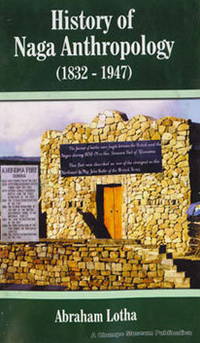
book cover

Paul Pimomo reviews in The Morung Express a book that might not only be interesting for area specialists. The History of Naga Anthropology is, he writes, “a valuable contribution to the broad area of postcolonial studies“.

In History of Naga Anthropology (1832-1947), Abraham Lotha sheds light into a darker part of the history of our discipline. Among other things, he documents the “intimate collaboration between science and colonial administration in the development of Naga ethnography”. The book is based on research for the master’s degree in Cultural Anthropology at Columbia University in New York:

Like other postcolonial studies of history, Abraham Lotha’s book places the first hundred years of writings about Nagas in the category of “colonial anthropology,” that is to say, ethnography by colonial administrators and others enabled by them in ways that directly or indirectly served the colonial functions of the powers that be.
(…)
British writing on Nagas up to 1866 portrayed them as ignorant, stubborn, and hostile to British interests. Several monographs came out of the military expeditions into Naga territory at this time, and shorter individual soldiers’ accounts of their experiences were published in the Journal of Asiatic Society of Bengal. These early articles, mostly in the manner of descriptive reports, sold the Nagas as exotic, wild, and savage tribes to their scholarly readers in India and in England.

The projects of the colonial administration and Christian missionaries resulted in that the Nagas were socialized into the ideology of colonial subordination and, after they left the Naga Hills, into the position of second-class citizens in postcolonial India, he writes.

>> read the whole review in The Morung Express

SEE ALSO:

Book review: An Anthropological history of the Adivasis of Bastar

An exhibition and a movie: The French, colonialism and the construction of “the other”

On Savage Minds: Debate on the Construction of Indigenous Culture by Anthropologists

Anthropology and Colonial Violence in West Papua

Rethinking Nordic Colonialism – Website Sheds Light Over Forgotten Past

“No wonder that anthropology is banished from universities in the ‘decolonized’ world”

book cover

Paul Pimomo reviews in The Morung Express a book that might not only be interesting for area specialists. The History of Naga Anthropology is, he writes, "a valuable contribution to the broad area of postcolonial studies".

In History of Naga…

Read more

Really an ethnic conflict? An anthropologist on the Kenya-crisis

Both in Norwegian and international media, the recent crisis in Kenya has often been described as an ethnic or an tribal conflict. But is this a correct view? “There is a tendency in media in the West to portray Africa as a place where tribal rivalries inevitably and almost naturally yield conflict and violence, and that is fairly misleading”, says anthropologist Angelique Haugerud in a The Real News Network radio interview:

It’s clear that ethnicity is a part of this picture, but it is only one piece of it. And the conflict in Kenya is as much due to political party competition, modern efforts at democratization, and the kinds of political dynamics we see anywhere in the world.

The kind of anger that’s boiling over now has also to do with economic inequalities:

The U.S., like the World Bank, the IMF, and European donors have over the years emphasized neoliberal economic policies—privatization, user fees for health care, and so on. That’s a set of policies that were, of course, widely implemented in Africa by these international financial institutions, as well as through bilateral aid. In Kenya, those have accentuated economic inequality and poverty.

>> view and read a transcript of the interview

In an article in OpenDemocracy, the anthropologist gives us an optimistic buttom-up-perspective. The way Kenyan citizens are living out and working through their country’s crisis offers insight into how boundaries of ethnicity, clan and class can be overcome, she writes:

Yet such hardening of ethnic boundaries, even four weeks into the crisis, is by no means pervasive or irreversible. 23-year-old Muthoni, for example – a Nairobi resident whose parents are from Embu district and thus again perceived as nearly Kikuyu – traveled with her church group to assist Luo people who had taken refuge at a police station in the nearby town of Limuru, whose population is predominantly Kikuyu. She comments: “we are all Kenyans…it’s a mixed brew; we can’t live without the other….it’s not logical to kill your neighbour; you were in agreement before.”

(…)

In spite of today’s newly charged ethnic identities and growing mistrust, now (as in the past) mutual assistance and other social bonds soften boundaries of ethnicity, neighborhood, clan, and class.

>> read the whole story in OpenDemocracy

I wish she’d elaborated more on this issue. But several excellent round-ups over at GlobalVoices provide us with useful links.

Rebecca Wanjiku writes:

After a week of killings, looting and the political madness witnessed in Kenya after last month’s general elections, Kenyan Bloggers are at the forefront of reconciliation, urging people to reach out, regardless of their ethnic background

>> read Kenya: “Bloggers seek to heal a wounded nation” and Kenya: Moving images of unrest and hope by Juliana Rincón Parra and Kenya: Cyberactivism in the aftermath of political violence by Ndesanjo Macha

A similar perspective can be found in the analysis by media researcher George Ogola:

A week prior to the election, only Al-Jazeera had taken some trouble to tell the Kenyan story. Reuters Africa proved another notable exception. But the familiar would soon follow, vicious and unrelenting.

When protests met the announcement of the presidential results, CNN, BBC 24 and Sky News sent some of their finest to Nairobi. But the frame of reference had been pre-determined. A narrative had been established. Kenya had descended into tribal anarchy reminiscent of the Rwanda genocide. Neighbours had turned onto each other just because they belonged to different tribes. ‘Tribal violence’ became the definitive mantra and was the basis for reports across the world.

(…)

It was equally about a western anthropology that figures conflict in Africa only in tribal terms; an Africa whose existence is so basic it must not be understood beyond the discourse of the tribe. I witnessed the power of a selective morality that tends to view Africa from a paradigm of difference, a unique rationality that embraces the kind of savagery the world was witnessing.

(…)

Amid this, the obvious was deliberately being negated. Why was violence in Nairobi largely restricted to the slums of Kibera and Mathare? Was it possible that the Kenyan poor were at war with the rich and with themselves? (…) Was it really possibly that because of disputed presidential elections, Kenya would suddenly implode? Was there a historical trajectory to this conflict?
(…)
The assumption that informs the continent’s interpretation is that this is a continent whose civilisation cannot be so sophisticated as to have class wars; neither can it justifiably fight for anything remotely democratic.

>> read the whole comment in AfricanPath

See also comment by Madeleine Bunting in the Guardian: “The west’s exotic fantasy of Africa means we fail to understand the real reasons for conflict in developing countries”, she writes.

>> read the whole comment “The violence in Kenya may be awful, but it is not senseless ‘savagery'”

UPDATE: Anthropologist Miroslava Prazak agrees: “Economic difference is truly at the heart of what is happening,” she said. “… It’s not about ethnic clashes. It’s about a political process that has gone wrong.” >> full story in the Bennington Banner (link updated)

SEE ALSO:

Cameroon: “Ethnic conflicts are social conflicts”

Turning away from ethnicity as explanatory model

Seeing Africa as exceptional underestimates common experience of globalisation

Conflict Resolution and Anthropology: Why more scholarship on violence than on peace?

Both in Norwegian and international media, the recent crisis in Kenya has often been described as an ethnic or an tribal conflict. But is this a correct view? "There is a tendency in media in the West to portray Africa…

Read more