
search expand

Kosher cell phones, kosher bus routes and kosher clothing: Israel’s Ultra-Orthodox economy

For Jews, not only food needs to be kosher, the New York Times explains in an interesting article about Israel’s Ultra-Orthodox.

There are even kosher mobile phones. You cannot send text messages with them, take photographs or connect to the Internet. More than 10,000 numbers for phone sex, dating services etc are blocked. Calls to other kosher phones are cheaper and on the Sabbath any call costs $2.44 a minute, a steep religious penalty. “You pay less and you’re playing by the rules. You’re using technology but in a way that maintains religious integrity.”

A whole economic system has evolved to meet their needs, as Tamar El-Or, an anthropologist at Hebrew University explains. She has studied ultra-Orthodox shopping patterns. “There are lines of cellphones and credit cards and Internet suppliers and software and DVDs and clothes and so many things produced or altered or koshered for them, because they have a certain organized power to get the producers to make what they want.”

We read about a bus company that has special routes for the ultra-Orthodox, so that men and women are segregated, sometimes in separate buses. There are shops where you can buy special clothing. Movies and television are forbidden by many rabbies – an exemption is made for children if the intentio is educational. So in a video and music store for the Ultra-Orthodox you can find a large stock of nature documentaries: “National Geographic videos are considered fine, so long, as that there is no human nudity or sexuality, or even sexuality from animals.”

>> read the whole story in the New York Times

As we learn in an article in Science-Spirit mobile use has always been allowed but “it has been difficult to find one that didn’t contain access to the Internet or feature instant messaging plans displaying ads for worldly goods and services.” So, Israel’s ultra-Orthodox rabbis responded by convincing companies to produce a no-frills mobile phone for their community.

The introduction of the kosher phone comes at a time of intense discussion about the community’s future and the practicality of remaining so separate from the rest of Israeli culture:

The Ultra-Orthodox constitute about ten percent of Israeli Jews, or about 600,000 people. (…) They live in their own neighborhoods, have their own school systems, and, as long as they remain in religious school, are exempt from the military service required of all other Israeli citizens (except the approximately 1.5 million Palestinian Arabs living in the state). Ultra-Orthodox families have an average of seven children and most of the men study religion rather than work, relying on stipends from the government. (…) But in recent years, driven by rising poverty, cuts in government stipends and their own expanding population, the ultra-Orthodox have slowly begun to increase their participation in the largely secular Israeli society.

>> read the whole story in Science Spirit

I’ve found one article by anthropologist Tamar El-Or online:

The length of the slits and the spread of luxury: reconstructing the subordination of ultra-orthodox Jewish women through the patriarchy of men scholars (Sex Roles: A Journal of Research, Nov, 1993)

See also Wikipedia on Orthodox Judaism

For Jews, not only food needs to be kosher, the New York Times explains in an interesting article about Israel’s Ultra-Orthodox.

There are even kosher mobile phones. You cannot send text messages with them, take photographs or connect to the…
Read more

Anthropologist examines influence of robots in Japan

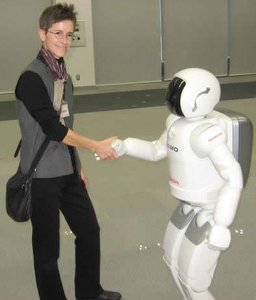
At home, robots are about to replace the role of the grandmother and in the industrial sector, robots are more popular than foreign laborers according to anthropologist Jennifer Robertson. Robertson is researching on the effects of robots on Japanese society.

At a seminar, Robertson spoke on the decreasing human birthrate and increasing humanoid robot population in Japan, the university newspaper The Daily Texan informs.

In the industrial sector, Japan prefers robots over foreign laborers “because machines do not enhance racial tensions by evoking wartime memories, as foreigners do”, Robertson said (!)

But the country is according to the anthropologist more concerned with utilizing robots to help increase native births:

Because children require care at home, they can keep women from holding jobs. But in today’s society, many women need or want to hold professional positions. As mothers join the workforce, robots take over their household duties, thus increasing the workforce and the birthrate. (…) Robertson showed photos of cartoon-like machines with exaggerated features and colorful bodies. These were the robots such as Wakamaru, PaPeRo and Ri-man that babysit, tutor children and care for the elderly.
(…)
These robots transmit images to cell phones, thus allowing mothers to keep an eye on their children while away from the home. (…) Japanese children are obedient to their robotic caretakers, and the machines have replaced the role of the mother or grandmother in the home.

>> read the whole story in The Daily Texan

“Robots are expected to be in the 21st century what automobiles were in the 20th century,” Jenny Robertson said in an earlier article in The Michigan Daily. For more information on robots in Japan, see also two BBC-stories Japan’s rise of the robots and Japanese scientists have unveiled the most human-looking robot yet – a “female” android

SEE ALSO:

Why cellular life in Japan is so different – Interview with anthropologist Mizuko Ito

Pop goes Japanese culture: Japan’s most visible export isn’t economic, but cultural

The cultural nationalism of citizenship in Japan and other places

At home, robots are about to replace the role of the grandmother and in the industrial sector, robots are more popular than foreign laborers according to anthropologist Jennifer Robertson. Robertson is researching on the effects of robots on Japanese society.…

Read more

Sexual anthropologist explains how technology changes dating, love and relationships

homepage front page

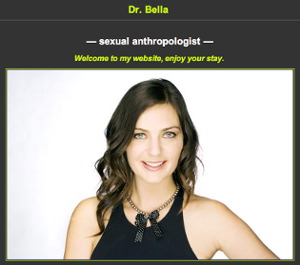
Bella Ellwood-Clayton is sexual anthropologist. As we read in the Washington Post, Bella Ellwood-Clayton has studied texting and dating in the Philippines. On her website you can download the texts Desire and loathing in the cyber Philippines and Unfailthful: Enchantment and disenchantment through mobile use, some of her weekly sex and relationship columns and some poems and short stories.

You can even watch some videos and follow her on her fieldwork in Sumatra, researching beauty as a cultural notion.

>> visit her website

SEE ALSO:

E-mail has become the new snail mail – Text Messaging on Rise

Instant Messaging – Studying A New Form of Communication

Why cellular life in Japan is so different – Interview with anthropologist Mizuko Ito

homepage front page

Bella Ellwood-Clayton is sexual anthropologist. As we read in the Washington Post, Bella Ellwood-Clayton has studied texting and dating in the Philippines. On her website you can download the texts Desire and loathing in the cyber Philippines and…

Read more

Why were they doing this work just to give it away for free? Thesis on Ubuntu Linux hackers

thesis-cover

It all started when anthropologist Andreas Lloyd (University of Copenhagen) was browsing on the Internet looking for a new laptop computer and ended up installing the free Windows alternative Linux. Two years later, he finished his master thesis “A system that works for me” – an anthropological analysis of computer hackers’ shared use and development of the Ubuntu Linux system.

The thesis is a study of the Internet Gift Economy. Linux is developped by computer geeks saround the world, collaborating over the Internet, building a computer operating system in their spare time, which can be downloaded, installed, used and modified completely for free. It is among the biggest and most complex engineering projects ever conceived and built:

Based on more than 2 years of daily use of the Ubuntu Linux system and 6 months of online and in-person fieldwork among the developers working to develop and maintain it, this thesis examines the individual and collaborative day-to-day practices of these developers as they relate to the computer operating system that is the result of their labour.
(…)
A group of Spanish computer scientists measured the size of a Linux system similar to Ubuntu, and found that it contained around 230 million lines of source code. When they translated this into the effort spent on writing this code using a standard software industry cost estimate model, they found that it would correspond to almost 60.000 man-years of work (Amor-Iglesias et. al. 2005). By comparison, it took an estimated 3.500 man-years to build the Empire State Building in New York, and 10.000 man-years to build the Panama Canal. This immense effort makes modern operating systems such as Ubuntu among the biggest and most complex engineering projects ever conceived and built.

So the anthropologist was curious to learn more about how the hackers collaborate to build such an intricate system, and to learn why they were doing all of this work just to give it away for free.

How do you do fieldwork among hackers around the world? He explains:

I joined the Ubuntu on-line community on the same terms as the Ubuntu hackers, contributing to and using the same system, sharing their experiences with the system, and meeting them in-person on the same terms as they do at the conferences at which they gather, experiencing the same social and technical means and limitations through which they develop the system.
(…)
In order to do participant observation in this on-line space, I began contributing to the system by writing the system help and documentation, rather than the system itself due to my lack of technical understanding. In this way, I could take part in shaping Ubuntu alongside other community members while slowly developing a feel for the everyday exchanges and work in the community.

His thesis is by the way neither dedicated to any girl friend nor his parents:

In the true digital spirit of this work, I dedicate this thesis to Rosinante, the laptop on which I first experienced the Ubuntu system, and which was my faithful companion during my fieldwork and the writing of this thesis, only to bow out a week before tsafe for so long.

>> download the thesis

(Links updated 11.1.17)

SEE ALSO:

The Internet Gift Culture

Open source movement is like things anthropologists have studied for a long time

Open Source Fieldwork! Show how you work!

Gift economies and open source software: Anthropological reflections

Why you always get a present you don’t want – Social Sciences and Gift-Giving

Mobile phone company Vodafone gets inspired by traditional Kula exchange system

Open Source Anthropology : Are anthropologists serious about sharing knowledge?

2006 – The Year of Open Access Anthropology?

thesis-cover

It all started when anthropologist Andreas Lloyd (University of Copenhagen) was browsing on the Internet looking for a new laptop computer and ended up installing the free Windows alternative Linux. Two years later, he finished his master thesis "A…

Read more

New website helps save Kenai Peoples language (Alaska)

Their language is nearly dead. Maybe a new website can revitalize Kahtnuht’ana Qenaga: The Kenai Peoples Language in Alaska? For more than two years, the two anthropologists Alan Boraas and Michael Christian have taken pictures, navigated through HTML and digitized old audio recordings of Native writer Peter Kalifornsky in order to present vocabulary, grammar, stories and place names in an interactive Web site that went live last month, the Peninsula Clarion reports.

“I hope people of all ages go to it and gain insights into both the language and the culture,” Boraas says. This project is the latest in the Kenaitze Indian Tribe‘s endeavor to revitalize their Native language. Finding people who actively speak the Dena’ina language is one of the most difficult parts of revitalizing it. The credit for much of the Dena’ina revitalization goes to James Kari, who spent 30 years working on a dictionary.

>> read the whole story in the Peninsula Clarion

>> visit the website Kahtnuht’ana Qenaga: The Kenai Peoples Language

SEE ALSO:

How to save Tibetan folk songs? Put them online!

Knowledge Fades As Africa Languages Die

Modern technology revives traditional languages

Saving native languages

Inuit language thrives in Greenland

Book review: Empires of the Word: A Language History of the World

Their language is nearly dead. Maybe a new website can revitalize Kahtnuht'ana Qenaga: The Kenai Peoples Language in Alaska? For more than two years, the two anthropologists Alan Boraas and Michael Christian have taken pictures, navigated through HTML and digitized…

Read more