search expand

Open Access: New alliances threaten the American Anthropological Association

screenshot

(via media anthropology) What is the purpose of organisations like the American Anthropological Association? What is the point of publishing articles? The free software movement forces anthropologists to rethink these questions, Christopher Kelty says in a conversation about anthopology and open access to scholarship.

The discussion between seven anthropologists was published in the journal Cultural Anthropology. The article Anthropology of/in Circulation: The Future of Open Access and Scholarly Societies is of course available online.

They talk among other things about new divisions between scholary organisations like the AAA and anthropologists who want to engage with the wider world by making their research more accessible online. Now, the largest part of anthropological research is locked behind login forms that only members of subscribed institutions can pass through. The AAA has not taken side with the open access movement but with the commercial publishing industry.

“All anthropologists who want to be part of the revolution in scholarly communication must do so outside of the AAA”, Alex Golub says. The AAA has “made exactly the wrong allies”.

One common argument against free access to scholarship has to do with economics: Journal subscriptions are an important part of the budget of organisations like the AAA.

But Jason Baird Jackson explains:

(I)f we want to think seriously about “sustainability” we must realize that sustaining anthropology means more than sustaining the AAA budget—it means sustaining the viability of research libraries and of our not-for- profit university press partners as well.

More and more research libraries today are responding by partnering directly with scholars to “publish” (…) research, and thus they are expanding the library’s role in new ways. They are trying to make scholarship more open and more sustainable by cutting out the middleman, the publishing companies. In doing so, they might make commercial publishing less profitable and scholarly societies built around toll access publication profits less sustainable.

So whose interests do you align with?

I’d like my efforts to help sustain the AAA, but the association’s interests are now more congruent with those of the publishing industry, not my library or the university presses. As a result the interests of my ethnographic consultants, my university library, my students, and my colleagues are increasingly in conflict with those of my professional society.

Alex Golub adds:

One of the key things about Free Software and Open Access (…) is that it allows things to get done extremely cheaply if you have the people who know how to work the technology. The AAA has failed to develop low-cost solutions using these methods, it has alienated much of a generation of younger scholars willing to devote their time to developing these solutions, and as a result it has thrown up its hands and outsourced this work to institutions like WB (Wiley-Blackwell).

WB then doubles the price of American Anthropologist, and makes money off of the AAA’s inability to manage its own publications program. We are all literally paying the price of the AAA’s inability to keep our house in order.

The AAA has developped AnthroSource where AAA members can browse through hundreds of journals. Jason Baird Jackson says we do not need AnthroSource anymore because of all the blogs, open access and other online initiatives that he calls the “Shadow AnthroSource”:

(I)n a way what is happening now outside of the AAA is a “shadow AnthroSource” that fulfills the ambitions of the original AnthroSource. In its visionary phase, AnthroSource was going to have a subject repository in which we could have put our field notes, white papers, unpublished book manuscripts, etc. I saw this vision die during my first year as an editor.
(…)
However, we do not actually need AnthroSource anymore because we have already built it up out of various bits and pieces outside the AAA framework. We have a subject repository (Mana’o), we have a constellation of weblogs and key metablogs (such as antropologi.info), we have people like Mike Wesch and Chris showing us how to mix and match readily/freely available tools to build powerful research collaboratories (like Digital Ethnography and Anthropology of the Contemporary Research Collaboratory / ARC
(…)
We have organizations like the EVIADA project (Ethnomusicological Video for Instruction and Analysis Digital Archive; ) and individual researchers like Kim building powerful, innovative database tools for use in our research and our collaborations with students and communities, there are people (like Rob Leopold at the National Anthropology Archives) in many archives and museums building great projects to make the archival database more accessible, we have folks like the team organized by the American Folklife Center and the American Folklore Society building metadata tools like the new ethnographic thesaurus, and as Chris noted recently in a SavageMinds blog post, we have more and more OA journals spanning the topical and international diversity of world anthropology.

Will all this stuff somehow function better if it is centralized and put under the control of the home office?

Chris Kelty has recently published a book that is also available online. He compares the internet with a bookstore:

The Open Access argument is simply that making the book available on line was in my interest, because it will mean that it will be easy to find, easy to cite, and easy to use in classes.

But it might also be in Duke’s interest; I made the argument that people are more likely to buy the paper book if they can get a look at the book in its entirety digitally (Harper Collins buys this argument, and has just begun a similar experiment)

I told Duke to think of the website as a bookstore with a huge number of potential visitors, and the on-line version as the browseable version of the book. If a million people download my book, but only 1 percent of them then go on to buy a copy, Duke will still be selling far more copies then they ever dreamed. And what if I sell 5 percent? I’ll be a superstar!

>> read the whole article

>> blog of this publication

UPDATE See also Owen Wiltshire’s comments

SEE ALSO:

AAA: “Open access no realistic option”

American Anthropological Association opposes Open Access to Journal Articles

Open Access: “The American Anthropological Association reminds me of the recording industry”

For Open Access: “The pay-for-content model has never been successful”

Danah Boyd on Open Access: “Boycott locked-down journals”

Is it time to boycott SAGE?

The unacknowledged convergence of open source, open access, and open science

Why were they doing this work just to give it away for free? Thesis on Ubuntu Linux hackers

Plans to study anthropological online communities and Open Access movement

2006 – The Year of Open Access Anthropology?

screenshot

(via media anthropology) What is the purpose of organisations like the American Anthropological Association? What is the point of publishing articles? The free software movement forces anthropologists to rethink these questions, Christopher Kelty says in a conversation about…

Read more

Ainu in Japan: Cool to be indigenous

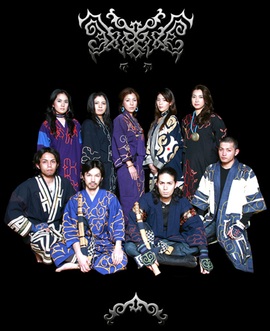
ainu rebels screenshot

Better times for the Ainu in Japan? There is an “revival of ethnic pride” going on in Japan according to ap.

At the forefront are the Ainu Rebels (image). They use music and dance to rebel against a history of institutionalized discrimination. They celebrate being an Ainu by mixing traditional dress, dance and language with hip-hop and rap.

And they’re getting an enthusiastic response from young Japanese. T-shirts, vests and handbags adorned with Ainu motifs are selling well, and Ainu rock musician Oki Kano is making it big with a band featuring the tonkori, a sort of Ainu guitar, ap journalist Malcolm Foster writes. Ethnicity is hip in Japan according to linguist John Maher.

When I visited the indigenous music festival Riddu Riddu in Northern Norway a few years ago, I noticed the strong ties between the Saami and other indigenous people around the world. Riddu Riddu started as a Saami festival but developped into an international festival with guests from Papua New Guinea, Botswana, New Zealand, Nunavut and Greenland.

Contact with other indigenous people was also critical to the Ainu revival. Mina Sakai from the Ainu Rebels tells that her awareness came at age 16 when, on a cultural exchange trip to Canada, she was struck by the passionate way Canadian indigenous people danced and sang:

“I was shocked. They were so cool and so proud of being native Canadians. I realized that I have a beautiful culture and strong roots. I decided that I should be a proud Ainu and express that in my life.”

In June, Japan’s parliament recognized the Ainu as an indigenous people – a major shift from the mid-1980s when Yasuhiro Nakasone, the then prime minister, declared that Japan was a homogenous nation with no minorities.

>> read the whole ap-story “Ainu rise up from the margins of society in Japan, celebrate long-hidden culture”

The article also mentions Ann-Elise Lewallen, an American cultural anthropologist at Hokkaido University who has worked closely with the Ainu community for 10 years. But I could not find info about her online.

LINKS UPDATED 18.7.2024

SEE ALSO:

Inuit language thrives in Greenland

“Pop culture is a powerful tool to promote national integration”

The cultural nationalism of citizenship in Japan and other places

How Media and Digital Technology Empower Indigenous Survival

“But We Are Still Native People” – Tad McIlwraith’s dissertation is online

Indigenous people no victims of globalisation: Alex Golubs dissertation on mining and indigenous people

Open Access to Indigenous Research in Norway

How filmmaking is reviving shamanism

Thomas Hylland Eriksen on Cosmoculture: Preferably more art than books!

ainu rebels screenshot

Better times for the Ainu in Japan? There is an "revival of ethnic pride" going on in Japan according to ap.

At the forefront are the Ainu Rebels (image). They use music and dance to rebel against a history of…

Read more

Development anthropology via the mobile phone

screenshot

With mobile banking taking off around much of the developing world, how long will it be before international aid is delivered electronically, asks anthropologist Ken Banks in PC World.

Banks is the founder of kiwanja, an organisation, that helps non-profit organisations to make better use of information and communications technology in their work – of course with an anthropological perspective. “Anthropology is interestingly the area which raises the most eyebrows among delegates at conferences”, he writes on his website.

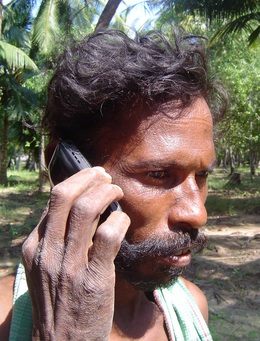
phone user

He writes:

As our ever-expanding digital world slowly reaches some of the poorest and marginalized members of society, opportunities to deliver financial aid to them electronically becomes less myth and more reality.

Mobile phone users in a growing number of developing countries can already pay for goods and services wirelessly through their mobile phones, and there are few technical challenges in allowing someone in the U.K., for example, to make a direct donation to a user in Kenya by way of airtime credit to their phone.

Just as the Internet redefined the way we shop, the mobile phone will likely end up doing the same for international aid.

>> read the whole article in PC World.

There’s a lot to explore on Kiwanja’s website and elsewhere on the web . Some weeks ago he wrote the article Anthropology’s Technology-driven Renaissance (PC World), Africa’s grassroots mobile revolution – a traveller’s perspective (Vodafone Retriever). And his projects were presented by the BBC (Mobile development rings true), Global Voices (Zimbabwe: Using New Technologies to Fight for Democracy) and Mongabay.com (Cell phones, text-messaging revolutionalize conservation approaches – An interview with IT conservation expert Ken Banks)

Some of you might remember an related article in the New York Times by ethnographer Jan Chipchase Can the Cellphone Help End Global Poverty?.

(Image courtesy of www.kiwanja.net)

SEE ALSO:

Why the head of IT should be an anthropologist

How Media and Digital Technology Empower Indigenous Survival

Ethnographic reports about the uses of ICT in low-income communities

“The science of ethnography is an ideal tool to designing mobile phones”

Mobile phone company Vodafone gets inspired by traditional Kula exchange system

screenshot

With mobile banking taking off around much of the developing world, how long will it be before international aid is delivered electronically, asks anthropologist Ken Banks in PC World.

Banks is the founder of kiwanja, an organisation, that helps…

Read more

En overraskelse at barna sliter?

Nyheten om at barn på asylmottak sliter psykisk er blitt slått opp i mange aviser. For alle som kjenner til Norges asylpolitikk og situasjonen på mottakene ville heller det motsatte vært en bombe.

– Usikkerhet, frykt, trangboddhet og frustrerte foreldre preger barnas liv i mottakene. Halvparten av asylmottakene har ikke kapasitet til å følge opp barnas problemer, sier antropolog Hilde Lidén som har studert asylbarnas hverdag.

Forskningsarbeidet “Asylbarn og barns rettigheter” er gjort på oppdrag for Redd Barna og publiseres i høst.

Norsk Folkehjelp driver flere asylmottak. Informasjonssjef Ivar Christiansen bekrefter Lidéns funn og mener økt bemanning og et større aktivitetstilbud kan bidra til å forebygge psykiske problemer. Men, sier han, det er ikke mulig med dagens ressurser.

>> les hele saken i Dagsavisen

Jeg har selv jobbet på et asylmottak der en tredjedel av beboerne sleit med psykiske problemer. Vi var tre til fire ansatte i et mottak med rundt hundre beboere. Jeg fikk vite at samme mottak hadde tre ganger så mange ansatte for en del år siden før driften av mottakene ble privatisert og lagt ut på anbud. UDI overlater driften av mottakene til organisasjonen / firmaet som er billigst.

Dette systemet er ikke bare dårlig for beboerne men også for de ansatte. Det er stor gjennomstrømming og nesten ingen av oss holdt ut lenger enn ett år.

Antropolog Anne Barlindhaug har vært på feltarbeid i et asylmottak for enslige mindreårige. Hun har lagt merke til “store humørsvingninger”. Den ene dagen kan ungdommene virke glad og fornøyd, den neste dagen er de depressive og vil helst dø. En viktig grunn, skriver hun, er den lange ventetiden som bl.a. UDI er ansvarlig for.

>> les hele saken “En etnografi fra et asylmottak for enslige mindreårige”

I en annen rapport har Hilde Lidén påpekt at Utlendingsforvaltningen ikke tar ikke barnas interesser på alvor

Nyheten om at barn på asylmottak sliter psykisk er blitt slått opp i mange aviser. For alle som kjenner til Norges asylpolitikk og situasjonen på mottakene ville heller det motsatte vært en bombe.

- Usikkerhet, frykt, trangboddhet og frustrerte foreldre…

Read more

Journal Ethnologie: “Tribal Colleges”, Nunavut, Indianer-Tourismus und heimliche Gesänge

Journal Ethnologie macht keine Sommerpause. Die vierte Ausgabe dieses Jahres ist im Netz und handelt von Indianern und Inuit in Nordamerika.

Sehr spannend ist der Text von Anne Grob. Tribal Colleges. Indianisch geführte Universitäten als Symbole von Hoffnung und Stolz heisst er und basiert auf ihrer Magisterarbeit. Trotz ihrer Bedeutung für indianische Gemeinschaften seien diese Hochschulen, die teils auch Magisterabschluesse anbieten, kaum bekannt, lesen wir.

Ein Großteil der Tribal Colleges befindet sich weitab von Städten und in der Nähe von Reservationen. Sie bieten Leuten eine Hochschulausbildung, die für viele sonst nur schwer zu erreichen wäre. Die Autorin zitiert einen Experten, der die Entstehung von Tribal Colleges als “die wichtigste Entwicklung innerhalb indianischer Gemeinschaften seit dem Zweiten Weltkrieg” bezeichnet.

Obwohl sie allen offenstehen, sind die meisten Studenten “Native Americans”. Das Lehrpersonal besteht jedoch hauptsächlich als nichtindianischen Personen. Doch der Anteil an indianischen Dozenten nimmt zu, schreibt Anne Grob

>> zum Text in Journal Ethnologie

Sehr interessant ist auch der Text Navajo Zeremoniallieder der 1930er-Jahre zwischen dynamischer Tradition, Kulturerbepolitik und Political Correctness von Rainer Hatoum. Eine 1300 Wachswalzen umfassende Sammlung von Heilgesängen, die im Berliner Phonogramm-Archiv aufbewahrt wird, soll den Navajo wieder zur Verfügung gestellt werden. Wie wäre es z.B. mit einer CD mit diesen Gesängen? Doch längst nicht alle Navajo sind von dieser Idee begeistert:

Weite Teile der Klah-Sammlung wurden aus „Navajo-Perspektive“ nicht nur im Hinblick auf ihre Nutzbarkeit als „wertlos“ betrachtet, sondern von einer Reihe von Gesprächspartnern als geradezu „gefährlich“.
(…)
Für strenggläubige Navajo handelt es sich bei den Klah-Aufnahmen um ein Gut, das überhaupt nicht existieren dürfte und mit dem man in dieser vollkommen unkontrollierten Form nichts zu tun haben möchte. Für diese Gruppe von Gesprächspartnern ist „Wissen“ im wahrsten Sinne des Wortes „Macht“.

>> zum Text in Journal Ethnologie

Torsten Diesel war auf Feldforschung in Iqaluit, der Hauptstadt Nunavuts. Im Text Nation Building in Nunavut. Kulturelle Identität und politische Symbolik erfahren wir, dass Nation Building der politischen Elite Nunavuts “monokulturell” ausgerichtet ist mit nur wenigen “multiethnischen Ansätzen”.

Indianerreservationen werden als Reiseziele immer wichtiger. Davon berichtet Markus H. Lindner im Artikel Indianer-Tourismus in Nordamerika. Chance und Gefahr

Der Text von Susanne Jauernig gibt uns einen Einblick in die Keramiktradition in Zuni, New Mexico/USA

Journal Ethnologie macht keine Sommerpause. Die vierte Ausgabe dieses Jahres ist im Netz und handelt von Indianern und Inuit in Nordamerika.

Sehr spannend ist der Text von Anne Grob. Tribal Colleges. Indianisch geführte Universitäten als Symbole von Hoffnung und Stolz…

Read more