search expand

Dansk antropolog leder »Projekt Hip Hop Palæstina«

“Det, der optager mig mest, er at give de unge en stemme, så de kan komme af med deres frustrationer. Hip hop er et værktøj”, sier antropologen Janne Andersen. 25åringen leder »Projekt Hip Hop Palæstina« i Vestbredden, skriver Berlingske Tidende.

Avisa har snakket med flere deltakere, bl.a. Balqees Farraz, en av to jenter som driver med Breakdance:

Jeg valgte breakdance for at kunne udtrykke min vrede og smerte. Vi lever under Israels besættelse. Der er en smerte inden i os, som vi kan bruge dansen til at formulere.

Rapperen Sameh Zakout mener hip hop kan lage broer:

Vores politikere har ikke formået at forbedre situationen her – tværtimod. Musik og kunst har altid været en vej til at styrke og redde bevægelser for eksempel i Sydafrika og Algeriet. Hiphop har åbnet en masse døre for mig som palæstinenser. De unge kan bruge musikken til at skabe sig en bedre fremtid – frem for at kaste med sten. Jeg ved, hvordan det er at blive arresteret eller skudt på. Det kan gøre en sindssyg.

>> les hele saken i Berlingske Tidende

Thomas Hylland Eriksen sa nylig noe lignende på et seminar: Heller mer kunst enn flere bøker!

SE OGSÅ:

Avkoloniserer Sapmi med joiken

Socially conscious hip-hop is worldwide phenomenon

"Det, der optager mig mest, er at give de unge en stemme, så de kan komme af med deres frustrationer. Hip hop er et værktøj", sier antropologen Janne Andersen. 25åringen leder »Projekt Hip Hop Palæstina« i Vestbredden, skriver Berlingske Tidende.

Avisa…

Read more

Antropolog skal skape liv i bygda

I Mehamn ender veien mot nord. Lengre nord kommer du ikke i Fastlands-Norge. Kommunen har nå ansatt antropologen Marte Teie Hellum for å styrke turistinformasjonen og legge til rette for framtidig turisme, leser vi på Gamvik kommunes hjemmeside.

Antropologer kan brukes til mye. Kommunen framhever bl.a. Marte Teie Hellums kontakter med utlandet og perspektivet utenfra.

Hun forteller:

– Jeg har fortalt om og sendt bilder fra Gamvik til mange venner i Norge og Europa ellers. Alle får lyst å komme hit når de får høre om og se dette flate, ville landskapet med Slettnes fyr på tuppen. (…) I likhet med meg selv, tror jeg også andre som kommer utenfra, vil oppleve Gamvik som både eksotisk og vakkert.

Marte Teie Hellum tror “det uberørte landskapet, menneskene og fortellingene deres kan inspirere til mange typer virksomhet” og at derfor “mennesker med interesse for kunst og kultur kan finne seg til rette i dette miljøet”.

>> les hele saken

Antropologen planlegger bl.a. et kurs i økologisk vin-smaking og et tangokurs og en fotokonkurranse.

Marte Teie Hellum har mastergrad fra Universitetet i Bergen. Hun skrev masteroppgaven Hvem er du? Selvbevissthet: visshet og uvisshet i Nuba Mountains, Sudan

(Jeg jobbet på samme turistinformasjon i 1995 og syntes også det var en veldig spesiell plass.)

SE OGSÅ:

Månedens antropolog: Fra palestinsk aktivisme til merkevarebygging i Telemark

– Turister søker det lokale og tradisjonelle

Telemarkskua, bygdeliv og næringsutvikling

Antropologer kritisk mot økoturisme

I Mehamn ender veien mot nord. Lengre nord kommer du ikke i Fastlands-Norge. Kommunen har nå ansatt antropologen Marte Teie Hellum for å styrke turistinformasjonen og legge til rette for framtidig turisme, leser vi på Gamvik kommunes hjemmeside.

Antropologer kan…

Read more

Anthropologist explores heavy metal in Asia, South America and the Middle East

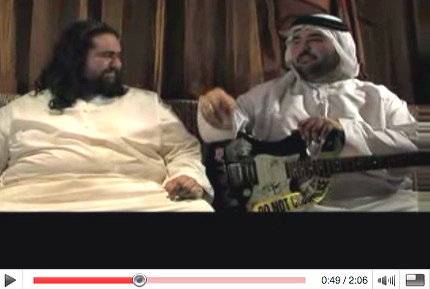
In 2005 his movie Metal – A Headbanger’s journey took the world with storm. Now anthropologist and metal musician Sam Dunn has released “Global Metal” – a film about the global expansion of heavy metal music.

Together with his co-director Scot McFayden, Dunn visited metal fans in Brazil, Japan, China, Indonesia, Israel and Iranian metal fans in Dubai.

The film seems to be especially relevant for theories on globalisation, cosmopolitanism, and social movements. As we read on the film’s homepage:

GLOBAL METAL reveals a worldwide community of metalheads who aren’t just absorbing metal from the West – they’re transforming it. Creating a new form of cultural expression in societies dominated by conflict, corruption and mass-consumerism.

Reviewer Liz Braun notes in the Winnipeg Sun:

In every country, metal has been bent and remade to reflect the culture. In India, metal fans talk about Bollywood music. In China, kids learn metal licks at a music school devoted to rock. Kaiser Kuo of the band Tang Dynasty talks about the underground metal scene in Beijing. In the Middle East, a Muslim says, “I got caught by the religious police for wearing a Slayer T-shirt and having long hair.”

(…)

Global Metal confirms that music is an international language. Particularly in countries where war and oppression are the norm, metal seems to represent a crucial outlet for emotional expression.

Unlike many facets of so-called “Western culture”, metal has not been spread by mass media, but rather by word of mouth and the internet. After the success of their first film, Dunn began receiving emails from places he didn’t even know had a metal culture, he tells to The Age:

There were a lot of countries that didn’t get proper distribution of the film, and we started to get emails from India and Iran, from people saying, “We’ve heard about the film or downloaded it, but come and check out metal in our country.”

We knew about metal in places like Brazil and Japan; we didn’t know the full extent of how metal is spread around the world.

In an interview with twitchfilm.net, Scot McFayden says that they even hired researchers for their movie.

Sam Dunn tells that he was especially surprised about heavy metal in Israel:

I was really struck by our experience in Israel actually and the degree to which the Metal that the Israeli kids listen to and perform has such a strong personal relevance for them.

When I was growing up as a Metalhead, the lyrics were never necessarily reflecting something I was going through as a person. (…) But to go to Israel and talk with people that are living through a day to day reality of conflict and war. It was quite eye-opening for me and I realized that Metal can mean something very different to people depending on where you come from.

In an interview with Victoria Times Colonist he says learning about metal communities in other countries changed his views on Heavy Metal:

Being a fan of metal in Iran means you’re putting, at some extent, your personal safety at risk. Kids have had their hair cut [off], their T-shirts taken away, rehearsal rooms raided and gear confiscated, so we realized being a metal-head is a far greater statement [there] than being a snotty-nosed teenager with a Slayer shirt who wants to piss off your parents.

According to the SeeMagazine, “Dunn is a major reason the film is so charming”:

He’s tall and lanky, forever wearing the same Mastodon t-shirt and awkwardly tucking his shoulder-length blond hair behind his ears. That earnest, unassuming quality makes him a likable character, but it also makes him an extremely effective interviewer: everyone seems to want to talk to the guy—not just Chinese record store owners and struggling metal bands from Iran, but ex-Megadeth guitarist Marty Friedman (who now makes his career appearing on Japanese variety television) and even Lars Ulrich, the notoriously prickly drummer for Metallica.

SEE ALSO:

The Rediff Interview/Nandini Chattopadhyay: Music and Protest

Socially conscious hip-hop is worldwide phenomenon

Cultures of Music Piracy: An Ethnographic Comparison of the US and Japan

How does music create community? Interview with Jan Sverre Knudsen and Stan Hawkins

filmtrailer

In 2005 his movie Metal - A Headbanger's journey took the world with storm. Now anthropologist and metal musician Sam Dunn has released "Global Metal" - a film about the global expansion of heavy metal music.

Together with his co-director Scot…

Read more

Ethnographic study of anti-corporate globalization movements

cover

“I had never seen anything like it. I knew immediately that I wanted to study this phenomenon”, says

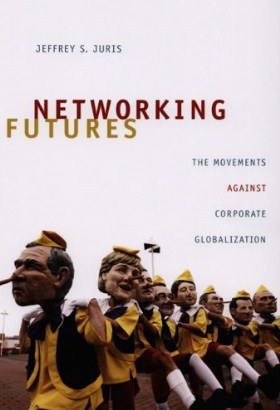
 anthropologist Jeffrey S. Juris. In 1999 he participated in the protests against the World Trade Organization meeting in Seattle. Now he has published an ethnography of the transnational anti-corporate globalization movements called Networking Futures: The Movements Against Corporate Globalization.

The book chronicles his experiences organizing and participating in protests from Seattle to Prague to Barcelona. From his base in Barcelona, he followed their connections and movements around the world. He explains how activists are not only responding to growing poverty, inequality, and environmental devastation but also building social laboratories for the production of alternative values, discourses, and practices.

>> more information on the Arizone State University website

>> website of the book

I’ve been fascinated by this topic as well. When I was considering starting with a doctorate a few years ago, I wanted to do multisited field work at the World Social Forums where activists from all over the world meet. In 2004, I wrote an article for the Norwegian Attac magazine Utveier about the World Social Forum in Mumbai, India:

Hindus and Muslims eat breakfast together; Christian nuns join Tibetan monks in a chant. At the World Social Forum in India, getting to know the person sitting next to you was at least as important as hearing the speeches by the stars in the movement for a just globalisation.
(…)
The Indian newspapers were thrilled at the amount of people from all countries of the world who came seeking knowledge. “There’s something intoxicating about ordinary people from all parts of the world gathering at one place,” The Times of India writes, telling enthusiastically about an Australian woman trying to understand the struggle of the Telugu farmers, and about a burly Austrian asking a petite Tibetan girl about her leaflet against the Chinese occupation.

>> read the whole article

SEE ALSO:

Chronicles Women’s Social Movements in India

John Postill on media anthropology and internet activism in Malaysia

David Graeber: There never was a West! Democracy as Interstitial Cosmopolitanism

New journal: “Radical Anthropology” with David Graeber

Get Out of the Library and Into the Streets – new book by David Graeber

“Anthropology needs to engage in an activist way”

cover

"I had never seen anything like it. I knew immediately that I wanted to study this phenomenon", says

 anthropologist Jeffrey S. Juris. In 1999 he participated in the protests against the World Trade Organization meeting in Seattle. Now he has…

Read more