search expand

Forsker på "Norges mest flerkulturelle menighet"

Den katolske St.Olav-menigheten i Oslo er “Norges mest flerkulturelle menighet” ifølge antropolog Sidsel Mæland. De troende kommer fra 138 ulike land. I St.Olav feirer de gudstjenester på polsk, vietnamesisk, tagalog, ungarsk, kroatisk, spansk, engelsk og norsk. Nordmenn er en minoritet og utgjør ca 40% av medlemmene og antakelig rundt 20% av kirkegjengerne.

Mæland holder på med et doktorgradsprosjekt der hun skal undersøke hvordan dette fellesskapet som går på tvers av språk og etnisitet faktisk fungerer. Likhetsdiskursen i kirken, som går ut på at alle katolikker deler de samme verdiene og har de samme behovene, ser ut til å fungere som en støtdemper mellom de ulike språkgruppene i kirken, sa hun da hun nylig presenterte prosjektet sitt.

De fleste katolikkene hun har snakket seg ikke som en religiøs minoritet, men som medlem av en verdensreligion. Kirken er universell og dette gjør nasjonale grenser uinteressante.

>> les hele saken (lenke oppdatert)

SE OGSÅ:

Fram med den dagligdagse kosmopolitismen

Slik skaper de et felles verdigrunnlag

Researches neo-paganism in an overwhelmingly Catholic society

Den katolske St.Olav-menigheten i Oslo er "Norges mest flerkulturelle menighet" ifølge antropolog Sidsel Mæland. De troende kommer fra 138 ulike land. I St.Olav feirer de gudstjenester på polsk, vietnamesisk, tagalog, ungarsk, kroatisk, spansk, engelsk og norsk. Nordmenn er en…

Read more

Doktoravhandling: Forskjellene mellom offentlige og muslimske skoler er overdrevet

friskoler-cover

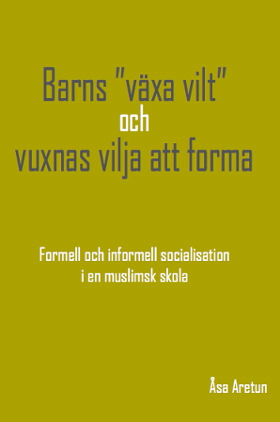
Antropolog Åsa Aretun (Linköpings universitet) har vært på feltarbeid på en muslimsk friskole i Sverige i ett år. Igår forsvarte hun sin doktoravhandling Barns ”växa vilt” och vuxnas vilja att forma: Formell och informell socialisation i en muslimsk skola.

Debatten om muslimske friskoler er polarisert. Til Östgöta Correspondenten sier antropologen at debatten har et utpreget voksenperspektiv. En går utifra at skolen har en stor påvirkning på barnas utvikling. Men slik er det ikke:

– Men min forskning visar att det inte är så. Barn umgås framför allt med andra barn under skoldagen och det är i det samspelet, och i familjen, som barnen framför allt formas som individer.

Forskjellene mellom den offentlige skolen og muslimske friskoler er overdrevet, mener hun:

– Skolmiljöer är ungefär likadana. Elever umgås förbluffande lite med vuxna under en skoldag, utan nästan bara med varandra. De tycker att det är trist att vara tysta och att ägna sig åt skolarbete hela tiden och tar ofta möjligheten att tänja lite på gränserna. Så var det i den muslimska skolan också.

– Föräldrarna kopplar av lite grann och bevakar inte barnen lika hårt som om de hade gått i en kommunal skola. Men barn på muslimska friskolor är lika nyfikna på sin omvärld som andra barn och agerar därefter.

>> les hele saken i Östgöta Correspondenten

>> last ned doktoravhandlingen

SE OGSÅ:

– Elever fra muslimske friskoler klarer seg best

Antropolog: “Muslimske friskoler er for autoritære”

Doktoravhandling: Skolen skaper skiller

friskoler-cover

Antropolog Åsa Aretun (Linköpings universitet) har vært på feltarbeid på en muslimsk friskole i Sverige i ett år. Igår forsvarte hun sin doktoravhandling Barns ”växa vilt” och vuxnas vilja att forma: Formell och informell socialisation i en muslimsk skola.

Debatten om…

Read more

Norske antropologer som spioner for E-tjenesten?

Blant de ansatte i Forsvarets etterretningstjeneste fins også antropologer, forteller oberstløytnant Petter Lindqvist til VG. Vi får også vite at E-tjenesten har rekruttert nordmenn med bakgrunn fra Afghanistan, Pakistan og Iran og sendt dem ut som etterretningsagenter til Afghanistan. E-tjenesten etterspør nemlig språkkunnskap og kulturkunnskap. Det kommer frem i boken “Norges hemmelige kriger” skrevet av VG-journalist Tom Bakkeli. >> les hele saken i VG

Nå får vi ikke vite detaljene om antropologenes arbeidsfelt. Men i USA og England jobber flere og flere antropologer for militæret og etterretningsorganisasjoner. Denne militariseringen av antropologien er et av fagets mest omdiskuterte temaene, se bl.a. her:

Forskere som spioner? Etterretningsorganisasjoner betaler antropologer for å “forske“ på muslimer. I militære fagtidsskrifter brukes uttrykk som “kulturbasert krig“

The dangerous militarisation of anthropology

I Sverige: Antropologer utdanner soldater

Månedens antropolog: Tone Danielsen, rådgiver i Forsvaret

Fredrik Barth underviste Hæren om Afghanistan

“Tribal Iraq Society” – Anthropologists engaged for US war in Iraq

San Jose: American Anthropologists Stand Up Against Torture and the Occupation of Iraq and AAA Press Release: Anthropologists weigh in on Iraq, torture at annual meeting

Blant de ansatte i Forsvarets etterretningstjeneste fins også antropologer, forteller oberstløytnant Petter Lindqvist til VG. Vi får også vite at E-tjenesten har rekruttert nordmenn med bakgrunn fra Afghanistan, Pakistan og Iran og sendt dem ut som etterretningsagenter til Afghanistan. E-tjenesten…

Read more

Why were they doing this work just to give it away for free? Thesis on Ubuntu Linux hackers

thesis-cover

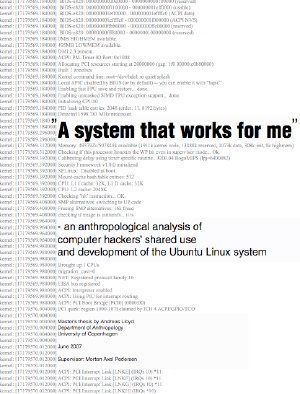
It all started when anthropologist Andreas Lloyd (University of Copenhagen) was browsing on the Internet looking for a new laptop computer and ended up installing the free Windows alternative Linux. Two years later, he finished his master thesis “A system that works for me” – an anthropological analysis of computer hackers’ shared use and development of the Ubuntu Linux system.

The thesis is a study of the Internet Gift Economy. Linux is developped by computer geeks saround the world, collaborating over the Internet, building a computer operating system in their spare time, which can be downloaded, installed, used and modified completely for free. It is among the biggest and most complex engineering projects ever conceived and built:

Based on more than 2 years of daily use of the Ubuntu Linux system and 6 months of online and in-person fieldwork among the developers working to develop and maintain it, this thesis examines the individual and collaborative day-to-day practices of these developers as they relate to the computer operating system that is the result of their labour.
(…)
A group of Spanish computer scientists measured the size of a Linux system similar to Ubuntu, and found that it contained around 230 million lines of source code. When they translated this into the effort spent on writing this code using a standard software industry cost estimate model, they found that it would correspond to almost 60.000 man-years of work (Amor-Iglesias et. al. 2005). By comparison, it took an estimated 3.500 man-years to build the Empire State Building in New York, and 10.000 man-years to build the Panama Canal. This immense effort makes modern operating systems such as Ubuntu among the biggest and most complex engineering projects ever conceived and built.

So the anthropologist was curious to learn more about how the hackers collaborate to build such an intricate system, and to learn why they were doing all of this work just to give it away for free.

How do you do fieldwork among hackers around the world? He explains:

I joined the Ubuntu on-line community on the same terms as the Ubuntu hackers, contributing to and using the same system, sharing their experiences with the system, and meeting them in-person on the same terms as they do at the conferences at which they gather, experiencing the same social and technical means and limitations through which they develop the system.
(…)
In order to do participant observation in this on-line space, I began contributing to the system by writing the system help and documentation, rather than the system itself due to my lack of technical understanding. In this way, I could take part in shaping Ubuntu alongside other community members while slowly developing a feel for the everyday exchanges and work in the community.

His thesis is by the way neither dedicated to any girl friend nor his parents:

In the true digital spirit of this work, I dedicate this thesis to Rosinante, the laptop on which I first experienced the Ubuntu system, and which was my faithful companion during my fieldwork and the writing of this thesis, only to bow out a week before tsafe for so long.

>> download the thesis

(Links updated 11.1.17)

SEE ALSO:

The Internet Gift Culture

Open source movement is like things anthropologists have studied for a long time

Open Source Fieldwork! Show how you work!

Gift economies and open source software: Anthropological reflections

Why you always get a present you don’t want – Social Sciences and Gift-Giving

Mobile phone company Vodafone gets inspired by traditional Kula exchange system

Open Source Anthropology : Are anthropologists serious about sharing knowledge?

2006 – The Year of Open Access Anthropology?

thesis-cover

It all started when anthropologist Andreas Lloyd (University of Copenhagen) was browsing on the Internet looking for a new laptop computer and ended up installing the free Windows alternative Linux. Two years later, he finished his master thesis "A…

Read more

“Anthropology = Smarter Counterinsurgency”

Another article about military anthropologists: The Christian Science Monitor writes about anthropologist “Tracy” who helps the US Army in their war against Afghanistan. Tracy “can give only her first name” to the journalist:

Evidence of how far the US Army’s counterinsurgency strategy has evolved can be found in the work of a uniformed anthropologist toting a gun in the mountains of eastern Afghanistan. Part of a Human Terrain Team (HHT) – the first ever deployed – she speaks to hundreds of Afghan men and women to learn how they think and what they need.
(…)
Finding ways to challenge that fear – and learn what makes Afghans choose to support the government or its enemies – is the job of the HTT. The key ingredient is a “senior cultural analyst,” in this case, Tracy, the anthropologist in uniform.

She has interviewed hundreds of Afghan women and men, sometimes for hours on end, hearing how most are “so tired of war.” In nine months, Tracy has gained deep knowledge, she says, aimed at helping “fill the vacuum that the Taliban and other nefarious actors want to fill.”

Tracy tells Afghans that she wants to “enhance the military’s understanding of the culture so we don’t make mistakes like in Iraq.” But the bar is high, and this village with the medical clinic shows signs of militant influence, such as being “coached.”

Still, Tracy says that she sees real progress, “one Afghan at a time.” And the US military’s views are evolving accordingly, away from firepower to a smarter counterinsurgency.

“It may be one less trigger that has to be pulled here,” Tracy says of the result. “It’s how we gain ground, not tangible ground, but cognitive ground. Small things can have a big impact.

>> read the whole story in the Christian Science Monitor

SEE ALSO:

The dangerous militarisation of anthropology

“Tribal Iraq Society” – Anthropologists engaged for US war in Iraq

Military – social science roundtable: Anthropologists help mold counterinsurgency policy

Protests against British research council: “Recruits anthropologists for spying on muslims”

More and more anthropologists are recruited to service military operations

Military anthropologist starts blogging about his experiences

San Jose: American Anthropologists Stand Up Against Torture and the Occupation of Iraq and AAA Press Release: Anthropologists weigh in on Iraq, torture at annual meeting

“War on terror”: CIA sponsers anthropologists to gather sensitive information / see also debate on this on Savage Minds

Another article about military anthropologists: The Christian Science Monitor writes about anthropologist "Tracy" who helps the US Army in their war against Afghanistan. Tracy "can give only her first name" to the journalist:

Evidence of how far the US Army's…

Read more