search expand

SZ ueber Ethnologen-Protest: “Nachwuchswissenschaftler arbeiten zum Nulltarif”

Sie arbeiten für 0 bis 400 Euro pro Semester – ohne Vertrag, ohne Sozialversicherung, ohne Lohnzettel. Jetzt wehren sich die Lehrbeauftragten der Münchner Hochschulen, schreibt die Sueddeutsche Zeitung ueber eine Protestveranstaltung an der Uni Muenchen.

Die Lehrbeauftragten in der Muenchner Ethnologie seien so verzweifelt, dass sie “laut darüber nachdenken, im Sommersemester keine Lehraufträge zu übernehmen”.

Die SZ schreibt weiter:

Nur noch vier Professoren betreuen rund 1300 Studenten, bald werden es nur noch drei sein, sagt Institutsleiter Matthias Laubscher. Weitere Posten im Mittelbau der akademischen Mitarbeiter und Stellen, die über Drittmittel finanziert waren, sind ebenfalls weggefallen. “Wir sind auf die Lehrbeauftragten unmittelbar angewiesen”, so Laubscher, sonst könnten die Studenten nur doch die Basics hören, nicht aber das Neue, das Spannende von den Rändern der Teildisziplinen.

(…)

“Ich bin ratlos”, gesteht Institutschef Laubscher. “Wir können nur als Bettler auftreten”.

Uni-Rektor Bernd Huber sieht wenig Möglichkeiten, an der Lage etwas zu ändern. An einem solchen Beispiel werde einmal mehr manifest, wie “chronisch unterfinanziert” die Hochschulen seien, sagt er zur SZ.

>> weiter im der SZ (link korrigiert)

>> mehr Info auf der Protestblog

SIEHE AUCH:

Proteste geplant: Zukunft der Ethnologie in München in Gefahr?

Sie arbeiten für 0 bis 400 Euro pro Semester - ohne Vertrag, ohne Sozialversicherung, ohne Lohnzettel. Jetzt wehren sich die Lehrbeauftragten der Münchner Hochschulen, schreibt die Sueddeutsche Zeitung ueber eine Protestveranstaltung an der Uni Muenchen.

Die Lehrbeauftragten in der…

Read more

“A Season in Mecca” – New book about real participant observation as a mecca pilgrim

Priceton University presents a new book which might be an example for good anthropological writing. It’s a book about the Hajj-pilgrimage to Mecca by anthropologist Abdellah Hammoudi:

Written in the first person, “A Season in Mecca” reads like a novel and is filled with descriptions and personal reflections. It follows a narrative structure, starting with journal entries Hammoudi wrote at his Princeton home before embarking for North Africa and the Middle East, and ending with his departure from Saudi Arabia, which is where Mecca and other sites central to the hajj are located.

Approximately 2 million Muslims travel to Mecca annually. The hajj is one of the five pillars of Islam — along with profession of faith, prayer, fasting and alms giving. It is obligatory for every Muslim man or woman, who has the means, to do once in a lifetime. “According to Muslim tradition, the hajj purifies you from sin, puts you on the right path, and brings the mercy of God in you for a good life here and in the hereafter”, says anthropologist Abdella Hammoudi, author of the book which became available in English in January.

Hammoudi grew up in Morocco and moved later to France. He says, he knew that the project would be “problematic” for him because of the tension he felt arose from his dual education (both religious and secular). But, and this is interesting, “it was precisely this cultural and educational hybridity that he saw as integral to his study of the hajj”.

“I would not have done this [project] as an anthropologist without that sense of existential risk-taking. I went as a cultural Muslim with empathy, and also with distance. I went also with the openness to take the risk to revise everything I had lived with until now.”

>> read the whole story

>> read an excerpt of the book (OpenDemocracy)

>> Review of the book in the Christian Science Monitor: He traveled to Mecca in search of himself

SEE ALSO;

The Secret of Good Ethnographies – Engaging Anthropology Part III

Priceton University presents a new book which might be an example for good anthropological writing. It's a book about the Hajj-pilgrimage to Mecca by anthropologist Abdellah Hammoudi:

Written in the first person, “A Season in Mecca” reads like a novel and…

Read more

Anthropologist Pnina Werbner on Muhammad-cartoons: ‘Satanic Verses Taught us a Lesson’

No newspaper in Britain has published the Muhammad-cartoons. “There are some lessons (the British) learned from “The Satanic Verses” that I’m afraid others in Europe still need to learn”, anthropologist Pnina Werbner says in an interview with Der Spiegel:

During the Rushdie affair, there was also a major discussion about the limits of freedom of speech. The debate made it clear that despite our invocations of freedom of speech, even in the West freedom of speech is not absolute. After all, limits are set on pornography, for example.

Freedom of speech today is to a large extent exercised through self-censorship — not only through legislation, but by commercial interests, such as newspapers and publishing houses. They constantly make decisions about what should or shouldn’t get publicized — partly in response to audiences, partly in response to commercial interests, partially in response to the sensibilities of their viewers or readers.

You can say what you like in the privacy of your own home, but if you try to get it published, to get your voice heard in public, you will find that your opinions may be unacceptable for purely commercial or pragmatic reasons.

(…)

Their passionate belief is puzzling and alien to us. But we have to understand that, precisely because ordinary Muslims are also deeply offended, for that reason such apparently light-hearted satire will play into the hands of the extremists, the very people whom these cartoons were meant to criticize.

They are the ones who are benefiting most from the cartoons. For them, this is a huge PR coup, which enables them to recruit young people to the radical cause of Islam. In this sense the publication of the cartoons has backfired and that, I think, is the real indictment of the cartoonists. They’ve mobilized people all over the Muslim world against the West.

>> read the whole interview in DER SPIEGEL (International edition)

MORE ANTHROPOLOGISTS ON THIS ISSUE

Daniel Martin Varisco: Much Ado about Something Rotten in Denmark (My own view, even as a satirist who idolizes Montesquieu and Swift, is that the best public course is one of “freedom of discretion” at a time when there is such misunderstanding on all sides) og Loony Tunes: The War Draws On (It is bad enough that we have a war of bombs and bullets exasperated by a war of words. Do we really need to have cartoonists drawn into the fray?)

Erkan Saka: Danish Media’s Representations of Islam by anthropologist Peter Hervik and A call for respect and calm (both posts have many useful links among others Danish paper rejected Jesus cartoons and Trampling others’ beliefs in defence of yours.)

Kambiz Kamrani: Cultural relativism meets freedom of speech with the Danish cartoons and Muslim protests (He reviews several blog comments and concludes: “With the publication of these cartoons, this distance of understanding and communication is further gapped because we’re ultimately fueling an already burning fire.”)

www.sorrydenmarknorway.com – Arab and Muslim youth initiative (The problem with media representation of such issues tends to be that the media only picks up the loudest voices, ignoring the rational ones that do not generate as much noise.)

SEE ALSO:

Special Report Cartoon Protests (The Guardian)

Arab Bloggers Take on Danish Cartoons

No newspaper in Britain has published the Muhammad-cartoons. "There are some lessons (the British) learned from "The Satanic Verses" that I'm afraid others in Europe still need to learn", anthropologist Pnina Werbner says in an interview with Der Spiegel:

During…

Read more

"A unique art form" – Anthropological Research on Anime

An old drawing style in Japan is being reintroduced as new in the United States, and USC anthropology research scientist Mizuko Ito presented the development of Anime at the UCLA Faculty Center, UCLA University writes on their homepage. Academics should view anime fan art as its own unique art form, she said: “It is important for academic institutions to acknowledge popular culture (such as anime).”

Ito is known for her research on mobile phones. Currently she is part of the research project Digital kids.

The article also mentions Rachel Cody, a research assistant who works with Ito and studies the interaction of anime enthusiasts on the Internet and in front of the computer in private rooms.

>> read the whole story

>> read “Anime and Learning Japanese Culture” by Mizuko Ito

SEE ALSO:

Pop goes Japanese culture

Ethnographic Study on “Digital Kids”

Technologies of the Childhood Imagination- new text by anthropologist Mizuko Ito

Why cellular life in Japan is so different – Interview with anthropologist Mizuko Ito

Mizuko Ito’s homepage

LINKS UPDATED 5.1.2023

An old drawing style in Japan is being reintroduced as new in the United States, and USC anthropology research scientist Mizuko Ito presented the development of Anime at the UCLA Faculty Center, UCLA University writes on their homepage. Academics should…

Read more

Leidiger Kulturkampf, ein paar Links und hoffentlich ist bald Schluss

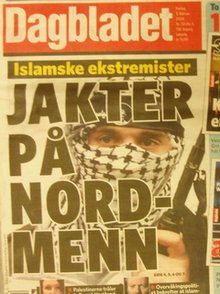
dagbladet Die Kontroverse um diese Mohammad-Karikaturen nimmt kein Ende und die Zeitungslektuere macht keine Freude – siehe Titelseite einer von Norwegens meistgelesener Zeitungen (unabhaengig von Alter und sozialer Schicht). Text: “Extremisten auf der Jagd nach Norwegern”. Auch der Eintrag bei ethno::log, hebt nicht die Stimmung.

Konstruktiver dagegen ist woweezowee’s Text Die alte Leier vom Kampf der Kulturen, in dem der Ethnologe Ethnologiestudent ein beliebtes Argument fundamentalistischer Islamhetzer zerpflueckt. Erbauend sind auch seine Links zur Karikaturen-Affäre.

Hinzufuegen moechte ich einen Text von Florian Rötzer in telepolis, in dem er aufzeigt, wie unglaubwuerdig und scheinheilig ein anderes viel benutztes Argument “Meinungs- und Pressefreiheit” in Wirklichkeit ist.

Ein differenzierter Blick auf den Konflikt bietet der Eintrag auf Global Voices Arab Bloggers Take on Danish Cartoons, der die Stimmung unter arabischsprachigen Bloggers auslotet.

Einen grundlegenden und empfehlenswerten Text mit viel Hintergrundinformation hat Ethnologe Daniel Martin Varisco geschrieben: Much Ado about Something Rotten in Denmark.

due

Ein anderer Ethnologe – Erkan Saka – berichtet ebenfalls regelmaessig, siehe u.a. Danish Media’s Representations of Islam by anthropologist Peter Hervik und A call for respect and calm – ein Eintrag mit vielen Links

Ethnologin Pnina Werbner erklaert, weshalb England viel besonnener als viele andere Laender reagiert hat

Blogger Gullsnø (goldener Schnee) aus Norwegen fordert alle auf, Friedenstauben zu posten.

Hilgal Sezgin: Die Freiheit der anderen – (taz, 8.1.06)

(wird evtl fortgesetzt)

dagbladet

Die Kontroverse um diese Mohammad-Karikaturen nimmt kein Ende und die Zeitungslektuere macht keine Freude - siehe Titelseite einer von Norwegens meistgelesener Zeitungen (unabhaengig von Alter und sozialer Schicht). Text: "Extremisten auf der Jagd nach Norwegern". Auch der Eintrag bei ethno::log,…

Read more