search expand

Book review: No fashion outside the “West”?

“The subject of fashion in non-Western world is largely understudied. The whole research community is to be blamed for viewing fashion too narrowly”, Tereza Kuldova writes in her new book review for antropologi.info. She has read a new book on fashion studies: Fashion in Focus by sociologist Tim Edwards.

——-

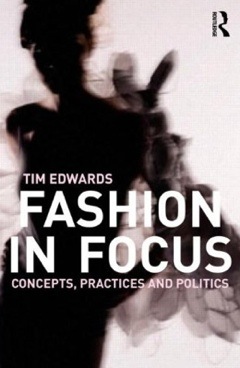
Review: Fashion in Focus: Concepts, Practices and Politics by Tim Edwards, New York: Routledge, 2011.

Tereza Kuldova, PhD Fellow, Department of Ethnography, Museum of Cultural History, University of Oslo

Fashion in Focus by Tim Edwards is mainly an overview work, summarizing most of the texts predominantly within the confines of sociology that deal with various aspects of the fashion system.
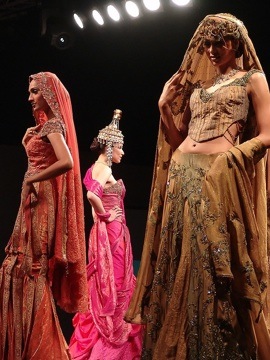
Nilofer: Pakistani fashion in Dubai. Foto: Mark Kirchner, flickr

The book is not a revelation in any sense and it does not develop the theory of fashion in any major way, though one might find traces of such attempts within the text. Considered as a summary of the most influential theories in fashion studies, it is a very good one. The language of the work is marked by clarity of expression, though there is a tendency towards excessive repetitiveness (though again, this might come handy to students)

However, the book considers almost without exception only western fashion, leaving the emerging non-western fashion centers unnoticed and the ‘East’ thus remains simply an (exploited) producer of fashion, rather than being treated as more and more important consumer. Considering the fact that Louis Vuitton’s sales are higher in Asia than in Europe and US together, this is a severe omission.

This omission is however not the mistake of the author summarizing the existing work, the whole research community is to be blamed for viewing fashion too narrowly, as a modern particularly Western phenomenon, focusing on consumption while neglecting production. With the exception of a handful of anthropologists, the subject of fashion in non-Western world is largely understudied and production and consumption remain separated in most of the studies.

The author is of course not unaware of the situation and to fill the gap he includes a chapter (7) on the production of fashion. There is a nice section that says it all in a few lines, let me quote:

“Fashion, even in its second-hand market versions, is sold according to illusion or the notion that dresses, jackets or shoes are somehow invested with the transformative magic to make us more than what we are, that clothes may somehow make up for what we lack or more simply help us to fulfill our fantasies. Fashion’s production is a grim reminder that they are no such thing, that they are just material assembled and sold, often at a rip-off cost to our pockets and at the expense or the exploitation of someone else” (121).
However, one might want to add, even though clothes and other fashion objects are in principle just assembled materials, their power over the minds of the self-fashioning individuals and the magic has real effects. Thomas’ theorem works here perfectly, ‘if people define situations as real, they are real in their consequences’.

Though as a person involved in the research on production and consumption of fashion in India I was looking forward to this chapter in particular, I was disappointed to a degree. The author hardly goes beyond stating the “popular”, i.e. ‘fashion production is exploitation’. Yet, as my own fieldwork can tell, it might be both, exploitation and empowerment. The omnipresent idea of a dreadful sweatshop is without doubt true to reality in some cases; however the incredible variety of destinies within fashion production can hardly be reduced to it.

A balanced and empirically grounded view is what is needed here. Only an in-depth qualitative research seems to be able to reveal the actual processes and meanings of and within the incredible complex rollercoaster of fashion industry. It appears as if too much of the theorizing done in the book is from the table, based on one’s perceptions, local bias, and readings of other scholars equally speculating from the warmth of their office chairs.

Edwards however makes up for certain omissions by paying attention to other rather neglected topics within the fashion studies, and that is men’s wear, children wear and recently also the topic of media, celebrities, designers and desire. In the third chapter he turns his attention towards the case of western suit, discussing topics of gender and masculinity in relation to the evolution of suit as a nexus of the consumption of men’s fashion in the West. There is a nice point in the chapter that Edwards makes about the oscillation of men’s dress throughout centuries from extravagant and lavish to simple and modest and back, he calls it “playboy” vs. “puritan” tendencies (45). These concepts might have broader application, not only being useful in conceptualizing the recent rise of the ‘metrosexual’ man, but also in conceptualizing fashion in other non-Western contexts.

In the fifth chapter he then turns towards the children fashion. This chapter being based on the actual original research by the author is definitely one of the more interesting. It draws on interview material with retailers, designers and consumers of children fashion in UK. It touches on the topics of branding of child wear, increasing fashion consciousness of children and the relationships between parents and children as consumers, as well as the tendency of parents to turn the child into a “mini me”.


Children fashion show in Singapore. Photo: Choo Yut Shing, flickr

Edwards concludes that in respect to children fashion in the UK market “the overwhelming key variables were age and gender and not class, geography or ethnicity” (100), which is hardly surprising. However what is possibly new (though the question remains to which degree) is “the rise of a more adult sense of fashion consciousness in the children’s clothing market, whether in terms of the wishes of some parents to dress their children more fashionably or in terms of wider trends of ‘mini-me’” (100).

The last chapter is then devoted to a trendy and until recently also neglected topic of desire, designers, branding and celebrities. He presents a good introduction into this topic, but it also becomes obvious that it is an area which needs more thorough investigation. Let me give you a tasting of this chapter in a quote that at the same time in a way makes obvious why fashion needs to taken seriously as a research object. It is “the combining of the desire for a designer label – whether sexual or more diffuse – for another person that turns contemporary fashion not only into a process of desiring objects but one of desiring subjects. More problematically still it also becomes a process of desiring subjectivity per se. Not only is the fashion consumer a desiring subject who desires both objects and other subjects but a desirer of alternative forms of subjectivity” (158).

Further the book includes summaries of both classical, modern and postmodern fashion theory, as well as a discussion on fashion, feminism and fetishism and ideas on the politics of dressing and self-expression. It is apparent by now that the book will make a good resource for students of fashion in various disciplines and it might thus stimulate further development of fashion theory, not less because it points towards the blind spots in the theory and towards areas that need to be investigated with greater sensitivity.

—-

See more reviews by Tereza Kuldova, among others Religious globalization = Engaged cosmopolitanism?, The deep footprints of colonial Bombay and Hindi Film Songs and the Barriers between Ethnomusicology and Anthropology or Colonialism, racism and visual anthropology in Japan: Photography, Anthropology and History and my look at her master’s thesis about the Chikan embroidery industry in India That’s why there is peace

"The subject of fashion in non-Western world is largely understudied. The whole research community is to be blamed for viewing fashion too narrowly", Tereza Kuldova writes in her new book review for antropologi.info. She has read a new book on…

Read more

Doktoravhandling tetter hull i Bygde-Norge

Altfor få antropologer interesserer seg for livet i Bygde-Norge. Anne-Katrine Brun Norbye er en av dem. I tre år har hun vært på feltarbeid på stølene i Hemsedal og dokumentert livet der. Like før jul forsvarte hun doktoravhandlingen sin “En fornemmelse av støl”.

På 300 sider skriver antropologen om alt fra navn på husdyr til slektskap, selvrealisering og kvinnefellesskap, om lyden av stillhet, stølturisme, fortellinger om det underjordiske Haugafolket, magi, ritualer og innovasjon. Ja, hun har skrevet en riktig tradisjonell etnografi om norske forhold.

Jeg må si det var klart en av de beste avhandlingene jeg har lest i det siste. Den er velskrevet med nesten uten jargon. Hun setter også funnene sine i en større sammenheng. Livet på stølene kan lære oss noe nytt om tilhørighet og integrering, livskvalitet og globalisering.

Forskeren fra Sosialantropologisk institutt ved Universitetet i Oslo (SAI) viser blant annet hvor viktig følelser og sanseinntrykk er for å skape tilhørighet til et sted – aspekter som forskningen om tilhørighet hittil har viet lite oppmerksomhet.

Avhandlingen er dessverre ikke tilgjengelig på nett, men jeg har skrevet en sak om den på SAIs hjemmeside og oppsummerte en artikkel av henne om magi, trolldom og Haugafolket i Hallingdal.

SE OGSÅ:

Hvor er antropologene når Bygde-Norge går på jakt?

Hva skjer med bygdekulturen?

Integrering: “Snakk mer om norsk kultur!”

Ordinær i Oslo eller stjerne i Finnmark? Doktoravhandling om innflyttere

Masteroppgave om bedehuskultur i endring

Les bygdebøker!

Altfor få antropologer interesserer seg for livet i Bygde-Norge. Anne-Katrine Brun Norbye er en av dem. I tre år har hun vært på feltarbeid på stølene i Hemsedal og dokumentert livet der. Like før jul forsvarte hun doktoravhandlingen…

Read more

Forscher widerlegen Sarrazin in neuem Report

Sarrazins Thesen auf dem Prüfstand (pdf) heisst ein neuer Report, in dem ein Team aus Politologen, Sozialwissenschaftlern, einem Islamwissenschaftler und einer Ethnologin die Aussagen von Thilo Sarrazin über Muslime in Deutschland widerlegen.

Den Forschern der Humboldt Universität in Berlin geht es im Report in erster Linie um Fakten und weniger um Sarrazins Weltbild (als alternatives Projekt könnte man evt Sarrazins Nähe zu Hitler aufzeigen).

Sie schreiben u.a. über “Interethnische Partnerschaften”, “Kriminalitätsrate nicht in Abhängigkeit zur Religiosität”, “Sprachkenntnisse bei großer Mehrheit gut”, “Bildungsanstieg bei zweiter Generation” und – sehr interessant “Deutschland droht zum Auswanderungsland zu werden”.

Ob Sarrazins Anhänger sich überzeugen lassen?

Im Report räumen die Forscher selbst ein, dass in der öffentlichen Debatte wissenschaftliche Analysen “dem Bauchgefühl einer meinungsbildenden Mehrheit unterlegen” war. “Gegenläufige Trends und Ergebnisse, die von der Wissenschaft gemessen werden, verschärfen eher das Misstrauen gegenüber der Forschung, als zu einem Stimmungswechsel innerhalb der Gesellschaft zu führen.”

Der Report wird von der Politologin Naika Foroutan herausgegeben. Sie leitet das Forschungsprojekt Hybride europäisch-muslimische Identitätsmodelle.

In mehreren Medien wurde der Report besprochen, siehe u.a. Interview mit Naika Foroutan im Deutschland-Radio sowie Berichte im Standard, im ORF und in der Frankfurter Rundschau.

SIEHE AUCH:

Sarrazin-Protest: Ethnologin Sabine Hess hatte Recht

Racism: The Five Major Challenges for Anthropology

Sarrazins Thesen auf dem Prüfstand (pdf) heisst ein neuer Report, in dem ein Team aus Politologen, Sozialwissenschaftlern, einem Islamwissenschaftler und einer Ethnologin die Aussagen von Thilo Sarrazin über Muslime in Deutschland widerlegen.

Den Forschern der Humboldt Universität in Berlin…

Read more

Migrationsboom in Museen: Stadtgeschichte wird Weltgeschichte

Migration ist offenbar ein populäres Thema in deutschen Museen geworden. Im Tagesspiegel schreibt Manuel Gogos von einem regelrechten “Migrationsboom”.

Forscher “mit Migrationshintergrund” sind auch daran beteiligt und schreiben z.B. in Stuttgart Ausstellungskonzepte. Migranten haben sich schon lange für die Dokumentation der Einwanderungsgeschichte Deutschlands engagiert, betont Gogos und verweist auf das Migrationsarchiv Domid (wo er selber auch mitgeschafft hat).

“Die transnationale Gastarbeiterära wird zur nationalen Erinnerung und Migration zum Thema öffentlicher Repräsentation. Das bezeugt eine nachholende Anerkennung von Geschichte und Gegenwart der Migration”, kommentiert der Autor und Ausstellungsmacher. Stadtgeschichte werde Weltgeschichte.

Doch trotz dieses Booms werde der Ruf nach einem zentralen Migrationsmuseum in Deutschland von der deutschen Kulturpolitik nicht erhört. In zahlreichen europäischen Ländern seien solche Museen in der Diskussion. Als erstes bedeutendes Einwanderungsmuseum eröffnete im Oktober 2007 die Pariser Cité Nationale de l’Histoire de l’Immigration.

>> weiter im Tagesspiegel

SIEHE AUCH:

Ausstellung “Crossing Munich”: Ethnologen für neue Perspektiven in der Migrationsdebatte

“Projekt Migrationsgeschichte”: Kulturwissenschaftler in Container in Innenstadt

Ethnologe schreibt Migrationsgeschichte – Interview mit Erwin Orywal

ZEIT nicht beeindruckt ueber “Projekt Migration”

– Highlight the connections between people!

Migration ist offenbar ein populäres Thema in deutschen Museen geworden. Im Tagesspiegel schreibt Manuel Gogos von einem regelrechten "Migrationsboom".

Forscher "mit Migrationshintergrund" sind auch daran beteiligt und schreiben z.B. in Stuttgart Ausstellungskonzepte. Migranten haben sich schon lange für die Dokumentation der…

Read more

How racist is American anthropology?

Why does anthropology tend to focus on “exotic others”? Why this obsession with Africa? How come calls by well-known anthropologists such as Paul Rabinow to “anthropologize the West seemed to have not brought forth much fruit? How racist is American anthropology?

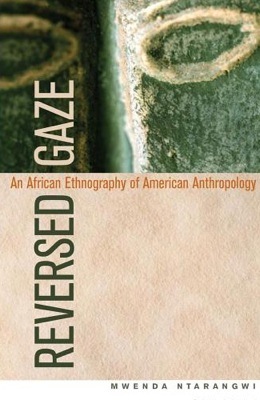
Kenyan anthropologist Mwenda Ntarangwi discusses those and other questions in his new book Reversed Gaze. An African Ethnography of American Anthropology.

Yes, Ntarangwi has conducted an anthropological study of American anthropology! An important undertaking. He has studied textbooks, ethnographies, coursework, professional meetings, and feedback from colleagues and mentors. He “reverses the gaze”, he stresses: Whereas Western anthropologists often study non-Western cultures, he studies “the Western culture of anthropology”.

He is especially interested in “the cultural and racial biases that shape anthropological study in general”.

In the preface and introduction he writes:

If anthropology truly begins at home as Malinowski states, how come, as I had thus far observed, anthropology tended to focus on the “exotic”? How come only a small percentage of fieldwork and scholarship by Western anthropologists focused on their own cultures, and when they did it was among individuals and communities on the peripheries, their own “exotics” such as those in extreme poverty, in gangs, ad others outside mainstream culture? (…)

This book is a personal journey into the heart of anthropology; representing my own pathways as an African student entering American higher education in the early 1990s that I knew very little about. It is a story about my initial entry into an American academic space very different from my own experience in Kenya, where we followed a British system of education.

It is also a story hemmed within a specific discourse and views about anthropology that can be best represented by remarks from fellow graduate students who wondered what i was doing in a “racist” discipline. (…) Troubled by this label, I consciously embarked on a journey to find more about the discipline.

He critiques dominant tenets of reflexivity, where issues of representation in his opinion are reduced to anthropologists’ writing style, methodological assumptions, and fieldwork locations. Inherent power differences that make it easier for anthropologists to study other people (“studying down”) than to study themselves (“studying up”) are rendered invisible.

Ntarangwi seeks to contribute to the process of “liberating the discipline from the constraints of its colonial legacy and post- or neocolonial predicament”. As long as the bulk of anthropological scholarship comes from Europe and North America and focuses on studying other cultures than their own, the power differentials attendant in anthropology today will endure.

I have just starting to read and took among others a short look at the chapter about the annual meetings of the American Anthropological Association (AAA).

“I believe it is at the AAA meetings that the anthropological ritual of what we do as anthropologists is best performed”, he writes:

Just as America has become an economic and political empire, American anthropology has consolidated a lot of power and in the process has peripheralized other anthropologies, forcing them either to respond to its whims and hegemony or to lose their international presence and appeal. The American Anthropological Association (AAA), I argue, is an important cultural phenomenon that begs for an ethnographic analysis.

It was in 2002, four years after his graduation that Mwenda Ntarangwi attended his first AAA-meeting. It was held in New Orleans. Already at the airport, he realises it is easy to spot anthropologists:

They were dressed casually, many were reading papers, and majority wore some exotic piece of jewelry or clothing that symbolized their field site – either a bracelet from Mexico (…), a necklace from a community in Africa, a tie-dyed shirt, or a multicolored scarf.

His observations from the different sessions he attended remind me of my own impressions: “Conference papers were written to make the presenters sound more profound rather than to communicate ideas”, he writes.

But there were interesting panels as well, among others about “marginalization and exclusion of certain scholars and scholarship on the basis of their race”. There were, he writes, “discussions of how Haitian anthropologists challenged the notion of race but were never “knighted”, as was Franz Boas, simply because they were Black”.

He also attended sessions where the speakers were using data collected ten or twenty years before and yet were speaking of the locals as if representing contemporary practices.

Ntarangwi went to the 2007 annual meeting as well. He was very much interested in seeing how well the meeting itself reflected in its theme “Inclusion, Collaboration, and Engagement.”

I’ll write about it next time. I’ll take the book with me on my short trip to Portugal. I’m leaving tomorrow.

You can read thw first pages of the books on Google Books. Check also Mwenda Ntarangwi’s website.

SEE ALSO:

How can we create a more plural anthropological community?

The Five Major Challenges for Anthropology

The resurgence of African anthropology

“Take care of the different national traditions of anthropology”

“No wonder that anthropology is banished from universities in the ‘decolonized’ world” (updated)

Keith Hart and Thomas Hylland Eriksen: This is 21st century anthropology

Why does anthropology tend to focus on "exotic others"? Why this obsession with Africa? How come calls by well-known anthropologists such as Paul Rabinow to "anthropologize the West seemed to have not brought forth much fruit? How racist is American…

Read more