search expand

– Vår oppfatning av kvinnelig omskjæring er bygget på myter

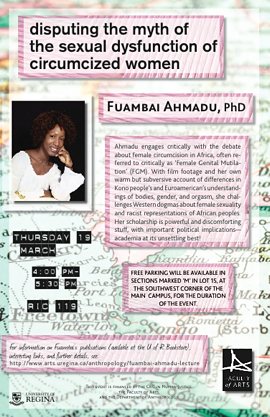
(Lenker oppdatert 9.9.2019) For et par dager siden skrev jeg saken Yes to female circumcision? som fikk mye respons og ble mye lest. Innlegget handlet om antropolog Fuambai Ahmadu som i et intervju med Anthropology Today utfordret dominerende oppfatninger om kvinnelig omskjæring.

Nå har Hege Ulstein i Dagsavisen også tatt opp saken. Dette vil du ikke lese, skriver hun i en veldig god kommentar med mange nyttige linker med tilleggsinformasjon:

Akademikere som har forsket på omskjæring i afrikanske kulturer har gjort en rekke interessante funn. Opplysningene de kommer med har det til felles at de nesten aldri omtales i vestlig presse. Det er rart, for myteknusingen er massiv, oppsiktsvekkende og lærerik. Omskårede kvinner har like stor glede av sex og får orgasme like ofte og hjertelig som andre kvinner. Omskjæring er ikke bare en skikk som stadfester kvinneundertrykkelse. Det er i mange tilfeller en markering av kvinnelig kraft og makt. Plager som inkontinens, smertefull sex, menstruasjonsproblemer, infertilitet og infeksjoner er omtrent like vanlig hos kvinner som er omskåret, som hos dem som ikke er det.

Hun minner også på at “unødig kirurgi for å møte visse skjønnhetskrav” ikke er “noe bare afrikanske kvinner driver med”:

Her i Vesten er brystimplantater, fettsuging, ansiktsløftning og skjønnhetsoperasjoner av det kvinnelige kjønnsorganet vanlig og akseptert. Piercing i underlivet er heller ikke et ukjent fenomen. Slike inngrep kan – i likhet med omskjæring – føre til helseproblemer og til og med dødsfall. Men det er ikke straffbart av den grunn.

Vår oppfatning av kvinnelig omskjæring, oppsummerer Ulstein, er altså ikke bare tuftet på fakta. Dette er et problem når man tenker på hva slags kontroversielle virkemidler myndighetene har tatt i bruk i kampen mot omskjæring av kvinner, påpeker hun. Hun nevner “tvangsundersøkelse av underlivet til småjenter, plukket ut etter etniske og rasemessige markører, mens de blir filmet. Inntil åtte års fengselsstraff. Omsorgsovertakelse.”

Men det betyr ikke at man skal heie fram skikken, understreker hun:

Men det betyr at vi bør møte problemstillingen med en helt annen ydmykhet og åpenhet enn vi hittil har gjort. Vi bør også omtale våre omskårede medsøstre med respekt. De har like stor rett som alle andre til å være stolte over kroppen sin. De er ikke «freaks».

>> les hele saken i Dagsavisen

SE OGSÅ:

Yes to female circumcision? Is it a good idea to fight against female circumcision? Not neccesarily according to anthropologist Fuambai Ahmadu

Circumcision: “Harmful practice claim has been exaggerated” – AAA meeting part IV

Hva har høye hæler og omskjæring til felles?

Antropolog: – Debatten om kjønnskorrigerende inngrep blant barn må løftes ut av sykehusene

Omskjæring: Antropolog advarer mot heksejakt

(Lenker oppdatert 9.9.2019) For et par dager siden skrev jeg saken Yes to female circumcision? som fikk mye respons og ble mye lest. Innlegget handlet om antropolog Fuambai Ahmadu som i et intervju med Anthropology Today utfordret dominerende…

Read more

Avdekker store mangler i migrasjonsforskningen

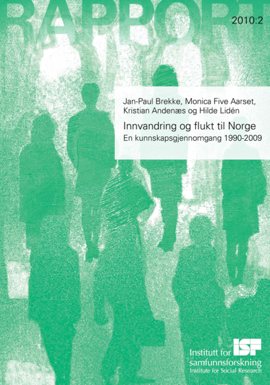
Migrasjon er et av de mest debatterte temaene i offentligheten. Men det er fortsatt store kunnskapshull. Og det er store mangler i migrasjonsforskningen. Dette viser rapporten Innvandring og flukt til Norge. En kunnskapsgjennomgang 1990-2009.

Jan-Paul Brekke, Monica Five Aarset, Hilde Lidén og Kristian Andenæs har gjennomgått forsknings- og utredningsarbeid knyttet til migrasjon, innvandring og flukt til Norge de siste tjue årene.

De påpeker bl.a.

  • Det er en merkbar mangel på tverrfaglige og komparative studier: Internasjonalt har det vært pekt på at innvandringsforskningen ofte er monofaglig og ikke sammenligner på tvers av case eller land. Reell tverrfaglighet innebærer at slikt samarbeid inngår i design, metodologi og analyser.
  • Fokus er i stor grad er på Norge. Nasjonalstaten utgjør rammen i de fleste studiene. Migrasjonen forstås i liten grad ut fra forhold i avsender- eller transitland. Det samme gjelder transnasjonale perspektiv, dvs. der vedvarende bånd mellom hjemland og mottakerland studeres.
  • Norsk praksis når det gjelder tvangsreturer av personer uten opphold er ikke studert.
  • Myndighetene har stått sentralt i å drive fram forskningen på migrasjonsfeltet i Norge. Dette forholdet kan legge noen begrensninger på forskningen: Policydrevet forskning risikerer å ha et for snevert fokus, være kortsiktig og lite kumulativ.

>> Oppsummeringen av rapporten

>> last ned rapporten

Det er blant annet på grunn av disse hullene og manglene at Culcom ble startet opp ved Universitetet i Oslo i 2004. Men dette tverrfaglige forskningsprogrammet blir ikke nevnt i rapporten.

SE OGSÅ:

Thomas Hylland Eriksen: Myndighetene hemmer migrasjonsforskningen

Etter nasjonalstaten: En samtale mellom Saskia Sassen og Thomas Hylland Eriksen

– Vi forsker for mye på integrering

Innvandrerkriminalitet, integrering og gammeldags innvandrerforskning

Migrasjon er et av de mest debatterte temaene i offentligheten. Men det er fortsatt store kunnskapshull. Og det er store mangler i migrasjonsforskningen. Dette viser rapporten Innvandring og flukt til Norge. En kunnskapsgjennomgang 1990-2009.

Jan-Paul Brekke, Monica Five Aarset, Hilde…

Read more

Yes to female circumcision?

(Links updated 2.2.2021) Is it a good idea to fight against female circumcision? Not neccesarily according to Sierra Leonean-American anthropologist Fuambai Ahmadu.

In an interview in Anthropology Today , she attacks Western feminists, media and anti-Female Genital Mutilation campaigns and accuses them for presenting a one-sided, ethnocentric picture of female circumcision.

A great deal of what is regarded as facts is not true, she explains. Many people think circumcision is a “barbaric tradition” and “violence against women”. But Ahmadu does not see circumcision as mutilation. Circumcision is no notable negative effects on your health and does not inhibit female sexual desire either.

The problem with the representation of various forms of female circumcision as ‘mutilation’ is that the term, among other things, presupposes some irreversible and serious harm. This is not supported by current medical research on female circumcision.

But this research (Obermeyer, Morison etc) has not received any attention in Western media:

However, neither Obermeyer’s reviews nor the Morison et al. study have been mentioned in any major Western press, despite their startling and counter-intuitive findings on female circumcision and health. This is in contrast to the highly publicized Lancet report by the WHO Study Group on FGM, released in June 2006, which received widespread, immediate and sensationalized press coverage highlighting claims about infant and maternal mortality during hospital birth.

Supporters of female circumcision justify the practice on much of the same grounds that they support male circumcision, she says:

The uncircumcised clitoris and penis are considered homologous aesthetically and hygienically: Just as the male foreskin covers the head of the penis, the female foreskin covers the clitoral glans. Both, they argue, lead to build-up of smegma and bacteria in the layers of skin between the hood and glans. This accumulation is thought of as odorous, susceptible to infection and a nuisance to keep clean on a daily basis. Further, circumcised women point to the risks of painful clitoral adhesions that occur in girls and women who do not cleanse properly, and to the requirement of excision as a treatment for these extreme cases. Supporters of female circumcision also point to the risk of clitoral hypertrophy or an enlarged clitoris that resembles a small penis.

For these reasons many circumcised women view the decision to circumcise their daughters as something as obvious as the decision to circumcise sons: why, one woman asked, would any reasonable mother want to burden her daughter with excess clitoral and labial tissue that is unhygienic, unsightly and interferes with sexual penetration, especially if the same mother would choose circumcision to ensure healthy and aesthetically appealing genitalia for her son?

It is important to remove the stigma around circumcision, Ahmadu stresses:

It is my opinion that we need to remove the stigma of mutilation and let all girls know they are beautiful and accepted, no matter what the appearance of their genitalia or their cultural background, lest the myth of sexual dysfunction in circumcised women become a true self-fulfilling prophecy, as Catania and others are increasingly witnessing in their care of circumcised African girls and women.

In an article in The Patriotic Vanguard, she describes the term Female Genital Mutilation as “offensive, divisive, demeaning, inflammatory and absolutely unnecessary”:

As black Africans most of us would never permit anyone to call us by the term “nigger” or “kaffir” in reference to our second-class racial status or in attempts to redress racial inequalities, so initiated Sierra Leonean women (and all circumcised women for that matter) must reject the use of the term “mutilation” to define us and demean our bodies, even as some of us are or fight against the practice.

Anthropologist Carlos D. Londoño Sulkin comments Ahmadu’s talk in Anthropology Today and criticizes his colleagues:

My own sense, after listening to Ahmadu, is that many Euroamericans’ reactions to the removal of any genital flesh is shaped by parochial understandings and perfectly contestable biases and values concerning bodies, gender, sex and pain.
(…)
Many anthropologists, reacting against collectivist social theories and some of the less felicitous entailments of cultural relativism, have joined in the condemnation of female circumcision without first taking counsel from our discipline’s methodological requirement actually to pay attention to what the people we write about say and do about this or that, over an extended period. Listening to Ahmadu, I can no longer condemn the practices of genital cutting in general, nor would I be willing to sign a zero-tolerance petition.

>> Disputing the myth of the sexual dysfunction of circumcised women. An interview with Fuambai S. Ahmadu by Richard A. Shweder (incl. comment by Carlos D. Londoño Sulkin)

SEE EARLIER POSTS ON THIS TOPIC:

Circumcision: “Harmful practice claim has been exaggerated” – AAA meeting part IV

Male circumcision prevents AIDS?

(Links updated 2.2.2021) Is it a good idea to fight against female circumcision? Not neccesarily according to Sierra Leonean-American anthropologist Fuambai Ahmadu.

In an interview in Anthropology Today , she attacks Western feminists, media and anti-Female Genital Mutilation…

Read more

University reforms – a threat to anthropology?

It started around 20 years ago: The idea of education as a right was being replaced by a concept of education as a commodity to purchase. Today’s universities are managed like businesses, striving for “excellence”, being best, competing for the “best” brains with new logos and slogans like The University of Manchester is pioneering, influential and exciting.

What are the consequences of the focus on competition instead of cooperation, quantity instead of quality, bureaucratic control instead of academic freedom and what can be done about it?

In the new issue of the journal New Proposals, anthropologist Charles R. Menzies writes about the recent developments from his personal experience and explains why the commercialisation also created a space for progressive action.

The search for excellence structures all aspects of the contemporary university environment, he writes:

In its operational mode excellence is little more than a set of quantified indictors—dollar value of grants, number of publications, ranking of publication venue, completion rates of students, and so on. These indicators are tabulated by individual, unit, or university and then ranked accordingly. Deriving from the tautological market principle that those who win are bydefinition excellent, being top ranked makes one excellent. (…) Our work becomes measured by quantity and placement of output: “so long as one publishes with the prestigious academic presses and journals, one’s publications are ‘excellent’” (Wang 2005:535)

Academics in the university of excellence are expected to win grants and publish papers. In this they have a lot of autonomy. For as long as academics in the university of excellence maintain their productivity at the rate being set by their colleagues a limited social space is opened up for progressive activity. He writes that he often says to his students: “Yes we must publish, but we get to choose what we publish”:

For me this has led to a series of articles and films on research methods (2005, 2004, 2003, 2001a) in place of what I may have originally wished to publish. This shift reflects my concern for conducting ethical research and to resist the undue influence of the competitive drive to publish as much as one can. To me, a respectful research engagement means that one takes the time to consult and to work with the people about whom we write. Some researchers, lost in the competitive rush to publish, prioritize their own advancement and desires over the people about whom they write.

He suggests following research topics:

– What are the effects of global capitalism on people’s health and wellbeing?
– How have local/ trans-national elites have gained control over public institutions such as the university of excellence?
– How can we make democratic practice real and what does our knowledge of small-scale societies tell us about the possibility of true participatory democracy?

>> read the whole paper “Reflections on work and activism in the ‘university of excellence'”

>> New Proposals Vol 3, No 2 (2010): Universities, Corporatization and Resistance

On his website, Menzies provides community resources and lots of publications to download

Interestingly, the recent issue of the journal Social Anthropology deals with the same topic. And the whole issue is available for free.

In their introduction, Susan Wright and Annika Rabo explain the background for the current reforms:

The current wave of reforms anchors both the global north and south in the so-called global knowledge economy where higher education is universally perceived as increasingly crucial for economic development. In today’s political discourse there is less emphasis on higher education as a public right and a means to liberate and cultivate citizens. Higher education occupies centre stage in the discourse on the global knowledge economy because ‘knowledge is treated as a raw material’ (Slaughter and Rhoades 2004:17). Universities are thus sites for both the mining and the refining of this resource.
(…)
A second strand in the international policies for university reform derives from the argument that universities are no longer just servicing the economy: now educating international students is itself a lucrative trade. American, British and Australian universities are especially competitive in this global market, and foreign students are Australia’s third most important source of export earnings.

The reforms represent also a “new rationality of governance”.

Such reforms involve changing the status of service providers (including universities in many parts of Europe) so that they are no longer part of the state bureaucracy, but are turned into ‘autonomous’ agents, with whom the state can enter into contracts, and through which they are held ‘accountable’ for their performance. In many countries, universities are being treated as a service supplier, just like any other part of the public sector.

What we need is more anthropology of university reform:

As the contributions to this special issue show, an anthropologist’s view of the ‘field’ can combine a critical examination of the keywords, policy discourses and rationalities of governance, with an exploration of how political technologies like accountability mechanisms, performance measurement, and customers satisfaction surveys actually work in practice, with accounts of students’, academics’ and sometimes managers’ diverse ideas of the university and how they act to shape their institution in their daily life.
(…)
(A)cademics seem not yet to have reformulated their values and modes of organising into a forward-looking vision for universities. There are plenty of contradictions in the reform agenda that could be exploited to this purpose. For example, why do governments imagine that by creating top-down steered, coherent organisations with a hierarchy of autonomous and strategic leaders they are preparing universities for a knowledge economy? Just to be provocative (and ironic, as we can also see negative sides to this image), why not imagine a future university by drawing on some positive aspects of companies which recognise that their biggest resource is the ideas, imagination and ability of the workers, and where staff take responsibility for their own work, have a weekly ‘free research’ day, and follow their own initiatives through networks of colleagues and short-term project teams in their own institution and internationally? Why not formulate an idea of a university as a kind of flexible, networking ‘knowledge organisation’?

>> read the whole paper “Anthropologies of university reform “

>> Social Anthropology Special Issue: Anthropologies of university reform

In my opinion, an analysis of the language used in strategic documents would be interesting. Take for example a look at the Consultation document for University of Oslo’s strategy 2010–2020 where we read about universities’ “ role as a growth instigator in the local and global economy” . But a look at the table of contents is enough where we find a list of some of the main goals like “ A quality‐conscious university”, “ A ground breaking university” and (being) “The epitome of a good university”.

By the way, just a few hours ago, Chris Kelty has written a post at Savage Minds about the new “Stasi like” culture of control at The Department of Anthropology at UC Berkeley

SEE ALSO:

Thomas Hylland Eriksen: On the fundamental uselessness of universities

Protests at Yale: When Walmart’s management principles run an anthropology department

“Intolerant Universities”: Anthropology professor Chris Knight suspended over G20-activism

Teamwork, Not Rivalry, Marks New Era in Research

Neoliberal applied anthropology: Who owns the research — the anthropologist or the sponsor?

Success in publishing defined by quality? Anthropology Matters on “The Politics of Publishing”

Militarisation of Research: Meet the Centre for Studies in Islamism and Radicalisation

It started around 20 years ago: The idea of education as a right was being replaced by a concept of education as a commodity to purchase. Today's universities are managed like businesses, striving for "excellence", being best, competing for the…

Read more

Neuperlach: Wie Schule, Eltern und Medien "Ausländerprobleme" schaffen


Der Münchner Stadtteil Neuperlach. Bild: Altweibersommer, flickr

Viertel mit vielen Ausländern haben nicht immer den besten Ruf. Ghetto und Gewalt – so zeigen die Medien auch den Münchner Stadtteil Neuperlach. Die Sueddeutsche interviewt Veronika Knauer, die ihre Magisterarbeit in Ethnologie über Neuperlach geschrieben hat.

Knauer, die selber in Neuperlach aufgewachsen ist, aber nicht mehr da lebt, ging folgenden Fragen nach: Wie nehmen die Neuperlacher ihr Viertel wahr? Welche Rolle spielt für sie Herkunft? Wie erleben sie das Zusammenleben mit Menschen unterschiedlicher kultureller Hintergründe?

Ihre Studie zeigt wie das Denken in kulturellen Kategorien ein Produkt der Erziehung ist. Für Kinder gibt es die Kategorie “Ausländer” nicht, erzählt sie:

Ich habe eine vierte Klasse beim Unterricht beobachtet und sie kurze Aufsätze schreiben lassen zum Thema “Mein bester Freund oder meine beste Freundin“. Das Ergebnis war überraschend: Die Kinder denken überhaupt noch nicht in den Kategorien “Ausländer – Deutsche“ oder “Wir – Die“, wie die Älteren.

Diese Kategorien werden durch die Schule, die Eltern und die Medien erst erzeugt. Gerade durch den Lehrplan werden solche Denkweisen sehr stark vermittelt: Hier wird oft von “den deutschen Kindern“ und “den ausländischen Kinder“ geredet, wenn auch meist im Zusammenhang mit Integration. Da heißt es dann “Wir müssen die ausländischen Kinder integrieren“ oder es werden Themen diskutiert wie “Welche Kultur haben ‘Die’, welche Kultur haben ‘Wir’?“.

Die erwachsenen Bewohner lehnen das durch die Medien vermittelte Bild Neuperlachs als sozialen Brennpunkt ab. Sie sind der Meinung, dass es mit Ausländern keine Probleme gibt. Die Kategorien “Wir – die Anderen”, so Knauer weiter, sind dennoch in den Köpfen der Menschen fest verankert.

Veronika Knauer ist eine der Autorinnen des Sammelbandes “München migrantisch – migrantisches München. Ethnographische Erkundungen in globalisierten Lebenswelten”, der heute abend in München vorgestellt wurde. Ihr Aufsatz heisst „Learning Ethnicity – Oder: Wie nehmen die Bewohner Neuperlachs ihre multikulturelle Wohnsituation wahr?“ Der Band wird herausgegeben von Sabine Hess und Maria Schwertl.

>> zum Interview in der Sueddeutschen (Link aktualisiert 3.6.18)

Sabine Hess leitete die Ausstellung Crossing Munich über Migration in München.

SIEHE AUCH:

Einwanderung, Stadtentwicklung und die Produktion von “Kulturkonflikten”

Kosmopolitismus statt Multikulturalismus!

In Darkest Leipzig – Ethnologiestudent erfolgreich mit Buch über Leipziger Clans und Stämme

Feldforschung am Tresen: Magisterarbeit über Münchens Bierstüberl

“Punk-Gesetz eine Schande” – Kulturwissenschaftler studierten Grazer Punk-Szene

Der Münchner Stadtteil Neuperlach. Bild: Altweibersommer, flickr

Viertel mit vielen Ausländern haben nicht immer den besten Ruf. Ghetto und Gewalt - so zeigen die Medien auch den Münchner Stadtteil Neuperlach. Die Sueddeutsche interviewt Veronika Knauer, die ihre Magisterarbeit in Ethnologie…

Read more